Crashes, No Sound, or Screen Glitches?
Random freezes, missing sound and display glitches usually trace back to one bad driver. Find and replace yours safely.Free scan · under a minuteWindows Errors? Fix Them Before They Spread
Repair common Windows errors and clear accumulated junk for a smoother, more stable PC - no reinstall needed.Free scan · no reinstallNeither is universally better. Incline walking can raise aerobic demand to running-like levels without using a running gait, while running is time-efficient and may suit people who enjoy or specifically train for it. A 2025 laboratory study found that 20% incline walking and level jogging produced similar oxygen uptake, but jogging caused higher foot and sacrum accelerations. Those accelerations are impact-related measurements—not proof that incline walking prevents injury or that running damages joints. Choose according to the intensity you need, symptoms, tolerability and the activity you can perform consistently.
What “better” means in this comparison
Fitness is not one outcome. A workout can be compared by the effort it produces in the moment, the oxygen uptake reached during a test, the adaptations gained after weeks of training, or how reliably a person keeps doing it. Incline walking and running can look different on one measure and similar on another.
As an Amazon Associate I earn from qualifying purchases.
- Acute effort: how hard the session feels and how much oxygen the body uses while exercising.
- Exercise-test capacity: the maximum oxygen uptake or perceived exertion reached in a controlled treadmill test.
- Training adaptation: changes such as improved endurance after a multiweek program. The studies cited here did not establish that one mode produces larger long-term gains.
- Adherence: whether the pace, grade and impact are comfortable enough to repeat regularly. A theoretically demanding workout has little value if you cannot sustain it.
The direct evidence is mostly short laboratory work with small samples. It can show how a protocol changes oxygen use, acceleration or joint moments; it cannot establish comparative injury rates, arthritis prevention, cartilage changes or long-term fitness superiority.
What the closest head-to-head study found
Matched oxygen use, different accelerations
Lankford and colleagues studied 19 physically inactive adults aged 18–31 with no known cardiovascular, orthopedic or neuromuscular disease. Each participant completed 20 minutes of level-grade jogging and 20 minutes of walking at a 20% treadmill grade. Speed was adjusted so relative oxygen consumption fell within the study’s matching range. The full article is available from the International Journal of Exercise Science (2025).
#1 Best Overall
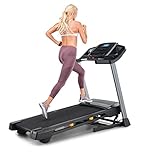
- THE T6.5S TREADMILL - See your live workout stats on the clear LCD display or use your own device to follow iFIT trainers and automatically control your treadmill, all from your phone or tablet (iFIT Train Membership Required).
- 0-10 MPH - Run, jog, or walk at speeds of up to 10 MPH. Perfect for home workouts, cardio training, and endurance building.
- 0-10% INCLINE - Boost calorie burn and target more muscle groups with a 0–10% incline range.
- KEYFLEX CUSHIONING - Reduce joint impact while walking or running. This treadmill supports smoother strides and improved comfort for daily use.
- FOLDABLE & COMPACT - The folding frame makes this treadmill ideal for small spaces. When you're done, fold it and roll it away. Press the foot bar for smooth, assisted lowering.
Under that protocol, the two modes were matched for oxygen uptake, so steep walking was capable of producing a demanding aerobic workload comparable to level jogging. The authors wrote in their abstract: “Despite being matched isocalorically, LGJ increased peak and integral muscle activation and produced higher foot and sacrum accelerations.” Here, LGJ means level-grade jogging. The acceleration result is a biomechanical proxy; it is not a count of injuries, a diagnosis of joint damage or proof of superior long-term safety.
| Measure in the 2025 protocol | Finding | How to interpret it |
|---|---|---|
| Participants | 19 physically inactive adults, age 18–31 | Results do not automatically apply to older adults, trained runners or people with diagnosed joint disease. |
| Walking condition | 20 minutes at a 20% treadmill grade | A very steep grade; consumer treadmills vary in their maximum incline. |
| Jogging condition | 20 minutes at level grade | Level jogging, not every form of running or outdoor terrain. |
| Intensity control | Speed adjusted to match relative oxygen consumption | This was an isocaloric comparison, not a free-choice workout comparison. |
| Peak foot acceleration during jogging | 22.14 ± 8.44 m/s² | A measured acceleration signal, not a direct ground-reaction-force or injury measurement. |
| Peak sacrum acceleration during jogging | 27.21 ± 7.92 m/s² | Another impact-related proxy recorded during the short trial. |
The experiment did not follow participants long enough to record injuries, pain trajectories, cartilage changes or arthritis. It also tested one high grade and a young, inactive sample. You should not generalize its result to every incline, outdoor hill, running speed or population.
Can incline walking provide the same cardio workout as running?
At a matched oxygen demand, sometimes yes
If “same cardio workout” means a similar oxygen requirement during the session, the 2025 comparison shows that walking at a 20% grade can be adjusted to match level jogging in oxygen uptake. That makes steep walking a credible alternative for someone who wants a hard aerobic treadmill session without adopting a running gait.
Recommended Free Tools
“Same cardio workout” does not mean the movements, muscle recruitment, impact signals or training outcomes are identical. In the matched trial, jogging produced greater peak and integral muscle activation and higher foot and sacrum accelerations. The two modes therefore reached a similar metabolic target through different mechanical strategies.
Maximal-test results are not training-equivalence results
An ACSM 2019 annual-meeting abstract compared graded walking with ungraded running as maximal treadmill tests in 20 healthy young adults. It reported similar maximal oxygen uptake and perceived exertion, alongside differences in other cardiometabolic responses. The abstract is in the ACSM 2019 annual meeting collection.
A maximal test asks how far a participant can progress during one test. It does not show that assigning graded walking and ungraded running for several weeks will produce equal VO₂max improvement, running economy, muscle strength or endurance. Treat the finding as evidence that both modes can elicit high effort in a test—not as proof that their training adaptations are interchangeable.
Why speed and grade change the answer
Walking intensity depends on both speed and grade. A slow, steep walk can demand substantial oxygen use; a faster level walk may create a different combination of metabolic and mechanical stress. Running adds a flight phase and a different gait pattern. Comparisons are meaningful only when you specify the speed, incline, intensity target, surface and outcome being measured.
Do these 3 things before closing this tab:
1Clear out junk files and repair common Windows errors2Scan for outdated or missing drivers - takes under a minute3Repair Windows errors before they cause bigger problemsIs incline walking easier on your knees?
Knee mechanics can change with incline
Haggerty and colleagues examined 15 healthy men walking at 1.34 m/s on a treadmill set to 0%, 5%, 10%, 15% and 20% grade. Peak internal knee-abduction moment was lower than level walking at every tested incline except 5%. The study, published in Gait & Posture, is indexed at PubMed.
A knee-abduction moment is a mechanical variable describing how forces and lever arms act around the knee. The result suggests that changing grade can alter knee loading patterns under the tested conditions. It does not measure pain, cartilage loss, osteoarthritis incidence or future injury. The sample was small and exclusively male, and the authors’ discussion of possible cartilage or osteoarthritis implications was a hypothesis about what the mechanics might mean—not a clinical outcome.
Slower uphill walking may reduce some moments in adults with obesity
A separate study of 12 adults with obesity compared combinations of walking speed and grade. Walking at 0.75 m/s on a 6° incline, compared with level walking at 1.50 m/s, reduced peak knee-extension and knee-adduction moments by approximately 19% and 26%, respectively. Metabolic rates were similar across the tested conditions and remained in the moderate-intensity range. The study is indexed at PubMed.
This is a useful example of why speed must be reported with grade: the uphill condition was half the level-walking speed. It does not establish that every person with obesity, or every person with knee symptoms, will experience the same loading or safety profile. Individual anatomy, strength, pain, balance and treadmill technique still matter.
Rank #2

- 【Quiet Brushless Motor】The walking pad treadmills featuring a sturdier steel frame construction, has undergone rigorous testing,continuous 8-hour operation tests. Ensures a stable and durable product,The treadmill is equipped with a brushless motor with a maximum power of 3.0HP and can withstand users up to 300 lbs. this portable treadmill runs smoothly at speeds of 0.6-6.2 MPH,The internal noise reduction layer effectively controls the noise level at 55 dB,Provide a smoother sports experience.
- 【LED Display and pause function 】The LED display of the walking pad treadmill clearly shows time, calories, step, speed and distance, keeping your movement data at a glance.The P button on walking pad treadmill has 12 preset programs, and PAU button has Pause the treadmill operation (retain current data), providing different intensity of exercise, allows you to improve and adjust your workout program.
- 【Treadmill with 12% Incline】 This walking pad treadmill has a manual incline of 12%, which can be increased to 12% with the small black foot pads to simulate realistic walking and running hill climb scenario.This incline function is not only effectively boosts calorie burn, but also adds fun and challenge to the user's workout.This feature is particularly suitable for users who wish to workout at home, helping them to achieve more efficient training results in the same amount of time.
- 【Shock-Absorbing Running Belt Protected Joints】This treadmill with handle comes with a durable six-layer running belt, which is designed to increase shock absorption non-slip performance and prolong service life.,It is also equipped with 4 high-density silicone shock absorbers and 2 impact-reduction pads and anti-slip handle, while padded grips and shock-absorption tech work together to reduce knee stress by 40%.Treadmill is designed to accommodate users of most body types.
- 【 Easy Move and Store】The compact design of this treadmill for home makes it easy to store and easy to store in small spaces such as home or apartments. The treadmills for home built-in wheels allow it to be moved effortlessly under a bed or sofa for storage,this mini treadmill weighs only 48 Pound,the running belt measures 39 inches in length and 15 inches in width, providing ample space for walking or running on this incline treadmill.
Impact is not one number
Ground-reaction force, segment acceleration, joint moment, tissue loading, pain and injury are related but distinct. One study can show a higher acceleration while another shows a lower knee moment, without the findings being contradictory. The 2025 study itself cautioned that acceleration cannot be stated with certainty to be directly comparable to ground-reaction force. Lower acceleration in one location also does not mean zero joint stress.
Another study comparing horizontal walking, incline walking and running at similar aerobic intensity concluded that vigorous aerobic exercise may be performed without elevated orthopedic stress depending on the mode prescribed. Its result should not be converted into “running is always damaging” or “incline walking is always safe.” The relevant variables include speed, grade, intensity, participant characteristics and the force or moment actually measured. See the study record at PubMed.
Incline walking versus running: evidence side by side
| Question | Incline walking | Running or jogging | What the evidence supports |
|---|---|---|---|
| Can it reach a high aerobic demand? | Yes, when grade and speed are high enough; 20% walking matched level jogging for oxygen uptake in the 2025 trial. | Level jogging reached the matched oxygen-uptake target in that trial. | Either can be strenuous; matching requires measuring or controlling intensity. |
| What happened to peak accelerations in the direct study? | Lower than jogging at the foot and sacrum under the matched protocol. | 22.14 ± 8.44 m/s² at the foot and 27.21 ± 7.92 m/s² at the sacrum. | Jogging produced higher measured accelerations in that short study; this is not an injury comparison. |
| What happened to knee-abduction moment? | Lower than level walking at 10%, 15% and 20% grades, and at 0% versus the tested comparisons; the 5% result did not differ from level walking. | Not tested in that Haggerty walking protocol. | Incline changes knee mechanics, but clinical benefit was not measured. |
| Long-term injury or arthritis prevention | Not established by the cited studies. | Not established by the cited studies. | Do not infer disease prevention from acute laboratory measures. |
| Best fit for a person who dislikes running impact | A practical option if a steep grade is comfortable and controllable. | Useful if the person enjoys running and tolerates its gait. | Choose the mode that can be repeated without worsening symptoms. |
How to choose the mode for your goal
Choose incline walking when
- You want a demanding treadmill workout but prefer to keep one foot on the belt at all times.
- You are trying to match a vigorous aerobic effort without level jogging.
- You tolerate uphill posture and calf, glute and hamstring work better than the repeated running gait.
- You need to control intensity by adjusting grade and speed independently.
A 20% grade was used in the direct comparison, but that does not make 20% a universal target. Start with a grade your treadmill, balance and symptoms can handle, then adjust speed or grade while keeping your effort controlled.
Choose running when
- You enjoy running and can perform it consistently without pain that worsens during or after sessions.
- Your goal includes running-specific ability, such as covering a distance continuously or preparing for a race.
- You prefer a shorter session at a pace that naturally raises your heart rate.
The available evidence does not show that every runner should switch to incline walking. A lower acceleration signal in one protocol is not a mandate to abandon a mode that you tolerate and value.
Use a hybrid approach when both are tolerable
Alternating sessions lets you vary gait and loading while preserving aerobic work. For example, one session can use comfortable incline walking and another can use run–walk intervals. Keep the comparison fair by recording speed, grade, duration and perceived effort; otherwise a steep walk and a fast run are not directly comparable.
Practical setup for an incline-walking session
- Check the treadmill specification. Consumer machines have different maximum grades. Do not assume a model supports the 20% condition used in the 2025 study; verify the manufacturer’s stated range.
- Begin at an easy grade and speed. Establish balance and posture before increasing either variable. Hold the rails only for safety while setting the machine; leaning heavily changes the exercise mechanics.
- Raise one variable at a time. Increase grade or speed in small steps, allowing your breathing and leg effort to settle before another change.
- Use a sustainable intensity target. You should be able to complete the planned work without form deteriorating. A study-matched oxygen demand is a laboratory condition, not a requirement for a normal workout.
- Monitor symptoms during and after. Stop if you develop sharp pain, instability, chest symptoms, unusual shortness of breath or neurological symptoms. Persistent or worsening joint symptoms warrant individualized advice from a qualified clinician.
- Progress only one training stress at a time. If you add grade, avoid simultaneously making the session much longer and faster. This makes it easier to identify what your body tolerates.
An adjustable treadmill with incline is optional equipment for indoor hill walking, not a requirement for fitness. The cited study used a treadmill and notes that high-incline models vary in maximum grade; it did not test consumer models or establish that readers need one.
How to compare a run fairly with a walk
- Match duration: compare equal work periods, such as 20 minutes, rather than comparing a short run with a long walk.
- Match intensity when possible: heart-rate data, oxygen uptake or a consistent perceived-effort scale is more informative than speed alone.
- Record grade and surface: level treadmill jogging, outdoor running and uphill treadmill walking are different conditions.
- Separate acute response from adaptation: a session that produces similar oxygen use today may not produce identical fitness gains over months.
- Track symptoms and recovery: note pain during exercise and later that day or the next morning, not only the peak effort in the session.
Common mistakes and how to correct them
“Lower acceleration means no joint stress”
Why it fails: acceleration is only one proxy, and the 2025 authors cautioned against treating it as directly equivalent to ground-reaction force.
Better interpretation: say that jogging produced higher measured foot and sacrum accelerations in that protocol, while acknowledging that injury and tissue outcomes were not measured.
“Incline walking prevents arthritis”
Why it fails: the Haggerty study measured knee-abduction moments in 15 healthy men; it did not follow cartilage, pain or arthritis.
Better interpretation: incline altered a knee-mechanics variable under specific speeds and grades. Clinical prevention remains unestablished.
“A maximal test proves equal training gains”
Why it fails: the ACSM abstract describes a single maximal exercise-test comparison, not a multiweek intervention.
Rank #3

- 12% 6° 9-Level Auto Incline Treadmills for Home: Features 0-12% true 6° auto incline with 9 levels; One-button adjustment burns more calories; This under desk treadmill simulates hiking and climbing at home on rainy mornings, snowy days, or before work
- 450 lbs Capacity & Bluetooth Audio: This heavy duty walking pad supports 450 lbs with a reinforced steel frame; the 2.5 HP motor runs smooth and quiet; the built-in Bluetooth speaker pairs instantly for crisp sound while you catch the game, a show, or your playlist
- Enhanced Bluetooth & Free FitYo App: This auto incline walking pad treadmill features upgraded Bluetooth for hi-fi audio and syncs seamlessly with the free FitYo app; access 100+ coach-led courses with no subscription; and join a 200,000+ user community built for focused indoor workouts at home
- Triple Cushion & RGB Display: This under desk treadmill has double-deck structure, 4 silicone absorbers, and 5-layer anti-slip belt for comfortable walks while you work or take calls; RGB LED tracks speed, calories, time, distance, and auto incline level in 6 colors
- 3-Year Warranty — We've Got It Covered. Just Enjoy: Everything after purchase is on us. This walking pad comes with a 3-year warranty and a professional team ready to assist — thoughtful support, so your experience stays smooth from unboxing to daily use. 3 years, 1,095 days. We handle the rest. You just focus on your workout.
Better interpretation: graded walking and ungraded running can reach similar maximal oxygen uptake and perceived exertion in that test population, but adaptation still needs separate evidence.
Free tools Windows power users keep installed
One-click scans. No signup required.
“The steepest treadmill setting is automatically best”
Why it fails: grade changes posture, muscle demand and balance requirements, and the 20% protocol was studied in young inactive adults.
Better interpretation: select the lowest grade that reaches your intended effort while preserving control and tolerability.
Who should seek individualized guidance
The direct high-incline study excluded known cardiovascular, orthopedic and neuromuscular disease. Its results therefore should not be treated as a prescription for people with those conditions. Seek individualized advice before changing exercise substantially if you have diagnosed joint disease, significant pain, recurrent instability, recent surgery, cardiovascular symptoms or another limitation that affects walking or running. During exercise, stop and seek urgent medical care for severe chest pressure, fainting, severe breathlessness or sudden neurological symptoms.
What remains unknown
- Whether incline walking or running produces larger VO₂max gains over months when training volume and intensity are matched.
- Whether either mode has lower injury incidence across older adults, trained runners, people with arthritis or diverse body sizes.
- Whether the observed acceleration and knee-moment differences translate into less pain, cartilage wear or osteoarthritis over time.
- How outdoor hills, different footwear, surfaces and grades compare with the treadmill protocols.
- Which mode people adhere to better when enjoyment, schedule and access are considered.
Those gaps matter because acute biomechanics can inform a choice without determining a long-term clinical outcome.
Quick wins for a faster PC:
Scan for outdated or missing drivers - takes under a minuteDriver Scan →Clear out junk files and repair common Windows errorsFree Scan →Fix the driver behind crashes, sound loss and screen glitchesFind Drivers →Bottom line
Incline walking is a legitimate high-effort alternative to running when you can tolerate the grade: in a small 2025 study, 20% walking matched level jogging for oxygen uptake and produced lower peak foot and sacrum accelerations. Other small studies found that incline and slower uphill walking changed knee moments, but none established fewer injuries, less pain or protection from arthritis. Running remains appropriate for people who enjoy it, tolerate it and need running-specific fitness. Pick the mode that reaches your desired effort, fits your goals and can be repeated consistently without worsening symptoms.
Frequently Asked Questions
Is a 20% treadmill incline necessary to match running?
No. The 20% grade was the condition used in one small 2025 laboratory comparison. It demonstrates what was possible under that protocol, not a universal target or requirement.
Does incline walking burn the same calories as running?
Calories depend on body mass, speed, grade, duration and efficiency. The cited study matched relative oxygen consumption, not every person’s calorie expenditure. A walk and run are comparable only when those variables are specified.
Should I switch from running if my knees do not hurt?
Not solely because of the acceleration finding. The study did not show that running causes future joint disease. If you run comfortably and meet your goals, there is no evidence here requiring a switch.
What’s actually slowing this PC down?
Pick the symptom - the matching free tool is one click away.
Can I use incline walking with knee pain?
The studies do not establish a universal safe grade for painful knees. Reduce or stop any movement that worsens symptoms and obtain individualized clinical guidance for persistent, severe or recurrent pain.
Quick Recap
Product prices and availability are accurate as of the date/time indicated and are subject to change. Any price and availability information displayed on Amazon at the time of purchase will apply.

