What’s actually slowing this PC down?
Pick the symptom - the matching free tool is one click away.
To switch to an Agile workflow, first define what needs to improve, map how work moves today, and identify the people and constraints involved. Then choose practices that fit the work, try them with a supported team, and review evidence before expanding. Agile is not one universal process: Scrum and Kanban offer different structures, and neither a new tool nor a new meeting schedule can fix unclear priorities or blocked decisions by itself.
What an Agile workflow means
Agile is a set of values and principles for delivering work, responding to change, and learning through feedback—not a single workflow to install. The Manifesto for Agile Software Development expresses those values; PMI’s Agile Practice Guide covers approaches, life-cycle selection, implementation, team delivery, and organizational considerations.

As an Amazon Associate I earn from qualifying purchases.
A workflow transition changes how an organization chooses, delivers, and learns from work. It may involve team practices, but it can also affect approvals, planning, architecture, operations, compliance, and release management. Start with the intended result rather than adopting Agile as a label.
The Tool Desk
Outbyte Driver Updater FREEFix the driver behind crashes, sound loss and screen glitchesFind Drivers →Outbyte PC Repair FREEClear out junk files and repair common Windows errorsFree Scan →Step 1: Define the reason and scope
Write down the specific problem you want to address. Examples include feedback arriving too late to influence a decision, shifting priorities, unclear ownership, or work spending too long waiting between stages. Name the team, product or service, stakeholders, kinds of work, and boundaries included in the change.
#1 Best Overall
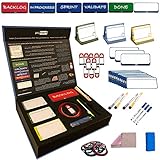
- ✔️ STACKABLE; Our magnetic cards have been designed and tested to ensure maximum stackability in any direction. They can be easily stacked, grabbed and move around on magnetic boards. Our unique magnetic properties ensure maximum flexibility on how you want to stack them in any direction and concept!
- ✔️ REUSABLE; Our magnetic boards can be cleaned easily with a wet cloth and reused. Our reliability tests proved that our cards can be used up to 50.000 times without any degradation in quality! They are designed to be your partner in long years to come
- ✔️ SMOOTH WRITING; We thought about everything on our products from selecting special materials to color tones of the cards, thicknesses, sizes and markers go best with cards in order to make your writing experience unique
- ✔️ VISUAL; Everything is about being visual! Our products provide maximum visualization by grouping tasks with different color codes, attaching blocker cards to ease the identification of critical tasks as well as help prioritizing. Moreover, you can specify task owners right on the task cards in the dedicated area!
- ✔️ WASHABLE; Our design is special and highest quality possible for a megnetic card. We did not use any paper based material on our products and card design is printed by using UV printing technology directly on a special PVC material. It makes our products fully washable
Agree in advance on observable signs of progress tied to the problem. If the goal is earlier feedback, for example, examine whether stakeholders can review useful work sooner. Avoid selecting a generic target such as “be faster” without defining what should improve and how you will recognize it.
Step 2: Map current work and constraints
Follow several representative work items from request to delivery. Note where work waits, which handoffs and approvals occur, where rework happens, and what depends on another team. This gives you a practical picture of the existing workflow before you change it.
Rank #2
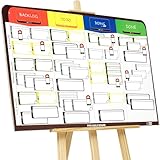
- COMPLETE AGILE MANAGEMENT SOLUTION: All-in-one physical Agile board kit including a full magnetic Kanban & Scrum board, 84 reusable magnetic cards, easel stand, markers, and accessories for Kanban, Scrum, Lean, Agile workflows, task tracking, and visual project management
- FULL MAGNETIC DRY ERASE BOARD WITH MULTIPLE SETUP OPTIONS: Lightweight high-density EVA magnetic board can be used on the included easel, mounted on a wall, or snapped onto other magnetic surfaces. Write directly on the board and move cards effortlessly as work progresses
- CUSTOMIZABLE KANBAN & SCRUM CARDS (84 PCS): Includes task cards, blocker cards, and column headline cards for Backlog, To Do, Doing, and Done. Blank headline cards allow full customization to match your workflow, team structure, or project type
- DESIGNED FOR VISUAL CLARITY & TEAM COLLABORATION: Color-coded cards and magnetic markers help teams quickly identify priorities, blockers, and progress. Suitable for daily standups, sprint planning, retrospectives, classrooms, and team task boards
- REUSABLE, DURABLE & EASY TO MAINTAIN: Premium magnetic cards and dry-erase surface are built for long-term use. Cards clean easily with the included cloth and eraser, making this a cost-effective Agile planning solution
Talk with the partners who own or rely on those steps. PMI’s transition guidance identifies policies, standards, regulatory pressures, portfolio management, architecture, operations, and release management as factors that can affect adoption. Bring relevant owners into planning so that requirements outside the delivery team are visible.
Quick wins for a faster PC:
Repair Windows errors before they cause bigger problemsFix Now →Fix the driver behind crashes, sound loss and screen glitchesFind Drivers →Step 3: Choose an approach that fits the work
Scrum is a defined framework with accountabilities, events, and artifacts intended to work together. Kanban practices can be a suitable starting point when the priority is to visualize and improve flow through an existing process. The choice depends on how work arrives, what coordination it needs, and what degree of change the organization can support.
Rank #3
- AGILE-INSPIRED DESIGN: Features a calming Kanban-style project board with smooth flow arrows and a serene meditating manager illustration.
- HIGH-QUALITY GLOSSY PRINT: Printed on durable glossy photo paper measuring 13x19 inches with fade-resistant ink for long-lasting vibrancy.
- MODERN OFFICE DECOR: Soothing palette of soft blues and greens with clean lines and modern typography creates a productive, tranquil workspace.
- VERSATILE DISPLAY: Perfect for home offices, bedrooms, studios, kitchens, and hallways, complementing a wide range of modern decor styles.
- LIGHTWEIGHT AND EASY TO HANG: Weighing only 0.3 pounds, this unframed rectangular poster is simple to display anywhere inspiration is needed.
| Consideration | Scrum may fit when… | Kanban practices may fit when… |
|---|---|---|
| Shape of the work | The team can work toward a product goal and benefit from regular planning and review. | Requests arrive continuously and the team wants to make existing work and its flow visible. |
| Structure needed | Defined accountabilities and a regular cadence for inspection and adaptation are useful. | The team wants to improve how work moves through current stages without starting from a prescribed cadence. |
| Organizational change | Stakeholders can support the framework and the team can work with its accountabilities and events. | A gradual change to an existing workflow is more practical, or flow management complements other practices. |
These are practical tailoring considerations, not a universal decision test. Teams may combine practices, but be clear about what they use and why. The 2020 Scrum Guide cautions that changing or omitting core elements can obscure problems and limit Scrum’s benefits. If you choose Scrum, learn its accountabilities, events, and artifacts rather than keeping only the labels.
Step 4: Run a supported pilot
A pilot can test whether a workflow change addresses the problem in a real setting. PMI’s transition guidance discusses pilots and gradual adoption; its Disciplined Agile improvement roadmap describes ongoing small improvements.
Rank #4

- Stackable Magnetic Kanban Cards — Premium magnetic Agile cards for stacking, moving, sorting, and grouping on any metal board. Build Kanban, Scrum, Lean, or hybrid workflows with flexible layouts.
- Reusable & Washable Agile Cards — PET laminate writing surfaces wipe clean with a damp cloth for repeated sprint planning, standups, classrooms, and PMO use.
- Smooth Writing Experience — Includes fine-tip card markers and board markers sized for clear handwriting on every card type.
- Visual Agile Workflows — Color-coded task cards, blockers, and column headers make priorities, owners, and blockers easy to see at a glance.
- 156 Magnetic Pieces — Task cards, detail cards, column headlines (including blanks), blockers, markers, and column tapes for richer backlogs and board setups than smaller starter kits.
- Choose the work and team: Select a meaningful piece of work, with access to stakeholders and enough authority to try the agreed changes.
- Set the learning goals: Record the problem, the practices being introduced, the evidence you will review, and a date to assess the pilot.
- Secure support: Make sure the team can reach decision-makers and raise policy, dependency, or approval barriers to the people able to address them.
- Review what happened: Compare observations with the goals, identify what remains uncertain, and decide whether to adjust, continue, or try the approach elsewhere.
A pilot without stakeholder access or organizational support may reveal the limits of the team’s isolation rather than the fit of the workflow. One team’s experience also does not prove that the same approach will work unchanged across every team.
Step 5: Clarify responsibilities and working agreements
For Scrum, consult the Scrum Guide to understand the Product Owner, Scrum Master, and Developers accountabilities, along with the purpose of its events and artifacts. For any approach, agree on practical questions that otherwise create delays:
- Who prioritizes incoming work, and how are priority changes communicated?
- Who reviews outcomes and provides feedback?
- How does the team surface blockers and escalate decisions it cannot make?
- How is quality checked before work is considered complete?
- Which decisions can the team make, and which require another owner?
Include leaders and stakeholders in the transition. Changing only the team’s calendar leaves expectations about approvals, commitments, and decision rights untouched.
Step 6: Review evidence and adjust
Inspect whether work is reaching users or stakeholders more usefully, whether feedback arrives in time to affect decisions, whether quality is maintained, and where work is waiting or blocked. Choose measures that illuminate the goal you set; there is no universal numerical target that proves a team has become Agile.
Use trends and discussion to understand what is happening rather than turning one metric into an individual performance score. Scrum’s emphasis on transparency, inspection, and adaptation, and Scrum.org’s Evidence-Based Management Guide, support learning about value delivery under uncertainty; they do not prescribe a guaranteed speed or productivity gain.
Recommended Free Tools
Step 7: Expand based on what you learn
Share what changed, what evidence you observed, and what is still uncertain. Before introducing the approach to more teams, address obstacles that cross team boundaries, such as approval rules, dependencies, or release processes. Continue revisiting the fit as products, constraints, and organizational needs change; adoption is an ongoing improvement effort, not a one-time rollout.
Further reading
For a broader reference on Agile approaches and organizational implementation, see PMI’s Agile Practice Guide. PMI lists the guide as a 210-page publication dated October 2017.
Quick Recap
Product prices and availability are accurate as of the date/time indicated and are subject to change. Any price and availability information displayed on Amazon at the time of purchase will apply.




