Start with the measures that work on almost every compact excavator, loader, skid-steer or similar diesel machine: eliminate avoidable idling, keep the engine and exhaust system maintained, and train operators to run only the power the job requires. For an older machine, a diesel particulate filter (DPF), diesel oxidation catalyst (DOC), repower or replacement can help only after the exact engine family, horsepower, emissions tier, fuel, exhaust-temperature profile and duty cycle have been matched to an approved application. Diesel exhaust fluid (DEF) is relevant only when the machine has a selective catalytic reduction (SCR) system that specifies it.
The safest way to choose an emissions project is to treat the machine as a specific configuration rather than as a generic “compact” model. Record its identification data, correct the low-cost operating causes first, then check an EPA- or CARB-verified technology listing or an experienced installer before buying hardware.
As an Amazon Associate I earn from qualifying purchases.
Start with a machine-specific emissions plan
Compact equipment often works in short cycles, on changing sites and at partial load. That makes operating practice unusually important: an engine that spends long periods warming up, waiting for a truck or moving a light load can produce exhaust without doing useful work. Older nonroad engines may remain in service for decades, so reducing emissions from equipment already in the fleet matters as much as choosing cleaner new equipment.
Do these 3 things before closing this tab:
1Clear out junk files and repair common Windows errors2Scan for outdated or missing drivers - takes under a minute3Repair Windows errors before they cause bigger problems- Identify the machine. Record make, model, model year, serial number, engine make and family, rated horsepower, emissions tier, fuel specification, accumulated hours and any exhaust after-treatment already fitted.
- Describe the duty cycle. Note idle time, average load, high-load intervals, travel speed, attachment use, ambient conditions and whether the machine normally reaches the exhaust temperatures required by an after-treatment device.
- Correct basic causes. Remove unnecessary idle time, repair fuel or air-system faults and bring preventive maintenance up to date.
- Train and monitor operators. Use a shutdown rule, avoid needless high-rpm operation and record idle hours and recurring warnings.
- Screen hardware options. Compare a verified retrofit, repower and replacement against the machine’s remaining life and the actual pollutants that need to be reduced.
This sequence prevents a common mistake: installing a filter or catalyst that is technically sound but unsuitable for the engine, fuel or temperature profile.
#1 Best Overall
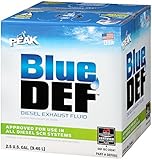
- One gallon of is used approximately every 300 miles
- A truck with a 20 gallon DEF tank can go up to 6000 miles between fill-ups
- When used in an SCR system will reduce the levels of NOx emissions of those engines
- Fit type: Universal
Know which pollutant you are trying to reduce
“Diesel emissions” describes several pollutants, and a control designed for one is not automatically a solution for another.
| Pollutant | What it represents | Controls that may address it | Important qualification |
|---|---|---|---|
| Particulate matter (PM) | Smoke and very small solid or condensed particles in the exhaust | Combustion maintenance, a DOC in eligible applications, or a DPF | A DPF must be matched to the engine, fuel, temperature and duty cycle. |
| Nitrogen oxides (NOx) | Gases formed during high-temperature combustion | SCR with DEF, engine controls, repower or replacement | DEF helps only an SCR-equipped machine that calls for it. |
| Hydrocarbons (HC) and carbon monoxide (CO) | Products of incomplete combustion | Maintenance, improved combustion and, where listed, oxidation catalysts | Application limits differ by engine and technology. |
EPA describes Tier 4 as an integrated engine-and-fuel-control program for new nonroad diesel engines. Tier 4 is therefore not a generic bolt-on label for an existing compact machine; identify the engine and its installed control system before deciding what change is possible.
Cut avoidable idling and inefficient operation
Set an idling rule that matches the work
Shut the engine down when the operator is waiting for a truck, attachment, spotter or delivery and there is no safety, hydraulic or temperature-control reason to keep running. A written site rule should define the short periods when idling is necessary, such as controlled warm-up, cooldown after a demanding load or operation of a required safety system. The exact time limit should follow the machine manual and site conditions rather than an arbitrary universal number.
Warm up under light load, not by prolonged stationary running
Use the manufacturer’s start-up procedure. After the initial checks, bring the machine into light productive work instead of leaving it at idle for an extended period. Cold operation can increase smoke and incomplete combustion, but excessive stationary idling also wastes fuel and can prevent an after-treatment system from reaching its intended temperature.
Rank #2
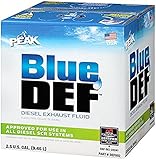
- One gallon of is used approximately every 300 miles
- A truck with a 20 gallon DEF tank can go up to 6000 miles between fill-ups
- When used in an SCR system will reduce the levels of NOx emissions of those engines
Match engine speed and attachment to the task
- Use the lowest engine speed that provides the hydraulic flow and breakout force the attachment requires.
- Avoid repeated full-throttle bursts for light grading, positioning or travel.
- Keep buckets, forks and other loads within the rated capacity; overloading causes high fuel use and smoke.
- Plan truck loading and material movements to reduce waiting with the engine running.
- Keep travel routes and work areas clear so the machine does not make unnecessary passes.
Use the machine’s installed controls correctly
If the machine has an automatic idle-control, regeneration or emissions-warning function, operators need to understand its indicators and the conditions required for it to operate. Do not defeat, unplug or bypass an emissions control. A warning that returns after the prescribed procedure is a maintenance issue, not a reason to continue operating indefinitely.
Maintain the engine, fuel system and exhaust
Preventive maintenance is an emissions measure as well as a reliability measure. A restricted air filter, leaking injector, poor fuel quality, low compression or malfunctioning turbocharger can increase smoke and fuel consumption. Follow the machine manufacturer’s intervals and keep records that show what was inspected, when and at what hour reading.
| Maintenance area | What to check | Emissions reason | Action when abnormal |
|---|---|---|---|
| Air intake | Air filter restriction indicator, intake hoses, clamps and turbocharger plumbing | Insufficient or leaking air can cause incomplete combustion and smoke. | Replace or repair using the specified parts; do not wait for visible black smoke. |
| Fuel system | Fuel quality, water or contamination, injector condition and leaks | Poor atomization or contaminated fuel can raise PM and HC. | Drain contaminated fuel safely and have injectors or the pump tested when symptoms persist. |
| Lubrication and cooling | Oil level and grade, coolant level, radiator and cooler cleanliness, thermostat and temperature indications | Incorrect temperature or lubrication can worsen combustion and damage controls. | Correct the fault before returning to heavy work. |
| Exhaust and after-treatment | Leaks, loose joints, sensor wiring, warning lamps and soot or ash service requirements | Leaks bypass controls; neglected filters can increase backpressure or fail to regenerate. | Use the manual’s diagnostic and cleaning procedure or a qualified technician. |
| Operating records | Idle hours, fuel use, regeneration events, fault codes and smoke complaints | Trends reveal a problem before a component fails. | Compare records with the machine’s normal pattern and investigate changes. |
Use the fuel grade required by the engine and any installed exhaust technology. Fuel sulfur limits are not interchangeable between systems; a retrofit listing may require ultra-low-sulfur diesel (ULSD) at 15 parts per million sulfur or less.
Train operators to protect air quality
A short practical briefing is more effective than a general reminder to “drive clean.” Include these points in the site induction and refresh them when operators change:
Rank #3

- Meets GM Original Equipment specifications to be approved for use in GM vehicles as well as in non-GM diesel vehicles that have an SCR (Selective Catalytic Reduction) system to meet regulated NOx emissions (Based on EPA certification testing. Your actual emissions will vary based on several factors including temperature, terrain, and driving conditions).
- High quality formula is made from high purity urea and deionized water.
- Meets API regulations and ISO 22241 standard for purity and concentration
- Nozzles sold separately
- Recognize the difference between a productive task and waiting with the engine running.
- Use the prescribed start-up, shutdown, regeneration and fault-code procedures.
- Select engine speed and attachment settings for the actual load.
- Report blue, white or black smoke, unusual fuel consumption, poor power, repeated regeneration or warning lamps promptly.
- Never remove a filter, catalyst, sensor or emissions label to keep a machine working.
- Log idle hours and significant faults so supervisors can identify recurring causes.
Supervisors can reinforce the training by reviewing idle time and fuel use during normal safety or production meetings. A reduction in idle hours is useful evidence that an operating change is working, but it is not a substitute for an emissions test or a verified technology requirement.
When a verified retrofit makes sense
Retrofit hardware is not one-size-fits-all. EPA’s verified nonroad technology listings specify the engine category, fuel, horsepower or particulate range, exhaust temperature and other operating conditions for each system. A listing applies to the qualifying application, not to every machine that looks similar.
DOCs and DPFs
A diesel oxidation catalyst can oxidize certain gaseous pollutants and organic components of PM in applications for which it is listed. A DPF is intended to capture particulate matter and normally requires the exhaust to reach a suitable temperature and the filter to be serviced as specified. Neither device should be selected solely because the machine is a diesel or because the product claims a high percentage reduction in a different application.
Recommended Free Tools
Examples of how narrow the listings can be
| EPA-listed example | Application limits stated in the listing | Reported result under those criteria | What an owner must verify |
|---|---|---|---|
| Clean Diesel Technologies Purifilter DPF | Certain nonroad Tier 1–3 diesel engines, a specified PM range and 100–603 horsepower; ULSD at 15 ppm sulfur or less. | 90% PM reduction for the qualifying application. | Exact engine family, horsepower, PM level, fuel sulfur and operating conditions. |
| Caterpillar CGP system | Limited to specified M313D and M315D wheeled excavators with specified Tier 3 engine families and a defined exhaust-temperature profile. | EPA states reductions for the listed applications. | Model, engine family and the required temperature profile; a similar excavator is not automatically eligible. |
| Donaldson NR-LNF DPF | Specified nonroad Tier 1 or Tier 2 engines, ULSD and defined exhaust-temperature requirements. | 90% PM reduction for qualifying applications. | Engine tier and range, fuel sulfur and measured or documented duty-cycle temperature. |
The percentages in this table are technology-listing claims under stated criteria. They are not a guarantee for an arbitrary compact loader or excavator, and they do not describe NOx reduction unless the listing specifically says so.
Rank #4
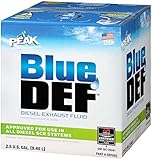
- Blue Def DEF002-2PK Diesel Exhaust Fluid, 2.5 Gallon, 2 Pack
Build a retrofit qualification file
- Photograph the engine identification plate and record the complete engine family and serial information.
- Confirm rated horsepower, emissions tier, fuel specification and any existing DOC, DPF, SCR or electronic controls.
- Measure or document the exhaust-temperature profile during the real work cycle, including low-load periods.
- Estimate PM, NOx, HC and CO priorities from smoke observations, fault history, site requirements or a professional emissions assessment.
- Check the current EPA or CARB verified listing for every application condition, including fuel sulfur and maintenance requirements.
- Ask the installer to document backpressure, mounting, regeneration, cleaning intervals, sensor connections and warranty responsibilities.
- Obtain a written statement that the proposed system is approved for that exact engine and duty cycle before purchase.
If no listed device fits, do not infer that a universal filter is safe. An unsuitable DPF can plug, create excessive backpressure or fail to regenerate; an unsuitable catalyst may provide little benefit.
Compare retrofit, repower and replacement
The right choice depends on the pollutant target, machine condition and remaining service life, not just the purchase price of a device. Consider the following axes for every option:
| Decision factor | Verified retrofit | Repower | Equipment replacement |
|---|---|---|---|
| Best fit | A sound machine with a listed technology application and suitable temperatures. | A valuable chassis whose engine can be replaced with a compatible lower-emission configuration. | A machine near the end of useful life or one with no suitable retrofit or repower path. |
| Pollutant focus | Often PM with a DPF or DOC; exact pollutants depend on the listing. | Can address the emissions performance of the engine as a system. | Provides the emissions configuration of the selected new machine. |
| Main technical risk | Mismatch of engine family, fuel, temperature or duty cycle. | Integration of cooling, hydraulics, electronics, exhaust and certification requirements. | Higher capital commitment and disposal or redeployment of the old unit. |
| Maintenance impact | Adds inspection, cleaning, backpressure or regeneration requirements. | Requires maintenance for the new engine and integrated controls. | Uses the replacement model’s maintenance and fuel requirements. |
| Economic question | Is the machine reliable enough to justify installation and future servicing? | Does the chassis have enough remaining life to recover the project cost? | Will lower fuel use, downtime and emissions justify the acquisition? |
No generic price can be assigned from the machine category alone. Obtain comparable quotes that separate hardware, installation, temperature or backpressure testing, engine work, downtime, future cleaning and disposal. Include the machine’s remaining hours and expected workload; a low-cost retrofit is poor value if the chassis is unreliable or rarely used.
Understand DEF and SCR before buying fluid
Many nonroad machines use SCR and DEF to reduce NOx. DEF is a consumable for that emissions system, not a universal diesel additive and not a repair for a failed injector, clogged filter or warning light.
Best Value

- ENGINEERED: For use in Selective Catalytic Reduction (SCR) systems on diesel engines
- EFFICIENCY: BlueDEF diesel exhaust fluid is key to helping improve fuel economy by up to five percent
- PROTECTION: Diesel exhaust fluid is non-toxic and safe to handle
- QUALITY: Stable, colorless and odorless, and also meets ISO Standards 22241 for purity and composition
- EFFORTLESS: Easily Inject the fluid into your exhaust stream with a specialized dosing module
- Read the machine manual and inspect the emissions label or dashboard for an SCR/DEF system.
- Confirm the specified DEF standard, storage conditions and refill procedure.
- Use only the fluid called for by the equipment manufacturer; do not pour DEF into the diesel tank.
- Keep the DEF tank and fill equipment clean and prevent contamination.
- Follow the manual when a low-level, quality or dosing warning appears; continued operation may lead to a power limitation.
If the machine has no SCR system and no DEF specification, adding DEF will not reduce its emissions and may damage the equipment.
Funding and program eligibility in the United States
EPA’s Diesel Emissions Reduction Act (DERA) project categories include engine replacement, equipment replacement, verified retrofit and idle-reduction technology for eligible projects. Construction equipment is covered within the nonroad category, but eligibility, cost share, application timing and approved activities depend on the current grant notice and jurisdiction.
Before planning around a grant, check the active DERA notice, confirm that the owner and equipment qualify, preserve baseline engine and usage records, and obtain the required technology verification or manufacturer documentation. Treat a funding possibility as a financing option to be verified, not as an entitlement or a reason to select hardware first.
Quick wins for a faster PC:
Scan for outdated or missing drivers - takes under a minuteDriver Scan →Clear out junk files and repair common Windows errorsFree Scan →Measure whether the change is working
Use a simple baseline before changing practice or hardware. For at least several comparable work cycles, record engine hours, idle hours, fuel consumed, task mix, ambient conditions, warning events and visible smoke observations. After the change, collect the same fields and separate production changes from emissions changes.
- Operational project: Look for lower idle hours and fuel use at equivalent production, with no rise in fault codes or downtime.
- Maintenance project: Look for restored power, stable temperatures and reduced smoke after the underlying fault is corrected.
- Retrofit project: Confirm installation records, required fuel, exhaust temperature and service intervals; use an appropriate emissions measurement when a quantified result is required.
- Repower or replacement: Compare fuel, idle time, maintenance events and productive hours with the old machine under similar work.
A manufacturer display or fleet spreadsheet can show trends, but it does not turn a technology-listing percentage into a measured result for your machine.
Troubleshoot common symptoms
| Symptom | Likely areas to check | Immediate response |
|---|---|---|
| Black smoke under load | Restricted intake, leaking boost hose, injector or fuel-system problem, overload or incorrect engine setting | Reduce load if safe, inspect the air system and schedule diagnosis; do not mask the symptom with an unverified filter. |
| Frequent regeneration or rising backpressure | Low-load duty cycle, ash accumulation, failed temperature sensor, excessive PM production or incorrect fuel | Follow the manual’s regeneration and service procedure and have the system inspected before continued heavy use. |
| DEF or SCR warning | Low or contaminated DEF, dosing fault, sensor fault or an emissions-system failure | Use the specified diagnostic path; adding random additives or bypassing the system is not a remedy. |
| White or blue smoke | Cold operation, coolant intrusion, oil consumption, injector or compression problem | Stop prolonged idling and obtain mechanical diagnosis, especially if the smoke persists at operating temperature. |
| Retrofit installation does not reach its required temperature | Duty cycle is too light, the system is oversized or the installation does not match the listing | Stop treating the device as compliant until the installer verifies the application and proposes a documented correction. |
What EPA’s new-engine standards do—and do not—tell you
EPA states that it finalized standards in 2004 intended to reduce particulate matter and nitrogen oxide emissions from new nonroad diesel engines by more than 90 percent when fully implemented. That statement describes the intended effect of the standards on new engines; it is not a measured reduction for an individual compact machine or retrofit.
For an existing unit, the practical question remains configuration and use: which engine family is installed, how it is operated, what fuel it receives, what temperatures it reaches and how much useful life remains. Those facts determine whether operating changes are sufficient or whether a verified control, repower or replacement is justified.
Free tools Windows power users keep installed
One-click scans. No signup required.
Quick Recap
Product prices and availability are accurate as of the date/time indicated and are subject to change. Any price and availability information displayed on Amazon at the time of purchase will apply.

