For a first playthrough, use the mainline games in release-oriented order. That sequence protects the intended reveals, lets you see mechanics develop naturally, and makes each reference easier to understand. Treat chronological order as an optional replay route, not the default.
Remakes and spin-offs need a separate decision. A remake may replace an original, expand it, or continue it; a spin-off may require several mainline entries or may be entirely optional. Check that scope before inserting either one into your sequence.
| # | Preview | Product | Price | |
|---|---|---|---|---|
| 1 |

|
Rune Factory Guardians of Azuma Standard Edition Nintendo Switch | $15.00 | Buy on Amazon |
| 2 |

|
Tales of Berseria: REMASTERED - Nintendo Switch | $29.98 | Buy on Amazon |
| 3 |
|
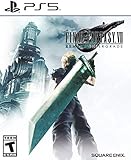
FINAL FANTASY VII REMAKE INTERGRADE | $31.90 | Buy on Amazon |
| 4 |

|
The Last Remnant -Xbox 360 | $18.83 | Buy on Amazon |
| 5 |

|
FINAL FANTASY I-VI Collection Anniversary Edition - 2024 (NSW) | $47.98 | Buy on Amazon |
As an Amazon Associate I earn from qualifying purchases.
The short answer: start with the mainline release path
When a JRPG series has numbered or clearly designated mainline entries, play those entries in the order they were originally released unless you have a specific reason to do otherwise. Release-oriented play preserves three things that chronological order often disrupts:
Quick wins for a faster PC:
Repair Windows errors before they cause bigger problemsFix Now →Scan for outdated or missing drivers - takes under a minuteDriver Scan →Clear out junk files and repair common Windows errorsFree Scan →- Spoiler control: later games can reveal the origin of a character, faction, or event that an earlier game deliberately presents as a mystery.
- Continuity prerequisites: a sequel can assume that you understand the previous game’s terminology, world state, or ending.
- Mechanical context: systems that feel basic in an older game may be refinements of ideas introduced earlier. Playing in release order shows that progression instead of making older mechanics feel like unexplained regressions.
Do not treat every game carrying the same logo as a required chapter. First identify the mainline spine, then classify each additional release as a remake, expanded edition, continuation, direct prequel or sequel, or independent spin-off. Your final route should reflect those relationships rather than a simple list of launch dates.
#1 Best Overall
- Bold New Abilities and Weapons; As an Earth Dancer, use the power of dance, sacred treasures, and fresh weapons to undo Blight's damage
- It Takes a Village; Mind the farm, rebuild entire villages, and revive the gods
- Your Fantasy Japanese Life; Experience Japanese-inspired character designs from festivals and events to monsters
- Romance and Relationships; Choose male & female protagonists, then befriend or romance the eligible candidates
- Recruit these new friends to aid you in battle, too
Release order versus chronological order
Why release order is the safer first route
Release order is the sequence in which the writers, designers, and original audience encountered the story. A prequel released years later may explain a famous event, but it can also assume that you already recognize the people involved. Starting with that prequel may turn a dramatic reveal into ordinary background information.
Release order also avoids abrupt jumps in presentation. Older entries can look and play differently from current games, but the transition is easier to understand when you have seen the series evolve. You can then decide whether an older title’s limitations matter to you, rather than judging it against a newer entry you played first.
When chronological order makes sense
Chronological order is useful for a second run, for readers who value in-universe history above reveal timing, or for a series whose publisher explicitly presents a unified timeline. It can make a fictional history easier to follow, but it may reveal backstory before the original game intended you to know it.
PC Slower Than It Used to Be?
A free scan shows the junk files, broken settings and background clutter dragging Windows down - then fixes them in one click.Free scan · Windows 10 & 11Crashes, No Sound, or Screen Glitches?
Random freezes, missing sound and display glitches usually trace back to one bad driver. Find and replace yours safely.Free scan · under a minuteBefore choosing chronology, verify that the dates actually describe one continuity. Some series reuse names, settings, or gameplay systems without placing every release in the same story. A game can be a thematic companion rather than a timeline chapter.
A practical route comparison
| Route | Best for | Main benefit | Main risk |
|---|---|---|---|
| Release-oriented mainline | First-time players | Protects reveals and teaches the series in the order it was designed | Older mechanics and presentation may require patience |
| In-universe chronology | Returning players and lore-focused readers | Shows events in fictional historical order | Can spoil mysteries and create large gameplay jumps |
| Remake-project sequence | Players choosing a modern reinterpretation | Provides a consistent, current presentation | A remake may cover only part of the original arc |
| Completionist route | Players who want every related release | Reveals optional connections and alternate viewpoints | Prerequisites, tonal shifts, and redundant stories can make the route unwieldy |
Classify every release before you place it
Use the following labels instead of assuming that “newer” means “next.” A release can fit more than one label, but its most important story relationship should determine where you play it.
Mainline entry
A mainline entry advances the central numbered or officially designated sequence. Put it after the preceding mainline game in release-oriented order. If the publisher separates several arcs or subtitles, follow that explicit separation rather than forcing every title into one timeline.
Rank #2
- A Tale of Emotion Versus Reason - Follow the journey of Velvet as she embarks on a journey of vengeance towards the murderers of her brother, torn between the person she was and the path her rage has set before her. Can she hold onto who she was, or will vengeance consume all that remains?
- Exhilarating Battle System - Customize your skills to create unique playstyles and defeat your foes by unleashing a flurry of attacks. Engage in exhilarating battles by stealing “Souls” from your enemies to empower your combos.
- A Modern, High-Quality Retelling - Play with new quality-of-life updates, including destination icons, the ability to toggle encounters, early grade shop access, and more.
- An All-Around Experience - Enjoy the immersion with the DLC*, which was launched alongside the original release, including costumes, useful items, and other fun extras.
Expanded edition
An expanded edition adds quests, characters, balance changes, or an alternate ending to a game that already exists. Play the expanded edition in place of the base release when possible; buying or finishing both is usually unnecessary unless you specifically want to compare versions. If the added story is sold as a separate expansion, finish the base game first and then start the expansion.
The Tool Desk
Outbyte PC Repair FREERepair Windows errors before they cause bigger problemsFix Now →Outbyte Driver Updater FREEScan for outdated or missing drivers - takes under a minuteDriver Scan →Remake
A remake can be a replacement, an expansion, or a continuation disguised as a retelling. Check its scope before treating it as the definitive version. A one-for-one remake can stand in for the original on a first run, while a reconstruction that changes structure or covers only one segment should be treated as its own route.
Direct sequel or prequel
A direct sequel normally follows the game whose ending it continues, even if it was released on another platform or under a different subtitle. A direct prequel can be placed after the game it enriches for a first playthrough, then moved earlier for a chronological replay.
Continuity-heavy spin-off
A continuity-heavy spin-off assumes knowledge of one or more mainline entries. Place it after the latest entry it references. If it depends on a specific ending, character arc, or world change, wait until that prerequisite is complete.
Independent spin-off
An independent spin-off uses the setting, combat ideas, or characters without requiring the central plot. Mark it optional and place it after the nearest shared-world entry. You can also use it as a break between major games when its story does not alter your understanding of the mainline.
How to handle remakes and expanded releases
Ask what the remake actually covers
Look for the publisher’s description, not just the word “remake” in a store listing. Determine whether the new release:
Rank #3
- Immerse yourself in the city of Midgar like never before, with improved textures, lighting, and background environments
- Players can switch between two game modes: "Graphics Mode" prioritizes 4K high-resolution graphics; "Performance Mode" prioritizes smooth action at 60 frames per second
- Capture and share your memorable moments from the game with a fully customizable “Photo Mode”
- Players can enjoy immersive battles by using the DualSense PlayStation 5 controller with its haptic feedback integration
- Play the brand-new episode featuring Yuffie and experience new combat and gameplay additions
- replaces the complete original story;
- retells and expands one portion of a larger story;
- changes the continuity and expects familiarity with the original; or
- forms one part of a multi-release project.
That distinction changes your route. If the remake is complete and self-contained, it can be your first version. If it is one installment in a larger reconstruction, you still need to decide whether to play the original for the complete arc or wait until all remake parts are available.
Keep multi-part remakes in the publisher’s sequence
Do not reorder a split remake by fictional dates. Play its parts in the sequence stated by the publisher. Square Enix describes the Final Fantasy VII Remake project as a three-part reconstruction of the 1997 game on its official series portal: Square Enix Final Fantasy VII Remake Series Portal. That means the project is a distinct route, not a one-for-one replacement for the complete original arc.
A trilogy package can make that route easier to follow when it is sold in your region. Square Enix lists a trilogy edition for the remake project on its official product page: Square Enix Final Fantasy VII trilogy edition information. Availability, language options, platform, and included discs or download codes can vary by region, so confirm those details before purchasing.
Place separate expansions after their base game
If an expansion is a new chapter attached to an existing game, finish the base game’s required story first. Starting an expansion early can expose characters, locations, or systems that the base game introduces later. Follow any in-game level or quest recommendation only after checking whether the expansion is narratively locked to an ending.
Where spin-offs belong
Use prerequisites, not branding
A familiar logo does not establish a required order. Read the game’s official synopsis and identify the entries it assumes. If it revisits an event from the mainline, play that mainline entry first even when the spin-off was released earlier or is set earlier.
Separate story-critical and optional material
Some spin-offs add context but are not needed to understand the next numbered game. Label these “optional” in your personal checklist. A completionist can place them after their nearest prerequisite; a first-time player can skip them without damaging the main route.
Rank #4
- The Last Remnant for the Xbox 360 is the first role-playing game in a new series from Square Enix
- Breathtaking visuals, a mysterious storyline, and a massive battlefield provide hours of exciting gameplay
- Battles are fought between multiple friendly and enemy unions -- groups of up to five characters
- Commands change depending on the current battle situation or the distance and positions of friendly and hostile unions
- In Deadlock gameplay, the two unions must fight each other until one union has been completely destroyed
Watch for spoiler-heavy cameos
Crossovers and side stories often introduce characters from several games. If a spin-off includes a character whose identity is a later reveal, defer it until the latest relevant mainline entry. When the publisher gives no clear prerequisite, the conservative choice is to finish the mainline arc first.
A step-by-step method for building your own order
- List the releases. Record every game, remake, expansion, and spin-off you are considering. Include platform-specific versions only when their content differs.
- Mark the mainline spine. Identify the numbered or publisher-designated core entries. This is your default first-playthrough route.
- Record each release date and fictional placement. Keep both fields; they answer different questions and prevent accidental chronological ordering.
- Check continuity prerequisites. Note the exact game an entry assumes, including an ending or a particular character arc.
- Classify remake scope. Decide whether each remake is a replacement, expansion, continuation, or installment in a multi-part reconstruction.
- Place expansions after their base game. Do not move them earlier merely because their setting occurs earlier.
- Place continuity-heavy spin-offs after prerequisites. Put independent spin-offs after the nearest shared-world entry and label them optional.
- Choose your route goal. Select first-playthrough release order, chronological replay, modern-remake route, or completionist route.
- Check practical access. Confirm platform, language, region, save-transfer support, and whether a collection contains every part you expect.
- Write a stopping point. If a remake project is incomplete or a spin-off is unavailable, finish the accessible mainline entry rather than delaying the entire series.
Worked example: Final Fantasy VII
Final Fantasy VII demonstrates why one universal order can be misleading. There are two valid starting paths, and they serve different goals.
Original-continuity route
Start with the original Final Fantasy VII. Square Enix maintains a separate title listing for that release at the official Final Fantasy VII title page. After completing it, add related entries only after checking what each one assumes. This route gives you the complete original release path and preserves the context in which its story was first presented.
Remake-project route
Choose the remake series if you prefer its modern presentation, then follow the parts in Square Enix’s stated order. Because the project is a three-part reconstruction, the first part should not be described as replacing the entire 1997 game. Treat the remake project as its own sequence and keep its installments together.
Choosing between the two
| Your priority | Recommended starting point | What to understand first |
|---|---|---|
| Experience the original release arc | Original Final Fantasy VII | Later related entries may require prerequisites; check them individually |
| Use the current remake presentation | First part of the remake project | It covers only part of the reconstructed arc |
| Play the complete remake project | Remake parts in publisher-stated sequence | Confirm that every part and edition is available in your region |
| Collect a physical package | Listed trilogy edition, where available | Verify platform, region, contents, and language before buying |
Do not alternate between the original and remake after every chapter. Their structures and assumptions are different, so switching mid-route can create unnecessary comparisons and spoil discoveries intended for one version.
What’s actually slowing this PC down?
Pick the symptom - the matching free tool is one click away.
Current availability and edition checks
“Available” can mean different things across countries. Before you commit to a route, verify:
Best Value
- The games that inspired a generation come to life once more, in the ultimate 2D pixel remaster!
- These games are newly developed remaster editions based on the original titles. Some of the changes and additional elements found in other remakes of these games are not included.
- The Anniversary Edition includes a pixel character sticker sheet.
- Universally updated 2D pixel graphics, including the iconic FINAL FANTASY character designs created by Kazuko Shibuya, the original artist and current collaborator.
- Beautifully rearranged soundtrack in a faithful FINAL FANTASY style, overseen by original composer Nobuo Uematsu.
- Platform: the exact console or PC storefront, including whether backward compatibility is supported.
- Region: release date, language, age rating, and physical-stock status can differ by market.
- Edition contents: a deluxe or trilogy package may include download codes, separate discs, or only selected installments.
- Completion status: a multi-part remake may not yet cover the whole original story.
- Save compatibility: transferring progress between editions is not automatic unless the publisher documents it.
Use official publisher pages for scope and sequence, then check your local console store or retailer for the edition you can actually obtain. A store page may use “complete” as a marketing term, so compare its contents with the publisher’s list.
Common ordering mistakes and fixes
Starting with the newest game because it looks easiest
Problem: you may encounter unexplained references or spoilers for older entries. Fix: confirm whether the newest release is self-contained. If it is a sequel or continuity-heavy spin-off, move it after its prerequisites.
Treating a remake as the whole series
Problem: a remake project may reconstruct only one segment. Fix: check the publisher’s scope statement and decide whether you want the original-continuity route, the remake-project route, or both.
Free tools Windows power users keep installed
One-click scans. No signup required.
Putting prequels first automatically
Problem: chronological placement can spoil the mystery that the original release expected you to solve. Fix: reserve chronological order for a replay unless the series clearly presents the prequel as an independent entry.
Playing every spin-off before the next mainline game
Problem: optional material delays the central story and may introduce contradictory assumptions. Fix: require a documented prerequisite before inserting a spin-off; otherwise mark it optional and return to the mainline.
Assuming an expanded edition requires two full playthroughs
Problem: the base and expanded versions may duplicate most content. Fix: use the expanded edition in place of the base game unless you specifically want a version comparison.
Decision checklist
Use this checklist whenever a new entry, remaster, or spin-off is announced:
Recommended Free Tools
- Is it mainline, a sequel, a prequel, an expansion, a remake, or a spin-off?
- Which exact game does it assume?
- Does it replace the original story, expand it, or continue it?
- Does the publisher state a sequence for multiple parts?
- Would playing it first reveal a later character, event, or ending?
- Is it required for the next mainline entry, or merely optional context?
- Can you obtain the correct edition in your region and on your platform?
- Are you choosing a first-playthrough route or a chronological replay?
If you cannot answer the prerequisite question, leave the release out of the first route. You can add it after the mainline game once its continuity role is clear.
Quick Recap
Product prices and availability are accurate as of the date/time indicated and are subject to change. Any price and availability information displayed on Amazon at the time of purchase will apply.

