To loop Indian classical flute meditation music on YouTube Live, play a recording repeatedly in an encoder such as OBS Studio and send that continuous feed to YouTube. For one prepared file, add it as an OBS Media Source and enable Loop. For a rotation of separate tracks, use an OBS VLC Video source with a playlist. Before going live, clear the rights for the specific recording and test the transition between plays.
Choose a single recording or a playlist
- One continuous arrangement: Prepare a video file containing the flute recording, with a still image or animation if desired. Add it to OBS as a Media Source and enable its Loop option. OBS supports common video formats including MP4, MOV, MKV and WebM, as well as audio formats including MP3, AAC, OGG and WAV. See OBS Media Sources.
- Several tracks: Use an OBS VLC Video source and add the files in the desired order. OBS documents Loop Playlist as on by default. This is useful when tracks should remain separate and be managed individually; VLC must be installed for this source.
The repeat control is in OBS, not YouTube: OBS keeps playing the source while the encoder sends its output as a live feed. YouTube does not create the loop from a track uploaded to the broadcast.
| # | Preview | Product | Price | |
|---|---|---|---|---|
| 1 |

|
MYTHIC DREAMER - MUSIC FOR NATIVE AMERICAN FLUTE | $11.54 | Buy on Amazon |
| 2 |

|
PRAYERS ON THE WIND NATIVE AMERICAN & SILVER FLUTE | $15.00 | Buy on Amazon |
| 3 |
|
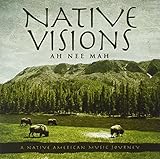
Native Visions: A Native American Music Journey | $13.49 | Buy on Amazon |
| 4 |

|
Canyon Trilogy: Native American Flute Music | $18.72 | Buy on Amazon |
| 5 |

|
Sacred Spirit: Chants and Dances of the Native Americans | $12.69 | Buy on Amazon |
As an Amazon Associate I earn from qualifying purchases.
Set up the loop in OBS and connect YouTube
- Prepare your media. Make a video file with the recording and any intended visual, or gather the individual files for a playlist. Listen through the ending and beginning together so you can identify pauses, abrupt cuts or silence at the loop point.
- Create a scene and add the source. In OBS, create or select a scene. In the Sources panel, select + and choose Media Source for a single file, or VLC Video Source for a playlist. Select the recording or add tracks in playback order.
- Enable repetition. For a Media Source, open its properties and turn on Loop. For a VLC Video source, check the playlist loop setting; OBS documents Loop Playlist as on by default. Make sure the audio is not muted in the source, OBS mixer or desktop output.
- Set up YouTube streaming. In YouTube Studio, open the live-stream setup and choose the encoder workflow. Copy the stream key shown for the broadcast into OBS under Settings > Stream, selecting YouTube as the service. Treat the key like a password: do not share it or include it in a public recording.
- Check the incoming preview before going public. Start the encoder connection and inspect YouTube’s preview. Confirm the picture, audio level and source are present. Let the recording reach its end and restart at least once; correct any blank frame, silence, unwanted gap or abrupt cut before starting the public broadcast.
- Start and monitor the broadcast. Start streaming from OBS, then use YouTube’s live controls to begin the broadcast if the setup requires it. Keep an eye on YouTube’s status and OBS’s connection indicators, especially during the first loop transition.
OBS playback settings control local repetition, but the encoder still has to send that output to YouTube. A loop setting alone does not make a YouTube stream live.
Clear rights for the actual recording
Confirm that you have permission to broadcast the specific performance and sound recording, or that the material is genuinely in the public domain and usable for this purpose. An old or traditional composition does not automatically make a modern performance or recording free to stream. For Indian classical music, check the composition and the particular recording separately; the available guidance does not establish a blanket permission or a specific Indian-law license.
#1 Best Overall
- Check that a license explicitly covers YouTube livestreaming, the territories where the stream will be available, and any replay that remains on the channel.
- A track described as “free” online is not necessarily cleared for a live broadcast. YouTube says that safe music is public-domain music or music used with the copyright owner’s permission, and recommends checking the terms and permitted uses of third-party music licenses. Its tips to find safe music also point creators to the YouTube Audio Library.
- If a licensed recording may match Content ID, ask the rights owner to add your channel to its allowlist. A license and an allowlist are distinct practical issues: YouTube may still detect a match unless the owner has taken the relevant step.
YouTube scans live streams for third-party content. When it detects a match, it may replace the stream with a placeholder and warn the creator to stop using the material; if the content continues, the broadcast may be interrupted or terminated. Read YouTube’s guidance on copyright issues with live streams before using music you did not create or control.
Troubleshoot a loop that will not repeat cleanly
- The recording stops at the end: Reopen the Media Source properties and verify Loop is enabled. For a playlist, verify its loop setting and that the VLC Video source contains the intended files.
- There is a pause, blank frame or audio cut between plays: Check the source file’s ending and beginning, then test a complete transition in the YouTube preview. The loop control repeats the file; it does not remove silence or edit an imperfect seam.
- YouTube preview has no sound: Check that the media source is playing, its audio is not muted, and its level is active in the OBS audio mixer. Then check the incoming preview again before starting the public broadcast.
- The source is not visible: Confirm the source is in the active scene and visible in the Sources list, and check that it is not covered by another source. Verify the selected media file opens and plays.
- The broadcast is interrupted or replaced: Check YouTube’s notice for a copyright match. Stop using material you are not authorized to broadcast; if you do have a license, contact the rights owner about allowlisting your channel.
- YouTube does not receive the encoder feed: Confirm OBS is connected to YouTube with the correct stream key, and check the live setup’s status and preview. If the key may have been exposed, reset it in YouTube Studio and update OBS with the replacement.
Or let it run in the cloud
If you do not want OBS and a computer to stay on at home, StreamNeo is a cloud service for keeping a YouTube channel live from uploaded videos. Upload the recording or build a playlist, add your YouTube stream key once, and go live. The cloud keeps the loop running, so nothing has to stay on at home. Your upload streams as made, up to 4K 60fps, at one price per slot; if YouTube drops the stream, StreamNeo attempts automatic recovery. The first day is free with no card. Monthly pricing is $9.99 per month. It plays uploaded videos rather than broadcasting a camera feed. You still need the rights to the music you stream. Start your free first day with StreamNeo.
Quick Recap
Best Value
- SACRED SPIRITS
- R&P INTERNACIONAL
- INTERNATIONAL
- MUSIC
Rank #3
- Shrink-wrapped
Product prices and availability are accurate as of the date/time indicated and are subject to change. Any price and availability information displayed on Amazon at the time of purchase will apply.




