The Tool Desk
Outbyte PC Repair FREERepair Windows errors before they cause bigger problemsFix Now →Outbyte Driver Updater FREEScan for outdated or missing drivers - takes under a minuteDriver Scan →Messier 30 (M30), also cataloged as NGC 7099, is a compact globular cluster in Capricornus. Enter M30 or NGC 7099 in a current planetarium app or sky chart, then verify the position at right ascension 21h 40.4m and declination −23° 11′. NASA identifies October as the best general observing month, while Celestron’s checklist places it in the autumn season. Binoculars are sufficient to see the cluster as a deep-sky object, although its visibility and apparent detail depend on your latitude, local horizon, sky transparency and optics.
What M30 is
M30 is a globular cluster: a gravitationally bound, roughly spherical swarm of very old stars. It lies in the constellation Capricornus and has the alternate catalog designation NGC 7099, so either name should lead a modern chart to the same object.
As an Amazon Associate I earn from qualifying purchases.
NASA describes M30 as approximately 28,000 light-years away, about 90 light-years across, and containing several hundred thousand stars. NASA also gives an age of about 13 billion years. Those figures are NASA’s stated properties; different catalogs can use different methods and rounding, so they should be treated as attributed estimates rather than a single independently reconciled set of measurements.
Quick wins for a faster PC:
Fix the driver behind crashes, sound loss and screen glitchesFind Drivers →Clear out junk files and repair common Windows errorsFree Scan →Scan for outdated or missing drivers - takes under a minuteDriver Scan →The cluster is a worthwhile target because it combines an accessible location in the sky with unusual stellar history. Hubble observations reported by NASA identified blue stragglers associated with near head-on stellar collisions and with binary systems in which one star transfers hydrogen from a more massive companion. The object you see is therefore not just a faint patch: it is a laboratory for studying how dense stellar systems evolve.
#1 Best Overall

- 【Excellent Optics】Astronomical telescope features 80mm aperture 600mm(f/6.7) focal length-The big aperture can capture more light; high transmission multi-fully coated optical lens can improve light transmittance, reduce the reflection of light. It will bring you more bright and clear images.
- 【Portable & Stable】Our refractor telescope has a backbag, an adjustable aluminum tripod and an upgraded phone adapter. All accessories can be packed into the bag, which is convenient for you to carry and storage for traveling. The tripod is stable and the height can adjust from 17.7" to 52", which is suitable for adults and kids. With the phone adapter, you can take amazing photos through your phone.
- 【Easy to Operate】 This telescope is easy to assemble even for astronomy beginners and kids. You can set up easily with the detail installation manual and video. No tools are required. It’s a great astronomy gift telescope for adults, astronomy enthusiasts, beginners and kids 8-12.
- 【Optimum Magnification】Our telescope for kids and adults is equipped with two replaceable excellent-quality eyepiecesa (20mm and 9mm) for 30X and 66X magnification. A moon filter transmits only 13 percent of the incoming light and improving contrast. Also with 5x24 finderscope, you can locate objects easily. A great option for astronomy lovers to explore the moon, Saturn and Jupiter.
- 【Satisfaction Service】We provide 3 years satisfaction service. If you have any questions about the product and service, please feel free to contact us to get 24-hour technical support from our expert team. Whether observing moon or viewing planets, our telescope can meet your all needs. It’s a great telescope for adults & 8-12 kids & astronomy beginners.
When and where to look
Use the autumn observing window
NASA states that M30 is best observed during October. Celestron’s checklist independently labels autumn as the viewing season. These are broad seasonal guides, not guarantees that the cluster will be high enough from every location. Capricornus sits relatively far south in the sky, so observers at different latitudes can have very different maximum altitudes and horizon obstructions.
Check your exact date and location
A date-and-location-specific chart is the reliable way to determine when M30 rises, culminates and sets for you. Enter your observing site and date in the app, select M30 or NGC 7099, and use the altitude or visibility display to choose a time when the object is well above your local horizon. Avoid planning around a direction blocked by buildings, trees or hills.
Allow for sky conditions
Transparency matters more than darkness for a low-contrast deep-sky target near the horizon. Haze, smoke, humidity and thin cloud can erase a compact cluster even when the sky appears generally clear. A darker site helps, but a transparent suburban night with an unobstructed southern view can be more useful than a darker site where the target is hidden by the landscape.
Free tools Windows power users keep installed
One-click scans. No signup required.
Coordinates and chart setup
Celestron’s catalog checklist gives M30’s position as right ascension 21h 40.4m and declination −23° 11′. Use those coordinates as a verification step, not as a substitute for a current chart: the chart must also account for your time, date and location when it converts the catalog position into a point above the horizon.
Rank #2

- Superior Optics: 400mm(f/5.7) focal length and 70mm aperture, fully coated optics glass lens with high transmission coatings creates stunning images and protect your eyes. Perfect full positive telescope for astronomers to explore stars and moon.
- Magnification: Come with two replaceable eyepieces and one 3x Barlow lens.3x Barlow lens trebles the magnifying power of each eyepiece. 5x24 finder scope with mounting bracket and cross-hair lines inside make locating objects easily.
- Wireless Remote: This refractor telescope includes one smart phone adapter and one Wireless camera remote to explore the nature of the world easily through the screen and take amazing celestial images.
- Adjustable Tripod: This telescope allows for many different viewing positions with a adjustable aluminum alloy tripod and a carry bag, the telescope and tripod can fit inside the bag for easy traveling and storage.
- Satisfaction: Buy with confidence from a leading manufacturer.
- Open a current planetarium app or a reliable printed star chart.
- Search for
M30. If the result is ambiguous or missing, search forNGC 7099. - Open the object information panel and confirm that the displayed coordinates are approximately RA 21h 40.4m, Dec −23° 11′.
- Switch to the sky view for your observing location and date. Rotate the view toward the direction and altitude shown for the object.
- Zoom out until Capricornus and nearby bright reference stars are visible, then zoom back in to M30’s marker.
Printed charts can work just as well. When choosing one, check that its coordinate epoch is clear, the print is readable under a dim red light, and the chart covers the southern sky visible from your hemisphere. A free chart or app is enough to identify M30; purchasing equipment is not a requirement.
Finding M30 step by step
1. Start with the catalog name
Searching by catalog number is more dependable than trying to identify a faint smudge by eye. Search first for M30, then use NGC 7099 if your software uses NGC labels more prominently.
2. Confirm Capricornus
Use the chart’s constellation outlines to locate Capricornus. Do not rely on a generic picture of the constellation without checking the date and location, because the entire pattern rotates through the night and appears at a different altitude for different observers.
Do these 3 things before closing this tab:
1Clear out junk files and repair common Windows errors2Scan for outdated or missing drivers - takes under a minute3Repair Windows errors before they cause bigger problems3. Verify the coordinates
Read the object details and compare them with RA 21h 40.4m and Dec −23° 11′. This catches common mistakes such as selecting another Messier object, a similarly named nebula or a user-created chart marker.
Rank #3
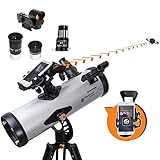
- SMARTPHONE-POWERED SKY TOUR: No experience needed! Just dock your phone, launch the StarSense Explorer app, and follow the on-screen arrows to locate stars, planets, nebulae, and more.
- PATENTED STARSENSE TECHNOLOGY: Unlike other astronomy apps, StarSense Explorer uses sky recognition technology to turn your phone into a celestial navigation system, analyzing star patterns overhead to pinpoint your telescope’s position.
- TONIGHT’S BEST TARGETS, INSTANTLY: The app generates a curated list of the top objects to see based on your time and location. See planets, bright nebulae, galaxies, and star clusters from the city—and even more from dark skies.
- SIMPLE SETUP, SMOOTH TRACKING: Features a manual altazimuth mount with altitude slow motion adjustment with a sliding rod. Follow the on-screen arrows to your target; when the bullseye turns green, you can view it clearly through the eyepiece.
- 114MM REFLECTOR WITH IMPRESSIVE VIEWS: The 4.5" Newtonian reflector with high-reflectivity coatings delivers sharp, vivid views of the Moon, planets like Jupiter and Saturn, and deep-sky favorites like the Orion Nebula and Andromeda Galaxy.
4. Move to the calculated position
Use the app’s compass or field-of-view mode to point toward the indicated azimuth and altitude. With a manual mount, begin with the widest field available and place the chart’s reference stars in the same orientation as the sky. Because no single star-hop route is established here, let the current chart supply the intermediate stars for your exact site.
5. Observe only after the target clears obstacles
Wait until M30 is comfortably above the local horizon rather than trying to view it through a layer of rooftop-level haze. If the app shows the cluster close to an obstruction, move to a different observing position before changing equipment.
What you can see with binoculars
NASA explicitly says M30 can be seen through binoculars, making them a practical starting aid. The available sources do not establish a minimum aperture or magnification, so there is no responsible single equipment threshold to promise. Binocular performance varies with aperture, optical quality, steadiness, sky brightness and the observer’s eyesight.
Make binocular viewing easier
- Brace your elbows against your body or rest the binoculars on a solid support to reduce shaking.
- Focus carefully on a bright star before moving to the cluster’s chart position.
- Use averted vision: look slightly to one side of the suspected patch so the more sensitive part of your eye receives the light.
- Give your eyes time to adapt to darkness and avoid white phone screens; use the dimmest red display practical.
- Compare the field with the chart at low zoom before narrowing the view. A faint, compact glow can be easy to lose when you magnify too quickly.
Seeing the cluster through binoculars does not mean you will resolve individual stars. M30 is a compact deep-sky target, and the sources do not support a particular visual description for a particular binocular model.
Rank #4

- Superior Optics: Dianfan astronomy telescope features a focal length of 800 mm and a fully coated 90 mm objective lens. The large aperture gathers more light for brighter, clearer views, high-transmission coatings enhance contrast and color for sharp, vivid images for an enjoyable stargazing experience
- Powerful Magnification: With two eyepieces and a 3× Barlow lens, this telescope offers 32×–240× magnification. It allows you to observe craters and lunar seas on the surface of the Moon. With the 45° zenith mirror, images are upright and correctly oriented for terrestrial viewing, making distant targets details easier to observe. The telescope is ideal for beginners and astronomy enthusiasts
- Quick Setup & Beginner-Friendly: User-friendly design with clear instructions makes assembly simple—ready in about 15 minutes. Smooth focusing helps you quickly locate targets. Perfect for families to enjoy stargazing and explore the night sky together
- Portable & Versatile: Lightweight design with a sturdy stainless steel tripod ensures stable, steady viewing. Easy to carry in the included bag, making it perfect for travel and outdoor adventures. Suitable for stargazing, birdwatching, wildlife observation, and exploring cityscapes
- Professional Astronomical Telescope: The Dianfan 90x800 telescope combines quality , functionality and reliability. It delivers high-resolution views that bring the universe closer. Designed for adults high powered, it inspires interest in astronomy and science while encouraging exploration of the starry sky
Using a telescope
A telescope is optional and can provide a more detailed view, but the available material does not identify a best aperture, eyepiece or magnification. Start with the lowest practical magnification so that you can identify the surrounding star field, then increase magnification only if the image remains sharp and steady.
A sensible telescope sequence
- Align and focus the telescope on a bright star in the same region of the sky.
- Use the chart or app to place the telescope at M30’s coordinates.
- Begin with a wide field and confirm that the star pattern matches the chart.
- Center the cluster and let the view settle before judging its appearance.
- Try a higher magnification if the air is steady; return to the wider view if the image dims, shakes or becomes difficult to track.
Do not interpret a blurry or featureless view as proof that M30 is absent. Poor focus, vibration, light pollution, haze and an obstructed horizon can all hide a compact cluster. Recheck the chart position and observing conditions before concluding that the equipment is inadequate.
How bright is M30?
Published apparent magnitudes differ between the two supplied references. NASA’s page, accessed in 2026, lists magnitude 7.7; Celestron’s checklist, also accessed in 2026, lists magnitude 7.2. Magnitude values can vary among catalogs and presentations, so neither figure should be treated as an exact promise of what your eyes will see.
| Item | NASA (page accessed 2026) | Celestron checklist (accessed 2026) |
|---|---|---|
| Apparent magnitude | 7.7 | 7.2 |
| Position | Not stated in the supplied NASA summary | RA 21h 40.4m, Dec −23° 11′ |
| Seasonal guidance | October is best | Autumn viewing season |
| Binocular visibility | NASA says it can be seen through binoculars | Not stated in the supplied checklist summary |
An apparent magnitude is a measure of total received light, not a guarantee that the object will be visible to the naked eye. Surface brightness, sky glow, haze, altitude and optical steadiness all affect detection. Use the magnitude entries to understand why M30 is considered an attainable binocular target, not to predict a specific visual size or number of resolved stars.
Best Value

- BRIGHT, SHARP VIEWS ANYWHERE: Unlike many beginner telescopes, this quality refractor features fully coated glass lenses and a 70mm aperture for crisp, clear views of the Moon, planets, and daytime scenery—all in a lightweight, travel-ready design.
- PERFECT FIRST TELESCOPE FOR BEGINNERS: Designed for adults and kids to enjoy together, this beginner-friendly telescope sets up in minutes and delivers rewarding views with no prior experience required.
- EASY NO-TOOL SETUP: No complicated assembly or tools needed. The full-height tripod and telescope tube set up in seconds and pack neatly into the included backpack—so you’re always ready to observe on the go.
- DUAL EYEPIECES FOR VERSATILE VIEWS: Includes 20mm and 10mm eyepieces for wide and close-up views of celestial and terrestrial targets. Spot craters on the Moon at night or wildlife during the day.
- BONUS BACKPACK AND SOFTWARE: Includes a padded backpack with room for accessories, a finderscope, star diagonal, eyepieces, and a free download of Starry Night software to help you identify celestial objects and plan your next stargazing session.
What to record during an observation
A short log makes later attempts more effective and separates an identification problem from a poor night of seeing. Record details that change from one session to the next.
- Date and local time, plus the observing location or approximate latitude.
- Whether you used binoculars, a telescope or unaided chart work.
- Optical details such as binocular aperture or telescope eyepiece, if known.
- Sky transparency, haze, cloud and nearby artificial lights.
- How high M30 appeared above the horizon and whether anything blocked that direction.
- Whether you detected a compact glow, a brighter center or any impression of individual stars. Describe only what you actually saw.
- The chart or app name and the catalog label used, so you can reproduce the search.
Troubleshooting a failed search
| Symptom | Likely cause | What to do |
|---|---|---|
| The chart shows no M30 | The app’s catalog layer is disabled or the search uses a different designation. | Enable deep-sky objects and search for NGC 7099 as well as M30. |
| The coordinates do not match | A different object or an imprecise user marker was selected. | Open the object data and verify RA 21h 40.4m and Dec −23° 11′. |
| You are in the right constellation but see nothing | The target is too low, hidden by terrain or lost in haze. | Wait for a higher altitude, change position and check transparency before changing optics. |
| Binoculars reveal only stars | The field is not centered or hand movement is masking a faint glow. | Brace the binoculars, refocus on a nearby bright star and return to the chart position using the widest field. |
| The telescope view is soft | Focus, vibration, atmospheric turbulence or excessive magnification. | Refocus, stabilize the mount, lower magnification and allow the image to settle. |
| The object looks unlike an online photograph | Photographs accumulate light and processing that the eye does not receive in real time. | Judge the observation against the chart and your conditions, not against a processed image. |
Choosing observing aids
Binoculars
For binoculars, compare aperture, magnification, weight and how steadily you can hold them. A theoretically brighter instrument is not automatically better if it is too heavy to keep stable. A support or seated observing position may improve the view more than additional magnification.
Printed charts and apps
Compare chart readability, coordinate epoch and hemisphere coverage. An app offers date-and-location calculations; a printed chart avoids screen glare and battery concerns. Either format can identify M30 when it includes the object and its surrounding reference stars.
Windows Errors? Fix Them Before They Spread
Repair common Windows errors and clear accumulated junk for a smoother, more stable PC - no reinstall needed.Free scan · no reinstallCrashes, No Sound, or Screen Glitches?
Random freezes, missing sound and display glitches usually trace back to one bad driver. Find and replace yours safely.Free scan · under a minuteTelescope accessories
Because no source here establishes an optimal telescope or eyepiece, choose accessories around practical handling: a stable mount, a field of view that matches your chart and controls that let you center a faint object smoothly. Treat any product-specific performance claim as separate evidence rather than as a property of M30 itself.
Planning checklist
- Select an autumn night, with October as NASA’s general best-month guidance.
- Check a forecast for transparency and cloud, then inspect the local horizon in daylight.
- Set your location and time in the planetarium app.
- Search for M30 or NGC 7099 and verify RA 21h 40.4m, Dec −23° 11′.
- Take binoculars if available, but do not treat a specific aperture or magnification as mandatory.
- Bring a dim red light, a chart backup and a way to steady the binoculars or telescope.
- Log what you saw and the conditions that shaped the view.
Why this old cluster is scientifically interesting
NASA’s description places M30 about 28,000 light-years away, roughly 90 light-years wide, with several hundred thousand stars formed about 13 billion years ago. In such a dense, ancient environment, stellar encounters can alter the normal aging sequence. NASA reports Hubble evidence for blue stragglers linked both to near head-on collisions and to mass transfer in binary systems, where one star supplies hydrogen to a more massive companion.
Those details also explain why visual observing and astrophysical interpretation are different activities. Your binoculars may show a compact unresolved glow, while Hubble resolves stellar populations and researchers infer interactions from their properties. The modest visual appearance is compatible with a rich and dynamically active system.
Bottom line for a first attempt
Use a current chart, search for M30 or NGC 7099, verify RA 21h 40.4m and Dec −23° 11′, and observe it from an unobstructed site during the autumn window, especially October. Begin with binoculars, steady them carefully and let the chart—not an assumed star-hop or a promised telescope view—guide the identification. If the cluster is missing, check altitude, haze, focus and catalog selection before buying different equipment.
What’s actually slowing this PC down?
Pick the symptom - the matching free tool is one click away.
Quick Recap
Product prices and availability are accurate as of the date/time indicated and are subject to change. Any price and availability information displayed on Amazon at the time of purchase will apply.

