Free tools Windows power users keep installed
One-click scans. No signup required.
A logged-in user who is allowed to perform an action is not automatically entitled to perform it on every tenant’s data. The server must establish which tenant or tenants the user may access, carry that trusted context through the request, and enforce the boundary wherever resources are reached. That is the difference between authorization and tenant isolation—and it answers the practical question: how do you associate tenant context with users and apply it throughout a SaaS architecture?
Authentication, authorization, and tenant isolation answer different questions
Authentication establishes who the caller is. Authorization decides whether that identity may perform an action, such as reading a record. Tenant isolation constrains which tenant’s resources the caller can reach. A caller can pass authentication and an action-level authorization check yet still cross a tenant boundary if the resource lookup is not tenant-scoped.
As an Amazon Associate I earn from qualifying purchases.
AWS puts the distinction succinctly: “Tenant isolation focuses exclusively on using tenant context to limit access to resources.” Its guidance on multi-tenant SaaS authorization and API access control and its authorization FAQ treat authorization and isolation as related but separate concerns.
Crashes, No Sound, or Screen Glitches?
Random freezes, missing sound and display glitches usually trace back to one bad driver. Find and replace yours safely.Free scan · under a minuteWindows Errors? Fix Them Before They Spread
Repair common Windows errors and clear accumulated junk for a smoother, more stable PC - no reinstall needed.Free scan · no reinstallIn practice, a permission such as “may view records” answers what the user can do. A tenant boundary answers which tenant’s records that permission can apply to. Both checks belong on the server-side path to the resource.
#1 Best Overall

- More Secured Server Mounting Setup: RM-CI-T14 by Rackmount.IT IU rack mount kits have dedicated slots to safely install compatible Cisco Meraki models, including Cisco Meraki MX68, MX68W, MX68CW, and MX75.
- Improves Cable Management: All console ports of the Cisco Meraki appliance are brought to the front for easy access and user convenience — all while preventing overheating with custom-made cut-outs.
- Straightforward Installation Process: Mounting your appliance to a 19 inch shelf only takes 2-5 mins. as our network tray kits have everything a user needs — bolts, hex keys, zip ties, port labels, cables, and an assembly guide.
- Suitable for Any Type of Business: Our 1U rack shelf kits are designed to fit your appliance in 19-inch network rack shelves, making them ideal for small business owners, large corporations, and government agencies looking to improve their cloud management and network connectivity.
- Passionate for Smart Design and Customization: Rackmount.IT offers innovative solutions to common user needs by producing high-quality custom rack mounted shelf with excellent features that support major desktop appliance manufacturers.
Bind the authenticated identity to trusted tenant context
Make tenant membership part of the application’s identity model. Associate each principal with its tenant or tenants during provisioning, or resolve the association through a reliable server-side mapping. After authenticating a request, validate that binding and make the resulting tenant context available to the code that selects or accesses resources. The AWS SaaS Lens identity and access guidance treats tenant association as a first-class identity construct and describes carrying the context through services without requiring every service to repeat the identity lookup.
A tenant identifier supplied in a URL, request body, query string, or header is a selector—not proof of membership. The server must verify that the authenticated principal is permitted to act in that tenant. If a user belongs to multiple tenants, a selected tenant can determine the active context only after the server validates the user’s membership in it.
Rank #2

- More Secured Server Mounting Setup: RM-SW-T9 by Rackmount.IT IU rack mount kits have dedicated slots to safely install compatible SonicWall firewall appliance models, including SonicWall TZ570 and TZ670.
- Improves Cable Management: With the provided CAT6 cables, pre-installed RJ45 couplers, and custom-made cut-outs, all console ports are brought to the front for easy access and user convenience — all while preventing overheating.
- Straightforward Installation Process: Mounting your appliance to a 19 inch shelf only takes 2-5 mins. as our network tray kits have everything a user needs — bolts, hex keys, zip ties, port labels, cables, and an assembly guide.
- Suitable for Any Type of Business: Our 1U rack shelf kits are designed to fit your appliance in 19-inch network rack shelves, making them ideal for small business owners, large corporations, and government agencies looking to improve their cloud management and network connectivity.
- Passionate for Smart Design and Customization: Rackmount.IT offers innovative solutions to common user needs by producing high-quality custom rack mounted shelf with excellent features that support major desktop appliance manufacturers.
Keep the distinction clear in the request model: the authenticated principal identifies the caller; the validated tenant context limits the caller’s resource scope. Downstream code should receive the trusted context established by the server, not silently treat an arbitrary client-provided identifier as authoritative.
The Tool Desk
Outbyte Driver Updater FREEFix the driver behind crashes, sound loss and screen glitchesFind Drivers →Outbyte PC Repair FREEClear out junk files and repair common Windows errorsFree Scan →Carry tenant context through every resource path
Tenant isolation is only as strong as its least-controlled access path. Apply the tenant boundary to APIs and to the internal paths they trigger: service-to-service calls, background work, and data access. The initial login or frontend selection cannot protect a resource if a later service or job performs an unscoped operation. AWS guidance calls for isolation controls across the APIs and components of a multi-tenant application, including application-enforced isolation in pooled environments and broader security practices for multi-tenant SaaS environments.
Rank #3

- support ATX PS2 PSU with top 120mm or side 80mm fan both are OK
- Front access for mother board I/O
- Material Construction: Heavy-duty & Rugged steel SGCC 1.2mm
- This chassis is only 14.17 deep and has three 80mm fans for air ventilation.
- M/B size: Micro-ATX 9.6 x 9.6 / mini itx 6.7 x 6.7
- At the API boundary: authenticate the caller, validate the tenant association, and establish the request’s trusted tenant context before accepting a tenant-scoped operation.
- At service boundaries: propagate that validated context with internal requests. A downstream service should use the trusted context it receives rather than infer access from a client-controlled value.
- At the data boundary: constrain reads and writes to the tenant scope. In pooled resources, this requires fine-grained enforcement; infrastructure separation can provide a coarser boundary in siloed designs.
- In background work: preserve the tenant context when a request schedules a job or event, then enforce the scope when the worker accesses resources. A job running outside the original HTTP request still needs a tenant boundary.
These are separate enforcement points, not interchangeable checks. A role check can allow an action while a tenant-scoped resource check limits where it applies.
Choose isolation boundaries to fit the workload
There is no universally best isolation model. Pooled designs share resources across tenants and therefore depend on consistent, fine-grained enforcement. Siloed designs dedicate resources or stacks to tenants and provide a stronger infrastructure-level separation, while generally increasing the work involved in onboarding, deployment, and operations. AWS’s tenant-isolation guidance emphasizes that the right mechanisms depend on application requirements; components within one application do not all have to use the same model.
Rank #4
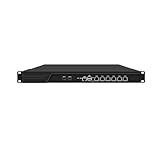
- HUNSN RJ16 equipped with 3th gen core i5 3320m, 3340m processor, compatible with many freebsd based router systems, linux distros, or win.os supported, easy configuration and management, support aes new instructions
- Please note, this is a barebone only. A system memory, a storage drive and an operating system are needed to complete this system
- Standard 1u, atx power, with power cord, make sure to use a big brand memory and ssd with quality assurance, ready to run straight out of the box
- Designed with rst, gpio, console, 2 x usb2.0, 6 x lan, 2 x sfp+, vga, power switch, ac socket, size at 440 x 255 x 45mm
- Original industry network motherboard, low power consumption, low heat, use dedicated turbo silent cooling fan to ensure long-term operation
| Design choice | Boundary and operational trade-off | When it may fit |
|---|---|---|
| Pooled resources | Tenants share infrastructure, so the application needs fine-grained controls at relevant resource boundaries. Shared models can simplify some operations but require those controls to be applied consistently. | When shared infrastructure suits the application and its isolation requirements can be met through reliable enforcement. |
| Siloed resources | Tenant-specific resources or stacks provide a coarser infrastructure boundary. Per-tenant deployment and lifecycle management can add operational complexity. | When tenant-specific separation is an important requirement and the added operational work is acceptable. |
| Mixed model | Different components can use different boundaries, balancing shared operations with stronger separation where needed. | When requirements vary by component rather than calling for one isolation model across the entire application. |
Policy design can also vary. A shared policy store can suit common authorization rules if tenant scope remains enforced. A per-tenant policy store can fit tenants with distinct authorization models and can narrow the impact of policy updates or deployments, at the cost of additional lifecycle and operational complexity. AWS describes these trade-offs in its guidance on a per-tenant policy store.
Use policy services for decisions, not as a substitute for isolation
For applications with many APIs, a consistent policy architecture can make authorization decisions easier to administer and apply. It can include policy administration, a policy decision point that evaluates a request, and policy enforcement points that apply the decision at APIs or other resource boundaries. Role-based access control (RBAC), attribute-based access control (ABAC), or a combination can express different authorization needs.
Best Value

- Custom Rack Mount for Fortinet Appliances – Specifically designed for FortiGate 40F, FortiWifi 40F, FortiADC 60F, and FortiWeb 100F models to securely mount in standard 19” racks.
- Front-Facing Connections – Repositions rear-facing ports to the front for cleaner, more accessible cable management in network environments.
- Easy Installation – Assembles in under 5 minutes with included mounting hardware and power supply fixation to prevent accidental disconnections.
- Space-Saving 1U Design – Compact 1U form factor saves rack space while maintaining ventilation and accessibility.
- Perfect Fit and Finish – Engineered by Rackmount.IT to match Fortinet dimensions and airflow, ensuring optimal performance and aesthetics.
A policy decision can answer whether a principal may take an action under the relevant conditions. The application must still ensure that the underlying resource access is constrained to the validated tenant context. A correct policy decision does not repair a data path that ignores tenant scope. AWS discusses policy approaches and decision services, including Amazon Verified Permissions or an open policy engine, in its multi-tenant authorization guidance.
Review the boundary as an end-to-end property
- Identity binding: Is the caller’s tenant membership established and validated on the server?
- Untrusted selectors: Does the server verify a requested tenant against that membership rather than trusting the identifier alone?
- Complete propagation: Do internal services, asynchronous events, and workers receive the validated context they need?
- Resource enforcement: Does every read, write, and other tenant-scoped operation enforce the boundary at the relevant resource layer?
- Separate decisions: Are action permissions and tenant scope both enforced, instead of treating one as proof of the other?
- Model fit: Do the chosen pooled, siloed, or mixed boundaries match the application’s isolation needs and operational capacity?
Reviewing only the login flow or API gateway leaves the rest of the path unexamined. The boundary must remain intact from the authenticated request through each service and resource that can expose or change tenant data.
Quick Recap
Product prices and availability are accurate as of the date/time indicated and are subject to change. Any price and availability information displayed on Amazon at the time of purchase will apply.




