The Tool Desk
Outbyte Driver Updater FREEFix the driver behind crashes, sound loss and screen glitchesFind Drivers →Outbyte PC Repair FREERepair Windows errors before they cause bigger problemsFix Now →Connect a USB-equipped MIDI keyboard to your Mac with its USB cable, or connect a keyboard with 5-pin MIDI ports through a MIDI interface. In GarageBand, select a software-instrument track to play; select that track, start recording, and play to capture your performance as a MIDI region. Apple documents both wired connection routes and the GarageBand workflow in its keyboard connection guide, software-instrument playback guide and recording guide.
Choose the connection route that matches your keyboard
A MIDI keyboard sends musical control data, such as notes, to GarageBand. GarageBand uses that input to play one of its software instruments. The right connection depends on the keyboard’s ports and capabilities, so check the keyboard itself and its manual before buying an interface or changing GarageBand settings.
As an Amazon Associate I earn from qualifying purchases.
| Keyboard connection | What to connect | Extra hardware | What to check |
|---|---|---|---|
| USB connection that supports MIDI | Connect the keyboard’s USB cable to the Mac. | A MIDI interface is not needed for this route. | Follow the keyboard maker’s instructions; install its driver if required. |
| 5-pin MIDI In and MIDI Out, with no direct USB-MIDI connection | Connect the keyboard to a MIDI interface, then connect the interface to the Mac. | A MIDI interface is required. | Match the keyboard’s MIDI Out to the interface’s MIDI In, and the keyboard’s MIDI In to the interface’s MIDI Out. |
| Bluetooth LE MIDI | Pair the compatible peripheral through Audio MIDI Setup’s MIDI Studio controls. | A wired MIDI interface is not needed for this route. | The keyboard must support Bluetooth LE MIDI; manufacturer software may also be required. |
Use the table as a hardware checklist rather than a ranking. Direct USB is the simplest documented wired route when the keyboard supports MIDI over USB. The traditional 5-pin route adds a MIDI interface, so check that the interface has the matching MIDI ports and a computer connection suitable for your setup. Bluetooth can avoid a wired MIDI interface, but only if the keyboard supports Bluetooth LE MIDI and can be paired through macOS. No connection route is universally right: the keyboard’s actual ports, its manual, and the manufacturer’s compatibility information determine what will work.
Do these 3 things before closing this tab:
1Repair Windows errors before they cause bigger problems2Fix the driver behind crashes, sound loss and screen glitches3Clear out junk files and repair common Windows errorsThere is no need to buy an interface just because GarageBand is involved. Apple documents direct USB and compatible Bluetooth MIDI as routes that do not require a traditional 5-pin MIDI interface, and GarageBand can also play software instruments with Musical Typing or an onscreen keyboard if you do not have an external controller. An interface is specifically relevant when the keyboard’s MIDI connection is through 5-pin ports and it has no direct USB-MIDI route. Confirm the need before shopping; the cited guidance does not compare interface models or establish prices.
#1 Best Overall

- FORE 1 MIDI in / 1 MIDI out MIDI interface, 16 MIDI input & output channels. Connecting keyboard, MIDI keyboard, synthesizer, electric drum and any device with input & output to computer/laptop for recording and editing your track.
- Plug & Play, with a Built-in driver and Intelligent LED Indicator. No extra difficult driver installation. Easy set up, truly plug and play. MIDI converter shows different light indicators & status. Red is Power, Blue is signal transfer & connections. Watch the video to get more details about how to use.
- No delay MIDI Input and Output. High-performance FTP processing chip, stable and fast speed MIDI data transmission. GarageBand, FL studio12, FL studio20, DirectMusic, CoreMIDI, Cubase, Sonar, MIDI Connections, etc. Supported.
- Conveniently integrated USB and cables. High quality wire with multi-layer protection. Technology of resistance to electromagnetic interference, ensuring the audio transmission rapidly and safely without damage. USB bus-powered, 6.5Ft.
- Designed & Produced by FORE. Compatible with iOS & Android, Windows / Mac OS. You can use the USB A-C Adapter to connect to Type-A or Type-C port. || Attention: "USB A-C Adapter" is not included in the package. ||
These are different ways to deliver MIDI input to GarageBand, not instructions for recording sound coming out of the keyboard’s speakers or audio outputs. To use the keyboard as a controller, GarageBand’s software instrument supplies the sound. Recording the keyboard’s own built-in sounds is a separate audio-input setup, and the cited Apple guides do not describe audio wiring for every keyboard model.
Apple’s GarageBand User Guide identifies GarageBand 10.4.14 among the available guide versions. The linked pages are served from Apple Support’s Australian locale. Menu labels and device compatibility may vary if you use another app or macOS version; for drivers and model-specific setup, follow the keyboard and interface makers’ current instructions.
Connect a USB MIDI keyboard
- Identify the keyboard’s MIDI-capable USB connection. Check the port labels and the keyboard manual. Do not assume that a connector that looks like USB necessarily provides MIDI; the device’s documentation determines what that port does.
- Connect the keyboard to the Mac with its USB cable. Apple’s documented direct route is to connect the keyboard’s USB cable to the computer. Follow the keyboard maker’s directions for powering the device and completing setup.
- Install the maker’s driver only if required. Some devices may require manufacturer software or a driver; others may not. Apple’s connection guide directs users to the keyboard manufacturer’s instructions rather than treating a driver as universally necessary.
- Check macOS recognition if GarageBand does not respond. Open Audio MIDI Setup and look for the device in MIDI Studio before troubleshooting the GarageBand track. The checks are described below.
- Open GarageBand and select a software-instrument track. Play a few notes. The selected GarageBand instrument should produce the sound; the keyboard itself is supplying MIDI input, not necessarily its own audio.
If your Mac or keyboard requires a particular connection accessory, driver, or setup step, confirm that against the specific model’s documentation. The Apple instructions establish the USB connection route but do not identify the requirements for every keyboard or Mac port configuration.
Connect a keyboard with 5-pin MIDI ports
A keyboard with conventional MIDI DIN ports and no direct USB-MIDI connection needs a MIDI interface between the keyboard and the Mac. The interface translates the keyboard’s MIDI connection into a computer connection. Match the port directions carefully: MIDI Out sends data from the keyboard, while MIDI In is where the interface receives it.
- Connect keyboard MIDI Out to interface MIDI In. This is the essential sending path when the keyboard is being used as a controller to play GarageBand instruments.
- Connect keyboard MIDI In to interface MIDI Out. Apple’s full wiring instructions specify this return connection as well. It is part of the documented two-way setup; whether it is useful depends on the keyboard’s capabilities and what you intend to do with it.
- Connect the MIDI interface to the Mac. Follow the interface maker’s setup instructions, including any power, software, or driver requirements.
- Check the connection in macOS. Open Audio MIDI Setup, choose Window > Show MIDI Studio, and check whether the interface appears. If it does not, use Rescan MIDI and then verify the cabling, power, and manufacturer software.
- Select a GarageBand software-instrument track and play. When the MIDI input reaches GarageBand, the selected software instrument is what you hear.
Apple’s keyboard connection guide gives the full two-way wiring sequence. For the controller-only use case, do not mistake the optionality of the return connection for a reason to reverse the essential Out-to-In sending path.
If you still need to buy hardware, first confirm that the keyboard has 5-pin MIDI ports and no USB-MIDI route, then match the interface’s ports to the keyboard and check compatibility with your Mac and installed macOS. A MIDI interface is not a universal GarageBand requirement: direct USB is also documented, and GarageBand has an onscreen Musical Typing option for playing without an external keyboard.
When comparing interfaces, the decision-relevant checks are whether the interface has the required MIDI In and MIDI Out connections, how it connects to the Mac, and whether its maker supports your macOS version. The keyboard’s intended use matters too: the MIDI Out-to-interface-In path sends notes from the keyboard to GarageBand; the opposite-direction return cable is included in Apple’s full two-way wiring instructions. The reviewed Apple documentation does not recommend particular models, give prices, or establish a product ranking, so choose by matching specifications and compatibility rather than assuming a specific interface is required for every keyboard.
Rank #2

- [Premium] Developed by CME with 30+ years of experience and contributing board member of the MIDI Association, providing trusted, human-centric 24/7 support via cme-pro(dot)com/support, lifetime updates, and hassle-free replacement.
- [Computers] Explore future-proof tech with advanced MIDI features: filter, mapping, routing. USB MIDI cable (1-in-1-out), 16 channels. Plug & play on macOS, iOS, Windows, Android, Linux, ChromeOS - no drivers needed!
- [Instruments] Handy colored MIDI plugs. Smart LED indicators. Works with all MIDI instruments including digital drum, digital piano, portable keyboard, MIDI controller, synthesizer, EWI and groovebox.
- [Performance] Ultra-fast 32-bit processor for extreme accuracy, high-speed optocoupler for error-free transmission, close to zero latency and jitter. High quality 6.5ft (2m) cable with all technology integrated into USB connector to reduce cable clutter.
- [MIDI] Supports all MIDI channels and messages, including notes, controllers, clock, sysex, MTC & MPE. Free UxMIDI Tools software (Mac/Win) for MIDI filtering (per channel) and MIDI routing (merge/split).
Pair a compatible Bluetooth MIDI keyboard
Bluetooth is an option only when the keyboard supports Bluetooth LE MIDI. Apple’s procedure uses macOS Audio MIDI Setup; GarageBand does not have a separate Bluetooth-pairing dialog in the cited instructions.
- Open Audio MIDI Setup on the Mac.
- Choose Window > Show MIDI Studio.
- Click Configure Bluetooth.
- Put the keyboard into its Bluetooth pairing mode, following the keyboard maker’s directions.
- Select the keyboard in the Bluetooth MIDI device list, then click Connect.
- Return to GarageBand, select a software-instrument track, and test the keyboard by playing notes.
Apple notes that software supplied by the manufacturer may be needed. If the keyboard does not appear, confirm that its model supports Bluetooth LE MIDI and that it is in pairing mode before treating the problem as a GarageBand issue. The Bluetooth steps are macOS device-pairing instructions, not a guarantee that every wireless keyboard sends MIDI.
Play the keyboard through a GarageBand instrument
- Open a GarageBand project.
- Select a software-instrument track. A MIDI controller sends input; the selected software instrument is what generates the GarageBand sound.
- Play a few notes on the external keyboard.
- If you hear nothing, test GarageBand’s built-in input method: choose Window > Show Musical Typing or press Command-K, keep the software-instrument track selected, and use Musical Typing to play.
Apple says software instruments can be played with a music keyboard, Musical Typing, or an onscreen keyboard. Musical Typing is useful as a comparison test: if it plays but the external keyboard does not, focus first on the MIDI connection and device detection. If Musical Typing is also silent, investigate the selected instrument and Mac audio output rather than assuming the external MIDI connection is the only possible cause. That comparison is a troubleshooting inference based on Apple’s documented input methods; it does not diagnose the Mac’s audio system by itself.
For the official playback workflow, see Apple’s software-instrument playback guide.
Record a MIDI performance
Once the keyboard plays the chosen software instrument, GarageBand can record the note performance on that track. Apple’s recording guide describes the result as a MIDI region, rather than an audio recording of the keyboard’s built-in sound.
- Select the software-instrument track. Confirm that the track you intend to record is selected before starting.
- Position the playhead. Move it to the point in the project where the performance should begin.
- Set optional timing aids. If useful, set the metronome and count-in before recording.
- Start recording. Click the Record button or press R.
- Play the keyboard. Perform the notes while GarageBand records.
- Stop recording. Click Stop or press the Space bar. The recorded notes appear as a new MIDI region on the software-instrument track.
If the region contains no notes, distinguish between a recording-control issue and an input issue. First confirm the intended software-instrument track was selected and that recording started; then test whether MIDI reaches the Mac using MIDI Studio’s input indicator. The recording controls do not establish that a keyboard is connected, so a successful transport start alone is not proof that MIDI notes arrived.
See Apple’s recording guide for its GarageBand recording workflow.
Rank #3

- High-Performance MIDI Interface: One-in/one-out MIDI interface with high-performance FPT processing for low latency and tighter clock timing
- Wide Compatibility: Compatible with Mac and Windows operating systems, and now with iOS on the iPad via the Apple iPad Camera Connection Kit
- Visual Data Indicators: Data indicators for both MIDI input and output to monitor signal flow
- Integrated Cable Design: Conveniently integrated USB and MIDI cables for streamlined connectivity without additional adapters
- USB Bus-Powered Operation: No external power supply needed as the device operates via USB bus power
Troubleshoot in the order the signal travels
Work from the keyboard toward GarageBand. This separates a physical or device-detection problem from a track or audio-output problem, and avoids changing unrelated GarageBand settings before confirming that the Mac receives MIDI.
Free tools Windows power users keep installed
One-click scans. No signup required.
1. Check power, cables, and port direction
- Confirm the keyboard is powered and that the cable is connected securely at both ends.
- For a 5-pin setup, make sure keyboard MIDI Out goes to interface MIDI In. If using Apple’s full two-way wiring, also connect keyboard MIDI In to interface MIDI Out.
- For USB, check that you are using the keyboard’s documented MIDI-capable connection and follow its maker’s setup instructions.
- Check the interface or keyboard maker’s driver and software requirements instead of assuming every device needs a driver.
2. See whether macOS detects the device
- Open Audio MIDI Setup.
- Choose Window > Show MIDI Studio.
- Look for the keyboard or MIDI interface. Apple says a USB MIDI interface is usually detected automatically.
- If it is missing, click Rescan MIDI.
- If it remains missing, confirm the connection and power, then install any manufacturer software required for that device.
These steps come from Apple’s MIDI Studio device guidance. A missing device at this stage points to detection, connection, power, or software—not to the sound selected on a GarageBand track.
3. Test whether MIDI notes reach the Mac
- In MIDI Studio, select the MIDI device.
- Click Test MIDI Setup.
- Play a note on the keyboard.
- Watch for the input indicator on the corresponding port to highlight.
Apple’s MIDI Studio guidance explains the device view, and its separate Test your MIDI setup article, dated May 27, 2026, describes the test. If the indicator does not respond, check the keyboard/interface’s compatibility with the installed macOS version and consult the manufacturer. MIDI Studio’s test checks incoming MIDI activity; it does not tell you whether GarageBand’s instrument or the Mac’s speakers are audible.
4. Separate MIDI input from GarageBand sound
- MIDI Studio sees notes, but GarageBand does not respond: Return to GarageBand, select a software-instrument track, and test the external keyboard again.
- The external keyboard is silent, but Musical Typing plays: The instrument can be triggered in GarageBand, so concentrate on the external keyboard’s connection or MIDI detection.
- Neither input method is audible: Check that a software-instrument track is selected and test the Mac’s audio output. The exact output-routing steps depend on the setup and are not specified in the Apple guides linked here.
- The device is not listed in MIDI Studio: Resolve the connection, power, rescan, or required manufacturer-software issue before troubleshooting instrument choice.
The comparisons between MIDI Studio, an external controller, and Musical Typing are diagnostic reasoning from Apple’s documented functions. They help isolate the stage to investigate; they are not a substitute for device-specific compatibility instructions.
Compatibility and version notes
The Apple GarageBand guides cited here are served from the Australian support site, and the GarageBand User Guide lists version 10.4.14 among its available versions. Apple’s Audio MIDI Setup pages list macOS 27 Golden Gate, macOS Tahoe 26, Sequoia 15, and earlier releases. Those page listings do not establish that every keyboard or MIDI interface works on every listed macOS release: compatibility remains specific to the device and its manufacturer’s software.
Quick wins for a faster PC:
Repair Windows errors before they cause bigger problemsFix Now →Scan for outdated or missing drivers - takes under a minuteDriver Scan →The setup guidance here reflects the Apple documentation reviewed on October 13, 2026. If your GarageBand or macOS version differs, or a menu label has changed, consult the current Apple guide for that version and the maker’s support page for the keyboard or interface. In particular, do not infer driver requirements, Bluetooth LE MIDI support, or audio-output wiring from the shape of a port alone.
Independent reader supportYour contribution helps us test, update, and keep practical guides available for everyone.Frequently asked questions
Do I need a MIDI interface to connect a keyboard to GarageBand?
Not always. A keyboard with a MIDI-capable USB connection can connect directly to the Mac, and a compatible Bluetooth LE MIDI keyboard can be paired through Audio MIDI Setup. A MIDI interface is needed for the documented 5-pin MIDI-port route when the keyboard has no direct USB-MIDI connection. Check the keyboard’s manual before buying one.
Rank #4
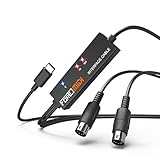
- FORE 1 MIDI in / 1 MIDI out MIDI interface, 16 MIDI input & output channels. Connecting keyboard, MIDI keyboard, synthesizer, electric drum and any device with input & output to iOS Phone/Pad, computer/laptop for recording and editing your track.
- Plug & Play, with a Built-in driver and Intelligent LED Indicator. No extra difficult driver installation. Easy set up, truly plug and play. MIDI converter shows different light indicators & status. Blue is Power, Red is signal transfer & connections.
- No delay MIDI Input and Output. High-performance FTP processing chip, stable and fast speed MIDI data transmission. GarageBand, FL studio12, FL studio20, DirectMusic, CoreMIDI, Cubase, Sonar, MIDI Connections, etc. Supported.
- Conveniently integrated USB and cables. High quality wire with multi-layer protection. Technology of resistance to electromagnetic interference, ensuring the audio transmission rapidly and safely without damage. USB bus-powered, 6.5Ft.
- Designed & Produced by FORE. Compatible with iOS & Android, Windows / Mac OS. You can use the USB A-C Adapter to connect to Type-A or Type-C port. || Attention: "USB A-C Adapter" is not included in the package. ||
Can I use a keyboard with only 5-pin MIDI ports?
Yes. Connect keyboard MIDI Out to interface MIDI In, connect the interface to the Mac, then select a GarageBand software-instrument track. Apple’s full wiring instructions also connect keyboard MIDI In to interface MIDI Out for a two-way setup. For notes sent from the keyboard to GarageBand, preserve the Out-to-In direction.
Can I connect a Bluetooth keyboard to GarageBand?
Only if it supports Bluetooth LE MIDI. Pair it in macOS using Audio MIDI Setup > Window > Show MIDI Studio > Configure Bluetooth, put the keyboard into pairing mode, select it in the device list, and click Connect. The documented pairing takes place in macOS, not in a separate GarageBand Bluetooth menu.
Recommended Free Tools
Why does GarageBand not make sound when I press a key?
First select a software-instrument track. If there is still no sound, try Musical Typing with Window > Show Musical Typing or Command-K. If Musical Typing works, check the external keyboard connection and MIDI detection. If it is silent too, check the selected instrument and Mac audio output; a MIDI input test does not diagnose speaker output.
How can I tell whether my Mac is receiving MIDI?
In Audio MIDI Setup, open MIDI Studio, select the device, and click Test MIDI Setup. Play a note and watch for the corresponding port’s input indicator to highlight. If the device is absent, use Rescan MIDI, then verify power, cabling, and any required manufacturer software.
Does GarageBand record the keyboard’s own sounds?
The workflow here records MIDI notes that trigger a GarageBand software instrument, creating a MIDI region. Capturing audio from the keyboard’s built-in sounds is a different setup; consult the keyboard’s instructions for its audio outputs and the appropriate audio-input path.
Do I need to install a driver?
Only if the keyboard or MIDI interface maker requires one. Apple directs users to follow the device manufacturer’s setup and software instructions; driver requirements are not universal.
What’s actually slowing this PC down?
Pick the symptom - the matching free tool is one click away.
Frequently Asked Questions
Do I need a MIDI interface to connect a keyboard to GarageBand?
Not always. USB-MIDI can connect directly, and a compatible Bluetooth LE MIDI keyboard can pair in Audio MIDI Setup. A MIDI interface is needed for the 5-pin MIDI route when the keyboard has no direct USB-MIDI connection.
Best Value

- Easy to turn your PC into a music studio. Start by connecting an electronic musical instrument to your computer with the provided USB MIDI cable. Within minutes you'll be able to play songs while they are being recorded on your PC. With appropriate software, you can overdub additional instruments, then edit, mix and even print sheet music of your final compositions.
- Easy to install adapter features MIDI in and out cables along with USB PC interface plug | Please Note: Some setups will require both MIDI plugs to be plugged in for use
- MIDI adapter cable supports up to sixteen channels in and sixteen channels out | Adapter features LED power, in and out indicator lights
- Wide Compatibility. Work with Windows XP/Vista/7/8.1/10 and Mac OS. Cable length: 2M (6.5ft). Note: Turn off the keyboard & any other musical instrument. Close the Audio software. Not support Hot-swapping.
- Package Contents: 1x USB to Midi Interface Cable, 1x Instruction Sheet. Attention: For using on iOS devices, Original authentic Camera Connection Kit is needed or it may not work.
Can I use a keyboard with only 5-pin MIDI ports?
Yes. Connect keyboard MIDI Out to interface MIDI In and connect the interface to the Mac. Apple’s full two-way setup also connects keyboard MIDI In to interface MIDI Out.
Can I connect a Bluetooth keyboard to GarageBand?
Only if it supports Bluetooth LE MIDI. Pair it through Audio MIDI Setup’s MIDI Studio and Configure Bluetooth controls; GarageBand does not have a separate pairing menu in the cited instructions.
Why does GarageBand not make sound when I press a key?
Select a software-instrument track and test Musical Typing. If Musical Typing works, investigate the keyboard connection or MIDI detection. If it is silent too, check the selected instrument and Mac audio output.
How can I tell whether my Mac is receiving MIDI?
In Audio MIDI Setup, open MIDI Studio, select the device, and click Test MIDI Setup. Play a note and watch for the corresponding port’s input indicator to highlight.
Does GarageBand record the keyboard’s own sounds?
The described workflow records MIDI notes that trigger a GarageBand software instrument, producing a MIDI region. Capturing the keyboard’s built-in sounds is a separate audio-input setup.
Do I need to install a driver?
Only if the keyboard or MIDI interface maker requires one. Follow the manufacturer’s setup instructions; driver requirements are device-specific.
The Bottom Line
Match the connection to the keyboard: use its MIDI-capable USB port, a compatible Bluetooth LE MIDI pairing, or a MIDI interface for 5-pin MIDI ports. Then select a GarageBand software-instrument track to play or record. If it does not respond, check detection and MIDI input in Audio MIDI Setup before changing unrelated GarageBand settings.
Outdated Drivers Are Slowing You Down
One free scan finds every outdated or missing driver and matches the right update for your exact hardware.Free scan · exact hardware matchPC Slower Than It Used to Be?
A free scan shows the junk files, broken settings and background clutter dragging Windows down - then fixes them in one click.Free scan · Windows 10 & 11Quick Recap
Product prices and availability are accurate as of the date/time indicated and are subject to change. Any price and availability information displayed on Amazon at the time of purchase will apply.




