The best game soundtrack commissions start before you contact a composer. Define the game’s world, audience, emotional arc, gameplay states, platforms, schedule, budget range and rights needs in a written brief. Then compare composers against the same cue list and implementation requirements, and put every creative, technical and legal responsibility in the contract.
This staged approach prevents the most expensive mistakes: hiring a composer whose style does not fit, budgeting by an arbitrary per-minute rate, discovering too late that adaptive music was never scoped, or finding that trailer and soundtrack rights were not included.
| # | Preview | Product | Price | |
|---|---|---|---|---|
| 1 |

|
Silent Hill 2 (Game Music) (Original Soundtrack) | $23.99 | Buy on Amazon |
| 2 |

|
Minecraft Volume Alpha | $13.49 | Buy on Amazon |
| 3 |
|
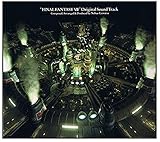
Final Fantasy VII Original Soundtrack | $38.50 | Buy on Amazon |
| 4 |
|
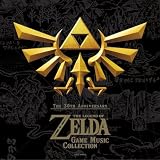
30th Anniversary The Legend of Zelda (Original Soundtrack) | $26.94 | Buy on Amazon |
| 5 |

|
Legend Of Zelda: 30Th Anniversary Concert | $30.17 | Buy on Amazon |
As an Amazon Associate I earn from qualifying purchases.
Start with a commissioning decision, not a composer search
A soundtrack can be commissioned as original music, assembled from licensed songs, or built as a hybrid. The choice affects creative identity, production schedule, implementation work and rights clearance.
Original music can be written around your characters, locations, themes, loops, stems and adaptive layers. Licensed music can deliver a recognizable artist or recording, but a game generally needs permission for both the underlying composition and the specific recording. Those permissions may have different costs, owners and usage limits. A hybrid plan can reserve original composition for signature themes while licensing selected lower-priority cues.
#1 Best Overall
Decide whether music is linear or interactive before requesting bids. A linear score may need finished cues and clean loops. An adaptive score may require layers, stems, intensity states, transitions and gameplay parameters, plus middleware or engine integration. Treat those as different production scopes rather than asking every composer for the same “soundtrack.”
Build a brief that a composer can price and write against
Xbox Game Studios describes music supervisors working with audio leads, creative directors and producers; commissioned scores commonly involve the producer, audio lead and composer. Your brief should give those people the information needed to make one coherent decision.
Describe the world and the audience
Explain the setting, time period, cultural influences, visual language and intended player response. State whether the audience is children, adults, genre specialists, a broad console audience or another defined group. Avoid labels such as “cinematic” or “epic” without examples: identify whether you mean intimate strings, aggressive percussion, synth-driven tension, choral scale or something else.
Quick wins for a faster PC:
Fix the driver behind crashes, sound loss and screen glitchesFind Drivers →Repair Windows errors before they cause bigger problemsFix Now →Scan for outdated or missing drivers - takes under a minuteDriver Scan →List any boundaries. These may include instruments you cannot use, cultural elements that require consultation, profanity or lyrical restrictions, accessibility concerns, platform loudness requirements, or a need to avoid similarity to a particular property. The composer needs to know both the desired identity and the risks to avoid.
Map the emotional and gameplay arc
Connect music to what the player is doing. A useful cue list names the state, purpose, approximate duration and whether the music must loop or transition.
- Title, menu and loading music.
- Exploration, traversal or social hubs.
- Combat, pursuit, stealth or boss states.
- Victory, defeat, discovery and narrative transitions.
- End credits and any special modes.
For each state, describe the emotional change the player should feel. “Combat” may mean rising panic, tactical focus or heroic momentum; those choices affect tempo, harmony and arrangement. If a state can change without a cut, mark it as interactive rather than treating it as an ordinary cue.
Set platforms, schedule and budget range
Name every launch platform and whether the game will later ship on additional platforms. Note the target for a first playable soundtrack, content lock, marketing trailer and final master. Include review windows so the composer can reserve time for feedback.
Free tools Windows power users keep installed
One-click scans. No signup required.
Rank #2
- Minecraft Original Soundtrack by C418 CD Volume Alpha
- GHIN85034
- Brand : GHIN85034
Give a realistic budget range instead of requesting a universal per-minute quote. State whether the range includes composition, production, live performers, mixing, mastering, revisions, implementation and rights. If the budget is provisional, say which elements are optional so proposals can show alternatives rather than silently cutting quality.
Provide musical references without demanding imitation
Supply a few references and explain what each demonstrates: instrumentation, pacing, harmonic language, texture, loop behavior or emotional effect. Include examples that show the range between exploration and combat, or calm and crisis. A reference is a communication tool, not permission to copy a melody, arrangement or recording.
Define expected deliverables
List the number of cues, estimated finished minutes, loop lengths, stems, file formats, sample rate and loudness expectations if known. Say whether you need source sessions, separated stems, middleware-ready assets, engine events, project files or post-delivery bug fixes. A composer can only price implementation accurately when the handoff boundary is explicit.
Shortlist composers by evidence of fit
A polished reel proves that someone can make attractive music; it does not prove that they can support your genre, schedule or technical pipeline. Listen for evidence in six areas:
PC Slower Than It Used to Be?
A free scan shows the junk files, broken settings and background clutter dragging Windows down - then fixes them in one click.Free scan · Windows 10 & 11Outdated Drivers Are Slowing You Down
One free scan finds every outdated or missing driver and matches the right update for your exact hardware.Free scan · exact hardware match- World and genre fit: Does the portfolio show the cultural, historical or speculative language your setting needs?
- Instrumentation: Can the composer deliver your required palette without relying on unsuitable stock sounds?
- Emotional range: Are calm, tension, discovery and resolution all handled convincingly?
- Loop quality: Do repeated sections remain musical, with clean starts, endings and transitions?
- Game implementation: Are there examples of layers, stems, state changes or middleware handoffs?
- Production reliability: Do credits or references demonstrate work delivered through milestones and revisions?
Ask every serious candidate to answer the same brief. Request a proposal containing the cue list, finished-minute estimate, deliverables, revision count, milestones, implementation boundary, total fee and rights position. Identical inputs make differences visible; otherwise one composer may quote a finished soundtrack while another quotes only composition.
If a finalist needs to demonstrate fit, commission a short test cue with a written fee and clear ownership terms. Decide in advance whether the test becomes part of the game, whether the composer may reuse it, and how the test will be evaluated. Do not ask for substantial unpaid work disguised as an audition.
Choose original, licensed or hybrid music deliberately
| Approach | Strength | Primary complication | Use when |
|---|---|---|---|
| Original commission | A unified identity designed around your characters, gameplay states, themes, loops and stems | Requires a composer’s time, revisions, production and potentially implementation work | The score is part of the game’s world-building or must react to play |
| Licensed music | Immediate recognition through an existing artist or recording | Permission is needed for both the composition and the specific recording, with scope defined for each use | A particular song or artist is central to the concept and the rights budget can support it |
| Hybrid | Original signature themes combined with selected licensed cues | Two production and rights workflows must be coordinated | You need distinctive identity but want recognizable music in limited moments |
For licensed tracks, clear the composition and recording separately. A permission covering use inside the game may not automatically cover trailers, the store page, demos, streams or a soundtrack release. Confirm territory, term, exclusivity and any restrictions before marketing assets are produced.
Rank #3
- Banda sonora original de Final Fantasy VII
- Compositor: Nobuo Uematsu
Budget from the work, not from minutes alone
Umberto Pisano identifies four major cost drivers: finished minutes, the number of separate cues, whether music reacts to gameplay, and whether implementation is included. Finished minutes matter, but a short adaptive system with many states can require more work than a longer linear cue set.
Recommended Free Tools
| Cost driver | What increases the work | Question for the bid |
|---|---|---|
| Finished minutes | More composed, produced and mixed music | How many final minutes are included, and are loops counted once or by variation? |
| Separate cues | New themes, arrangements, mixes and approvals for each asset | How many distinct cues and variations are required? |
| Interactivity | Layers, stems, transitions, intensity states and parameter mapping | Which gameplay states and transition rules must the music support? |
| Implementation | Middleware or engine setup, build integration, testing and bug fixes | Who creates events, integrates assets and supports acceptance testing? |
Berklee Online offered a 2022 planning example of $5,000–$15,000 for audio on a $100,000 overall game budget. That is an illustrative allocation, not a current market tariff or a promise that a soundtrack of a particular length will fit the range. No authoritative universal per-minute rate has been established; request quotes against the same scope.
Reduce scope without losing identity
When funds are tight, cut deliberately rather than spreading a small budget across many weak cues. Options include:
- Fewer, longer cues with strong loops instead of many short transitions.
- A smaller instrument palette that can be mixed consistently.
- Original music for the game’s defining themes and licensed tracks only for selected moments.
- Adaptive treatment for high-impact states while keeping menus or minor scenes linear.
- Composer delivery of music assets while the team handles integration, if the team has the expertise and time.
Pisano’s guidance is direct: “Small scope is not the same as not worth doing, and a game with three strong cues that fit is better than twelve that do not.”
Scope adaptive music as a technical system
Adaptive music is not simply a folder of audio files. It is a set of rules that connects player or game events to musical behavior.
Choose the interaction model
Decide whether the score uses layered intensity, horizontal transitions between cues, vertical mixing of stems, fixed states, parameter-driven changes or a combination. Document what happens when the player enters, exits or rapidly repeats a state. Specify whether a transition must finish a bar, use a short crossfade or jump immediately.
Agree on names, parameters and ownership
Write the event names, parameter names, value ranges and transition rules into the brief or technical appendix. Identify the engine or middleware boundary: does the composer deliver stems and markers, configure the middleware project, or work directly in the playable build? Assign one owner for integration and one for musical approval.
Rank #4
- Import Game - Japanese Version
- Compatible with US systems (region free)
- Japanese language (other languages may be included)
- Manual and packaging in Japanese language
Define files and acceptance testing
Specify stem formats, loop points, markers, sample rate, naming conventions and platform variants. Make playable-build testing a deliverable, not an informal favor. The acceptance process should cover entry and exit transitions, looping, memory or streaming behavior, missing-event fallbacks, volume balance and repeatability. Include a period for bug-fix support after delivery.
Pisano recommends discussing “parameters, transitions and build integration, rather than handing over audio and hoping.” That conversation should happen before the contract is signed, when changing the scope is still possible.
Do these 3 things before closing this tab:
1Scan for outdated or missing drivers - takes under a minute2Clear out junk files and repair common Windows errors3Fix the driver behind crashes, sound loss and screen glitchesPut the creative and legal scope in the contract
GameDeveloper’s contract guidance emphasizes establishing the audio budget first and addressing ownership, soundtrack exploitation, sequels and other uses in the agreement. Use a lawyer familiar with music rights when recordings, performers, samples, multiple territories or broad media rights are involved.
Production and review terms
- Cue list, finished minutes, loop lengths and file specifications.
- Musical references and the intended player or audience response.
- Milestones, review windows, revision rounds and change-order rates.
- Payment installments, acceptance criteria and cancellation or kill terms.
- Composition, production, live-performer and implementation responsibilities.
- Middleware or engine handoff, source files, stems, project files and post-delivery support.
Ownership and usage terms
Choose ownership or a license expressly; do not rely on an assumption that “commissioned” means the same thing in every jurisdiction. State territory, term, exclusivity and re-use rights. Enumerate the media and releases covered:
| Use | What the agreement should state |
|---|---|
| Game release | Whether the music may ship in the game on every named platform and edition |
| Marketing | Permission for trailers, demos, store-page videos and other promotional assets |
| Player broadcasts | Whether streams and other player-created broadcasts are covered |
| Soundtrack release | Whether a standalone soundtrack album or digital release is permitted |
| Future content | Rights for sequels, expansions and downloadable content, with any new fee or approval process |
Credits, performers and originality
- Composer and performer credit wording and placement.
- Written permissions from performers and any required neighboring or performer rights.
- Sample licenses and clearance records for every third-party sound.
- A warranty that the delivered work is original or that all incorporated material is properly cleared.
- Delivery of source sessions and stems if the team needs to remix, localize or create future versions.
Music rights are complex; Xbox’s music-supervision guidance stresses the importance of licensing specialists. Bring one into the deal when the rights chain extends beyond a composer’s original recordings.
Independent reader supportYour contribution helps us test, update, and keep practical guides available for everyone.Compare proposals with a decision framework
Score each proposal on the same six axes, using notes rather than relying on the cheapest total.
What’s actually slowing this PC down?
Pick the symptom - the matching free tool is one click away.
| Axis | Evidence to inspect |
|---|---|
| Creative fit | Relevant genre, setting, instrumentation, emotional range and response to your references |
| Interactive capability | Prior layers, transitions, stems, parameters, middleware work and build testing |
| Scope and deliverables | Matching cue list, finished minutes, file formats, source assets and revision count |
| Schedule and communication | Milestones, review windows, availability and named decision-makers |
| Total cost and change exposure | Separate prices for composition, production, performers, implementation, revisions and change orders |
| Rights and future flexibility | Ownership or license, territory, term, exclusivity, marketing, soundtrack, sequel and downloadable-content permissions |
Ask finalists to revise any ambiguous line item before selection. A low bid that excludes implementation or soundtrack rights is not directly comparable with a higher bid that includes them. If proposals remain close, favor the candidate whose process makes risks visible and whose communication matches your team’s working style.
Best Value
Run the production in controlled stages
- Brief approval: The producer, creative lead and audio lead agree on world, audience, cue list, states, references, platforms, schedule, budget range and rights goals.
- Proposal round: Candidates receive the identical brief and return scope, schedule, deliverables, revisions, implementation boundary, price and rights terms.
- Concept phase: The selected composer supplies themes or a short set of representative cues for an early fit check before the full score is produced.
- Composition and production: Work proceeds by milestone, with written feedback consolidated by one authorized reviewer.
- Implementation: Stems, markers, events and parameters are connected in the agreed engine or middleware boundary.
- Playable-build review: The team tests loops, transitions, state changes, levels and failure cases in the actual build.
- Acceptance and handoff: Approved masters, stems, source files, documentation and clearance records are delivered, followed by the contracted bug-fix period.
Common commissioning failures and fixes
The reel sounds right, but the game does not
Cause: Selection was based on polished standalone tracks rather than loop behavior, emotional range or implementation evidence.
Fix: Use the identical brief, inspect comparable game work and evaluate a paid test cue against your actual state or transition.
The quote looks cheap until production starts
Cause: The bid covered minutes of composition but not separate cues, performers, mixing, revisions or integration.
Fix: Require a line-by-line scope and a change-order rate before signing.
Adaptive music arrives as disconnected files
Cause: Parameters, event names, transition rules and ownership were never assigned.
Fix: Add the technical appendix and require build testing as an acceptance milestone.
The trailer or album cannot legally use the score
Cause: The agreement covered in-game use only, or performer and recording rights were not cleared.
Fix: Enumerate every intended use, territory and release, and clear composition and recording rights separately where applicable.
The soundtrack is too broad for the available budget
Cause: The team requested many short cues without prioritizing the moments that define the game.
Fix: Reduce cue count, instrument breadth or adaptive coverage while protecting the strongest themes and loops.
Quick Recap
Final commissioning checklist
- The brief explains the world, audience, emotional arc, gameplay states and musical boundaries.
- Platforms, milestones, review windows and budget range are explicit.
- References describe the desired response rather than asking for imitation.
- Every candidate is quoting the same cue list and implementation scope.
- Original, licensed or hybrid treatment is an intentional decision.
- Finished minutes, cue count, interactivity and implementation are priced separately.
- Adaptive work has named parameters, transitions, event ownership and build-testing duties.
- The contract defines revisions, acceptance, cancellation, change orders and payment installments.
- Ownership or license terms include territory, term, exclusivity and re-use rights.
- Game, trailer, store page, demo, stream, soundtrack, sequel and downloadable-content uses are addressed.
- Composer credit, performer permissions, sample clearance and originality warranties are documented.
- Source files, stems, project files, middleware handoff and post-delivery support are included where needed.
Product prices and availability are accurate as of the date/time indicated and are subject to change. Any price and availability information displayed on Amazon at the time of purchase will apply.
The Tool Desk
Outbyte Driver Updater FREEFix the driver behind crashes, sound loss and screen glitchesFind Drivers →Outbyte PC Repair FREERepair Windows errors before they cause bigger problemsFix Now →
