What’s actually slowing this PC down?
Pick the symptom - the matching free tool is one click away.
The best mixed-age board game is one the youngest player can physically handle and understand, while older players still have meaningful choices to make. Start with the youngest participant’s dexterity, reading, attention span, and tolerance for rules. Then check the box for player count, play time, age range, component safety, and complexity. Finally, decide whether your household will enjoy cooperation, competition, luck, strategy, or a blend.
No single age label guarantees a good family fit. A game marked for ages 8 and up may work for a thoughtful six-year-old with coaching, while an apparently simple game can fail if it requires sustained reading or delicate pieces. Use the product label as a safety and suitability screen, not as a substitute for knowing the children who will play.
As an Amazon Associate I earn from qualifying purchases.
Start with the youngest player, not the oldest
Mixed-age selection works best when you identify the youngest player’s real abilities first. The oldest players usually can adapt to simpler rules, teach a turn, or add a self-imposed challenge. A preschooler cannot reliably compensate for tiny components, long reading passages, or a game that demands an hour of sustained attention.
Free tools Windows power users keep installed
One-click scans. No signup required.
Check four abilities before you shop
- Motor control: Can the child pick up, sort, stack, spin, roll, or place the components without constant adult help? Fine-motor tasks such as balancing small pieces or manipulating thin cards can be harder than the age label suggests.
- Reading and language: Does the child read independently, recognize numbers and symbols, or need every card and instruction read aloud? A game can be “easy” strategically but inaccessible if its text load is high.
- Attention and stamina: How long can the child wait between turns and remain interested? A game with a 20-minute published duration may still be unsuitable if the child disengages after five minutes of watching others.
- Rule comfort: Can the child remember a sequence of steps, accept exceptions, and cope when an outcome is not favorable? Some children enjoy structured rules; others need a short demonstration and a forgiving first round.
Observe the child in a familiar activity rather than relying on a birthday cutoff. The same age group can include players with very different reading, coordination, and emotional readiness.
#1 Best Overall
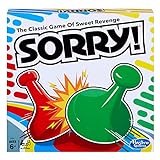
- GAME OF SWEET REVENGE: Enjoy classic Sorry! gameplay with this Sorry! board game for kids. It's an edge-of-your-seat race to home, so hurry up and get there first
- FIRST ONE HOME WINS: Who will be the first player to get all 3 of their pawns to the home space? But watch out! Players can get "sweet revenge" by sending each other's pawns back to the starting point
- SO MANY POSSIBILITIES: Slide, collide, and score to win the Sorry! game. This family game for kids and adults features so many possibilities depending on the card picked up and strategy chosen
- CLASSIC SORRY! GAMEPLAY: Remember playing the original Sorry! game as a kid? Bring back memories of playing the Sorry! game with family members and introduce it to a new generation
- FAMILY GAME NIGHT FAVORITE: A go-to game for family time or anytime indoor fun, the Sorry! game for kids is one of the best family games for game night
Use age guidance as a safety screen
The U.S. Consumer Product Safety Commission (CPSC) considers a product’s intended audience, packaging, marketing, and reasonably foreseeable use when determining whether it is a children’s product. Treat the printed age range as a meaningful starting point. If the box says a game is for older children, do not assume supervision alone makes it appropriate for a younger child; check the parts, rules, and warnings.
Age labels can differ between editions or regional versions. Read the label on the exact box you plan to buy, including any warning about choking, magnets, batteries, or other components. Keep small parts away from children younger than three, even when an older sibling is the intended player.
Decode the box before buying
A box usually answers the practical questions that determine whether a game will reach the table. Record the information for the specific edition rather than relying on a retailer’s abbreviated listing.
Recommended Free Tools
| Box detail | What to verify | Why it matters in a mixed-age group |
|---|---|---|
| Age range | Minimum age, upper age if stated, and all safety warnings | Signals expected dexterity, language, content, and supervision needs; it is not a guarantee of equal enjoyment. |
| Players | Minimum and maximum players, and whether teams are allowed | A game for two to four may not work for a six-person family unless team rules are supported. |
| Play time | Published duration and whether it describes one round or a full game | Short rounds are easier to fit around meals, bedtime, and younger attention spans. |
| Rules and content | Reading volume, exceptions, mature themes, and how many actions occur on a turn | Determines whether children can participate independently and whether the theme suits everyone. |
| Components | Piece size, quantity, card thickness, boards, dice, timers, and any magnets or batteries | Reveals choking, handling, storage, and replacement concerns. |
| Setup and reset | Sorting, assembly, app or account requirements, and cleanup time | A theoretically short game can become impractical if setup takes longer than play. |
If a listing omits a value, look at the publisher’s current product information or the physical packaging. Do not infer player count, age, or safety from a similarly named edition.
Match motor and cognitive demands
CPSC’s January 2020 age-determination guidance identifies five primary characteristics for card, floor, board, and table games: “Motor Skills Required,” “Content Complexity,” “Length of Time Required to Play,” “Educational,” and “Classic.” These categories make a useful purchase checklist.
Motor skills required
List every physical action in a typical turn: drawing and holding cards, moving a token, reading a spinner, rolling dice, arranging tiles, balancing pieces, or writing. A child who handles chunky pieces confidently may still struggle with narrow cards or a crowded board. Choose larger, clearly differentiated components when coordination or vision is a concern.
Content complexity
Count the rules a new player must know before the first turn, then note rules introduced later. Separate what you must remember from what you can see on the table. Open information, icon reminders, and a visible turn sequence reduce memory demands. Hidden information, simultaneous effects, and long card text raise them.
Do these 3 things before closing this tab:
1Clear out junk files and repair common Windows errors2Scan for outdated or missing drivers - takes under a minute3Repair Windows errors before they cause bigger problemsEducational and classic elements
“Educational” does not mean a game is automatically enjoyable or proven to improve a particular skill. It may indicate counting, vocabulary, planning, or following directions. “Classic” games often remain accessible because skill changes how difficult they feel. CPSC notes that traditional games such as chess, checkers, backgammon, playing cards, and Chinese checkers can appeal to children and adults because the level of difficulty rises or falls with the player’s skill.
Rank #2
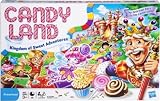
- CLASSIC BEGINNER GAME: Do you remember playing Candy Land when you were a kid. Introduce new generations to this sweet kids' board game
- RACE TO THE CASTLE: Players encounter all kinds of "delicious" surprises as they move their cute gingerbread man pawn around the path in a race to the castle
- NO READING REQUIRED TO PLAY: For kids ages 3 and up, Candy Land can be a great game for kids who haven't learned how to read yet
- GREAT GAME FOR LITTLE ONES: The Candy Land board game features colored cards, sweet destinations, and fun illustrations that kids love
Choose cooperation or competition deliberately
Neither format is universally better. Pick the social experience your household wants on the day.
When cooperative play fits
In a cooperative game, players share an objective and usually win or lose together. This can reduce direct winner-versus-loser pressure and gives an adult a natural coaching role: ask questions, explain a consequence, or suggest two options without making every decision. Cooperation is useful when reading levels differ, when one child is sensitive to losing, or when the group wants a shared puzzle.
Watch for the “quarterback” problem, in which the most experienced player dictates everyone’s turns. Prefer games with simultaneous choices, private information, rotating leadership, or a rule that lets each player control a distinct piece or hand. Set a house rule that advice is offered only when requested, or give the youngest player final authority over their own move.
When competitive play fits
Competitive games reward planning, negotiation, risk assessment, and learning to handle unequal outcomes. They can be excellent for families that enjoy rematches and visible progress. For a wide age spread, select games where an older player can demonstrate a strategy without making the result inevitable.
Explain before playing whether the group values winning, practicing, or trying a new tactic. Avoid changing rules mid-game to rescue one player unless everyone agrees; instead, use a planned handicap or team arrangement described below.
Fit time, player count, and stopping points
Use the shortest realistic session
The printed play time is an estimate, not a promise. Ask whether it covers teaching, setup, and cleanup, and whether the game ends after a single round or requires several rounds. A game that can stop cleanly after each round is more practical for younger children than one in which leaving early ruins the balance.
For weeknights, favor a short core game, a modular scenario, or a format that saves progress between rounds. For weekends, a longer game can work if players know the expected commitment before setup. Keep a visible clock or agree on a “last round” signal so the ending does not arrive as a surprise.
Windows Errors? Fix Them Before They Spread
Repair common Windows errors and clear accumulated junk for a smoother, more stable PC - no reinstall needed.Free scan · no reinstallOutdated Drivers Are Slowing You Down
One free scan finds every outdated or missing driver and matches the right update for your exact hardware.Free scan · exact hardware matchCheck the real player count
At the minimum player count, some games become more strategic; at the maximum, turns may slow and downtime may grow. Ask:
Rank #3

- FUN FAMILY GAME FOR KIDS: Remember playing the original Trouble board game as a kid? Introduce a new generation to classic Trouble gameplay with this Trouble game for kids
- EASY TO LEARN AND SET UP: The Trouble game is easy to play and quick set up. The object of the game is simple: the first player to get all of their game pieces around the board wins
- POWER UP SPACES: The game instructions include options for classic Trouble gameplay or a version with Power Up Spaces for a more challenging game
- POP-O-MATIC BUBBLE: In this beloved children's board game, players press and pop the plastic bubble to roll the die. The iconic Pop-o-Matic die roller is fun to press, and it keeps the die from getting lost
- BOARD GAMES FOR FAMILY: Adults and kids can play this family board game together. It's a fun indoor game for playdates and a great choice for Family Game Night
- Does every player have meaningful choices, or do extra players mostly wait?
- Can two children share a team without one person doing all the work?
- Are there enough components for the maximum listed count?
- Does the game support a graceful exit if a younger player loses interest?
Do not assume that adding house rules makes an out-of-range player count safe or balanced. If your household size is between the listed numbers, teams are usually less disruptive than inventing an entirely new turn structure.
Balance luck, strategy, theme, and replayability
Luck versus strategic control
Luck can level an age gap: a child may win a round because of a draw or roll even when an adult understands more long-term strategy. Too much randomness, however, can make careful choices feel pointless. Strategy-heavy games reward planning but can expose a large experience gap.
Look for a blend in which luck creates changing situations and players still choose how to respond. Ask whether a player can recover after an early setback, whether choices remain meaningful near the end, and whether an experienced adult can avoid optimizing every move.
Theme across generations
Choose a theme that gives the youngest player a clear reason to care and does not alienate older players. Animals, building, exploration, deduction, wordplay, and familiar everyday tasks can bridge ages, but the artwork and vocabulary still need checking. Read a sample card or scenario when possible; a family-friendly title can contain frightening, competitive, or culturally specific material that does not suit your group.
Replayability and setup burden
Replayability comes from variable goals, changing layouts, different roles, or decisions that produce genuinely different outcomes. A game with a single memorized solution may be exciting once and flat thereafter. Conversely, a deep game may be replayable but too demanding for a family that has only occasional game nights.
Estimate the total effort: opening the box, sorting components, teaching, playing, scoring, and returning everything to storage. A quick cleanup insert or labeled bags can matter more to a busy household than an extra mechanism.
Ways to make one game work across a wide age range
Use teams without assigning a permanent expert
Pair an older and younger player, then rotate partners each round. Give each teammate a defined responsibility, such as reading, moving a piece, choosing between two actions, or tracking points. This keeps the child involved instead of turning the adult into the sole decision-maker.
Apply a transparent handicap
Before the first game, decide on a small, visible advantage: an experienced player starts with fewer resources, has a restricted action, or must meet an additional objective. Keep the handicap stable for the whole session and remove it when players become more experienced. Avoid secretly giving a child a better outcome; learning is easier when everyone understands the adjustment.
Rank #4

- INTRODUCING A DIGITAL DIE: More suspense, more surprises, more laughs! In this Jenga game, enjoy the classic Jenga gameplay fans love—or dare to play it with the digital die for added challenges
- 6 MORE WAYS TO PLAY: Roll the digital die for unpredictable challenges: play using thumbs only, race against the clock, and more! (To download the die onto a phone, scan the in-pack QR code or access the web app. No additional purchase needed)
- HILARIOUS CHALLENGES: Actions like “Team-Up” amp up the fun! A player who rolls it selects another player to act as their eyes. The other player can guide their arm, but can’t touch the tower—or topple it
- EXCITING GAME FOR PARTIES OR SOLO PLAY: The Jenga game for kids and adults is the wooden block balancing game livening up parties for generations. No friends around? No problem. Play solo to beat a personal best
- GENUINE WOOD BLOCKS: The Jenga party game includes 54 precision crafted wooden blocks. Pull out a block, place it on top, but don't let the tower fall in this original wood block game
Reduce the rules, not the child’s agency
For a first session, omit an advanced module, use open hands, or limit the number of available actions. Let the youngest player make the final choice among a small set of legal options. Add complexity only after the group can complete a round without repeated reminders.
Teach in layers
- Explain the shared objective and show the components.
- Demonstrate one complete turn with the youngest player.
- Start with the basic actions and postpone rare exceptions.
- Pause after the first round for questions, then add any advanced rule.
- After the game, ask what felt confusing before changing a rule.
Layered teaching prevents a long rules lecture from consuming the child’s limited attention before play begins.
Safety checks before and after purchase
Before buying
- Read the exact age label and every warning on the edition you are considering.
- Confirm that no small part, loose magnet, or battery access conflicts with the ages in your household.
- Check whether cards, tokens, or miniatures are easy to distinguish and handle.
- Verify that the game’s theme and language are suitable for all players.
- Confirm current regional availability and the seller’s return policy if components arrive damaged.
After opening the box
Inventory the components against the rulebook before children play. Dispose of plastic bags and packaging promptly, keep spare pieces in a labeled container, and store the game where a child under three cannot access loose parts. Recheck pieces after repeated use; wear, cracks, or missing components can change safety and playability.
The Tool Desk
Outbyte Driver Updater FREEFix the driver behind crashes, sound loss and screen glitchesFind Drivers →Outbyte PC Repair FREERepair Windows errors before they cause bigger problemsFix Now →CPSC advises following age guidance and safety information, matching toys to each child’s interests and abilities, and keeping small parts away from children younger than three. Those precautions apply even when an adult is present at the table.
A practical shopping and first-session process
- List the group: Write down ages, reading levels, motor considerations, preferred themes, and the number of players likely to attend.
- Set a session target: Choose the maximum time the youngest player can reasonably stay engaged, including teaching and cleanup.
- Screen the label: Reject editions whose age guidance, component warnings, or player count conflict with your group.
- Read the rule summary: Identify the objective, turn sequence, reading load, hidden information, and end condition.
- Decide the social format: Choose cooperative, competitive, or team play based on how your group handles losing and coaching.
- Check setup and storage: Count sorting, assembly, app or account requirements, and cleanup time.
- Plan an adaptation: Prepare a team arrangement, handicap, or basic-rule version before the first session rather than improvising after frustration starts.
- Teach and observe: Run one demonstration turn, then watch for confusion, waiting, inaccessible components, or one player making every decision.
- Adjust for the next session: Change one variable at a time so you know whether the problem was length, complexity, competition, or the theme.
Age-band considerations
Preschool and early elementary players
Prioritize chunky, distinguishable pieces, very short turns, visual reminders, and a clear stopping point. Counting, matching, movement, and simple rule-following can be satisfying without requiring independent reading. Adults should expect to read aloud and model turn-taking. If a game includes small parts, follow the manufacturer’s minimum age strictly and keep the components inaccessible to children under three.
Older elementary players
This group often benefits from games that introduce planning without a large text burden. Look for a small number of actions, visible goals, and ways to recover from an unlucky turn. Children may be ready to manage their own cards or score, but confirm that the rulebook does not depend on advanced reading or arithmetic.
Teens and adults
Older players usually need enough uncertainty, strategic choice, or social interaction to stay engaged after the basic rules are mastered. Variable goals, negotiation, deduction, or multiple viable paths can add depth. A team format can preserve challenge while allowing an adult to coach a younger player. Check that the theme is not so juvenile that the teen disengages, and that the game can still be taught in the available time.
What board-game play can and cannot teach
Childcare.gov describes structured play as activity organized by adults in which a child follows directions or rules to complete a task. It also explains that play supports physical, social, intellectual, and creative skills and recommends balancing structured and unstructured play.
Best Value

- WHO’S GOT THE MOVES: Classic Twister gameplay challenges players to place their hands and feet on red
- GIVE THE SPINNER A WHIRL: See where it lands and make a move. Right foot red, off to a good start. Left foot green, you’ve got this. Left hand blue … wait, is that physically possible. Give it a shot
- INDOOR ACTIVITY FOR KIDS: Stuck inside. The Classic Twister game is an action-packed way for kids, tweens, and teens to "get their energy out." (Parents, rejoice)
- FUN PARTY GAME TO PLAY IN TEAMS: This group game includes instructions to play in teams, along with tips for hosting a Twister tournament. Break out the mat for game night too
- TYING PLAYERS UP IN KNOTS FOR GENERATIONS: Who doesn’t remember playing this Hasbro game as a kid. The Twister game is for adults and kids age 6 and up. Families can join in the fun together
A board game can provide practice in turn-taking, following directions, communicating, handling uncertainty, and making choices. Those are opportunities, not guaranteed outcomes. Do not claim that a particular game improves a measured skill unless its publisher or an independent study provides that evidence. Let the child’s enjoyment, participation, and ability to make meaningful choices guide the selection.
Troubleshoot a game that is not working
The youngest player keeps leaving
Check waiting time and session length first. End after a round, reduce the number of actions, or give the child a role that involves frequent decisions. If the child still disengages, the game may simply exceed their current attention range.
An adult wins every time
Use teams, rotate partners, or apply a published difficulty option. If none exists, agree on a visible handicap before play. Do not pretend the result was random if the adult is deliberately coaching every move; the child needs ownership of decisions to learn the game.
Rules cause arguments
Stop and return to the written objective and turn sequence. Separate a genuine ambiguity from a preference, make a temporary ruling for the current game, and check the rulebook afterward. For future sessions, teach only the rules needed for the first round and add exceptions later.
Players dislike losing
Try a cooperative scenario, team play, or a game with several rounds and small intermediate goals. Agree in advance whether the group will replay immediately, and praise a clever choice or helpful explanation rather than only the final score.
Setup prevents regular play
Sort components into labeled bags, photograph the starting layout, and store the rule summary with the pieces. If setup and cleanup still exceed the family’s available time, choose a shorter or more modular game rather than relying on willpower.
Frequently Asked Questions
Should I always choose a cooperative game for mixed ages?
No. Cooperation can reduce direct losing pressure and support coaching, but competitive games can teach planning, negotiation, and coping with unequal results. Choose the format that fits your family’s preferences and use teams or handicaps when experience levels differ.
Quick wins for a faster PC:
Fix the driver behind crashes, sound loss and screen glitchesFind Drivers →Repair Windows errors before they cause bigger problemsFix Now →Is the age printed on a board-game box reliable?
It is an important safety and suitability screen, not a guarantee that every child in that age range will enjoy or understand the game. Check the youngest player’s dexterity, reading, attention, and comfort with rules, and inspect the exact edition’s warnings.
How can I tell whether a game will be too long?
Check whether the stated duration includes teaching and setup, whether it describes one round or a full game, and whether play can stop cleanly after a round. Compare that total commitment with the youngest player’s realistic attention span.
What should I do if a child cannot read the cards?
Read cards aloud, use open information, or assign a teammate to help while letting the child make the final choice. If the text load remains central to every turn, choose a game with more visual information or a lower reading demand.
Are board games educational?
They can provide structured practice in following directions, turn-taking, communication, planning, and decision-making. Those are opportunities rather than guaranteed measured improvements; specific claims require evidence from the publisher or an independent study.
The Tool Desk
Outbyte Driver Updater FREEScan for outdated or missing drivers - takes under a minuteDriver Scan →Outbyte PC Repair FREEClear out junk files and repair common Windows errorsFree Scan →Quick Recap
Product prices and availability are accurate as of the date/time indicated and are subject to change. Any price and availability information displayed on Amazon at the time of purchase will apply.

