The right turn-based RPG depends on four separate choices: the content you are comfortable seeing, the setting and tone you want, how tactical you want combat to feel, and how much difficulty control or experimentation you need. A content rating answers the first question, not the last. Persona 5 Royal is the clearest story-first choice because its official site documents selectable difficulty and recommends SAFE or EASY when you mainly want the story. Octopath Traveler is the lower-intensity fantasy option, while Baldur’s Gate 3 suits players who want consequential, position-focused encounters. Yakuza: Like a Dragon combines a contemporary crime story with party-based turn-based battles, but carries a Mature rating.
Use four filters before you choose
Store pages often put every turn-based RPG in the same category, even though the games can feel radically different. Decide these four filters in order; doing so prevents a game with an appealing combat system from becoming a poor fit because of its tone or content.
| # | Preview | Product | Price | |
|---|---|---|---|---|
| 1 |

|
Persona 5 Royal (Switch) - EU Version Region Free | $34.99 | Buy on Amazon |
| 2 |

|
Persona 5 The Royal - Nintendo Switch | $39.99 | Buy on Amazon |
| 3 |
|
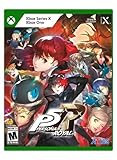
Persona 5 Royal: Standard Edition - Xbox Series X | $58.99 | Buy on Amazon |
| 4 |

|
Persona 3 Reload: Standard Edition - PlayStation 5 | $19.40 | Buy on Amazon |
As an Amazon Associate I earn from qualifying purchases.
1. Set your content boundaries
Start with the ESRB rating and its descriptors for the edition and region you plan to buy. A Teen or Mature label describes material such as violence, language, sexual content, drug references, alcohol use, blood, or nudity. It does not tell you whether battles are easy, whether the story is cheerful, or whether the game is suitable for a particular player in your household.
Read the individual descriptors rather than relying on the letter alone. Two games rated Mature can present very different combinations of violence, sexual themes, language, and substance references. If you are choosing for a younger player, a shared living room, or someone with specific content limits, treat those descriptors as a hard filter before considering genre preferences.
#1 Best Overall
- Base game and over 40 items of previously released downloadable content
- Explore Tokyo, unlock Personas, customize your own personal Thieves Den, experience alternate endings, and more
- Become the ultimate Phantom Thief and defy conventions, discover the power within, and fight for justice in the definitive version of Personal 5 Royal
- Choose between Japanese and English VO
2. Choose a setting and emotional tone
Turn-based combat appears in high-fantasy journeys, contemporary crime dramas, and modern supernatural stories. Decide whether you want an invented world with party-building, a recognizable city with social relationships, or a crime narrative that mixes serious events with humor. Setting determines the kind of exploration, characters, and stakes you will spend dozens of hours with.
3. Identify the combat structure you enjoy
“Turn-based” can mean selecting commands from a menu for a whole party, exploiting elemental weaknesses, or controlling a small group through a tactical battlefield where movement and positioning matter. Ask whether you prefer planning a team between encounters, making precise decisions during each mission, or alternating between both. A menu-driven system can still be demanding when enemies reward preparation; a tactical system can offer many solutions without requiring fast reflexes.
4. Check difficulty controls and your tolerance for experimentation
Look for documented difficulty settings, but do not infer a universal ranking from a rating or genre label. Some games let you lower combat pressure at the start; others expect you to learn party roles, target weaknesses, experiment with abilities, or accept occasional grinding. Decide how much time you want to spend testing builds and how comfortable you are with a consequence that is not immediately obvious.
Free tools Windows power users keep installed
One-click scans. No signup required.
Four games at a glance
| Game | Content rating | Setting and tone | Combat emphasis | Documented difficulty information |
|---|---|---|---|---|
| Persona 5 Royal | Mature 17+: Blood, Drug Reference, Partial Nudity, Sexual Themes, Strong Language, Violence | Modern setting with supernatural Personas, school life, friendships, romance, and activities | Turn-based party combat alongside social and daily-life systems | Difficulty can be selected at the start; the official site recommends SAFE or EASY for story-focused players and says story content is not affected by the level |
| Octopath Traveler | Teen: Blood, Fantasy Violence, Mild Language, Suggestive Themes, Use of Alcohol | Fantasy world of Orsterra with eight protagonists | Command-based, menu-selected battles and eight-character party building | No universal difficulty ranking is established by the cited material; challenge depends on planning, weakness targeting, and learning systems |
| Baldur’s Gate 3 | Mature: Blood and Gore, Partial Nudity, Sexual Content, Strong Language, Violence | Choice-rich role-playing adventure with creatures including gnolls, orcs, and goblins | Turn-based mission encounters emphasizing abilities, positioning, and consequences | No cross-game difficulty ranking is established by the cited material |
| Yakuza: Like a Dragon | Mature 17+: Blood, Intense Violence, Sexual Themes, Strong Language, Use of Alcohol | Contemporary crime melodrama with humor, following Ichiban Kasuga through a clan feud | Turn-based battles against enemy clans with quests, leveling, and party progression | No universal difficulty comparison is established by the cited material |
Persona 5 Royal: the strongest fit for a story-first player
Why it stands out
Persona 5 Royal is the most straightforward recommendation when your priority is a long, character-centered story and you do not want combat difficulty to block progress. Atlus’s official site says you select a difficulty when starting, that “The story content will not be affected by the level you choose,” and that SAFE or EASY is recommended for players who mainly want to enjoy the story. That is unusually explicit difficulty guidance: you can make the combat more forgiving without choosing a separate story mode or sacrificing narrative content.
What you spend your time doing
The game combines turn-based battles with a modern daily schedule. The official description highlights after-school activities, friendships, romances, shopping, movies, public baths, part-time work, and supernatural Personas. Those systems make the game as much about deciding how to use your time and building relationships as about selecting an attack. Choose it if you enjoy seeing characters develop through repeated social interactions and want a contemporary setting rather than a traditional medieval fantasy.
Content to consider
The ESRB rates Persona 5 Royal M for Mature 17+ for Blood, Drug Reference, Partial Nudity, Sexual Themes, Strong Language, and Violence. The rating is a content warning, not evidence that the game is mechanically difficult. If any of those descriptors are outside your boundaries, the selectable SAFE or EASY setting does not change them.
Rank #2
Who should choose it
- Players who want an explicit low-pressure route for combat while retaining the full story.
- Readers who prefer a modern, supernatural character drama with social activities.
- Players willing to manage a substantial calendar of relationships and side activities.
Choose another game if you want a purely combat-focused adventure, a fantasy setting, or content below a Mature rating.
Octopath Traveler: classic fantasy party building with a Teen rating
Its structure
Octopath Traveler takes place in the fantasy world of Orsterra and follows eight protagonists. The ESRB describes combat in which you select attacks from a menu, while Square Enix’s current series description emphasizes command-based battles and an eight-character party. That combination favors players who enjoy assembling a group, deciding which character covers a particular role, and making deliberate selections rather than reacting in real time.
How challenge works
The cited descriptions do not establish a universal difficulty ranking for Octopath Traveler, so it would be misleading to call it objectively easy or hard. Expect its challenge to come from party planning, targeting enemy weaknesses, and learning how the battle systems interact. If you enjoy experimenting with combinations and adjusting your group when a strategy fails, that kind of demand can feel rewarding. If you want a clearly documented story-friendly setting that reduces combat pressure, Persona 5 Royal has stronger evidence for that specific need.
Content profile
The ESRB rates Octopath Traveler T for Teen for Blood, Fantasy Violence, Mild Language, Suggestive Themes, and Use of Alcohol. That is a lower content intensity than the Mature-rated examples in this guide, but the descriptors still identify material you may want to check before handing the game to a younger player.
Who should choose it
- Players looking for a traditional fantasy world rather than a contemporary setting.
- Fans of menu-driven command selection and party composition.
- Players who prefer learning systems and exploiting weaknesses over choosing a preset low-difficulty route.
Baldur’s Gate 3: tactical turns and consequence-heavy decisions
What makes its turns different
Baldur’s Gate 3 uses turn-based combat for most missions. The ESRB description specifically mentions encounters with creatures including gnolls, orcs, and goblins. Its appeal is not simply waiting for an enemy’s turn; you are expected to think about abilities, positioning, and the consequences of choices. A tactical encounter may reward a creative use of the environment or an unusual ability rather than the highest-damage command.
Recommended Free Tools
The right mindset
Choose this game if you enjoy trying an approach, seeing how the world responds, and adapting when a plan produces an unexpected result. Its choice-rich identity means that experimentation is part of the role-playing rather than an optional detour. Players who want every battle to have one obvious optimal sequence may find that openness less comfortable, while players who like solving encounters in different ways may find it central to the experience.
Rank #3
- Prepare for the award-winning RPG experience in this definitive edition of Persona 5 Royal
- This title is packed with beloved characters, confidants, story depth, and plenty of locations to explore with many opportunities to strengthen your abilities in the metaverse and in your daily life
- Explore Tokyo, unlock Personas, customize your own personal Thieves Den, experience alternate endings, and more
- Become the ultimate Phantom Thief and defy conventions, discover the power within, and fight for justice in the definitive version of Personal 5 Royal
Content warning
The ESRB lists Blood and Gore, Partial Nudity, Sexual Content, Strong Language, and Violence. Those Mature descriptors should be treated independently from the game’s tactical demand. The cited material does not establish that Baldur’s Gate 3 is the hardest game in this group, and no objective cross-game ranking should be inferred from its systems.
Who should choose it
- Players who want mission-based tactical encounters rather than only menu-driven party commands.
- Players who enjoy positioning, ability combinations, and consequences that follow from decisions.
- Adults comfortable with the listed Mature content.
Yakuza: Like a Dragon: contemporary crime drama with party progression
Its story and combat identity
Yakuza: Like a Dragon follows Ichiban Kasuga, described by the ESRB as a low-level yakuza caught in a clan feud. The game combines quests and character leveling with turn-based combat against enemy clans. That premise supports a distinctive mix: a contemporary crime melodrama, party progression, and humor rather than a purely historical or fantasy adventure.
Why it may fit you
Choose it if you want recognizable modern surroundings and a protagonist whose story is tied to organized-crime conflict, but still want the structure of a growing RPG party. The leveling and quest systems give you reasons to develop characters between battles. Its tone can move between serious stakes and comic situations, so it suits players who enjoy that contrast.
Quick wins for a faster PC:
Clear out junk files and repair common Windows errorsFree Scan →Fix the driver behind crashes, sound loss and screen glitchesFind Drivers →Repair Windows errors before they cause bigger problemsFix Now →Content warning
The ESRB rates Yakuza: Like a Dragon M for Mature 17+ for Blood, Intense Violence, Sexual Themes, Strong Language, and Use of Alcohol. The “Intense Violence” descriptor is especially important if your content limits are stricter than the general Mature label. A turn-based system does not make those scenes less mature.
Who should choose it
- Players who want a present-day crime narrative instead of fantasy or supernatural school life.
- Players who enjoy quests, leveling, and a persistent party.
- Adults comfortable with intense violence, sexual themes, strong language, and alcohol use.
Match your priorities to a game
If story access matters more than combat mastery
Start with Persona 5 Royal. It is the only title here whose official description explicitly connects a selectable difficulty with uninterrupted story content and recommends SAFE or EASY for story-focused players. Its schedule-based activities also make character relationships a core part of the experience.
If you want the least intense content profile among these choices
Octopath Traveler is the only Teen-rated title in this comparison. Its rating still includes blood, fantasy violence, mild language, suggestive themes, and alcohol use, so review those descriptors against your own boundaries. The other three games carry Mature ratings with broader or stronger descriptors.
Rank #4
- Experience the pivotal game of the Persona series faithfully remade with cutting-edge graphics, modernized quality-of-life features, and signature stylish UI.
- Fully immerse yourself in an emotional, gripping journey with new scenes and character interactions, additional voiceover, and a reloaded soundtrack.
- Choose how to meaningfully spend each day through various activities from exploring the Port Island to forging genuine bonds with beloved characters.
- Build and command your optimal team to take down otherworldly Shadows and climb closer to the truth.
If you want classic fantasy and party planning
Choose Octopath Traveler. Its eight protagonists, Orsterra setting, command-based battles, and eight-character party align with a traditional party-building preference. Be prepared to learn weakness targeting and adjust your group rather than relying on a documented universal easy mode.
If you want tactical missions and creative solutions
Choose Baldur’s Gate 3. Its turn-based missions and emphasis on abilities, positioning, and consequences make experimentation the defining skill. Do not select it solely because you assume turn-based combat will be easy; the available evidence describes its structure, not a comparative difficulty score.
If you want a modern crime story with leveling
Choose Yakuza: Like a Dragon. Ichiban Kasuga’s clan-feud story, quests, character leveling, and battles against enemy clans are aimed at players who want contemporary crime drama wrapped around party progression.
Difficulty: what ratings and labels cannot tell you
A content rating and a difficulty setting answer different questions. ESRB descriptors tell you what material appears on screen or in dialogue. They do not measure how much planning a battle requires, how forgiving a mistake is, or whether grinding is useful. Conversely, a SAFE or EASY setting can reduce combat pressure but cannot remove a Mature story theme.
When a source does not provide a cross-game ranking, use observable demands instead of a number. Ask whether the game expects you to:
What’s actually slowing this PC down?
Pick the symptom - the matching free tool is one click away.
- Plan a party before entering a difficult encounter.
- Target elemental or other weaknesses.
- Learn several interacting systems through experimentation.
- Position characters or exploit abilities during a mission.
- Complete quests and leveling activities between major battles.
This approach gives you a more useful forecast than calling one title “easy” and another “hard” without defining the player or the conditions.
A practical selection process
- Write down unacceptable content. Compare your limits with the exact ESRB descriptors, not just the rating letter.
- Pick the setting you want to inhabit. Select fantasy Orsterra, modern supernatural social life, or contemporary crime drama.
- Choose your preferred decision scale. Pick menu-based party commands, weakness-focused planning, or tactical mission positioning.
- Decide how much help you need. If you want documented low-pressure combat, prioritize Persona 5 Royal’s SAFE or EASY option. For the other titles, plan to learn systems and adjust your party because the cited material does not provide a comparable universal ranking.
- Check the exact edition and region before buying. Confirm that the listing matches the game discussed here and that its rating and content descriptors apply to your region. Availability, inventory, and any promotional price can change, so verify those details at the time of purchase.
- Use your first session as a fit test. Notice whether you enjoy the setting, the amount of menu planning, and the consequences of mistakes. A highly rated system is still the wrong choice if its tone or decision load wears you down.
Common mistakes to avoid
- Choosing by rating alone: a Teen label does not guarantee simple combat, and a Mature label does not guarantee difficult combat.
- Assuming all turn-based games play alike: party commands, weakness targeting, and tactical positioning create different skill demands.
- Ignoring tone: a modern crime story, a supernatural school drama, and a fantasy journey produce very different emotional experiences.
- Expecting every game to have an easy story route: the official low-pressure guidance is documented for Persona 5 Royal; comparable universal evidence is not established for the other titles here.
- Skipping descriptors because a game is turn-based: Mature themes, violence, language, nudity, and alcohol references remain part of the content regardless of combat speed.
Bottom line
Choose Persona 5 Royal for the clearest story-first path with an explicitly documented SAFE or EASY setting, if its Mature content is acceptable. Choose Octopath Traveler for Teen-rated fantasy, eight-protagonist party building, and command-based combat. Choose Baldur’s Gate 3 for tactical missions that reward positioning, ability experimentation, and accepting consequences. Choose Yakuza: Like a Dragon for a contemporary crime melodrama built around quests, leveling, and turn-based battles. Make the content decision first, then match setting, combat structure, and difficulty support to the way you actually want to play.
Quick Recap
Product prices and availability are accurate as of the date/time indicated and are subject to change. Any price and availability information displayed on Amazon at the time of purchase will apply.

