Recommended Free Tools
The best red light therapy device is the one designed for your specific goal, fits the area you need to treat, has verifiable regulatory labeling, and is practical enough to use exactly as directed. Choose a skin mask or panel for facial concerns, a comb, cap, or helmet for hereditary-pattern hair loss, and do not treat FDA clearance as proof that a device will work for you.
Results are usually gradual and vary by device, condition, and person. Before buying, check the intended use, treatment schedule, eye-protection requirements, photosensitivity warnings, and whether a dermatologist should review your condition or medicines.
As an Amazon Associate I earn from qualifying purchases.
What home red light therapy can—and cannot—do
Home red light therapy devices use red or near-infrared light in a process commonly called photobiomodulation. Consumer products include wearable masks, flat panels, handheld wands, and hair-growth caps or combs. The format, light output, treatment distance, and schedule differ substantially, so a result reported for one device cannot automatically be expected from another.
The American Academy of Dermatology (AAD) says some studies find subtle to noticeable improvement in facial fine lines, wrinkles, dark spots, roughness, redness, or loose skin. It also says the studies are difficult to compare because they use different devices, treatment lengths, and research questions, and that more evidence is needed. Cleveland Clinic describes the overall evidence as promising but notes that some studies are small, lack a placebo group, or involve animals or cells rather than people.
#1 Best Overall
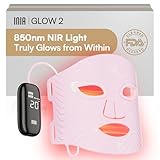
- Dual-Wavelength Revitalization: The INIA Red Light Mask combines 630nm red light for surface renewal with 850nm near-infrared light for deeper skin support. This dual-wavelength design allows up to 2× deeper penetration and energy delivery, helping boost collagen and skin elasticity. Press the “NIR” button to activate both modes and elevate your skincare routine.
- 4 Light Modes, Fully Customizable Routines: Personalize your skincare journey with INIA Red Light Therapy Mask for Face and its 4 precision wavelengths: Red-L (620nm), Red-H (630nm), Blue (460–470nm), and Red+Blue (460–630nm). Whether you’re targeting blemishes, dullness, or wrinkles, each mode can be enhanced with optional NIR activation to match your evolving skin needs.
- Visible Results with 220 High-Energy LED Chips: Step into the next level of skin renewal with LED Face Mask Light Therapy—engineered with 220 LED Chips delivering up to 105mW/cm² energy output. With consistent use over 4+ weeks, see noticeable improvements in skin tone, elasticity, and texture—making every session a step closer to smoother, more radiant skin.
- Tailored Timing for Every Routine: Take control of your skincare with the INIA Red Light Therapy Mask, powered by a high-capacity 2600mAh rechargeable controller. Featuring an intuitive timer function, you can easily select 10, 20, or 30-minute sessions with a short press of the “TIME” button. The device shuts off automatically when time’s up, giving you precise, hands-free treatment from the comfort of your home.
- Safe, Non-Invasive Skincare – Anytime, Anywhere: The LED Red Light Mask delivers salon-grade light therapy at home—without pain, irritation, or downtime. Use it 3 to 7 times a week for 10 to 30 minutes per session. Designed for comfort and results, it’s your reliable, skin-friendly companion for achieving youthful, healthy-looking skin at your own pace.
For hereditary (androgenetic) hair loss, the AAD reports that some—but not all—studies show some regrowth after repeated treatment. The result does not mean a full head of hair will return, and evidence for other causes of hair loss is limited. A red light device should therefore complement, not replace, a diagnosis and evidence-based treatment plan.
Short-term use appears generally safe when the product is used as directed. Reported side effects are usually mild, such as temporary pain or irritated skin. Long-term effects on skin and hair remain unknown, and misuse or excessive exposure can injure skin or eyes.
Start with the problem you want to treat
Write down one primary goal before comparing products. A device marketed broadly for “wellness” may not be labeled for your concern, while a device designed for hair loss may be awkward or ineffective for facial treatment.
The Tool Desk
Outbyte Driver Updater FREEScan for outdated or missing drivers - takes under a minuteDriver Scan →Outbyte PC Repair FREERepair Windows errors before they cause bigger problemsFix Now →Facial skin concerns
For wrinkles, fine lines, uneven tone, rough texture, redness, or mild loss of firmness, look for a device whose labeling specifically describes facial skin use. A mask places the emitters close to the face and provides a defined treatment area. A panel can cover the face, neck, or another body area, but you must maintain the manufacturer’s distance and position for every session. A wand treats a small area at a time and may be useful for spot work, but it usually requires more time and careful positioning.
Acne
Do not assume that any red-light product treats every type of acne. The AAD notes that some FDA-cleared visible-light devices are available for home use, but they are less powerful than devices used by dermatologists. Visible light is aimed at pimples; it does not treat blackheads, whiteheads, cysts, or nodules. If your acne is deep, painful, scarring, or widespread, seek medical assessment rather than relying on a generic red-light mask.
Hereditary-pattern hair loss
Choose a product labeled for hair growth, such as a comb, cap, or helmet, and verify that its intended use covers hereditary or hormonal pattern loss. These devices must deliver light to the scalp rather than the face, so a facial mask is not an interchangeable option. Because other causes—such as inflammatory scalp disease, nutritional deficiency, sudden shedding, or medication effects—may need different treatment, unexplained or rapid hair loss warrants a dermatologist’s evaluation.
Other body areas
Panels and larger systems may be marketed for body skin or pain. Do not transfer a label from one body area or indication to another. The FDA’s body-contouring information lists situations requiring medical caution, including photosensitivity disorders, pregnancy or plans for pregnancy, active implanted devices, cancer at the treatment site, photosensitizing medication, and an active infection, wound, or lesion. That page addresses body-contouring procedures, not every home device, so treat the list as a reason to obtain clinician advice—not as a universal label for all products.
Quick wins for a faster PC:
Fix the driver behind crashes, sound loss and screen glitchesFind Drivers →Clear out junk files and repair common Windows errorsFree Scan →Scan for outdated or missing drivers - takes under a minuteDriver Scan →Rank #2

- RED LIGHT THERAPY MASK: CryoGlow is an at-home LED face mask combining red, blue & deep infrared light with under-eye cooling to target fine lines and acne, firm skin & refresh tired under eyes.
- MOST AWARDED LED MASK IN THE U.S.*: Real people. Real results. Clinically tested on 119 participants by an independent third party & FDA-cleared for results you can see. *Based on the total number of editorial awards issued for skincare by beauty media publications in the U.S. for CryoGlow in 2025.
- EXPERTLY DEVELOPED: Developed by Shark Beauty alongside optical light experts and engineers, bringing MedSpa-inspired red light therapy into your skincare routine.
- 4 TREATMENTS DEVELOPED WITH DERMATOLOGISTS: Better Aging, Skin Clearing, Skin Sustain, and Under-Eye Revive treatments are all clinically tested.
- REDUCE FINE LINES: 6-minute Better Aging Treatment using Red & Infrared LED lights clinically proven to reduce fine lines and firm skin**. **Results from 12-week clinical study with 60 subjects and 1x/day use in Better Aging treatment mode. Individual results may vary.
Match the device format to your treatment area
| Format | Best fit | Advantages | Trade-offs to check |
|---|---|---|---|
| Wearable LED mask | Full-face wrinkles, texture, redness, or a product labeled for mild-to-moderate acne | Hands-free, repeatable positioning, defined face coverage | Usually limited to the face; fit, comfort, heat, and eye protection determine whether you will complete sessions |
| Panel | Larger facial or body areas when the label supports that use | Broad coverage and flexible positioning | Requires a stand or stable setup; treatment distance and angle must be consistent |
| Handheld wand | Small areas or users who want to move device-by-device | Portable and precise | Slow for large areas; holding the correct distance and exposure time can be demanding |
| Hair comb | Scalp treatment along part lines or smaller regions | Separates hair while treating; easy to target a path | Requires systematic coverage and repeated passes; unsuitable for facial goals |
| Hair cap or helmet | Scalp treatment over a broad area | Hands-free and consistent coverage when fitted correctly | Fit, weight, heat, battery life, and scalp coverage vary; intended use is generally hereditary-pattern loss |
Coverage is not automatically better when it is larger. A panel that reaches the whole body may be impractical if you cannot position it correctly, while a smaller mask can be the better choice when it makes regular use easy.
Check clearance and labeling without overreading them
Look for the exact device name or model in the manufacturer’s regulatory information and confirm that the clearance applies to the intended use you care about. “FDA-cleared” means the device has been considered low risk to the public under the applicable pathway; it does not establish that the device will be effective for every buyer.
The AAD states: “FDA cleared doesn’t tell you anything about how effective the device is.” Treat clearance as a safety and regulatory signal, then evaluate the indication, instructions, warnings, and supporting evidence separately. A product that is cleared for facial wrinkles is not thereby cleared for hair loss, joint pain, or every type of acne.
One FDA 510(k) summary describes an over-the-counter, home-use wearable LED mask intended for full-face wrinkles and mild-to-moderate acne. That device lists red light at 630 nanometers, infrared at 830 nanometers, yellow at 590 nanometers, and blue at 415 nanometers. These specifications show what a legitimate product category may look like; they do not prove that those wavelengths, or that particular mask, will outperform another model for you.
Crashes, No Sound, or Screen Glitches?
Random freezes, missing sound and display glitches usually trace back to one bad driver. Find and replace yours safely.Free scan · under a minuteWindows Errors? Fix Them Before They Spread
Repair common Windows errors and clear accumulated junk for a smoother, more stable PC - no reinstall needed.Free scan · no reinstallCompare specifications that affect real use
Wavelength
Wavelength is the color or infrared band emitted by the device. Product pages often make a single wavelength sound decisive, but the reviewed clinical sources do not establish one universally optimal wavelength or protocol for every skin or hair indication. Compare the wavelengths with the device’s labeled purpose and published instructions rather than choosing the largest number or the longest list of colors.
Irradiance and dose
Irradiance describes light power delivered over an area, while dose also depends on exposure time. A high irradiance claim is not useful if the company does not explain how it was measured, at what distance, and over what treatment area. The FDA’s photobiomodulation guidance addresses testing, clinical studies, and labeling in regulatory submissions; use the manufacturer’s stated distance and session duration instead of calculating a personal schedule from marketing numbers.
Coverage and fit
Check whether emitters actually face the area you need to treat, whether hair blocks scalp contact, and whether the device stays in place without pressure points. For a mask, look for openings that protect the eyes without leaving large untreated gaps. For a cap or helmet, confirm that it reaches the thinning regions you want to address.
Rank #3
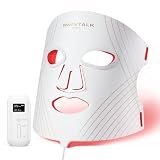
- Clinically Proven Results in 28 Days: Achieve visible improvements backed by lab data with Wavytalk’s LED face mask light therapy: up to 81.5% fewer breakouts, 10.5% reduction in fine lines, and a 70.4% boost in skin radiance. Salon-grade technology delivers professional results at a fraction of the cost. Whether you want clearer, younger-looking skin or a brighter glow —Wavytalk’s red light therapy mask delivers.
- 3-in-1 Light Therapy for Targeted Care: Wavytalk’s Glow Time LED Mask features Anti-Fine Line (630nm red + 850nm near-infrared), Anti-Acne (415nm blue + 630nm red), and Rejuvenation (590nm amber) modes that work together to reduce wrinkles, fight acne, and brighten dull skin. Multi-wavelength technology penetrates deep into the dermis—targeting root cause, not just surface.
- Medical-Grade Power & Full-Face Coverage: With 456 high-purity LED Chips and 40mW/cm² power density, this red light face mask ensures even, full-face coverage and consistent energy output—no missed spots, no patchy results. Enhanced light delivery to T-zone and U-zone targets oiliness, breakouts, and fine lines with precision.
- Smart Fit & Comfort for Multitasking: Made of soft, liquid silicone with light-sealing eye pads and adjustable straps for custom fit — start with a looser setting and adjust for comfort. Whether relaxing or multitasking, this LED mask light therapy stays in place without glare or discomfort.
- Flexible, Safe & Easy Routine: Customize your session with 10, 15, or 20-minute options. Use 3–5 times weekly for lasting results. Powered by a 2500mAh battery with safety lock charging—use only a 5V/1A charger (not included) with the included USB-C cable.
Controls and feedback
A timer, automatic shutoff, visible session indicator, and a clear battery or power connection reduce accidental overuse. These conveniences do not increase clinical effectiveness by themselves, but they can improve adherence and make it easier to follow the labeled schedule.
Eye protection
Read the instructions before purchase, not after opening the box. If the directions require protective goggles, use the specified goggles; the AAD specifically says not to substitute sunglasses. A device that is uncomfortable or leaves you unsure whether your eyes are protected is a poor choice, regardless of its headline specifications.
Evaluate the treatment schedule and the burden of consistency
Home therapy generally requires repeated sessions, and outcomes—when they occur—are gradual. The exact frequency, session length, distance, and total course depend on the product and indication. Do not copy the schedule from another mask, panel, or hair cap. Follow the instructions for the specific model.
Before buying, estimate the practical routine:
- Where will the device be stored and used?
- Can you remain in the required position for the full session?
- Will you need to charge it, connect a cable, or hold a wand?
- Can you clean the contact surfaces as instructed?
- Will the schedule fit around work, exercise, hair washing, or other treatments?
A technically impressive device that you use sporadically is less useful than a simpler one you can use consistently. Do not extend sessions to accelerate results; Cleveland Clinic warns that misuse, including excessive use or failure to follow directions, can injure skin or eyes.
Screen for safety and personal suitability
Conditions that increase light sensitivity
Ask a dermatologist before using a home device if you have a photosensitive disorder, such as lupus, or if sunlight causes blistering or burning. Cleveland Clinic dermatologist Jennifer Lucas, MD, advises: “Anyone who has what’s called a photosensitive disorder, meaning if you go out in the sun and you get blisters or burn, you want to avoid red light therapy.”
What’s actually slowing this PC down?
Pick the symptom - the matching free tool is one click away.
Review every prescription, over-the-counter medicine, and topical product with a clinician or pharmacist if it may increase light sensitivity. Dr. Lucas specifically mentions some antibiotics and blood-pressure medications as examples of sun-sensitizing medicines. Do not stop a prescribed medicine on your own; ask whether the device is appropriate or whether timing and protection need to change.
Skin tone and pigment changes
The AAD cautions that people with darker skin tones may be more sensitive to visible light and may develop hyperpigmentation. Start only after discussing that risk if you have a history of post-inflammatory hyperpigmentation or uneven darkening, and stop if new discoloration appears.
Rank #4

- 【680 Light Beads & Full Coverage】This LED Light Mask for face and neck features 100+70 beads, each containing 4 LED beads, totaling 680 light beads to full cover face, neck and chest. It has more than 5x the beads and power of leading brands, providing even LED light coverage across the face and neck for a convenient skincare experience.
- 【Hassle‑Free Wireless & Skin‑Friendly Design】INTEO LED light mask is lightweight, easy to use, made of soft, skin-friendly silicone—gentle, non-irritating, suitable for all skin types. Wireless magnetic battery control eliminates installation hassle and messy wires. Soft material and sturdy strapsensure a perfect fit for face and neck. Thoughtfully designed to block light for eye comfort duringskincare and enhancing your overall skincare experience.
- 【4 Light Modes for Multi‑purpose Skincare】 Our facial mask features four LED light modes, including 630nm red light, 460nm blue light, 605nm amber light, and 850nm near-infrared light. Easily switch between different light settings to personalize your facial care and LED light therapy routine at home.
- 【Rechargeable 2000mAh Remote with Timer】Rechargeable via Type-C, this cordless LED mask runs 120 mins/week on one charge. It is easy to control the timer by simply pressing the "Time Button" to adjust the timer to 10, 15, 20, 25, or 30 minutes. The device automatically shuts off when the timer ends. Recommended use: 3 to 4 times a week, 20 minutes per session.
- 【Save Your Time & Money】This wireless LED light mask is designed for convenient at-home skincare routines. The reusable cordless design helps support a comfortable beauty care experience whether at home, at work, or while traveling.
Active skin problems and medical devices
Do not place a device over an active infection, open wound, lesion, or cancer at the treatment site unless a treating clinician explicitly directs you to do so. The body-contouring FDA information also flags pregnancy or plans for pregnancy and active implanted devices as situations requiring medical review in that context. Because labels differ, use the warnings for your exact model and obtain individualized advice when any of these conditions applies.
Eye safety
Follow the eye-protection language word for word. Some products may be designed to be used with eyes closed; others require goggles or prohibit use near the eyes. If the instructions are unclear, contact the manufacturer or a clinician before the first session rather than improvising.
Free tools Windows power users keep installed
One-click scans. No signup required.
A step-by-step buying process
- Define one treatment goal. Write “facial wrinkles,” “mild-to-moderate pimples,” or “hereditary-pattern scalp thinning,” rather than a general goal such as “better health.”
- Choose the matching format. Select a mask, panel, or wand for a labeled skin use; select a comb, cap, or helmet for a labeled hereditary-hair-loss use.
- Read the intended-use statement. Confirm the body area, condition, age restrictions, and whether the product is intended for home use.
- Verify the regulatory claim. Check the exact model and indication in the manufacturer’s documentation. Do not accept a generic statement that a whole product line is cleared.
- Download the instructions. Find the session duration, frequency, distance, eye protection, cleaning method, charging requirements, and warnings before purchasing.
- Check contraindications and medicines. If you have photosensitivity, darker skin with a tendency to pigment, an active lesion, an implanted device, pregnancy, or a potentially photosensitizing medicine, obtain clinician advice.
- Assess coverage and fit. Make sure the light reaches the treatment area and that you can wear or position the device comfortably for every session.
- Plan adherence. Put the sessions on a calendar and identify a clean, safe storage location. If the routine is unrealistic, choose a less burdensome format.
- Set a reassessment date. Photograph skin or hair under the same lighting and angle, and assess progress only after following the labeled course—not after a few isolated sessions.
Use the device safely from the first session
- Read the model-specific instructions again. Confirm the required distance, exposure time, eye protection, and whether skin must be clean and free of products.
- Inspect the device. Do not use it if the housing, cable, battery, goggles, or emitters are damaged.
- Prepare the treatment area. Clean the skin or scalp as directed and remove anything the instructions say could interfere with light delivery.
- Position it exactly as specified. A panel may require a measured distance; a mask or cap must sit evenly so the intended area receives light.
- Complete only the labeled session. Do not add extra time, repeat immediately, or combine devices unless a clinician tells you to.
- Record your response. Note discomfort, redness, swelling, eye symptoms, or pigment changes. Stop and seek advice if a reaction is significant, persistent, or worsening.
- Clean and store it. Follow the manufacturer’s cleaning method and keep the device and eye protection away from heat, moisture, and children.
What results are realistic?
Expect a gradual, uncertain response rather than an overnight change. For facial concerns, the AAD describes outcomes ranging from subtle to noticeable in some studies, with no guarantee for an individual. For hereditary hair loss, some studies report regrowth over time, but not a complete restoration of hair and not consistent results for everyone.
An AAD study summary published on its page in 2024 reported that more than 90% of participants said they noticed some improvement after eight LED treatments over four weeks in a 90-person study. That percentage describes those participants, that device and protocol, and their self-reported improvement; it is not a general success rate for all masks or home users.
Track changes consistently. Take baseline photographs before treatment, use the same room and lighting, and avoid judging progress from day-to-day variation. For hair, monthly photographs of the same part line can be more informative than daily mirror checks. If the labeled course ends without meaningful improvement, reassess the diagnosis and device with a dermatologist instead of increasing exposure.
Common selection mistakes and how to avoid them
Choosing by wavelength alone
A wavelength list does not tell you whether the device covers your target area, has an appropriate dose, or is cleared for your concern. Start with intended use and instructions, then use wavelength as one comparison detail.
Do these 3 things before closing this tab:
1Clear out junk files and repair common Windows errors2Fix the driver behind crashes, sound loss and screen glitches3Repair Windows errors before they cause bigger problemsAssuming clearance guarantees results
Clearance addresses regulatory status and risk, not personal effectiveness. Verify the indication and keep expectations modest.
Best Value

- Dual-Wavelength Revitalization: The INIA Red Light Mask combines 630nm red light for surface renewal with 850nm near-infrared light for deeper skin support. This dual-wavelength design allows deep penetration and energy delivery, helping boost collagen and skin elasticity. Press the “NIR” button to activate both modes and elevate your skincare routine.
- 4 Light Modes, Fully Customizable Routines: Personalize your skincare journey with INIA Red Light Therapy Mask for Face and its 4 precision wavelengths: Red-L (620nm), Red-H (630nm), Blue (460–470nm), and Red+Blue (460–630nm). Whether you’re targeting blemishes, dullness, or wrinkles, each mode can be enhanced with optional NIR activation to match your evolving skin needs.
- Visible Results with 220 High-Energy LED Chips: Step into the next level of skin renewal with LED Face Mask Light Therapy—engineered with 220 LED Chips delivering up to 105mW/cm² energy output. With consistent use over 4+ weeks, see noticeable improvements in skin tone, elasticity, and texture—making every session a step closer to smoother, more radiant skin.
- Tailored Timing for Every Routine: Take control of your skincare with the INIA Red Light Therapy Mask, powered by a high-capacity 2600mAh rechargeable controller. Featuring an intuitive timer function, you can easily select 10, 20, or 30-minute sessions with a short press of the “TIME” button. The device shuts off automatically when time’s up, giving you precise, hands-free treatment from the comfort of your home.
- Safe, Non-Invasive Skincare – Anytime, Anywhere: The LED Red Light Mask delivers salon-grade light therapy at home—without pain, irritation, or downtime. Use it 3 to 7 times a week for 10 to 30 minutes per session. Designed for comfort and results, it’s your reliable, skin-friendly companion for achieving youthful, healthy-looking skin at your own pace.
Using a face mask for hair loss
Facial and scalp devices are designed for different coverage patterns. Use a hair-specific format for hereditary-pattern loss and seek diagnosis for other shedding.
Replacing goggles with sunglasses
Sunglasses are not an approved substitute when the instructions require protective goggles. Use the supplied or specified protection.
Overtreating because results are slow
More time or more frequent sessions can increase the chance of irritation or eye injury without proving a better outcome. Follow the schedule exactly.
Ignoring a new rash or darkening
Stop treatment and obtain medical advice for persistent irritation, pain, blistering, eye symptoms, or new hyperpigmentation. A reaction is a reason to reassess suitability, not to push through the course.
When professional guidance is the better first step
Arrange a dermatologist consultation before purchasing when the diagnosis is uncertain, hair loss is sudden or patchy, acne is painful or scarring, pigmentation changes easily, or you have a light-sensitive condition or potentially photosensitizing medicine. A dermatologist can determine whether red light is likely to help, could worsen an existing condition, or should be combined with standard treatment.
Professional care is also appropriate when you have completed the device’s labeled course without improvement, cannot follow the eye-protection instructions, or develop a significant reaction. Home treatment should not delay evaluation of a changing lesion, infected wound, rapidly progressing hair loss, or severe acne.
A quick decision framework
| If your priority is… | Start by looking for… | Do not overlook… |
|---|---|---|
| Facial wrinkles, texture, redness, or mild laxity | A home-use mask or panel labeled for facial skin | Fit, eye protection, treatment distance, and realistic gradual results |
| Mild-to-moderate pimples | An FDA-cleared visible-light device specifically labeled for acne | Visible light does not treat blackheads, whiteheads, cysts, or nodules |
| Hereditary-pattern hair loss | A cleared comb, cap, or helmet labeled for hereditary hair loss | Variable regrowth, repeated use, and diagnosis of other causes |
| A large body area | A panel whose labeling covers that body area | Distance, positioning, contraindications, and the body-contouring cautions that may require clinician review |
The practical winner is the device whose indication matches your diagnosis, whose safety instructions you can follow, and whose routine you can maintain. No reviewed evidence establishes a single best consumer wavelength, irradiance level, or format for every person and condition.
Quick Recap
Product prices and availability are accurate as of the date/time indicated and are subject to change. Any price and availability information displayed on Amazon at the time of purchase will apply.

