Choose Stellaris if Fallout’s strongest appeal is exploring an unknown science-fiction setting, meeting unusual factions, and creating an unpredictable story. Choose Sid Meier’s Civilization VII if you want a more approachable, turn-based empire game with exploration and several clear paths to progress. Choose Europa Universalis IV if you want diplomacy, trade, religion, colonization, and long-term statecraft in a historical world.
None of these games reproduces Fallout’s character-level role-playing, companions, first-person scavenging, or moment-to-moment shooting. The useful question is which Fallout feature you want to enlarge: exploration, faction politics, world-building, or strategic control over a society.
| # | Preview | Product | Price | |
|---|---|---|---|---|
| 1 |

|
Sid Meier's Civilization® VII Standard - PC [Online Game Code] | $69.99 | Buy on Amazon |
| 2 |
|
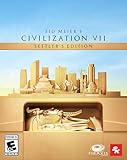
Sid Meier's Civilization VII Settler's - PC Steam [Online Game Code] | $119.99 | Buy on Amazon |
| 3 |

|
Sid Meier's Civilization VII Deluxe - PC [Online Game Code] | $50.00 | Buy on Amazon |
As an Amazon Associate I earn from qualifying purchases.
What Fallout fans should expect from a grand strategy game
Fallout puts you in the shoes of one survivor. You walk through ruined places, search containers, talk to companions, choose dialogue responses, and make decisions whose consequences are personal and immediate. A grand strategy game moves the camera far away. You usually direct a civilization, empire, or state on a map rather than controlling one person in a 3D world.
Do these 3 things before closing this tab:
1Repair Windows errors before they cause bigger problems2Scan for outdated or missing drivers - takes under a minute3Clear out junk files and repair common Windows errorsThat change in scale affects every part of play:
- Control: you manage settlements, provinces, fleets, armies, research, laws, or diplomacy instead of one character’s equipment and skills.
- Exploration: discovery means surveying regions, finding anomalies, claiming territory, or opening new routes rather than entering a building and looting it room by room.
- Factions: relationships are represented by alliances, rivalries, ideologies, borders, treaties, and wars instead of a party of companions and local quest givers.
- Progression: technologies, institutions, cultures, leaders, traits, and economic systems replace a personal perk tree.
- Story: events arise from the systems and your decisions. You create a campaign narrative rather than following a single authored protagonist.
If you mainly want first-person role-playing and scavenging, a grand strategy game may not satisfy the core appeal. If you enjoy Fallout’s factions, moral choices, environmental mysteries, and alternate-history imagination, the games below can provide a larger-scale version of those interests.
#1 Best Overall
- BUILD AN EMPIRE THAT STANDS THE TEST OF TIME - Lead your empire through distinct Ages of human history. Each Age is its own rich, nuanced journey, with unique playable civilizations, available resources, explorable land, and even entire gameplay systems, creating a deep, historically immersive strategy experience. Strive to accomplish significant scientific, cultural, militaristic, and economic milestones within each Age to unlock impactful advantages in the next!
- EVOLVE YOUR EMPIRE AS EACH NEW AGE DAWNS - To build a legacy that truly stands the test of time, you must adapt. Forge your own path through history as you reshape your empire at the start of each Age, selecting from a pool of new Age-relevant civilization options determined by your prior gameplay accomplishments. Evolving your empire unlocks fresh gameplay bonuses and unique units, so your current civilization is always at the height of its power.
- PLAY AS VISIONARY LEADERS OF PROGRESS - Embody an illustrious leader with one of Civilization's most diverse rosters yet, from traditional heads of state known for their militaristic might or political prowess, to visionary leaders who made everlasting impacts in philosophy, science, human rights, and more!
- TEST YOUR STRATEGIC METTLE IN MULTIPLAYER - Compete against other players online and prove your prowess as a great leader.** Multiplayer matches can be epic multi-Age campaigns, or take place in a single Age so you can enjoy an entire game in a single session. Cross-play is supported, so you can play together with friends wherever they are.
Quick comparison: Stellaris, Civilization VII, and Europa Universalis IV
| Game | Control scale | Setting | Exploration and discovery | Politics and progression | Best fit for a Fallout fan |
|---|---|---|---|---|---|
| Stellaris | Interstellar civilization and empire | Science fiction | Science ships survey unexplored space; anomalies can trigger quests and discoveries | Species, diplomacy, warfare, ship design, and a procedurally generated galaxy | The closest thematic match: strange worlds, factions, and emergent stories |
| Sid Meier’s Civilization VII | Civilization across a long historical campaign | Broad civilizational history | Map exploration, territory, resources, and new opportunities across three Ages | Scientific, cultural, militaristic, and economic milestones; identity can change between Ages | The clearest entry point for turn-based empire building |
| Europa Universalis IV | Historical country and state | History from the early modern era onward | Exploration and colonization alongside changing borders | Diplomacy, alliances, warfare, trade, religion, science, and hundreds of countries | The deepest choice for political simulation and statecraft |
The table describes the kind of decisions each game asks you to make, not a promise that any of them plays like Fallout. Your choice should follow the scale and setting you want, not a superficial genre label.
Stellaris: choose this for Fallout-style discovery and faction drama
Paradox Interactive describes Stellaris as beginning with a civilization that has discovered interstellar travel and is ready to explore the galaxy. That premise gives it the strongest thematic overlap with Fallout’s science-fiction curiosity. Instead of walking toward a ruined vault or an unexplained signal, you send science ships into unexplored space.
Why its exploration feels familiar
Science ships survey star systems and can encounter anomalies. An anomaly may lead to a quest or discovery that changes what happens in your campaign. This structure is the closest of the three to Fallout’s environmental storytelling: you investigate something unknown, choose how to respond, and live with an outcome that may not have been obvious at the start.
The scale is different. You do not personally enter the location, aim a weapon, or search a desk. Your decision is about how an entire civilization handles the discovery. The reward is an emergent campaign story rather than a scripted companion scene.
Why its factions and politics fit Fallout fans
Stellaris supports varied species, diplomacy, interstellar warfare, and customizable ships. The galaxy is procedurally generated, so the combination of neighbors, resources, threats, and discoveries changes from campaign to campaign. That variety can produce the same broad pleasure as Fallout’s competing factions: you meet groups with different priorities, decide whom to trust, and reshape the balance of power.
Diplomacy is conducted between empires rather than between your character and a settlement leader. Your choices can involve negotiation, alliances, rivalry, or war. Ship customization adds another layer of strategic identity: you are deciding how your civilization prepares for threats, not selecting a single character’s rifle or armor.
The trade-off: a heavier simulation
Stellaris is a complex grand-strategy simulation. You must monitor an empire, its technology, relationships, military capacity, and expanding territory. The game is not the most immediately readable option if you want a simple turn-by-turn rhythm. Its strength is the number of interacting systems that can generate an unexpected story; that same interconnection creates a steeper learning commitment than a character-focused role-playing game.
Quick wins for a faster PC:
Clear out junk files and repair common Windows errorsFree Scan →Fix the driver behind crashes, sound loss and screen glitchesFind Drivers →Repair Windows errors before they cause bigger problemsFix Now →Pick Stellaris when these statements sound right
- You want science fiction rather than a historical setting.
- You enjoy discovering anomalies and letting events redirect a campaign.
- You want to meet strange species and manage relationships between factions.
- You prefer an emergent story that comes from systems and decisions.
- You are willing to learn a real-time grand-strategy simulation instead of a first-person role-playing game.
Civilization VII: choose this for an approachable, turn-based empire sandbox
The official Civilization VII site lists a February 11, 2025 launch for PlayStation, Xbox, Nintendo Switch, PC, Mac, and Linux through Steam and Epic. Check the current edition, platform version, and regional availability before purchasing, because those details can change by market.
Rank #2
- Expand the strategic horizons of your empire and enjoy more options for your reign with Sid Meier's Civilization VII Settler's Edition! Sid Meier's Civilization VII Settler's Edition is the ideal way for new players to start their journey through history with a treasure trove of additional content. Settler's Edition includes: Full base game, the Tecumseh and Shawnee Pack, the Crossroads of the World Collection, the Right to Rule Collection, 4 leader Personas, and the Deluxe Cosmetics Pack.
- TECUMSEH AND SHAWNEE PACK - This content pack adds the leader Tecumseh and the Shawnee civilization to Civilization VII! Tecumseh specializes in diplomacy and defense.
- CROSSROADS OF THE WORLD COLLECTION - Explore new possibilities for your personalized empire with the post-launch add-on content of the Crossroads of the World Collection! Embody two new leaders: Simón Bolívar and Ada Lovelace. Lead four new civilizations: Carthage, Great Britain, Bulgaria, and Nepal. Discover the majesty of four new Natural Wonders: Machapuchare, Mount Fuji, Vihren, and Vinicunca. And expand your experience with a cosmetic bonus.
- RIGHT TO RULE COLLECTION - Explore new possibilities for your personalized empire with the post-launch add-on content of the Right to Rule Collection! Embody two new leaders: Genghis Khan and Lakshmibai. Lead four new civilizations: Assyria, Dai Viet, Qajar, and Silla. Discover the majesty of four new Wonders: Grand Bazaar, Mausoleum at Halicarnassus, Ubudiah Mosque, and Wat Xieng Thong. And expand your experience with a cosmetic bonus.
- 4 LEADER PERSONAS - Enjoy alternate Personas for four of Civilization VII's leaders, including Ashoka (World Conqueror), Friedrich (Baroque), Himiko (High Shaman), and Xerxes (The Achaemenid)! Each persona includes a unique outfit and background for the respective leader, plus a new Unique Ability and Agenda that reflect a different side of their personality!
Civilization VII is the best default if you like Fallout’s exploration and world-building but want a clearer, turn-based structure. You guide a civilization as it grows rather than inhabiting a survivor. Each turn gives you time to examine the map, consider diplomacy, move units, develop settlements, and decide which long-term direction to pursue.
How the three Ages shape a campaign
The Xbox description identifies three Ages: Antiquity, Exploration, and Modern. Your civilization moves through these stages, and the way you develop it affects the advantages available later. The structure gives a campaign a readable rhythm: establish a foundation, expand and make contact, then deal with a more developed modern world.
You can keep a civilization’s identity, evolve it into a new identity, or combine approaches. That flexibility resembles Fallout’s interest in competing visions for society, but it operates at a civilizational level. You are not choosing a dialogue response for one settlement; you are determining what kind of society your empire becomes.
Four broad routes to progress
Scientific, cultural, militaristic, and economic milestones unlock advantages in later Ages. These routes let you pursue different definitions of success:
- Scientific: prioritize discovery and technological development.
- Cultural: build influence through identity and cultural achievement.
- Militaristic: use armed strength and strategic expansion.
- Economic: develop resources and wealth to support your civilization.
The game does not require you to commit to one route permanently. A campaign can change direction as the map, other civilizations, and your available opportunities change. This makes Civilization VII approachable without making every game identical.
Where it differs most from Fallout
Civilization VII’s setting is broad civilizational history, not post-apocalyptic science fiction. Its exploration is map-based, and its conflicts involve armies, borders, resources, and diplomacy. There are no companions whose personalities develop alongside your survivor, and no first-person scavenging loop. The appeal is watching a society take shape over many turns and seeing your strategic choices reflected in its later identity.
Pick Civilization VII when these statements sound right
- You want turn-based pacing that lets you think before committing to an action.
- You prefer a readable empire-building structure to a dense real-time simulation.
- You want several strategic paths—scientific, cultural, militaristic, and economic.
- You like the idea of a civilization changing across Antiquity, Exploration, and Modern Ages.
- You want exploration and diplomacy without requiring a science-fiction setting.
Europa Universalis IV: choose this for historical politics and statecraft
The Europa Universalis IV manual presents a grand-strategy game covering exploration and colonization, diplomacy, warfare, trade, religious turmoil, scientific development, and hundreds of countries.
What’s actually slowing this PC down?
Pick the symptom - the matching free tool is one click away.
Choose Europa Universalis IV when the part of Fallout you value most is political consequence: alliances that shift, factions competing for power, resources that constrain decisions, and a world that changes because of your policies. You govern a historical state rather than a fictional survivor or a spacefaring species.
Rank #3
- Expand the strategic horizons of your empire and enjoy more options for your reign with Sid Meier's Civilization VII Deluxe Edition!
- Deluxe Edition includes: Full base game, Early Access, the Tecumseh and Shawnee Pack, the Crossroads of the World Collection, and the Deluxe Content Pack.
- BUILD AN EMPIRE THAT STANDS THE TEST OF TIME - Lead your empire through distinct Ages of human history. Each Age is its own rich, nuanced journey, with unique playable civilizations, available resources, explorable land, and even entire gameplay systems, creating a deep, historically immersive strategy experience. Strive to accomplish significant scientific, cultural, militaristic, and economic milestones within each Age to unlock impactful advantages in the next!
- EVOLVE YOUR EMPIRE AS EACH NEW AGE DAWNS - To build a legacy that truly stands the test of time, you must adapt. Forge your own path through history as you reshape your empire at the start of each Age, selecting from a pool of new Age-relevant civilization options determined by your prior gameplay accomplishments. Evolving your empire unlocks fresh gameplay bonuses and unique units, so your current civilization is always at the height of its power.
- PLAY AS VISIONARY LEADERS OF PROGRESS - Embody an illustrious leader with one of Civilization's most diverse rosters yet, from traditional heads of state known for their militaristic might or political prowess, to visionary leaders who made everlasting impacts in philosophy, science, human rights, and more!
What makes its statecraft distinctive
Diplomacy is not a side activity. Alliances, rivalries, wars, and negotiations shape whether your country can survive and expand. Trade links economic decisions to geography and power. Religious turmoil can destabilize a state, while scientific development affects what becomes possible later. Exploration and colonization open new territory but also create new strategic obligations.
The result is a campaign in which a military victory may create an economic problem, a religious change may upset diplomacy, or expansion may stretch your ability to govern. That interconnected cause and effect can appeal to Fallout players who enjoy deciding which faction’s vision should prevail, even though the setting and viewpoint are completely different.
The trade-off: patience and complexity
Europa Universalis IV is usually the least immediately approachable of these three choices because its systems are tightly connected and its historical scope is extensive. You need patience to understand how diplomacy, trade, religion, warfare, exploration, and science affect one another. The reward is a detailed simulation of statecraft in which a campaign can diverge dramatically from real history.
Recommended Free Tools
Pick Europa Universalis IV when these statements sound right
- You want historical change rather than science fiction or a broad, simplified civilization arc.
- You enjoy alliances, rivalries, negotiation, and long-term diplomatic planning.
- You want trade, religion, colonization, warfare, and scientific development to interact.
- You are comfortable learning a detailed simulation with many countries and interconnected systems.
- You want to manage a state’s survival and ambitions rather than follow a personal protagonist.
Match the Fallout feature you miss most
| If your favorite Fallout element is… | Start with… | What you will actually get |
|---|---|---|
| Exploring unknown places and uncovering strange stories | Stellaris | Science ships, unexplored space, anomalies, quests, and discoveries in a procedurally generated galaxy |
| Building a society and deciding what it becomes | Civilization VII | A civilization that develops through Antiquity, Exploration, and Modern Ages with changing identities |
| Faction politics, alliances, and consequences | Stellaris or Europa Universalis IV | Interstellar diplomacy and species politics in Stellaris; historical diplomacy, trade, religion, and warfare in Europa Universalis IV |
| Choosing a strategic path over many hours | Civilization VII | Scientific, cultural, militaristic, and economic milestones that shape later advantages |
| Historical power struggles and changing borders | Europa Universalis IV | State management across exploration, colonization, diplomacy, trade, religious turmoil, warfare, and science |
| Companions, first-person role-playing, and scavenging | None of these | These games operate at map and society scale; a character-focused role-playing game is a better fit |
How to decide in five minutes
- Choose your setting. Select science fiction for Stellaris, historical statecraft for Europa Universalis IV, or a broad civilizational setting for Civilization VII.
- Choose your pace. Pick Civilization VII if turn-based readability matters most. Pick one of the Paradox games if you want a more continuous, system-heavy simulation.
- Choose your unit of control. Decide whether you would rather manage a civilization, an interstellar empire, or a historical country. None puts you in control of one survivor.
- Choose your kind of discovery. For anomalies and strange factions, choose Stellaris. For map growth across three Ages, choose Civilization VII. For exploration tied to colonization and state power, choose Europa Universalis IV.
- Choose your tolerance for learning. Civilization VII is the safer first strategy purchase if you want a clear turn structure. Stellaris and Europa Universalis IV offer deeper simulations but ask you to track more connected systems.
Common mismatches and how to avoid them
Expecting a first-person Fallout replacement
Even Stellaris, the closest thematic match, does not reproduce walking through ruins, collecting equipment, speaking through a dialogue tree, or traveling with companions. Its discoveries are decisions made for a civilization. Buy it for the feeling of exploring an unknown science-fiction galaxy, not for Fallout’s combat and scavenging loop.
Assuming “exploration” means the same thing in every game
In Stellaris, exploration begins with science ships, surveys, and anomalies. In Civilization VII, it means revealing and developing a strategic map while your civilization advances through Ages. In Europa Universalis IV, exploration is connected to colonization and the expansion of a historical state. Decide which version of discovery sounds rewarding before you choose.
Choosing a game for its setting while ignoring its control scale
A science-fiction setting does not make Stellaris a role-playing game, and a historical setting does not make Europa Universalis IV merely a war game. The decisive difference is whether you want to manage an empire or state. Civilization VII is also not a personal adventure simply because it lets you explore and make choices; its subject is a civilization.
Buying without checking the current edition or platform
Civilization VII’s official launch information covers PlayStation, Xbox, Nintendo Switch, PC, Mac, and Linux through Steam and Epic, with a launch date of February 11, 2025. Confirm the edition, updates, platform requirements, and regional storefront listing at the time of purchase. The supplied official information does not establish a universal price or identical availability for every market, so do not assume that a listing in one region applies to yours.
The Tool Desk
Outbyte PC Repair FREEClear out junk files and repair common Windows errorsFree Scan →Outbyte Driver Updater FREEFix the driver behind crashes, sound loss and screen glitchesFind Drivers →Final recommendation
Start with Stellaris if you want the strongest Fallout-adjacent combination of science fiction, exploration, unusual factions, diplomacy, and emergent narrative. Choose Civilization VII if you want the most approachable turn-based empire sandbox and a clear progression through Antiquity, Exploration, and Modern Ages. Choose Europa Universalis IV if Fallout’s factional politics make you want a deeper simulation of diplomacy, trade, religion, colonization, and state power.
The right purchase depends on what you are scaling up. Stellaris scales up the unknown world, Civilization VII scales up society-building, and Europa Universalis IV scales up political control. All three replace the survivor’s personal journey with decisions that shape a much larger world.
Quick Recap
Product prices and availability are accurate as of the date/time indicated and are subject to change. Any price and availability information displayed on Amazon at the time of purchase will apply.

