Choose a face sunscreen that provides broad-spectrum protection and SPF 30 or higher. If you swim or sweat, choose a water-resistant formula. After those protection requirements are met, match the texture to your skin: creams generally suit dry skin, gels often feel better on oily skin, and mineral formulas containing zinc oxide and/or titanium dioxide are an option for sensitive skin. Tinted formulas with iron oxide can add visible-light protection and may reduce white cast.
The best sunscreen is one you can spread generously and reapply on schedule. A label word such as “sensitive,” “sport,” or “non-comedogenic” is a selection clue, not proof that a product will suit every person.
As an Amazon Associate I earn from qualifying purchases.
Start with protection, then choose the feel
Facial sunscreen decisions become simpler when you separate non-negotiable protection claims from comfort and appearance preferences. The American Academy of Dermatology (AAD) recommends sunscreen that is broad spectrum, SPF 30 or higher, and water resistant, particularly for swimming or sweating. Broad spectrum means the product is designed to protect against both ultraviolet A (UVA) and ultraviolet B (UVB) radiation.
Do these 3 things before closing this tab:
1Scan for outdated or missing drivers - takes under a minute2Repair Windows errors before they cause bigger problems3Fix the driver behind crashes, sound loss and screen glitchesAbout one in five Americans will develop skin cancer during their lifetime, according to the AAD’s Practice Safe Sun page, updated April 11, 2024. That is a U.S. population lifetime-risk estimate, not a prediction of any one person’s outcome. Sunscreen is one part of a larger sun-protection plan.
#1 Best Overall
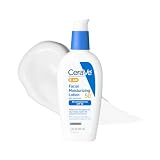
- [ BROAD SPECTRUM SPF 50 ] A micro-fine zinc oxide sunscreen for UVA/UVB protection. This CeraVe face moisturizer with sunscreen is a hydrating facial lotion that spreads easily, is absorbed quickly, and leaves a non-greasy finish
- [ HYALURONIC ACID & NIACINAMIDE ] Anti aging moisturizer contains Hyaluronic Acid to retain skin's moisture and Niacinamide to help calm skin. MVE Technology delivers hydration throughout the day
- [ LIGHTWEIGHT & BLENDABLE ] This daily sunscreen for face has a lightweight formula that blends easily into all skin tones with no white residue
- [ 3 ESSENTIAL CERAMIDES ] Ceramides are found naturally in the skin and make up ~50% of the lipids in the skin barrier. CeraVe's facial moisturizer with sunscreen is formulated with three essential ceramides (1, 3, 6-II) and help restore the skin’s natural barrier
- [ DAILY MOISTURIZER WITH SPF ] Use this daily face sunscreen as the last step in a daytime skincare routine. If layering, apply face lotion with SPF after other product applications have been fully absorbed. Reapply every two hours for protection.
Use this order when comparing products:
| Priority | What to check | How to use the information |
|---|---|---|
| 1. Protection | Broad-spectrum claim and SPF 30 or higher in the Drug Facts panel | Reject a product that does not meet both requirements, regardless of its texture or marketing. |
| 2. Exposure conditions | Water-resistant claim, with a time of 40 or 80 minutes | Choose water resistance when you will swim or sweat, then reapply as directed. |
| 3. Skin preference | Cream, moisturizing formula, gel, mineral actives, or non-comedogenic wording | Use these cues to find a formula you can apply in the required amount. |
| 4. Appearance | Tint and iron oxide, white-cast visibility, finish | Choose the finish that makes daily use and reapplication realistic; appearance never replaces the protection claims. |
The AAD’s label guidance is summarized in its How to decode a sunscreen label article. Read the Drug Facts panel and active ingredients rather than relying on the largest words on the front of the package.
Choose a texture for your skin type
Dry skin
A cream or moisturizing sunscreen is usually the most comfortable starting point for dry skin. The AAD says creams are best for dry skin and for facial application. A richer vehicle can reduce the tight, uncomfortable feeling that makes people apply too little or skip reapplication.
When testing a cream, check whether it spreads across the entire face without tugging. You still need the same broad-spectrum SPF 30-or-higher protection as every other skin type. “Moisturizing” describes feel and formulation; it does not establish UVA protection, UVB protection, SPF, or water resistance. Confirm those claims separately in the Drug Facts panel.
Free tools Windows power users keep installed
One-click scans. No signup required.
Oily or acne-prone skin
For an oily complexion, the AAD suggests trying a gel. Also look for “non-comedogenic” or “won’t clog pores” wording. These terms are useful product-selection cues, not guarantees: an individual can still react to a formula labeled non-comedogenic.
Choose the lightest texture that lets you apply the full amount without abandoning the routine because of shine or heaviness. A matte finish may be a personal preference, but it does not make a sunscreen more protective. If a product repeatedly causes pimples or irritation, stop using it and select another formula rather than reducing the amount applied.
Sensitive skin
Mineral sunscreen containing zinc oxide and/or titanium dioxide is an option the AAD recommends for sensitive skin. Look at the active-ingredient list to verify what is actually in the product. A front-label “sensitive skin” claim is not a guarantee of tolerance, so pay attention to your own response.
Rank #2
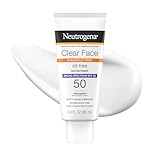
- Designed for acne-prone skin: Broad spectrum SPF 50 facial sunscreen formulated for oily and sensitive skin and reliable UVA/UVB protection while helping keep pores clear and skin looking shine-free
- Clear Face formula: Non-comedogenic daily face sunscreen with a lightweight, oil-free texture that absorbs quickly, feels breathable, and is comfortable for daily use and layering under makeup
- Sunscreen that won't cause breakouts: Oil-free and oxybenzone-free facial sunscreen moisturizer designed to support consistent, daily sun protection for oily skin and acne-prone skin
- Everyday face sunscreen: Water-resistant sunscreen up to 80 minutes, ideal for daily wear, outdoor activities, workouts, and active lifestyles that require a reliable, weightless sunscreen on the go
- Dermatologist-recommended sun care brand: Facial sunscreen formulated with decades of skin science expertise to deliver dependable broad spectrum protection for daily sun care routines
If a sunscreen causes persistent burning, rash, swelling, or other concerning symptoms, discontinue it and seek advice from a qualified medical professional. People with a diagnosed skin condition or ongoing reactions may benefit from a dermatology consultation to identify suitable active ingredients and vehicles.
Combination skin
Combination skin does not require a separate protection standard. Start with broad-spectrum SPF 30 or higher, then choose a texture that you can use comfortably over both the oilier and drier areas. A gel or lighter cream may be easier to spread than a very thick product; the practical test is whether you can apply enough to cover the whole face without avoiding particular zones.
If one formula feels uncomfortable on the entire face, do not compensate by applying less. Choose another texture that you will use consistently, while keeping the same protection requirements.
Skin prone to dark spots or melasma
Tinted sunscreen containing iron oxide can provide added protection against visible light. The AAD considers this particularly relevant for dark spots and melasma. Tint may also make a white cast less noticeable.
Tint is an addition, not a substitute. The product still needs broad-spectrum coverage and SPF 30 or higher, and water resistance still matters when you are swimming or sweating. Iron oxide in a tinted formula does not allow you to apply less or reapply less often.
The Tool Desk
Outbyte PC Repair FREEClear out junk files and repair common Windows errorsFree Scan →Outbyte Driver Updater FREEFix the driver behind crashes, sound loss and screen glitchesFind Drivers →How to read a face-sunscreen label
Broad spectrum and SPF
In U.S. labeling, a broad-spectrum claim is tied to testing of UVA protection relative to UVB protection. Look for the words “broad spectrum” alongside an SPF value of 30 or higher. SPF is the labeled protection measure for UVB; broad spectrum addresses UVA as well. Neither term tells you that a product is waterproof, sweatproof, or suitable for every skin type.
Rank #3
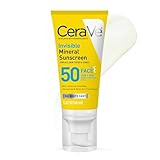
- [ INVISIBLE MINERAL SUNSCREEN FOR FACE ] Mineral sunscreen for all skin tones and skin types, offers 100% invisible finish and protection against UVA/UVB rays. Daily broad spectrum sunscreen can be used as hydrating makeup primer.
- [ MINERAL SUNSCREEN APPLICATION ] High protection mineral sunscreen for face with no white cast. Shake well before use. Apply product generously to face and neck 30 minutes before sun exposure. Suitable for use under makeup. Invisible on beards.
- [ GENTLE FORMULA ] Formula is fragrance free; noncomedogenic; and suitable for sensitive and acne-prone skin. Provides protection against UVA/UVB rays with 24H hydration. FSA Eligible & HSA Eligible.
- [ 3 ESSENTIAL CERAMIDES ] Ceramides are found naturally in the skin and can become damaged with sun exposure. All CeraVe products are formulated with three essential ceramides (1, 3, 6-II) to help restore and maintain the skin’s natural barrier.
- [ MINER-ALL TECHNOLOGY ] Formulated with Miner-ALL technology, Invisible Mineral SPF 50 ensures 100% invisible and weightless application for all skin tones and skin types, including sensitive skin.
Water resistance
U.S. sunscreen labels may state water resistance for 40 or 80 minutes under swimming or sweating conditions. The time is not a promise that protection continues unchanged for the entire day. The AAD advises reapplying every two hours while outdoors even when your skin remains dry, and reapplying after swimming, sweating, or toweling.
“Waterproof” and “sweatproof” are not permitted sunscreen claims in the United States. The FDA also cautions that “sunblock” overstates what sunscreen can do. Treat “sport,” “active,” and similar marketing language as descriptions of intended use, not as substitutes for the Drug Facts information. The FDA’s consumer guidance, Tips to Stay Safe in the Sun: From Sunscreen to Sunglasses, was surfaced as published in September 2026.
Active ingredients
For a mineral option, the active ingredients should include zinc oxide, titanium dioxide, or both. “Mineral” is a formulation description; broad-spectrum status and SPF still need to appear on the label. For any product, use the Drug Facts panel to confirm the active ingredients and directions instead of assuming that a claim such as “natural” or “clean” identifies the protection level.
Recommended Free Tools
Tint, white cast, and visible-light protection
White cast is the visible residue some sunscreens leave on the skin. A tinted formula can make that appearance less noticeable, although the result varies with shade and skin tone. Tint can also make daily wear more acceptable, which matters because sunscreen only protects the areas you actually cover.
Iron oxide is the ingredient to look for when you want the added visible-light protection the AAD discusses for dark spots and melasma. A tint without iron oxide should not automatically be assumed to provide that benefit. Check the active-ingredient and product information.
Do not select a tinted product solely for its color. Confirm broad-spectrum SPF 30-or-higher protection first, then decide whether the shade and finish encourage you to apply the full amount and reapply.
Rank #4

- SHEER FINISH — This sunscreen for face is easy to apply and blends in across all skin tones with no white cast
- LIGHTWEIGHT & NON-GREASY — Non comedogenic, fragrance free sunscreen won’t clog pores; the ultimate sunscreen for acne prone skin
- CLINICALLY PROVEN — Dermatologist and pediatrician approved broad spectrum UVA/UVB sunscreen SPF 50
- WATER-RESISTANT TRAVEL SIZE SUNSCREEN — Resists water and sweat for up to 80 minutes, perfect for beach trips, baseball games, and beyond
- IDEAL SUN CARE FOR SENSITIVE SKIN — Oil-free and alcohol-free facial sunscreen that applies quickly and easily, offering all-day comfort
Apply enough sunscreen to your face
Even a well-chosen formula underperforms when too little is applied. The AAD recommends at least one teaspoon for the face, approximately the amount that covers the length of your index and middle fingers. Use the product’s own directions as the final authority if they specify a different application method or area.
- Apply before going outdoors. Put sunscreen on exposed facial skin before you leave, rather than waiting until you are already in the sun.
- Measure the amount. Use at least one teaspoon for the face, or the AAD’s approximate index-and-middle-finger measure. Measuring makes it easier to avoid the common habit of applying a thin, cosmetic-sized layer.
- Cover all exposed facial skin. Spread the sunscreen evenly over the areas not covered by clothing, following the product directions. Do not let a preferred finish persuade you to leave out the edges of the face.
- Use the product consistently. A texture that feels comfortable is valuable because it makes the correct amount practical. If a formula pills, stings, or leaves an appearance you cannot tolerate, change formulas rather than cutting the amount.
- Reapply on schedule. Reapply every two hours while outdoors and after swimming or sweating. Reapply after toweling, even when the label says the product is water resistant.
The AAD’s detailed directions are available in How to apply sunscreen. Sunscreen should be part of your routine before exposure, not an emergency step after your skin has started to redden.
How water resistance changes your routine
Water resistance is useful for beach days, pool sessions, outdoor exercise, and any situation in which sweat or water will remove product. The 40- or 80-minute statement describes the tested swimming or sweating interval on the U.S. label; it does not eliminate the need to reapply.
- Reapply every two hours while you are outdoors, even if your skin stays dry.
- Reapply immediately after swimming or sweating, according to the product directions.
- Reapply after toweling, because rubbing can remove sunscreen.
- Do not treat a water-resistant label as permission to stay in direct sun indefinitely.
Use sunscreen with other sun protection
Sunscreen is one layer of protection. The AAD recommends seeking shade, wearing protective clothing including UPF-rated clothing, choosing a wide-brimmed hat, and using UV-protective sunglasses along with sunscreen. These measures are especially useful when reapplication is difficult or when you will be outside for a long period.
Plan the protection around the activity. For a commute, a comfortable daily formula may be the priority. For swimming or heavy exercise, water resistance and a reapplication plan matter more. For an outdoor event, shade, a hat, clothing, and sunglasses can reduce the amount of skin that depends on sunscreen alone.
A practical decision path
Use this sequence when comparing two or more face sunscreens:
Best Value

- Potent Mineral Formula for Natural Suncreen Protection: This lightweight 100% mineral tinted faces sunscreen with titanium dioxide was developed for daily SPF protection, gentle enough for sensitive skin, and provides broad spectrum SPF 50 protection
- Subtle & Blendable Tint for a Flawless, Glowy Look: The fast-absorbing, blendable texture leaves a tinted matte finish on skin for a healthy glow. Gentle and non-greasy to provide a smooth base for makeup application on all skin types
- Unique Cell-Ox Shield Technology: Formulated with Cell-Ox Shield Technology, this 100% mineral sunscreen offers broad spectrum UVA/UVB defense to decrease the risk of skin cancer and early aging from sun exposure. Face sunscreen for women and men
- Available in 4 Flexible Shades - Find your Match: Now available in 4 flexible shades - Tinted, Medium, Medium-Depp and Deep - this sunscreen blends seamlessly into diverse skin tones, ensuring a healthy glow without any white cast
- Allure Best of Beauty Winner: Winner of the Allure Best of Beauty Badge, it is dermatologist tested & recommended by the Skin Cancer Foundation to be effective at preventing sun-induced damage to the skin, including sunburn & possibly premature aging
- Confirm broad spectrum and SPF 30 or higher. If either claim is missing, remove the product from consideration.
- Match water resistance to your exposure. If you will swim or sweat, select a product labeled water resistant for 40 or 80 minutes.
- Choose the skin-type texture. Start with cream or moisturizing for dry skin, gel for oily skin, and mineral zinc oxide and/or titanium dioxide for a sensitive-skin option.
- Address appearance and visible light. If white cast, dark spots, or melasma are concerns, consider a tinted formula with iron oxide.
- Check your likely behavior. Pick the formula you can spread in the AAD-recommended amount and reapply every two hours outdoors. A theoretically ideal product is a poor choice if its feel makes you use too little.
| Your main concern | Useful starting point | What still must be verified |
|---|---|---|
| Dryness or tightness | Cream or moisturizing formula | Broad spectrum, SPF 30 or higher, and water resistance when needed |
| Oiliness or acne-prone skin | Gel; “non-comedogenic” or “won’t clog pores” wording | Your personal tolerance; these terms are not guarantees |
| Sensitivity | Mineral active ingredients: zinc oxide and/or titanium dioxide | Actual active ingredients and your response; “sensitive” on the label is not conclusive |
| Dark spots or melasma | Tinted sunscreen with iron oxide | Broad-spectrum SPF 30-or-higher protection and the reapplication directions |
| Swimming or sweating | Water-resistant product labeled for 40 or 80 minutes | Two-hour reapplication outdoors and reapplication after water, sweat, or toweling |
Troubleshooting common problems
“The sunscreen feels heavy, so I use less.”
Switch to a gel, lighter cream, or another texture rather than reducing the amount. The selection goal is a formula that allows complete coverage and regular reapplication. A lighter feel does not lower the protection requirement; it can simply make correct use more achievable.
“A non-comedogenic sunscreen still causes breakouts.”
Non-comedogenic wording is not a guarantee for every person. Stop using a product that repeatedly causes problems, and try a different formula while retaining broad-spectrum SPF 30-or-higher protection. If acne or irritation persists, seek professional medical advice instead of cycling through products indefinitely.
“Mineral sunscreen leaves a white cast.”
Consider a tinted formula; the AAD notes that tint may reduce white cast. Check whether the tint contains iron oxide if visible-light protection for dark spots or melasma is a goal. Do not trade away broad-spectrum coverage or the labeled SPF simply to avoid visible residue.
Quick wins for a faster PC:
Fix the driver behind crashes, sound loss and screen glitchesFind Drivers →Repair Windows errors before they cause bigger problemsFix Now →Scan for outdated or missing drivers - takes under a minuteDriver Scan →“My sunscreen says water resistant, so I do not reapply.”
Water resistance is time-limited and applies to tested swimming or sweating conditions. Reapply every two hours outdoors and after swimming, sweating, or toweling, as the AAD advises. “Waterproof” and “sweatproof” are not permitted U.S. sunscreen claims.
“The front label says sensitive, sport, or natural.”
Front-label adjectives do not replace the Drug Facts panel. Confirm broad-spectrum coverage, SPF 30 or higher, water resistance when relevant, and the active ingredients. Then judge whether the texture and finish work for your skin.
When to get individual advice
General selection guidance cannot identify the cause of persistent rash, swelling, burning, or recurring acne. If you have a diagnosed skin condition, repeated reactions, or difficulty finding a tolerable sunscreen, a dermatologist can help evaluate ingredients and recommend a routine suited to your condition. Continue using shade, protective clothing, a wide-brimmed hat, and UV-protective sunglasses while you resolve the problem.
For a concise AAD overview of selecting a product, see How to select a sunscreen and How do I know if I’m using the right sunscreen?. The winning choice is the one that meets the protection criteria, suits your skin, and remains comfortable enough for generous, repeated application.
PC Slower Than It Used to Be?
A free scan shows the junk files, broken settings and background clutter dragging Windows down - then fixes them in one click.Free scan · Windows 10 & 11Outdated Drivers Are Slowing You Down
One free scan finds every outdated or missing driver and matches the right update for your exact hardware.Free scan · exact hardware matchQuick Recap
Product prices and availability are accurate as of the date/time indicated and are subject to change. Any price and availability information displayed on Amazon at the time of purchase will apply.

