What’s actually slowing this PC down?
Pick the symptom - the matching free tool is one click away.
Choose the network from your threat model and participation model—not from the word “blockchain.” A permissionless network fits open participation, public verification and cryptoeconomic Sybil resistance. A permissioned network fits identifiable members, controlled admission, selective disclosure and organization-level governance. Then test consensus and finality, node and client diversity, privacy and deletion limits, key custody, recovery, operating cost and ecosystem maturity against your actual workload.
Start with the security decision, not the chain name
A blockchain is a ledger shared according to a protocol. Its security comes from who may participate, how disagreement is resolved, what data is replicated, how identities are controlled and how operators respond to failure. The same label—public, private, proof of stake or enterprise—does not establish that an application is secure.


As an Amazon Associate I earn from qualifying purchases.
Write down the answers to six questions before comparing platforms:
- Who may read records and metadata?
- Who may submit transactions?
- Who may validate, order or endorse transactions?
- Who administers membership, policies and upgrades?
- Who can recover the system after key loss, software failure or a compromised administrator?
- Which parties must be unable to collude to rewrite, censor or disclose records?
These answers determine whether you need a permissionless, permissioned or hybrid design. They also reveal requirements that a chain comparison alone cannot solve, such as application authorization, secure key storage and data-retention procedures.
#1 Best Overall
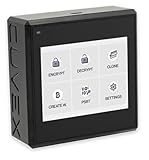
- Sovereign Self-Custody HSM: Personal hardware security module that encrypts secrets offline without relying on servers or third-party infrastructure
- Offline PSBT Signing: Sign Bitcoin PSBT transactions with deliberate human verification and dual air-gap security, minimizing attack surfaces
- No Telemetry, No Metadata Leakage: Designed with zero telemetry, zero balance auditing, and zero backend dependency for maximum privacy
- AES-256-GCM Cryptography: Seed phrases are encrypted offline with advanced AES-256-GCM; secrets never touch internet-connected systems
- Supports Any Wallet: Works seamlessly with existing wallets that expose recovery seeds (Ledger, Trezor, Coldcard, Jade, etc.)
Permissionless, permissioned or hybrid?
| Architecture | Security strengths | Security trade-offs | Typical fit |
|---|---|---|---|
| Public permissionless network, such as Ethereum | Independent verification, broad validator participation, public auditability and cryptoeconomic resistance to Sybil attacks | Public metadata and replicated state, difficult deletion, exposure to fees and congestion, and reliance on ecosystem governance | Public settlement, open interoperability and proofs that must be independently verifiable |
| Permissioned network, such as Hyperledger Fabric | Identified members, policy-based access, endorsement rules, channels, private-data collections and controllable governance | Trust shifts toward consortium members and operators; collusion, administrator compromise and membership errors must be modeled | Enterprise workflows with known participants and confidentiality requirements |
| Hybrid architecture | Sensitive workflow data stays in controlled systems while proofs or commitments can be anchored publicly | More components, bridges, key-management paths and operational dependencies | Applications needing both private processing and public tamper evidence |
When a permissionless network is appropriate
Use a permissionless network when parties cannot be pre-approved, an independent observer must verify the history, or the application needs open composability. Participants are not trusted because an administrator admits them; the protocol uses economic incentives and penalties to make large-scale Sybil attacks costly. You must still assess validator concentration, censorship resistance, reorganization or finality behavior, client diversity and the practical cost of disrupting the network.
Public replication is useful evidence, but it is not confidentiality. Every datum placed in a broadly replicated ledger can create a long-lived disclosure, including transaction timing, addresses, amounts, relationships and operational patterns. A public chain is therefore a poor default location for secrets, personal data or regulated payloads.
When a permissioned network is appropriate
Choose permissioned operation when participants are known organizations, access must be revoked, data must be disclosed only to defined groups, or governance needs formal approval. NIST distinguishes this model by its access-controlled membership rather than cryptoeconomic admission. Security depends on the accuracy of identities, the independence of member organizations and the policies governing endorsement, ordering, upgrades and recovery.
PC Slower Than It Used to Be?
A free scan shows the junk files, broken settings and background clutter dragging Windows down - then fixes them in one click.Free scan · Windows 10 & 11Outdated Drivers Are Slowing You Down
One free scan finds every outdated or missing driver and matches the right update for your exact hardware.Free scan · exact hardware matchHyperledger Fabric illustrates the model: components and actors have identities, while membership-service-provider settings, access policies, channel policies, lifecycle policies and endorsement policies define what each identity may do. An endorsement policy can require specified organizations to execute and approve a transaction result before it is accepted.
When hybrid architecture is the right compromise
A hybrid design can keep business records, personal information and workflow permissions inside a controlled environment while publishing a hash, commitment or proof to a public network. Anyone can later test whether the private record matches the anchored commitment without receiving the underlying payload.
This pattern reduces public disclosure, but it does not remove security obligations. Protect the private database, the commitment keys, any bridge or relay service and the process that decides which record is anchored. Document what happens if the private system is unavailable, the public transaction is delayed, or a key must be rotated.
Evaluate consensus and attack resistance
Public-network checks
Ethereum uses proof-of-stake consensus. Its documentation describes rewards and penalties, a fork-choice rule and the role of full nodes in enforcing consensus. For a security-sensitive deployment, ask:
- What event gives a transaction finality, and how often can the visible history reorganize before that point?
- How concentrated are validators, staking providers, geographic locations and network connections?
- What would censorship look like, and how quickly could an honest user route around it?
- Are multiple independent execution, consensus and networking clients maintained?
- What is the realistic cost and coordination required for an attacker to control or disrupt validation?
- Can your organization run and monitor independent full nodes rather than trusting a single remote endpoint?
Do not treat the validator count alone as a security score. A large set that depends on the same operator, cloud region, software client or service provider can fail together. Ethereum’s node guidance emphasizes that more diverse full nodes improve robustness and decentralization.
Permissioned-network checks
For a consortium network, identify the fault model explicitly. Determine how many organizations may fail, collude, go offline or become malicious before the system can approve an invalid result or stop making progress.
- What quorum or endorsement threshold is required?
- Are ordering nodes operated by multiple independent organizations?
- Can one administrator change membership, policies and smart-contract code?
- Can a colluding subset censor a member or rewrite an application-level record?
- Are endorsement results independently checked before ordering?
- What evidence is retained for disputes about an organization’s approval?
Fabric’s endorsement model can constrain which organizations must approve a transaction, but the policy is only as strong as its administration. A threshold that looks robust on paper fails if the same person or credential controls several organizations.
Design confidentiality, retention and deletion before deployment
Immutability can conflict with security, privacy and regulatory duties. NIST warns that a ledger’s resistance to alteration can become a problem when security-sensitive information must be deleted. Encryption does not automatically solve this: ciphertext remains replicated, metadata may remain visible and future key compromise can expose retained data.
Keep sensitive payloads off a broadly replicated ledger
Store documents, credentials, personal data and secrets in an access-controlled system. Put only the minimum necessary reference, hash or commitment on-chain. Use authenticated encryption, independent authorization and a documented retention schedule for the off-chain store. If deletion is required, destroy the relevant encryption keys and remove the off-chain object according to the applicable policy; do not claim that deleting a pointer erases an immutable ledger history.
Use restricted data features deliberately
Hyperledger Fabric distinguishes channels from private-data collections. A channel gives its members a confidential transaction ledger. A private-data collection keeps the values with authorized peers while hashes remain available to support validation. Compare both designs against metadata leakage, membership changes, backup handling, peer compromise and the need to prove a value to an outside party.
Ask whether timestamps, participant identities, amounts, chaincode names or access patterns reveal more than the payload. A private value with a public hash can still disclose that a transaction occurred and when it occurred.
Make identity and governance testable
Security-sensitive systems need written procedures—not informal promises—for admission, removal and emergency action. Compare candidates on these controls:
Do these 3 things before closing this tab:
1Clear out junk files and repair common Windows errors2Scan for outdated or missing drivers - takes under a minute3Repair Windows errors before they cause bigger problems- Membership: How is an organization verified, and who approves its certificate or account?
- Least privilege: Can a read-only auditor, submitter, validator and administrator receive separate credentials?
- Policy changes: Which quorum approves an endorsement, channel, ordering or lifecycle-policy change?
- Contract upgrades: Is new code reviewed, tested and approved by multiple parties before activation?
- Key rotation and revocation: How quickly can a compromised identity be disabled, and what happens to transactions it already signed?
- Emergency controls: Can the application pause new submissions without corrupting the ledger, and who may invoke that action?
- Recovery: Can the network be rebuilt from verified backups without restoring a compromised policy or key?
Governance is part of the threat model. A technically strong consensus protocol cannot protect a deployment in which one administrator can silently add a validator, change endorsement rules or replace application code.
Protect signing keys as a first-class control
List every key that can authorize value, endorse a transaction, sign a block, administer membership or publish an upgrade. Record its owner, permitted operation, storage location, backup method, rotation interval, revocation path and audit trail.
Keep private keys out of ordinary application processes wherever possible. Hyperledger Fabric documents hardware security modules (HSMs) as a way to protect private keys and perform cryptographic operations while allowing peers to endorse transactions and orderer nodes to sign blocks without exposing the keys.
HSM questions to resolve
- Does the deployment require an on-premises appliance, a cloud HSM or both?
- Is PKCS#11 or another required integration supported by the node software?
- Can two or more authorized people approve sensitive operations?
- How are keys backed up, restored and tested after a disaster?
- Can custody be separated between application, infrastructure and governance teams?
- What happens if the HSM is unavailable during a consensus, endorsement or recovery event?
An HSM does not fix excessive permissions, insecure policies or compromised application authorization. It limits key exposure and can produce stronger operational evidence; the surrounding access controls still determine who may ask it to sign.
Check production maturity and operating reality
NIST recommends a protocol with very high network security, an active technical development and support ecosystem, active contributors and a mainnet rather than a weaker testnet for production records. Treat “works in a demonstration” as a development milestone, not a production assurance.
Assess the software and support ecosystem
- Are execution, consensus, peer and client releases maintained and independently reviewed?
- How are vulnerabilities disclosed, patched and communicated to operators?
- Can you obtain reproducible builds, signed releases and a clear compatibility policy?
- Are node metrics, logs, alerts and incident timelines available to your operations team?
- Can your organization run an independent node and verify data without a single hosted RPC provider?
- How are upgrades coordinated across organizations, regions and client implementations?
Measure your own workload
Do not import a generic throughput claim into a security decision. Test transaction size, endorsement count, read/write contention, confirmation target, failure recovery, backup time and peak load using your real privacy and policy settings. Record latency distributions, not just averages, and test degraded conditions such as an unavailable validator, delayed peer, revoked certificate or overloaded ordering service.
Include recurring infrastructure, storage growth, archival, monitoring, HSM operation, audits, incident response, network egress and personnel in the operating-cost model. A network with low transaction fees can still be expensive to run safely.
Use a weighted scorecard instead of a brand shortlist
Give each candidate a documented score and an evidence note for every axis. Weight the axes according to the threat model; do not let a convenient developer toolchain outweigh a failed confidentiality requirement.
The Tool Desk
Outbyte PC Repair FREERepair Windows errors before they cause bigger problemsFix Now →Outbyte Driver Updater FREEFix the driver behind crashes, sound loss and screen glitchesFind Drivers →| Axis | Questions to answer |
|---|---|
| Participant admission | Open, invitation-only or organization-verified? How are members removed? |
| Read, write and validation permissions | Who can submit, inspect, endorse, order and administer? |
| Consensus and finality | What is the fault model, confirmation rule and reorganization behavior? |
| Validator or peer concentration | Could one operator, region, provider or client fail together? |
| Confidentiality and metadata | Which payloads, identities, timing and relationships are replicated? |
| Smart-contract isolation | How are code execution, dependencies, upgrades and resource exhaustion contained? |
| Key custody | Can critical keys use HSMs, split approval, rotation and tested recovery? |
| Governance and upgrades | Who changes policy, software and membership, and what quorum is required? |
| Incident recovery | Can operators pause, restore, audit and resume without reintroducing compromise? |
| Workload performance | Does measured latency and capacity meet the application’s peak and recovery targets? |
| Cost and compliance | What are infrastructure, personnel, fee, geographic and regulatory consequences? |
| Ecosystem support | Are clients, tooling, documentation, maintainers and security response credible? |
A practical selection procedure
- Write the threat model. Name attackers, trusted parties, collusion assumptions, availability targets, privacy obligations and the records that must remain independently verifiable.
- Classify every datum. Mark each field as public, consortium-visible, role-restricted, personal, secret or subject to deletion. Reject designs that place a prohibited class on a broadly replicated ledger.
- Define the participation model. Specify who may read, submit, validate, administer, upgrade and recover. This step usually narrows the architecture more than a feature list does.
- Set the consensus acceptance criteria. Document finality, tolerated failures, censorship assumptions, validator or peer independence and acceptable recovery behavior.
- Design identity and key custody. Separate roles, select certificate or account controls, define rotation and revocation, and decide where HSMs or equivalent protected signing services are required.
- Model governance failure. Simulate a compromised administrator, colluding members, a lost key, a malicious upgrade and an unavailable ordering or validator service.
- Prototype the real workload. Use realistic transaction sizes, privacy settings, endorsement policies, geographic placement and failure injection. Capture latency, capacity, recovery time and operational effort.
- Verify production readiness. Confirm maintained mainnet or production status, release support, incident communications, independent-node operation, observability, backup procedures and an upgrade runbook.
- Make the decision reversible where possible. Keep sensitive data portable, isolate chain-specific adapters and document how commitments, identities and historical evidence would be migrated.
Common mistakes and how to correct them
“Public means automatically safer”
Public verification can strengthen auditability, but it also creates permanent disclosure and operational exposure. Correct the mistake by separating public proofs from private payloads and evaluating metadata leakage.
Rank #4
“Private means nobody needs to be trusted”
A permissioned network replaces anonymous economic assumptions with named operators and policies. Correct the mistake by distributing administration, requiring multi-organization endorsement and testing collusion scenarios.
Putting encrypted personal data directly on-chain
Encryption may not satisfy deletion or future-confidentiality requirements. Correct the design with off-chain storage, minimal commitments, key-destruction procedures and documented retention controls.
Using one hot key for every role
A shared key makes attribution and containment difficult. Correct it with separate identities, least privilege, HSM-backed signing where justified, rotation and tested revocation.
Recommended Free Tools
Relying on one node, client or hosted endpoint
A single dependency can hide outages, censorship or data corruption. Correct it with independent nodes, diverse clients where available, authenticated data checks and operational monitoring.
Treating a testnet as production
Testnets may have weaker security, different governance and unstable data. Correct the mistake by selecting a maintained production network and documenting the release and migration process.
Ignoring application and upgrade security
Consensus cannot validate business logic that is wrong. Correct it with code review, dependency controls, authorization tests, resource limits, multi-party upgrade approval and an emergency pause plan.
What “secure enough” should mean
A defensible choice has an explicit trust model, a consensus assumption matched to that model, no prohibited data on an unsuitable ledger, independently protected signing keys, distributed administration, tested recovery and an operating team that can observe and upgrade the system. Ethereum may fit a need for open settlement and independent public verification; Hyperledger Fabric may fit identified organizations requiring policy-based access and restricted data; a hybrid may fit applications needing both. None is universally safest, and the correct answer can change when participants, regulations, data sensitivity or recovery requirements change.
Free tools Windows power users keep installed
One-click scans. No signup required.
Quick Recap
Product prices and availability are accurate as of the date/time indicated and are subject to change. Any price and availability information displayed on Amazon at the time of purchase will apply.

