Recommended Free Tools
Build your ecommerce customer-service stack around the channels your team can reliably staff and the information agents need to resolve the issues customers contact you about. Start with a helpdesk or service workspace connected to customer and order records; connect order-management and fulfillment systems for post-purchase work; then add self-service, automation, workforce tools, and analytics as concrete needs arise. The goal is a coherent workflow—not the largest possible collection of software.
Start with the work your support team needs to do
Before choosing software, list the channels customers use, the reasons they contact you, and the customer information or actions needed to resolve each type of contact. Ecommerce support may involve email, website chat, phone, text, and social channels. Every channel adds operational commitments: someone must staff it, know how to handle its conversations, meet an appropriate response time, and measure its performance.
As an Amazon Associate I earn from qualifying purchases.
For each recurring contact reason—such as an order-status question, a cancellation request, or a return—write down what an agent must see and what they must be able to do. A useful design separates three things that are often mistakenly treated as one: the conversation, the commerce record, and the post-purchase process. A helpdesk handles conversations; the ecommerce platform owns commerce customer and order records; and an order-management system (OMS) or fulfillment system may own shipping, returns, or other post-purchase state.
What’s actually slowing this PC down?
Pick the symptom - the matching free tool is one click away.
- Conversation: Which channel did the customer use, and where should an agent reply?
- Context: Which customer, order, payment, shipment, or prior-contact details are needed?
- Action: Which system is authorized to change an order, cancel it, issue a refund, or update a return?
Decide which system is authoritative for each record and action before connecting tools or automating changes. Otherwise, agents and integrations can end up acting on stale or conflicting information.
#1 Best Overall

- Compatible with a Wide Range of Desk Phones: This QD headset includes two QD-RJ09 cables and is compatible with most IP phone models from brands including Snom, Aastra, Mitel, ShoreTel, Polycom, Sangoma, Fanvil, Grandstream, Yealink, Digium, NEC, Toshiba, and Nortel. ⚠ Please note: This product is not compatible with Cisco IP phones, mobile phones, or computers.
- Excellent Sound Quality: This RJ09 telephone headset delivers HD audio for crystal-clear communication. Its noise-cancelling microphone effectively reduces background noise, making it ideal for use in busy or noisy work environments.
- All-day comfort: This call center headphone with large soft leatherette ear cushions and lightweight design ensure all-day comfort wearing. Adjustable headband is suitable for different head sizes and 300 degree rotatable microphone boom enables you to find perfect fit.
- Durable Corded Headset: Featuring a stainless steel headband and a high-quality noise-canceling microphone, this headset is designed for professionals who rely on clear and reliable communication throughout their workday. It delivers exceptional voice clarity and durability, offering performance comparable to leading brands like Plantronics and Jabra.
- Professional Office Headset: Equipped with a quick-disconnect plug for easy and convenient plugging and unplugging. The comfortable monaural design allows users to stay aware of their surroundings while on calls.
Map the six customer-service capabilities
Shopify’s 2026 contact-center technology guide groups a service stack into six capability layers. Treat these as functions to assess, not a shopping list of six separate products. A small team may cover several in one platform, while a larger operation may use dedicated systems where its workflows require them.
| Capability | What it contributes | Question to resolve before adding it |
|---|---|---|
| Communication channels | Ways customers contact the business, such as email, chat, phone, text, and social channels. | Can the team staff, train for, and report on each channel it offers? |
| Helpdesk and CRM | A workspace for handling conversations and viewing relevant customer history and commerce data. | Can agents see the context they need and complete supported actions without unnecessary tool switching? |
| Knowledge base and self-service | Customer-facing information that can help customers answer common questions without an agent. | Which recurring questions have clear, maintained answers suitable for self-service? |
| Automation and AI | Routing or other workflow assistance, and potentially automated help for suitable requests. | Which steps are predictable enough to automate, and who handles exceptions? |
| Workforce management | Capabilities for planning and managing support staffing. | Does the team’s channel coverage and workload call for dedicated workforce tools? |
| Analytics and quality assurance | Ways to assess service operations and the quality of customer interactions. | Which service measures or quality reviews will inform an actual operational decision? |
Start with the capabilities needed to handle today’s contact volume and workflows. Add a layer when there is a clear operational owner and a defined problem it will solve; buying tools without staffing or maintaining their workflows can add complexity rather than improve service.
Connect the helpdesk to customer and order context
A helpdesk is more useful when it brings customer conversations together with relevant customer history and ecommerce order information. An agent handling an order question should be able to identify the customer and the relevant purchase within the service workflow, rather than reconstructing context across unrelated systems.
Free tools Windows power users keep installed
One-click scans. No signup required.
Native commerce integrations can expose order details and, where supported, let agents take actions such as refunds or cancellations from the service workspace. Do not assume that a connector offers every action, that an action is available for every order, or that every account can use it. Capabilities can depend on the products, plans, account configuration, and permissions involved.
Rank #2

- NOISE CANCELLING MICROPHONE: Our monaural customer service headset features a built-in HD microphone with noise cancellation technology, ensuring crystal-clear voice transmission even in noisy environments. The flexible microphone can be adjusted to your preferred position for optimal sound quality during calls.
- VERSATILE COMPATIBILITY: This telephone headset is designed with an RJ9 crystal plug, making it compatible with a wide range of devices including office phones, call center systems, and telemarketing equipment. Perfect for customer service representatives, insurance agents, and conference call participants.
- ADJUSTABLE VOLUME CONTROL: The single-sided ear headphone comes with easy-to-use volume adjustment controls, allowing you to customize the speaker volume to your preferred level without any complicated setup or drivers required.
- COMFORTABLE DESIGN: Featuring soft ear cushions and a flexible headband, our RJ9 business headset provides all-day wearing comfort. The ultra-lightweight ABS material construction reduces fatigue during long work sessions.
- DURABLE CONSTRUCTION: Built with a sturdy structure and high-quality materials, this communication headset delivers reliable performance and long-lasting durability. The extended cable length offers freedom of movement while maintaining clear audio quality.
For example, Zendesk’s Shopify setup documentation states that its Support and Chat integration requires both Zendesk Support and Zendesk Chat. That prerequisite matters when assessing the actual setup: a named integration is not necessarily a standalone capability included with every service account. Confirm current product and plan terms, required permissions, and supported actions with the vendors.
Shopify’s guide names Gorgias, Zendesk, and Re:amaze as examples of helpdesk apps that connect service functionality with customer and order data. That list is not a head-to-head test or a ranking. Compare each candidate against the workflows your agents must perform, not just the fact that a connector exists.
Connect order management and fulfillment for post-purchase support
When support handles shipping, fulfillment, cancellations, returns, or refunds, the ecommerce order record may not be the only relevant source of truth. Order management commonly covers these post-purchase processes. Identify which system owns each status and which system is permitted to change it, then make that information available in the agent workflow where it is needed.
Salesforce’s developer documentation describes patterns for connecting a third-party OMS to Salesforce Order Management. The broader architectural point is that an OMS can be connected to the service and commerce environment rather than replaced by the helpdesk. Whether a dedicated OMS belongs in a particular stack depends on fulfillment complexity and the systems already in use; it is not a universal requirement for ecommerce support.
Rank #3
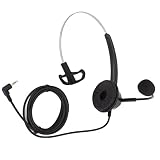
- I: H360-2.5 Business Headset is built with formance even with daily use. Its ction s it a choice for busy call centers and environments.
- AND COMABLE: ed for all-day , this monaural phone headset feas -weight truction, soft ear pads, and a ible headband. Stay ed on your contions wit m or fatigue.
- CLEAR SOUND : Enjoy with noise-c phone, which can be adjusted for optimal positioning. HD mic e is and clear, for calls customer service.
- WIDE COMPATIBI: 2.5mm phone headset is compatible with any device featu a 2.5mm headphone jack, g it tile for use in eting, insurance, confere, and home setups.
- TO USE: This plug-and-play business headset requires no drivers or complicated setup. Simply ect 2.5mm plug to your device and start g calls with s and com.
For a return inquiry, for example, an agent may need the original order from the commerce platform, the current return or fulfillment state from the system that manages that process, and a clearly authorized path for any change. Displaying a status is not the same as having permission or integration support to alter it. Keep those distinctions explicit in agent procedures and system permissions.
Compare options by workflow, not by connector badges
Shopify’s guide identifies commerce integration, automation, customer history, reporting, and extensibility as helpdesk evaluation areas. For a customer-service stack, extend that comparison to channel coverage, data freshness, actions available in the agent workspace, and the prerequisites to use them. The available information does not establish an independent head-to-head winner among the named helpdesks.
| Evaluation area | What to compare | Why it matters |
|---|---|---|
| Channels and agent workflow | Which channels are supported and how agents receive, reply to, and manage those conversations. | A channel is useful only if it fits the team’s operating and staffing model. |
| Customer and order context | Which customer history and commerce data appear in the workspace, and how current that data is. | Agents need reliable context to resolve requests without repeatedly switching systems. |
| Supported actions | Whether agents can make relevant order changes, refunds, returns, or cancellations from the workspace, and under what conditions. | Read-only visibility does not provide the same workflow as an authorized action. |
| Automation and routing | Available controls for directing work and automating appropriate steps. | Automation should match defined processes and have a path for exceptions. |
| History and reporting | What customer history and service reporting the platform provides. | Reporting needs should match the decisions the team intends to make. |
| Extensibility | Available APIs, apps, webhooks, and integration services. | Extension paths can bridge gaps, but they create integration work to own. |
| Prerequisites and permissions | Required products, plans, account configuration, and access rights. | A feature or connector may depend on more than the base service account. |
Use the same real scenarios to evaluate each option: find an order from a conversation, inspect a post-purchase status, carry out a permitted change, and see what appears in the resulting history or report. This keeps comparisons grounded in the work agents must actually do rather than in feature labels alone.
Use APIs and integration services when native connections are insufficient
A native connector may not carry the right fields, cover a required system, or support a needed workflow. Zendesk documents APIs, apps, webhooks, integration services, and embedded messaging as extension paths. Shopify describes integration-platform-as-a-service (iPaaS) as one way to connect a multi-tool stack and notes that platform APIs can pass data between systems.
Rank #4

- COMFORT: This call center headset features a manganese steel headband that easily adapts to any head size without causing discomfort. ergonomic longwearing- comfort, making it for extended customer service shifts.
- MICROPHONE CONTROL: wired headset includes a freely microphone bar that can be bent internally and externally for optimal positioning. Enjoy crystalclear- communication with a 180degree- rotatable boom and 330degree- rotatable microphone.
- NOISE CANCELLATION: Equipped with ENC noise reduction , this customer service headset effectively eliminates background noise. builtin- voice noise reduction processor your voice is heard clearly in any environment.
- CONSTRUCTION: Made from highquality- ABS material, this business headset is robust and built to last. It operates reliably in temperatures ranging from 10C- to 40C and humidity levels from 10% to 90%.
- WIDE COMPATIBILITY: Designed for telephones with RJ9 headset interface, this communication headphone is ideal for call centers, offices, and customer service environments. package includes one headset, for immediate use.
These routes make more combinations possible, but a connection is not self-maintaining. Someone must define which system sends each field, which direction updates travel, which permissions apply, what happens when an update fails, and how changes are tested across the full workflow. Treat integration ownership as part of the stack’s operating cost, not as a one-time technical detail.
Add channels and automation only when the operation is ready
More contact options can make a business easier to reach, but each option creates staffing, training, response-time, and reporting obligations. Before adding a channel, decide who monitors it, how incoming work is prioritized, what response expectations apply, and how its performance will be reviewed. The same principle applies to automation: begin with a defined, repeatable workflow, specify what should happen when the expected conditions are not met, and assign a person or team to handle exceptions.
Shopify’s 2026 guide reports two Backyard Butchers customer-case-study results: a 70% increase in the speed of customer order changes and an approximately 50% decrease in resolution times for tickets with information tied to Shopify. These are vendor-published results from one named customer, not general benchmarks that predict what another business will achieve. Tyler Medina, Backyard Butchers’ head of marketing, said, “Customer support has improved because now that everything’s integrated in the same system, we can see orders so much faster. We can pull customer data so much faster, so our response times have shortened,” as quoted in Shopify’s guide.
Implement the stack in stages
- Inventory contacts and channels. List the channels the team currently supports, recurring contact reasons, and any channel it plans to add. Note who staffs each one and how response work is tracked.
- Map context and actions. For each common contact reason, record the customer and order data agents need, the action they may take, and the system that owns that record or action.
- Choose the service workspace. Compare helpdesk candidates on channel workflow, customer and order context, available actions, reporting, automation, extensibility, and account or plan prerequisites.
- Connect commerce data. Configure the relevant native integration or other approved connection. Confirm which data appears, how fresh it is, which actions are supported, and what permissions are required.
- Connect post-purchase systems where needed. If fulfillment or returns live outside the commerce platform, map the relevant OMS or fulfillment data and permitted actions into the agent workflow.
- Test complete scenarios. Follow representative contacts from initial message through resolution. Check customer matching, order lookup, status updates, authorized actions, error handling, and the resulting customer history.
- Document ownership and exceptions. Record which system is authoritative, who maintains integrations and knowledge content, and where agents send cases when an automated or connected workflow cannot complete the task.
- Add further capabilities deliberately. Introduce self-service, automation, workforce management, or additional analytics when an identified need and an operational owner exist.
Build for the stack you can operate
A customer-service stack works when agents can handle the channels the business promises, see trustworthy customer and order context, and take only the actions their systems and permissions support. The right arrangement may use a helpdesk integration alone, or add OMS connections and custom integration work where post-purchase complexity demands it. Choose the smallest coherent set of capabilities that supports the real workflow, and expand it only with clear ownership for the new channel, data flow, or automation.
Best Value
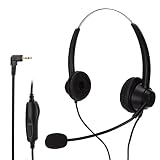
- NOISE CANCELLING MICROPHONE: The H360D-2.5MV telephone headset features a high-definition noise cancelling microphone that can be twisted for optimal positioning, ensuring crystal-clear conversations even in noisy call center environments. Perfect for customer service representatives who need to communicate effectively.
- COMFORTABLE DESIGN: Designed with soft ear cushions and a flexible, ultra-light headband, this binaural office headset provides all-day comfort without causing fatigue. The ergonomic design allows you to focus on your calls without discomfort or distraction.
- EASY TO USE: This wired telephone headset comes with a standard 2.5mm plug for plug-and-play convenience, requiring no additional drivers. It includes speaker volume adjustment and a microphone mute function, making it user-friendly for busy professionals.
- DURABLE CONSTRUCTION: Built with sturdy ABS material and a robust structure, this business headphone is designed for long-term use. The extended cord offers flexibility and freedom of movement, ideal for dynamic office or call center settings.
- WIDE COMPATIBILITY: Compatible with any device featuring a 2.5mm headset jack, this call center earphone is perfect for telemarketing, customer service, teleconferences, and office use. Its versatile design meets the needs of various professional environments.
Frequently Asked Questions
Do I need an order-management system to support ecommerce customers?
No. A dedicated OMS is appropriate when fulfillment and post-purchase processes warrant it; it is not a universal prerequisite for customer support.
Is seeing an order in a helpdesk the same as being able to change it?
No. Order visibility and supported actions are separate integration capabilities, and actions can also depend on account setup and permissions.
Should every customer-service capability be a separate product?
No. The six layers are capabilities to assess, not a requirement to buy six separate tools; one product may cover multiple functions.
Crashes, No Sound, or Screen Glitches?
Random freezes, missing sound and display glitches usually trace back to one bad driver. Find and replace yours safely.Free scan · under a minuteWindows Errors? Fix Them Before They Spread
Repair common Windows errors and clear accumulated junk for a smoother, more stable PC - no reinstall needed.Free scan · no reinstallQuick Recap
Product prices and availability are accurate as of the date/time indicated and are subject to change. Any price and availability information displayed on Amazon at the time of purchase will apply.




