What’s actually slowing this PC down?
Pick the symptom - the matching free tool is one click away.
No base is guaranteed to survive a determined raid. The practical goal is to make an attack slower, more awkward, and less rewarding—without building more than you can maintain. Because raid damage, upkeep, and building rules differ by game and server, start with the rules where you play, then design for multiple breach routes and a recovery plan.
Start with the rules of your game and server
Before choosing a layout, identify the game, mode, server type, team size, and any mods or raid-window rules. Check how the server handles upkeep and decay, building authorization, structure damage, explosives, offline protection, traps, and respawns. A material cost or breach count from one game is not a safe guide to another; even a game’s community server may change the rules.
As an Amazon Associate I earn from qualifying purchases.
Use current, game-specific information when comparing defenses. The Rust examples below illustrate how to apply the method, not a blueprint for Minecraft, DayZ, ARK, or other games.
Choose a footprint you can afford to maintain
Begin with the smallest base that meets your team’s actual needs. Each extra room, shell, or detached outbuilding can add protection, but it also takes resources and time to build and maintain. Add layers only when the delay or defensive value is worth that ongoing cost.
#1 Best Overall

- EXCITING SURVIVAL GAMEPLAY: Navigate a sinking island to escape with the most treasures, dodging new terrifying monsters and rival players who might thwart your plans.
- INCLUDES NEW MONSTER CHALLENGE: Enhance your game with the inclusion of a brand-new monster, adding unpredictability and thrilling challenges to every round.
- EXPANDED PLAYER OPTIONS: Now accommodating up to 5 players, this version allows more friends and family to join in the suspenseful escape from the treacherous island.
- STRATEGIC GAME OF RISK AND REWARD: Players must balance the pursuit of treasure with their survival instincts, making strategic decisions that could either aid their escape or doom them to the island’s fate.
- PERFECT FOR FAMILY GAME NIGHT: Designed for players aged 10 and up, this game is an ideal choice for family gatherings, offering a blend of strategy, excitement, and competitive fun.
In Rust, the Tool Cupboard is the building-privilege point and stores upkeep resources. Separate buildings require separate cupboard coverage, according to the Rust Wiki’s Tool Cupboard documentation. Facepunch’s Building 3.0 post explains that upkeep was introduced partly to constrain enormous builds; exposed outer pieces decay before the core when upkeep is insufficient. The Rust Wiki lists decay times after upkeep runs out as one hour for twig, three for wood, five for stone, eight for metal, and 12 for armored construction. These are Rust documentation values, not cross-game guarantees, and patches or server settings can affect what applies.
Make several routes to valuable storage inconvenient
Do not build around the assumption that an attacker will follow the route you intended. A hidden entrance or one extra-strong wall is not a reliable defense if there is a cheaper route through a door, roof, floor, window, or exposed utility area.
Rank #2

- The Official Survivor card game is here: Collect advantages, find hidden Immunity Idols, form secret alliances, and vote out other players to become the sole survivor.
- Designed by Jeff Probst: From the 67 Action Cards and 12 Survivor Character Cards to the Voting Box and Survival Guide– each one underwent rigorous testing by the King of Survivor.
- Perfect For Survivor Fans And Newbies Alike: It’s easy to learn and quick to play for adults, teens, and kids aged 8 and up.
- This party game brings all the thrills and drama of the island to family game nights or Survivor watch parties. Plus, it’s a great gift for the Survivor fan in your life.
- From The People Who Brought You Exploding Kittens: The Kickstarter famous, viral card game that started it all!
- Put essential storage behind more than one barrier rather than directly behind the easiest entry point.
- Separate valuable supplies from the most obvious approach to the core.
- Look for alternate approaches through ceilings, floors, soft-side surfaces, windows, and adjoining structures.
- Keep detached sections only if you can maintain them and understand whether they share building authorization.
That approach fits the way Facepunch describes Rust raiding: the developer wrote that it “shouldn’t be a fixed equation of sulfur and explosives to get to the loot” and should involve “planning, risk and reward” in Devblog 158. The broader lesson is to make likely attack routes costly or awkward, rather than relying on a single secret path.
Compare weak points before upgrading the strongest wall
Upgrading a wall may not help much if a door or roof offers a cheaper breach. Before spending scarce materials, compare the current damage and breach rules for the likely routes in your specific game and server. Prioritize removing cheap bypasses over making one already-strong section stronger.
Rank #3
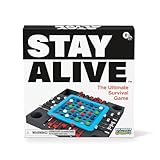
- Battle Royale: Move slides to open up holes in the board! Don't lose your marbles!
- Ultimate Survival Game: Use your brain to keep your own marbles in place on the board while eliminating your opponents!
- Family Fun: Get your minds working with this light strategy game for family game night! For ages 8 and up, 2 to 4 players!
- Stay Alive: The last player with marbles still on the board is the winner!
- All In The Box: Follow simple steps to set up your board and begin the game! Includes 5 board game pieces, 20 marbles, and simple instructions!
For Rust only, the official wiki’s Rocket item page lists rocket requirements of one for twig, two for wood, four for stone, eight for metal, and 15 for armored building pieces. It lists one for a wooden door, two for a sheet metal door, three for a garage door, and four for an armored door. The Wooden Door page describes that door as weak against fire and explosives. These figures are Rust item-reference values; they do not establish the raid cost in other games or on servers with altered settings.
Independent reader supportYour contribution helps us test, update, and keep practical guides available for everyone.Make defenses useful when you are online
If your game supports them, sight lines, protected firing positions, traps, alarms, and cover can give defenders a chance to respond. Design these around movement as well as attack: a defense that blocks your own routes, is difficult to maintain, or cannot be monitored may be more nuisance than protection. There is no universally best trap or turret arrangement established across survival games, so use the rules and testing options for your particular title and server.
Rank #4

- From the creator of the fun card games Loaded Questions and Awkward Family Photos Greatest Hits.
- The ALL NEW Worst-Case Scenario Card Game is different from trivia games with 0% trivia and 100% humorous fun
- This game for adults and kids is based on the The New York Times bestselling Worst-Case Scenario Survival Handbook.
- An easy-to-learn card game that is perfect for family game night. (Ages 10-Adult / 3-6 Players)
- In this family card game for kids and adults, match how players rank five worst-case scenarios from 1 (Bad) to 5 (The Worst). Match correctly and score points. Score the most points...and win
Plan how you will recover after a breach
Where the game allows it, avoid putting every resource, piece of equipment, and respawn option in one compartment. Keep a low-cost fallback or remote cache if server rules permit it. This can reduce the damage a successful raid does to your ability to play; it does not prevent the raid or guarantee that the cache remains untouched.
Free tools Windows power users keep installed
One-click scans. No signup required.
Test before committing scarce resources
If your game or server offers a creative mode, build server, or test environment, use it to check access routes, structural stability, sight lines, and upkeep. Rust’s official Creative Mode documentation describes a built-in system that can allow unrestricted building when enabled on a server. Availability and features vary by game and server, so verify what your own test environment permits.
Quick Recap
Product prices and availability are accurate as of the date/time indicated and are subject to change. Any price and availability information displayed on Amazon at the time of purchase will apply.




