Paleontologists reconstruct a prehistoric ecosystem by combining fossils with the rocks that contain them and with evidence of what happened after organisms died. A skeleton, leaf, shell or footprint is not an ecosystem by itself. Researchers identify all the organisms and traces in a rock sequence, determine how they were buried and preserved, interpret the ancient environment, and then test their conclusions against anatomy, chemistry, sedimentology and comparisons with living organisms.
The result is an evidence-based inference, not a direct recording of the past. Preservation favors some organisms and tissues over others, fossils can be transported or mixed through time, and behaviors or colors often require analogy. The strongest reconstructions make those uncertainties explicit while checking whether independent lines of evidence point to the same habitat, food web and community structure.
As an Amazon Associate I earn from qualifying purchases.
What an ecosystem reconstruction is—and is not
An ecosystem reconstruction is a model of organisms, environments and interactions during a particular interval of geologic time. It may address questions such as which plants formed the vegetation, what animals fed on them, whether water was permanent or seasonal, and how organisms moved, reproduced or died.
Windows Errors? Fix Them Before They Spread
Repair common Windows errors and clear accumulated junk for a smoother, more stable PC - no reinstall needed.Free scan · no reinstallCrashes, No Sound, or Screen Glitches?
Random freezes, missing sound and display glitches usually trace back to one bad driver. Find and replace yours safely.Free scan · under a minuteIt is not a complete census. The fossil record is filtered by decay, scavenging, transport, burial chemistry and the likelihood that a body part will fossilize. Microbes, soft-bodied invertebrates and small plants may leave little visible evidence, while a durable tooth or shell can be overrepresented. A fossil assemblage therefore records both the original community and the processes that selected what survived.
#1 Best Overall

- 【3 Kinds of Different Digging Fun】: 1. Dinosaur head fossil: Child can excavate 5 real dinosaur fossils including 2 tyrannosaurus teeth, 1 tyrannosaurus claw & 2 lava stones! 2. The dinosaur bones inside Brick can assemble a 3D T-rex skeleton. 3. 6 pieces Dino Eggs Dig Kit & discover 6 unique dinosaur designs. Feel like a real paleontologist excavating up unique toy dinosaurs from 3 digging styles.
- 【Fun and Educational】: A science project usually can be engaging, but not so funny. But the science kit achieves both! Great set for individual play or as a group activity. It fascinates children as soon as they pull it out of the box and is a perfect STEM project. It fosters a love for science and paleontology in a fun and exciting way.
- 【Environmentally Safe Materials】: The fossil digging dig kit is composed primarily of gypsum. No Pollution, Odorless, Safe and Non-toxic.
- 【A Gift with An Activity Inside】: The dinosaur toys will be dinosaur party favors for dino dino-themed birthday party. It is a great birthday gift/ dinosaur easter eggs gift/Christmas gift/graduation gifts for boys, girls, kiddos, nephews, nieces, or grandchild or even to your imaginative pupils in the kindergarten as fun educational toys.
- [Plan Your Dig]: Designed for kids ages 5-7, 8-12. Use a covered work surface or tray to catch plaster debris, and follow the included instructions. A hands-on activity for family afternoons and rainy-day play
Paleontologists separate those two influences through taphonomy: the study of what happens between death and fossilization. Taphonomy is the bridge between an observed fossil deposit and a defensible ecological interpretation.
How the reconstruction proceeds
- Document the geological setting. Researchers locate fossils within measured rock layers, record their three-dimensional positions and describe sediment, grain size, structures, orientation and the contact between beds.
- Identify the full fossil assemblage. Field teams collect or record vertebrates, plants, invertebrates, pollen, spores, microscopic fossils, coprolites, eggs, nests and trace fossils—not only the most conspicuous skeleton.
- Reconstruct the post-mortem history. Breakage, weathering, tooth marks, articulation, orientation and abrasion reveal decay, scavenging, transport and burial conditions.
- Interpret anatomy and ecological roles. Bones, teeth, shells and soft-tissue impressions are compared with better-preserved specimens and living organisms to infer feeding, movement, growth and habitat use.
- Add chemical and physical tests. Sedimentology, stable isotopes, dental microwear, geochemistry, CT models and functional-morphology experiments test environmental and biological interpretations.
- Compare communities through time. Species lists and ecological traits are compared between layers and localities to identify environmental change, community formation, persistence or collapse.
Each step narrows the possible explanations. A conclusion becomes more credible when independent observations converge rather than when one spectacular specimen appears to tell the whole story.
Why the surrounding rock matters
Depositional setting
Sediment records the physical setting in which remains were buried. Mud deposited in a quiet lake, sand laid down by a river, wind-blown dune sand and volcanic ash each imply different transport and preservation conditions. Ripple marks, mud cracks, channel fills, soil horizons and grain sorting can distinguish water flow, floodplain exposure, lake bottoms or dry land.
Field sites are selected partly by finding exposed rocks of a suitable geological age. Geological maps help teams trace those units and place fossils in a regional sequence. Recording the layer is as important as identifying the specimen: the same species in a river channel and in a lake deposit may represent different habitats or different stages of transport.
In-place remains versus transported concentrations
Orientation and articulation provide a first test. An articulated skeleton lying in a natural pose is more likely to have remained near its death site than isolated, abraded bones aligned by flowing water. The test is probabilistic, not absolute: currents can move nearly complete carcasses, and a local death assemblage can later be disturbed.
Rank #2

- Includes 2 Kinds of Dino Toys: 1. The dinosaur bones inside the Brick can assemble two 3D dinosaur puzzles: a T-rex and a triceratops skeleton Puzzles. 2. 2 pack 6.5” Realistic Looking dinosaur figurines Including T-Rex, Triceratops. Your little archeologist would be thrilled to see this dinosaur dig kit, would share and enjoy the discovery.
- Educational and Fun: A science project usually can be engaging, but no so funny. But this dinosaur fossil science kit achieves both! Great set for individual play or as a group activity. It fascinates children as soon as they pull it out of the box and is a perfect STEM project. It fosters a love for science and paleontology in a fun and exciting way. Very good teaching tool for young minds!
- Awesome Kids Birthday Activity: The fossil digging kit for kids will be dinosaur party favors for Dino themed birthday party. The Dino dig would be a great project to do with dinosaur-loving kids. Once complete the excavation. Kids paleontologists have to construct two Dino puzzles. The assembly Dino skeleton and the dinosaur figures can keep in kid's room on display.
- Environmentally Safe Materials: The dinosaur kit is composed primarily of gypsum. No Pollution, Odorless, Safe and Non-toxic.
- Great Gift for Dino Lovers: This dinosaur toys It is very giftable, will be a great Easter, Thanksgiving, Christmas gift for boys, girls, kiddos, nephews, nieces or grandchild or even to your imaginative pupils in the kindergarten as fun educational toys. Excellent discovery toys for kids that like to find and crack things open.
A large bone concentration at Dinosaur National Monument illustrates the problem. National Park Service interpretation describes bones in the Morrison Formation that were transported to an ancient river bend or sandbar. Some are disarticulated and tooth-marked, evidence that the deposit accumulated after movement and scavenging. The bonebed is therefore valuable evidence of ancient river processes and animal presence, but its location is not automatically the place where every animal died.
Preservation environments
At Fossil Butte, oxygen-poor water near the bottom of an ancient lake could restrict decay and scavenging, helping preserve delicate remains. At Florissant, transport and depositional conditions affected which fossils were preserved and in what condition. These examples show why a preservation setting must be interpreted locally; neither anoxic water nor transport produces the same outcome in every basin.
Recommended Free Tools
What different fossils can reveal
| Evidence | Questions it can address | Important qualification |
|---|---|---|
| Vertebrate bones and shells | Identity, body proportions, injuries, growth and possible habitat | Disarticulation or missing parts can make the original anatomy uncertain. |
| Teeth and microscopic tooth wear | Food properties, feeding mechanics and differences among feeding niches | Wear can reflect several foods or behaviors; it is interpreted with anatomy and context. |
| Plant fossils, pollen and spores | Vegetation, seasonality, moisture and landscape structure | Plants can be transported from where they grew before burial. |
| Coprolites and rare gut contents | Direct evidence of ingested material and food webs | One meal does not define an entire diet, and contents are rarely preserved. |
| Footprints and trackways | Locomotion, stride, speed estimates, group spacing and substrate conditions | Tracks record movement on one surface at one moment, not every behavior. |
| Eggs, nests and embryos | Reproduction, nesting places, clutch arrangement and development | Nests may be reworked or assigned to the wrong animal without associated evidence. |
| Invertebrates and microfossils | Water conditions, salinity, temperature, plankton communities and food-web components | Small fossils can be abundant yet unevenly sampled between layers. |
| Soft-tissue impressions and connected poses | Body outline, feather or skin distribution and posture | Exceptional preservation is rare and can still reflect burial distortion. |
Using many evidence types prevents a reconstruction from depending on a single uncertain indicator. Plant remains can establish the available habitat, while teeth and coprolites test what animals consumed; tracks add behavior that bones alone cannot show.
How anatomy becomes an ecological interpretation
Comparative anatomy
Researchers compare fossil structures with living animals and with more complete fossil specimens. A jaw’s joints, muscle attachment areas and tooth arrangement can indicate how it was loaded. Limb proportions and joint surfaces can constrain movement. If a specimen is disarticulated, anatomy and comparison are used to reassemble it; a pose is an interpretation unless the bones were preserved connected.
Living species are analogues, not time machines. A similar claw, beak or limb does not prove identical behavior because extinct animals may have used the structure differently or lived under different ecological pressures. Comparative anatomy is strongest when it agrees with wear, traces, sediments or chemistry.
Rank #3
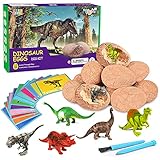
- Dino Eggs Kit: Discover 12 unique dinosaurs.With dig tools,feel like a real paleontologist excavating up unique toy dinosaurs.
- Knowledge Cards: Includes 12 dinosaur cards, each describing the history of a different dinosaur. After digging up a dino, match up the appropriate card to your dinosaur and learn more about it.
- 2 ways: Dig it up directly or put dinosaur eggs in water before digging,will be easier to dig up.A great learning and interaction toy for boys and girls.It fosters a love for science and paleontology in a fun and exciting way.
- 12 x Dinosaur Eggs (with a unique dinosaur toy in each), 12 x Chisel,12 x Brushes, 12 x Knowledge Cards.The best choice for kids, Easter gift, Birthday gift or Christmas gift.
- Perfect Easter Eggs Gift: Color packing box.A fun and educational gift for all ages. It fosters a love for science and paleontology in a fun and exciting way.
Feeding evidence
Tooth shape suggests whether an animal cut, crushed, scraped or sheared food. Microscopic scratches and pits on tooth surfaces can distinguish broad feeding mechanics and, in suitable cases, differences in food texture. Coprolites may contain plant fragments, bone, shells or other identifiable remains. Rare gut contents provide a closer link to a particular meal.
Quick wins for a faster PC:
Fix the driver behind crashes, sound loss and screen glitchesFind Drivers →Clear out junk files and repair common Windows errorsFree Scan →These indicators answer different questions. Tooth form describes capability; wear records use; a coprolite records material that passed through one digestive tract. None alone proves the complete diet or the animal’s role in the whole food web.
Movement and reproduction
Trackways preserve stride length, foot placement and the interaction between foot and substrate. Researchers can estimate aspects of gait and compare track makers with skeletal candidates, but a track surface captures only a brief event. Eggs, nests and clutch arrangements provide evidence about reproduction and nesting environments, while embryos can reveal development when preservation allows.
Geology, chemistry and digital tools
Sedimentology and geochemistry
Sedimentology identifies the physical setting; chemical tests can add independent environmental signals. The Florida Museum of Natural History’s Panama Canal project describes combining sedimentology with carbon and oxygen stable isotopes, dental microwear and postcranial functional morphology to compare ancient and modern terrestrial ecosystems. Geochemical analyses can also test whether fossils were reworked from older deposits.
Stable-isotope results require careful sampling and calibration. Not every locality preserves minerals or organic material suitable for analysis, and a chemical signal may reflect water, diet, climate or later alteration. The method is most informative when its environmental meaning is established for the particular rock and fossil materials.
Rank #4

- EXCAVATE A T-REX FOSSIL: Chip and brush through the plaster block to uncover hidden dinosaur bones, then assemble them into a detailed Tyrannosaurus rex skeleton.
- COMPLETE DINOSAUR DIG KIT: Includes a fossil excavation block, dinosaur bones, hammer-and-pick tool, chisel, brush, sponge, dinosaur figure, and illustrated instructions.
- HANDS-ON STEM LEARNING: Introduces children to paleontology and archaeology through an engaging science activity that encourages curiosity, patience, and discovery.
- DIG, BUILD & DISPLAY: After the excavation is complete, kids can assemble the bones into a 3D T-Rex skeleton for imaginative play, classroom learning, or shelf display.
- GIFT FOR YOUNG DINOSAUR FANS: A screen-free educational activity for children ages 6 and up—ideal for birthdays, holidays, homeschool projects, and rainy-day play.
CT scanning and biomechanical models
Computed tomography can reveal internal cavities, tooth roots, braincase anatomy or the internal structure of a bone without cutting a fragile specimen. Three-dimensional models allow researchers to measure geometry and run biomechanical tests that would be risky on the original fossil. A model tests whether an anatomical explanation is mechanically plausible; it does not by itself reveal an animal’s complete behavior.
Independent reader supportYour contribution helps us test, update, and keep practical guides available for everyone.From individual fossils to communities
After identification and taphonomic analysis, researchers assemble a community picture. They ask which organisms occur in the same layer, which are restricted to particular environments, and how abundance or ecological roles change upward through the sequence. A terrestrial community may include trees or low vegetation, insects, small vertebrates, large herbivores, predators, decomposers and organisms that lived in nearby water.
The Smithsonian National Museum of Natural History’s Evolution of Terrestrial Ecosystems program uses fossil evidence and paleoecological analyses to study community structure, environmental change, and ecosystem formation, sustainability and collapse through geologic time. Comparing multiple layers helps distinguish a local event from a long-term transition—for example, a flood deposit from a genuine change in regional vegetation or animal diversity.
Communities are also compared across sites. Similar faunas in different sediments may indicate a broad habitat, while differences can reflect climate, elevation, water availability, geographic barriers or sampling and preservation effects. The interpretation must keep those alternatives separate.
What’s actually slowing this PC down?
Pick the symptom - the matching free tool is one click away.
How paleontologists decide where an animal lived
Habitat is inferred by combining several clues:
- Occurrence: the rock type and depositional setting in which the animal is found.
- Anatomy: limb shape, joints, body proportions and structures associated with swimming, digging, climbing or terrestrial support.
- Associated organisms: plants, invertebrates and microfossils that indicate available habitat and resources.
- Trace evidence: tracks, burrows, nests and feeding marks that document activity at a place.
- Chemistry: isotopic or elemental signatures that may reflect water sources, diet or environmental conditions.
When these signals disagree, the disagreement is informative. A terrestrial skeleton in river sediment may have been washed in, whereas repeated tracks and burrows in the same surface indicate activity there. A water-adapted anatomy supports aquatic use, but the sediment and associated fossils determine whether the animal lived in that water body or was transported into it.
Best Value

- Dinosaur Archaeological Dig Kit: The Tyrannosaurus sensory bin toy includes a bag of cassia as sensory materials, 18 skeleton bones puzzle pieces, a paint brush and a scoop as sensory tools, a wooden storage box with cover, and a cloth storage bag
- Fossil Explore Sensory Play: Our dinosaur dig game is ideal to keep your little dinosaur lover entertained for hours. Simply bury the dinosaur skeleton bones in the sensory materials and let kids use scoop to dig them up, and use paint brush to uncover the delicate bones. Then collect all the skeleton pieces, and put them together, finish the dinosaur fossil puzzle
- Skills and STEM Development: Kids will love to dig and explore in this dinosaur fossils sensory bin. It’s great for fine motor practise as well as science learning, children can learn how archaeologist uncover their finds. It also helps to promote sensory development
- Quality Wood Material and Safe Toys: Our unique dinosaur archaeology dig kit are made from locally sourced wood, it is crafted with smooth corners and edges for your child safety. The sensory materials are made of cassia instead of sand, cleaner, easier and reusable for your kids to play again and again
- Ideal for Boys and Girls Age 3+: Every child will love this dinosaur dig sensory bin. It is super easy to set up but tons of fun for toddlers and preschoolers. Introduce your child to the exciting world of archeology
What remains uncertain
Preservation bias and missing organisms
Decay, scavenging, transport, burial depth, oxygen, acidity and mineral replacement determine what enters the record. Durable teeth may survive where skin, muscle and many invertebrates do not. An absence of fossils is therefore not proof that an organism was absent from the living ecosystem.
Time averaging and reworking
A single layer can combine remains deposited at different times. Older fossils may be eroded from one bed and redeposited in a younger one. Abrasion, mixed ages and incompatible preservation states warn that an assemblage is not a single-moment snapshot. Geochemistry, dating where available, sedimentary contacts and specimen condition help test for reworking.
Analogy and reconstruction
Some conclusions are relatively secure: estimating body size from well-preserved proportions or describing a track’s geometry is more direct than reconstructing growth rate, social behavior or color. The Australian Museum notes that visual details such as color and pattern may be educated guesses when direct evidence is absent. Published reconstructions should label whether a feature is observed, mechanically inferred, analogical or speculative.
Do these 3 things before closing this tab:
1Scan for outdated or missing drivers - takes under a minute2Clear out junk files and repair common Windows errors3Fix the driver behind crashes, sound loss and screen glitchesHow to evaluate competing interpretations
| Test | Question to ask |
|---|---|
| Depositional and taphonomic context | Could water, scavengers, decay or reworking have produced the observed association? |
| Identification security | Are the fossils diagnostic, complete and assigned to the correct species or group? |
| Independent evidence | Do sedimentology, isotopes, tooth wear, trace fossils or functional models support the same explanation? |
| Inference level | Which parts are directly preserved, and which depend on analogy or reconstruction? |
The preferred interpretation is not necessarily the most vivid one. It is the explanation that accounts for the fossils, their condition, the enclosing rocks and the independent tests with the fewest unsupported assumptions.
Further reading
For a broad synthesis of ecosystem change through geologic time, the Smithsonian identifies Terrestrial Ecosystems Through Time, published in 1992, as a compilation of paleoecological information. Museum and government overviews from the National Park Service, the Natural History Museum in London, the Florida Museum of Natural History and the Australian Museum provide complementary explanations of taphonomy, field context, analytical methods and reconstruction limits.
Quick Recap
Product prices and availability are accurate as of the date/time indicated and are subject to change. Any price and availability information displayed on Amazon at the time of purchase will apply.




