There is no dependable one-number conversion from Nike to adidas, New Balance or Puma. The reliable method is to measure both feet in centimeters, use the longer measurement, and match that length to the target brand’s own chart. Then check width, the individual model’s fit note and the seller’s return policy. A size label may coincide across brands, but that does not guarantee the same internal length, toe-box volume or upper shape.
Nike adds an important warning: the CM value printed on its boxes and labels is not the same thing as measured foot length. Its chart says, “Please note the CM size displayed on shoe boxes and labels is different than Foot Length (cm).” Use your measured heel-to-toe length instead of treating the printed CM label as a universal conversion.
As an Amazon Associate I earn from qualifying purchases.
Why a Nike size cannot be converted perfectly to another brand
US, UK and EU numbers are labels, not a single international measurement standard. Brands build their charts around their own lasts, grading rules and fit assumptions. Even within one company, a running shoe, court shoe, casual sneaker and safety shoe can use different shapes. The result is that a Nike US 10 can be close to another brand’s US 10 for one model and feel different in another.
Quick wins for a faster PC:
Clear out junk files and repair common Windows errorsFree Scan →Fix the driver behind crashes, sound loss and screen glitchesFind Drivers →Repair Windows errors before they cause bigger problemsFix Now →The official charts support comparison by measured length, not a claim that one brand universally runs small or large. adidas publishes heel-to-toe lengths and regional equivalents. New Balance combines length with several width choices. Puma Safety publishes centimeter ranges and separate normal and extra-wide columns. Those formats are useful, but they are not evidence that every model from the brands will fit identically.
#1 Best Overall
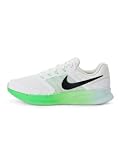
- Mesh on upper adds breathability.
- Flywire cables provide a supportive feel when you tighten the laces.
- Plush foam midsole cushions each step.
- Grooves on the rubber outsole help your foot move naturally.
- DR2695-114
- Keep the same category when comparing: men’s to men’s, women’s to women’s, or the applicable youth category.
- Use the target brand’s chart for the specific region and product category.
- Treat width and upper shape as a separate decision from length.
- Read the product-page fit note and return terms before ordering.
Measure your feet before comparing charts
A centimeter measurement gives you a common starting point. Measure at the end of the day, when feet are typically at their largest, on a hard, level surface. Wear the type of socks you expect to use with the shoes.
- Place a sheet of paper on the floor with one edge against a wall.
- Stand naturally with your heel touching the wall. Keep your weight evenly distributed rather than sitting down.
- Mark the end of the longest toe and the outermost point of the heel. The longest toe is not always the big toe.
- Measure the distance between those marks in centimeters.
- Repeat for the other foot. Record both results and use the longer foot for chart matching.
Do not round down to make a size appear to fit. If your measurement falls between chart entries, leave enough room for normal foot movement and follow that brand’s instruction. Nike explicitly says, “If the measurement is between sizes, we recommend sizing up,” on its current men’s footwear chart: Nike men’s footwear size chart.
How to read Nike sizing information
Measured Foot Length is the value to match
Nike distinguishes between Foot Length (cm) and the CM size printed on a shoe box or label. The printed CM figure should not be treated as a direct measurement of your heel-to-toe length or as a universal cross-brand code. Start with your measured length, then select the corresponding Nike size in the current chart for the relevant gender and footwear category.
Free tools Windows power users keep installed
One-click scans. No signup required.
Rank #2

- Mesh on upper adds breathability.
- Foam midsole delivers a soft ride.
- Flex grooves create a cushioned effect for your run.
- Waffle outsole is a made of a durable, flexible material that helps keep you on the move.
- HM9594-004
What to do when you are between Nike sizes
Use the longer foot, compare it with the chart and size up when the measurement sits between listed sizes, following Nike’s published guidance. The choice can still depend on the model: a snug racing shoe, a structured court shoe and a roomy lifestyle shoe may feel different at the same labeled size. If the product page gives a model-specific fit note, treat it as an additional instruction rather than overriding the measured-length process.
Width changes toe-box room
Nike’s width guidance quantifies the difference at the toe box. Its wide shoes provide approximately 1/4 inch (6.35 mm) more toe-box girth than regular width, while extra-wide shoes provide approximately 1/2 inch (1.27 cm) more. Girth is the measurement around the toe-box volume; it is not a promise that the shoe is longer. A wide option can therefore solve pressure at the forefoot without moving to a longer size, while a longer size can leave excess space in front of the toes.
What the adidas chart shows
adidas publishes a heel-to-toe length alongside US, EU and UK equivalents. In its men’s chart, a US 10 is listed as 27.1 cm, EU 44 and UK 9.5. That is a chart entry for men’s footwear, not proof that a Nike US 10 or every adidas model will feel the same.
Rank #3
- Mesh on upper adds breathability.
- Foam midsole delivers a soft ride.
- Flex grooves create a cushioned effect for your run.
- Waffle outsole is a made of a durable, flexible material that helps keep you on the move.
- HM9594-004
| Brand and category | Published chart example | How to use it |
|---|---|---|
| adidas men’s footwear | US 10 = 27.1 cm heel-to-toe; EU 44; UK 9.5 | Compare your longer measured foot with 27.1 cm, then check the specific model’s fit and width. |
| Nike men’s footwear | Use Foot Length (cm); Nike warns its printed CM label is different | Do not convert from the box CM number. Match measured length in Nike’s current chart. |
For example, if your longer foot measures 27.1 cm, adidas’s chart places that measurement at men’s US 10/EU 44/UK 9.5. You still need to look up the Nike size whose Foot Length (cm) entry matches your measurement; the adidas label cannot supply that Nike answer.
The Tool Desk
Outbyte PC Repair FREEClear out junk files and repair common Windows errorsFree Scan →Outbyte Driver Updater FREEFix the driver behind crashes, sound loss and screen glitchesFind Drivers →How New Balance adds width to the decision
New Balance’s guide publishes length and multiple width choices instead of treating length as the whole fit. Its men’s chart lists narrow B, standard D, wide 2E and extra-wide 4E columns. At men’s US 10, the standard D column is listed as 11.0 cm. Because this figure appears in the width section, do not read 11.0 cm as the shoe’s heel-to-toe length.
| New Balance width label | What it indicates | Why it matters when moving from Nike |
|---|---|---|
| B | Narrow | Can hold the foot more securely when a regular Nike width feels loose. |
| D | Standard men’s width; the US 10 chart entry lists 11.0 cm | Use the width column together with the length entry, not instead of it. |
| 2E | Wide | May provide needed forefoot volume without increasing length. |
| 4E | Extra-wide | For substantially more width; verify that the model is offered in this width. |
A Nike regular-width shoe and a New Balance D-width shoe may both accommodate a similar length while feeling different across the metatarsals. If your toes touch the front, solve length first. If the length is correct but the sides pinch, investigate width before sizing up.
Rank #4

- Mesh on upper adds breathability.
- Foam midsole delivers a soft ride.
- Flex grooves create a cushioned effect for your run.
- Waffle outsole is a made of a durable, flexible material that helps keep you on the move.
- HM9594-001
What Puma Safety’s chart contributes
Puma Safety’s current men’s/unisex chart uses centimeter ranges by size and provides separate normal and extra-wide columns. Its US 10 (EU 43) entry covers a 27.0–27.5 cm foot length. That range is a chart allowance, not a guarantee that a 27.5 cm foot and a 27.0 cm foot will experience identical space in every safety model.
Safety footwear can include protective toe caps, reinforced uppers and different internal shapes from athletic shoes. When comparing a Nike sneaker with Puma Safety footwear, match the measured length first, then check the safety model’s width column, required protection standard and return conditions. Do not assume the EU numbers are interchangeable simply because both charts display them.
Recommended Free Tools
A repeatable cross-brand sizing workflow
- Measure both feet. Do it at the end of the day on a hard surface, mark the longest toe and outermost heel, and write down both centimeter results.
- Select the longer result. Use that number for every brand chart; never average the feet.
- Choose the correct chart category. Keep men’s, women’s, youth, unisex and regional labels consistent.
- Look up the target brand’s length entry. For Nike, use Foot Length (cm), not the CM value printed on a box or label.
- Check width separately. Review Nike regular/wide/extra-wide guidance, New Balance B/D/2E/4E choices, or Puma Safety normal/extra-wide columns as applicable.
- Read the model page. Look for “runs small,” “roomy,” last or width notes supplied for that exact shoe. Such notes describe the model, not the entire brand.
- Confirm returns before paying. Make sure unworn shoes can be returned or exchanged if the length or width is wrong, and note any regional restrictions.
Length, width and volume are different fit problems
When the toes reach the front
Measure again and compare the longer foot with the target chart. A longer size may be appropriate, especially when a chart measurement falls between sizes. Do not use a wider option to compensate for insufficient length; extra width does not move the toe farther from the front.
Best Value

- The mesh upper offers a comfortable, breathable feel.
- The foam midsole delivers intuitive cushioning through comfort-focused rocker geometry.
- The outsole has an intuitive Nike design and flex grooves in the forefoot that create a comfortable and cushioned effect as you run.
- Touch points at the heel and tongue create a natural feel as you take the shoes on and off.
- HJ9198-002
When the sides or little toe feel compressed
Check whether the same length is available in a wider width. Nike’s approximately 6.35 mm wide and 1.27 cm extra-wide toe-box-girth guidance, New Balance’s width columns and Puma Safety’s extra-wide column are designed for this kind of decision. Moving up in length can create heel slip and excess forefoot space while failing to match the foot’s shape.
When the heel slips but the toes have room
A longer size is unlikely to fix the problem. Recheck the width and the model’s heel construction, try the intended socks and use the product’s lacing instructions if supplied. If the shoe remains insecure, choose a different width or model rather than assuming every brand’s larger size will lock the heel.
When one foot is larger
Fit the longer foot. The shorter foot can sometimes be accommodated with lacing or an appropriate insole, but compressing the longer foot to match the smaller one risks toe pressure and does not follow the chart-measurement method.
Outdated Drivers Are Slowing You Down
One free scan finds every outdated or missing driver and matches the right update for your exact hardware.Free scan · exact hardware matchWindows Errors? Fix Them Before They Spread
Repair common Windows errors and clear accumulated junk for a smoother, more stable PC - no reinstall needed.Free scan · no reinstallWhy model, socks and preference can change the result
The published sources provide charts and measurement instructions, not a controlled test of every shoe model. Construction, upper materials, cushioning, sock thickness and personal preference all alter how a labeled size feels. A flexible knit upper may tolerate a different fit from a rigid leather or protective upper. A performance runner may be chosen with less extra room than a walking shoe, while someone with swelling may need more volume later in the day.
For that reason, “Nike runs small” or “adidas runs large” is too broad to be useful. The defensible comparison is: your measured length maps to a particular entry in each brand’s chart, and the model’s width and construction determine whether that entry works on your foot.
Ordering and trying on without losing the measurement
- Save a screenshot or note of the chart entry you used, including the region and category.
- Try both shoes indoors on the socks you plan to wear. Check toe clearance, side pressure, arch contact and heel security while standing and walking.
- Compare left and right feet separately; do not judge only the smaller foot.
- Keep the shoes clean and retain packaging until you are confident, because return policies often require unworn condition.
- If the fit is wrong, identify whether the symptom is length, width or volume before ordering another size.
Quick reference: the numbers that are actually published
| Source | Published figure or rule | Qualification |
|---|---|---|
| Nike | Wide: approximately 6.35 mm more toe-box girth; extra-wide: approximately 1.27 cm more | Current Nike width guidance; describes toe-box girth, not added length. |
| Nike | Size up when the measurement is between sizes | Nike’s current chart recommendation; apply after measuring both feet and using the longer one. |
| adidas men’s | US 10 = 27.1 cm, EU 44, UK 9.5 | Current adidas chart entry for men’s footwear. |
| New Balance men’s | US 10 standard D width = 11.0 cm; B, 2E and 4E columns also listed | The 11.0 cm figure is in the width data; length and width must be read separately. |
| Puma Safety men’s/unisex | US 10 (EU 43) covers 27.0–27.5 cm foot length | Current chart range with normal and extra-wide columns; applies to the listed safety-footwear chart. |
The practical verdict
Use centimeters as the common language, but let each brand’s chart translate that measurement into its own size label. Nike’s printed CM number is not your measured foot length; measure both feet, use the longer one and size up when Nike places you between entries. For adidas, the published men’s US 10 example is 27.1 cm/EU 44/UK 9.5. For New Balance, select length and then B, D, 2E or 4E width as needed. For Puma Safety, compare your length with the chart’s range and choose normal or extra-wide. Those steps are more reliable than assuming a Nike size has a fixed equivalent everywhere.
Quick Recap
Product prices and availability are accurate as of the date/time indicated and are subject to change. Any price and availability information displayed on Amazon at the time of purchase will apply.
Do these 3 things before closing this tab:
1Repair Windows errors before they cause bigger problems2Scan for outdated or missing drivers - takes under a minute3Clear out junk files and repair common Windows errors
