Data-center REITs make money primarily by leasing powered data-center capacity. Customers pay recurring rent for space, electricity capacity, cooling, security and facility operations. REIT platforms can add interconnection ports, cross-connects and managed infrastructure services, while tenant recoveries reimburse specified property costs. The business is real-estate leasing with technology-heavy operations—not the sale of cloud software.
The core business: leasing powered data-center capacity
A data-center real estate investment trust (REIT) owns or invests in facilities designed to house servers and network equipment. It builds or buys those properties, supplies the electrical and mechanical infrastructure needed to operate them, and contracts with customers for capacity.
As an Amazon Associate I earn from qualifying purchases.
Digital Realty describes the model directly: “We generate the majority of our revenue by leasing operating properties to customers under operating lease agreements.” Lease structures can cover a dedicated powered shell, wholesale capacity or another defined portion of a facility. The customer usually supplies and manages its own servers, while the REIT provides the building, power-delivery systems, cooling, physical security and facility operations.
Rent is generally billed on a recurring schedule and may be based on the amount of space, contracted power capacity, service level and term. A lease can cover a single suite, a large wholesale hall or an entire building. Because data-center construction is expensive and customers face substantial costs to move equipment, a signed lease can create revenue visibility for several years.
#1 Best Overall

- Save valuable floor space: 6U wall mount server cabinet Dimensions: 13.78" H x21.65" W x17.72" D.Maximum mounting depth is 14.2"
- Keep critical network equipment secure: glass door and side panels are lockable to prevent unauthorized access. Front door can be installed on either side of the front of the cabinet to satisfy your door swing orientation preference
- Easy equipment configuration: Fully adjustable mounting rails and numbered U positions, with square holes for easy equipment mounting with top and bottom punch-out panels for easy cable access
- Durability: Made of high quality cold rolled steel holds up to 110lb (50kg) (Easy Assembly Required)
- PCI & HIPPA and EIA/ECA-310-E compliant
Where the revenue comes from
| Revenue stream | What the customer pays for | How it is usually charged | Business role |
|---|---|---|---|
| Lease rent | Dedicated space, powered shells, wholesale capacity and the associated facility infrastructure | Recurring operating-lease payments | Core revenue stream; Digital Realty says it generates the majority of revenue this way |
| Colocation | Cabinet, cage, suite or hall space plus power, cooling, security and on-site operations | Fixed recurring charges under customer contracts | Foundation of the recurring-revenue model at multi-service platforms |
| Interconnection and cross-connects | Ports and physical network links connecting a customer to carriers, cloud providers or other tenants | Monthly charges; terms can be month-to-month, one year or multiple years | Adds high-value network services and can make a facility more useful to tenants |
| Managed infrastructure | Specified operating or infrastructure services delivered around the customer’s equipment | Recurring contract charges | Supplementary service revenue alongside colocation and interconnection |
| Tenant recoveries | Agreed portions of common-area maintenance, property taxes, insurance and other property expenses | Reimbursement recorded with rental and other services revenue as costs are incurred | Offsets specified expenses; it is not a substitute for rent or a removal of operating costs |
Colocation and managed infrastructure
Colocation is the service most people encounter when a data-center operator rents room and operating capacity to many customers in one facility. The bill can include the customer’s reserved power, floor or cabinet area, cooling, physical access controls, monitoring and routine facility work. Managed infrastructure offerings add services around the equipment, but the REIT is still monetizing the site and its supporting systems rather than selling a consumer cloud application.
Equinix characterizes its business as “primarily based on a recurring revenue model comprised of colocation, interconnection and managed infrastructure offerings.” Its 2025 Form 10-K states that recurring revenue represented more than 90% of total revenue during the past three years. That percentage describes the company’s revenue composition; it does not mean every customer contract has identical pricing or that revenue cannot decline.
Interconnection and cross-connect fees
An interconnection is a network connection inside the facility. A cross-connect physically links one tenant’s equipment to a carrier, cloud provider, internet exchange or another tenant. Digital Realty reports that these services are commonly provided on month-to-month, one-year or multi-year terms and billed monthly. Installation revenue for a cross-connect is generally recognized when the connection is installed.
Interconnection can raise the economic value of a facility because a customer gains direct access to a dense network ecosystem. A tenant that needs many connections may prefer a location with numerous carriers and counterparties, improving retention and creating opportunities for additional ports as its network expands.
Tenant expense recoveries
Many rental arrangements pass specified property costs through to customers. Digital Realty says common-area maintenance, real-estate taxes and insurance are generally recovered from customers. The reimbursement is recorded with rental and other services revenue as the related expense is incurred.
Rank #2

- Universal 19” Rack Mount Compatibility – Perfect for pro audio, video, IT, and network gear. Compatible with mixers, routers, patch panels, servers, power amps, and more.
- Heavy-Duty Load Capacity – Built to support up to 550 lbs. Ideal for studio gear, DJ setups, server equipment, and AV components that demand serious stability.
- Robust Steel Frame & Design – Made with 1.5mm thick steel and weighs 36 lbs for maximum durability, reduced vibration, and long-term reliability in any setting.
- Mobile & Secure – Preinstalled with 3” industrial-grade caster wheels (lockable), making it easy to move and position your rack exactly where you need it.
- All-In-One Setup Kit Included – Comes with 34 rack screws (5mm & 6mm), a 1U blank spacer, and an assembly tool—ready for fast installation out of the box.
A recovery protects the landlord from bearing the full amount of an agreed expense, but it does not make the expense economically irrelevant. Electricity, maintenance, taxes, insurance and staffing still affect property-level net operating income, cash flow and the price a customer is willing to pay. When comparing operators, examine both recoveries and the underlying operating-cost trend.
How a customer payment becomes REIT cash flow
- Capacity is developed or acquired. The REIT buys an operating facility, develops a new building or invests through a joint venture. Electrical substations, generators, cooling equipment and network rooms are part of the capital-intensive asset.
- Capacity is contracted. A customer signs for a defined amount of space or power, often with related colocation, interconnection or managed-service commitments.
- Monthly billing begins. The customer pays base rent and any recurring service charges. Interconnection ports and cross-connects are billed according to their individual terms; an installation charge is recognized when the physical connection is completed.
- Property expenses are paid. The REIT pays for energy, maintenance, security, taxes, insurance, staffing and other operations. Recoverable items are billed back under the lease or service agreement where permitted.
- Cash is allocated. Remaining operating cash supports interest payments, capital expenditures, development, debt repayment and distributions. Asset sales, refinancing and equity issuance can supplement operating cash when the portfolio is expanding.
The result is a property business whose revenue is contractual but whose cash generation depends on occupancy, power availability, operating efficiency, capital spending and financing costs.
Recommended Free Tools
Why the revenue is recurring—and what can still change it
Equinix reports that customer contracts are generally one to five years and then automatically renew in one-year increments. Contracted terms improve visibility compared with a purely transactional business, but they do not guarantee permanent growth. Revenue changes when a facility fills vacant capacity, when a customer expands or contracts, when a lease renews at a different price, or when new capacity comes online.
- Occupancy: Empty powered capacity produces no rent until it is leased and commissioned.
- Pricing and renewal spreads: A renewal can increase, decrease or preserve the prior rate depending on market conditions and the facility’s connectivity.
- Power availability: A site may have physical room but no usable electrical capacity until utility or on-site infrastructure is expanded.
- Development timing: Delays in permitting, equipment delivery, construction or energization postpone the rent that a new project can produce.
- Customer credit: A contract is valuable only if the tenant can continue paying and using the facility.
- Interconnection demand: Network-dense sites can add ports and cross-connects, while a less connected location may have fewer service opportunities.
Customer concentration also matters. In the cited Equinix disclosure, the largest customer represented approximately 3% of recurring revenue, while the 50 largest customers represented 36% to 37% in the reported years. A dispersed customer base reduces dependence on one account, but a large group of major customers can still influence renewals, pricing and expansion decisions.
What the U.S. REIT structure changes
A data-center landlord generally chooses REIT status to obtain pass-through tax treatment at the entity level, subject to detailed statutory tests. These rules constrain the type of income and assets the company can hold.
Rank #3

- ADJUSTABLE DEPTH: 4- Post 22U 19" server rack enclosure with 4 vertical rails and adjustable mounting depth 5.7" to 33.0" (14,4cm to 83,8cm); IT rack is compatible with various servers / switches / data / video / AV and other IT networking equipment
- EASY SHIPPING AND ASSEMBLY: Enclosed 22U data rack cabinet ships compact flat-packed to avoid damage and facilitate installation; Include wheels & levelling feet to offer more stability; Home server rack cabinet is only 46.6in (118,3cm) in height
- DESIGN AND VENTILATION: Half height server rack cabinet has lockable and removable door and side panels with vented top allowing airflow; 4 Post 19" rack with 1764lb (800kg) weight capacity (stationary); Computer cabinet rack is EIA/ECA-310-E Compliant
- HARDWARE INCLUDED: Rolling home network rack includes rack mounting and equipment mounting hardware, such as 20 M6 cage nuts / screws, PVC cup washers; Front/rear doors and side panels Keys, 2x allen keys; Rack assembly hardware; Casters and leveling feet
- THE IT PRO'S CHOICE: Designed and built for IT Professionals, this 22U IT Server Cabinet is backed for life, including free lifetime 24/5 multi-lingual technical assistance
- Income test: Under the IRS rules cited for this structure, at least 75% of gross income must come from qualifying real-estate sources, and at least 95% must come from qualifying income categories.
- Asset test: At least 75% of asset value must be represented by real-estate assets, cash and cash items, or government securities under 26 U.S.C. §856.
- Distribution requirement: The dividends-paid deduction generally requires distributions equal to at least 90% of REIT taxable income, as defined in the IRS instructions for Form 1120-REIT.
These are U.S. requirements; a REIT organized or operating under another country’s rules may face different tests. For a U.S. data-center REIT, the distribution rule limits how much taxable income can be retained. Growth therefore relies on a mix of operating cash, debt, new equity, asset sales and joint ventures rather than retaining all earnings inside the company.
Do these 3 things before closing this tab:
1Repair Windows errors before they cause bigger problems2Fix the driver behind crashes, sound loss and screen glitches3Clear out junk files and repair common Windows errorsThe tests also explain why the business is organized around property ownership and leasing. Services must fit within the REIT’s qualifying-income framework or be conducted through an appropriate taxable subsidiary or other structure. The exact treatment depends on the facts and the tax rules in force, so investors should read the company’s filings rather than assume every service dollar receives identical treatment.
How data-center REITs grow
Developing new facilities
Development converts land, utility rights and construction capital into leasable power and space. A project can generate attractive growth after it is energized and leased, but construction spending occurs before the full rent stream begins. The critical milestones are securing power, completing the mechanical and electrical plant, delivering customer-ready capacity and signing tenants.
Acquiring and leasing existing assets
An acquisition provides immediate operating capacity and may offer vacant suites that can be leased over time. The buyer must judge the facility’s remaining useful life, power density, connectivity, tenant quality, renewal schedule and required capital upgrades.
Joint ventures and unconsolidated investments
Joint ventures let a REIT share development costs, financing and ownership with partners. The company may report its economic interest through an unconsolidated entity rather than consolidate every facility’s revenue line by line. Digital Realty’s 2025 portfolio contained 310 data centers, including 89 data centers held as investments in unconsolidated entities. That figure shows why an asset count should be read together with ownership structure.
Free tools Windows power users keep installed
One-click scans. No signup required.
Rank #4
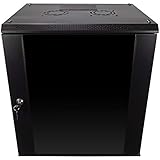
- DURABLE BUILD: Constructed from high-quality Cold Rolled Steel, the NavePoint Consumer Series 12U network cabinet boasts a sturdy, welded frame. Fitting EIA standard 19” networking equipment, this server cabinet confidently supports up to 110 lbs, providing a resilient base for your vital IT gear and equipment
- CONVENIENT DESIGN: This 12U cabinet features a reinforced, heat-treated, tempered glass front door with a security lock. Perfect for applications requiring both security and accessibility, its compact design of 17.72"L x 21.65"W x 24.42"H offers a practical solution for space-constrained settings.
- EASY & CUSTOMIZABLE EQUIPMENT SET UP - The 12U IT cabinet, with removable side panels and security locks, offers customization at its finest. Whether it's for an efficient device or cable management, this data cabinet ensures secure, adaptable configurations that suit your networking server requirements
- ENHANCED VENTILATION & SECURITY - Built-in fans and flow-through ventilation work to prevent overheating, ensuring optimal operation of your equipment. The reinforced, lockable tempered glass front door not only boosts security but also facilitates easy monitoring of installed equipment.
- SAFETY & COMPLIANCE - All NavePoint products are built to industry standards.
Capital recycling
A REIT can sell a mature or non-core property, refinance it or recycle the proceeds into a higher-growth market. Recycling can improve portfolio quality and fund development, but sale proceeds are not recurring customer revenue. They are a financing and portfolio-management source of capital.
Independent reader supportYour contribution helps us test, update, and keep practical guides available for everyone.What to compare between data-center REITs
| Metric | Why it matters | Questions to ask |
|---|---|---|
| Revenue mix | Shows how much comes from base rent versus interconnection and managed services | Is growth driven by leased capacity, network services or one-time activity? |
| Contract terms | Indicates the period of contractual visibility | What are the typical initial terms, renewal mechanics and pricing changes? |
| Occupancy and available power | Separates physical space from capacity that can actually earn rent | How much energized capacity is leased, and how quickly can more be delivered? |
| Customer concentration | Highlights dependence on large tenants | What share comes from the largest customer and the largest customer group? |
| Tenant recoveries and operating costs | Shows how property expenses affect margins and cash flow | Which costs are recoverable, and are energy and maintenance costs rising? |
| Development pipeline | Provides a potential source of future rent | Are projects permitted, powered, funded and pre-leased? |
| Geographic diversification | Spreads exposure to utility markets, regulation and local demand | Is growth concentrated in one power market or region? |
| Leverage and cost of capital | Determines how much operating cash remains after financing | When must debt be refinanced, and can the company fund construction without excessive dilution? |
| Cash available for distribution | Connects property performance with the dividend | Are distributions supported by recurring operations rather than asset sales? |
Equinix and Digital Realty: different disclosures of a similar engine
Both companies monetize data-center real estate, but their public descriptions emphasize different parts of the platform.
| Company disclosure | Published detail | How to interpret it |
|---|---|---|
| Equinix | Recurring revenue comprised more than 90% of total revenues during the past three years; contracts are generally one to five years with automatic one-year renewals | Recurring colocation, interconnection and managed infrastructure are central to the model, with renewal exposure after the initial term |
| Equinix | Largest customer was approximately 3% of recurring revenue; 50 largest customers were 36% to 37% in the cited years | Individual-customer exposure is limited, while major customers collectively remain material |
| Digital Realty | Majority of revenue comes from leasing operating properties under operating leases | Lease rent for powered capacity is the principal revenue engine |
| Digital Realty | 310 data centers in 2025, including 89 held through unconsolidated entities | Reported portfolio size includes facilities in which ownership is shared; read revenue and asset figures with that structure in mind |
| Digital Realty | Interconnection terms generally month-to-month, one-year or multi-year; cross-connect installation revenue generally recognized upon installation | Network services add recurring and installation-related revenue with varied contract duration |
The comparison is not a choice between “rent” and “cloud services.” In both models, the property and its powered capacity are fundamental. The useful distinction is the balance between lease revenue, network and managed services, ownership interests, customer concentration and development execution.
Risks that can interrupt the cash stream
- Power and construction risk: A project can be delayed or limited by utility interconnection, equipment availability, permitting or cost inflation.
- Technology and density risk: New server designs can require more power and cooling per rack, making older halls less competitive or forcing expensive retrofits.
- Renewal risk: A customer may reduce its footprint, negotiate a lower rate or leave when its term expires.
- Financing risk: Higher interest rates or an unfavorable capital market can raise the cost of refinancing and development.
- Regulatory and tax risk: Changes to REIT qualification rules, energy policy, data regulation or local permitting can affect the economics of a facility.
- Concentration risk: Even with a small largest-customer percentage, a large group of major tenants can influence leasing velocity and pricing.
A high recurring-revenue percentage improves visibility; it does not eliminate these risks. Investors should connect the dividend to occupancy, contracted pricing, power delivery, operating costs, leverage and the timing of new capacity.
Quick wins for a faster PC:
Scan for outdated or missing drivers - takes under a minuteDriver Scan →Clear out junk files and repair common Windows errorsFree Scan →Bottom line
Data-center REITs make money by owning or investing in facilities and leasing powered capacity to customers. Colocation, interconnection, cross-connects and managed infrastructure increase the recurring bill, while tenant recoveries offset specified property expenses. Long contracts and automatic renewals create revenue visibility, but growth depends on filling capacity, securing power, delivering developments, controlling costs and retaining creditworthy tenants. U.S. REIT income, asset and distribution tests keep the business centered on real estate and generally require at least 90% of taxable income to be distributed, which is why expansion is funded through a combination of operating cash, debt, equity, asset sales and joint ventures.
Quick Recap
Product prices and availability are accurate as of the date/time indicated and are subject to change. Any price and availability information displayed on Amazon at the time of purchase will apply.

