What’s actually slowing this PC down?
Pick the symptom - the matching free tool is one click away.
Credit-card rewards are valuable only when the rewards and benefits you will actually use exceed the card’s annual fees, other charges and any interest you pay. The safest strategy is to put planned purchases on a card, pay the statement balance in full, and compare the value of at least two redemption options before applying.
Rewards are now the norm: the Consumer Financial Protection Bureau (CFPB) reported that more than 90% of general-purpose credit-card spending occurred on rewards cards in 2019. Consumers earned more than $40 billion in rewards from major general-purpose cards in 2022, while unredeemed balances exceeded $33 billion at the end of that year, up 40% from the fourth quarter of 2019.

As an Amazon Associate I earn from qualifying purchases.
What credit-card rewards are
Issuers generally return value in one of three forms: cash back, points or miles. The form matters because the same spending can have very different value depending on how you redeem it.
Recommended Free Tools
Cash back
Cash back has an explicit dollar value. Depending on the card, you may receive it as a statement credit, a deposit to a bank account, a check or another cash equivalent. A reward advertised as 2% cash back generally returns two cents for every eligible dollar spent, subject to the card’s terms, category rules and any earning cap.
Points
Points are an issuer currency. Possible redemptions include statement credits, deposits, transfers to airline or hotel loyalty programs, issuer travel portals, gift cards, merchandise, charity donations and discounts at checkout. The value can change with the redemption route. The CFPB’s issue spotlight says major issuers typically estimate a point at about $0.01, but that is an approximation rather than a guarantee.
Miles
Miles generally move into an airline or hotel loyalty account. Their practical value depends on the partner’s award prices, available inventory, blackout or capacity controls, taxes and fees, and the dates and destinations you can use. A mile is therefore not automatically worth one cent or any other fixed amount.
How you earn rewards
Your card’s program terms define what counts as an eligible purchase and how quickly rewards appear. Earning usually combines several mechanisms.
Base purchase rates
Every card has a base earn rate, often expressed as a number of points, miles or a percentage of cash back per dollar. Read whether the rate applies to the transaction amount before or after refunds, credits and adjustments, and whether certain transactions are excluded.
Category bonuses
Cards may pay a higher rate for categories such as dining, travel, groceries or rotating promotions. The merchant’s coding determines the category, so a purchase that looks like dining to you can code as a hotel, delivery service or general merchandise. Programs can also impose spending caps, minimums or enrollment requirements.
Sign-up promotions
A welcome promotion may require a specified amount of spending within a stated deadline. The bonus is not earned merely by opening the account. Returns, fees, cash advances, balance transfers and other excluded transactions may not count toward the threshold. Check the exact deadline and qualifying-purchase definition in the offer and card agreement.
Rank #2

- 【 Product Information】: The credit card organizer size: 3.94x2.95in(LxW), convenient to take with you when you shop, travel, or go for a stroll. Our credit card book is designed with a high-quality metal snap button, easy to lock, sturdy, and longevity, and more protective
- 【Genuine Leather Wallet】: The credit card protector sleeves are made of durable PU leather and RFID-blocking wear-resistant fabric, nice looking, fine texture. The credit card organizer features premium PVC card slots with exquisite metal hardware, very durable and fashionable.
- 【Upgrade Designs】Our credit card holder book is made of thickened PVC card slots, not easy to tear, more durable. And using the groove design and the frosted design, the credit card organizer will not stick to the cards, easy to load and take out the cards. We pay more attention to consumers' experiences and feelings
- 【Easy to Use】: The practical credit card binder fits easily into your pocket or bag. Accordion slots keep your cards organized and easy to access, and the metal snap button of the credit card organizer design keeps your cards and money safe
- 【Multiple Storage】: The credit card organizer has 24 card slots, enough room for all your cards. Fits various types of cards: ID cards, credit cards, business cards, medical cards, gift cards, discount cards, driver's licenses, etc. Thedebit card sleeve makes your life convenient and easy!
Referrals and co-brand activity
Referral bonuses can reward an existing cardholder when an eligible applicant applies through a designated link. Co-brand cards may earn both the card issuer’s rewards and activity credits in an airline, hotel or other partner program. Each side can have separate rules for posting, expiration, transfers and account closure.
The calculation that tells you whether a card is worth it
Use this net-value equation for a full year:
annual reward value + realistic benefit value − annual fee − other fees − interest cost = net value
“Realistic benefit value” means the value of protections, credits or travel benefits you would otherwise pay for and will actually use. Do not assign a benefit its headline amount if you would not buy it independently.
A simple cash-back example
Suppose you put $20,000 of planned annual spending on a card that earns 2% cash back. Gross rewards are $400. After a $95 annual fee, the amount is $305 before any other fees, benefits or interest. That is arithmetic, not a claim about a particular card offer. If you carry a balance, interest can quickly exceed the $305 surplus.
Include the cost of borrowing
Rewards are not a discount on interest charges. The CFPB reported that “Consumers who carry revolving balances often pay far more in interest and fees than they get back on rewards.” If you cannot pay the statement balance in full, calculate the interest you realistically expect to pay and subtract it from the reward value. A card with a high earn rate can still produce a negative result.
The Tool Desk
Outbyte Driver Updater FREEScan for outdated or missing drivers - takes under a minuteDriver Scan →Outbyte PC Repair FREEClear out junk files and repair common Windows errorsFree Scan →When rewards are usually worth pursuing
- You are charging purchases you had already budgeted for, rather than buying extra items to trigger a bonus.
- You can pay each statement balance in full and on time.
- The redemption option you can reliably use gives a value that supports the advertised earn rate.
- The annual fee is lower than the rewards and benefits you will actually capture.
- You have checked foreign-transaction, cash-advance, balance-transfer, maintenance and other applicable fees.
Rewards are usually a poor trade when earning them encourages overspending, when you regularly revolve a balance, or when a bonus deadline forces purchases you would not otherwise make.
Rank #3
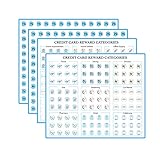
- Easy to apply: Fit on your cards perfectly and these decals are die cut,super easy to peel and apply
- Organized: Work perfectly to keep your cards organized.Make it so easy to track which card to use for which category to maximize points and miles
- Premium materials: Made with waterproof paper ,Clear print,long-lasting inks,bubble-free and removable
- Variety of categories and multipliers: There are 15 categories. And come with some blank labels,so you can write my own categories and X/%'s on them, pen or sharpie write well on the paper
- Includes: 502 lables.Size:0.39 inch/1cm in diameter,perfect size for credit cards
Compare cards using the spending and terms that matter to you
Compare the complete program, not just the largest earn-rate number.
| Comparison point | Question to answer |
|---|---|
| Earning rate | What rate applies to your actual spending categories, and are there caps, minimums or excluded transactions? |
| Redemption value | What do cash back, statement credits, portal bookings, transfers, gift cards and merchandise return in practice? |
| Annual fee | What recurring fee must your rewards and usable benefits cover? |
| Interest rate | How likely are you to carry a balance, and what interest would that add? |
| Other fees | Are there foreign-transaction, cash-advance, balance-transfer, maintenance or other transaction charges? |
| Welcome offer | How much qualifying spending is required, by what date, and which transactions are excluded? |
| Protections and benefits | Will you use the travel, purchase or other protections enough to assign them a real dollar value? |
| Partners and availability | Can you transfer to useful partners, and are awards limited by blackout dates, inventory or capacity? |
| Program control | Can the issuer or partner change, revoke, expire or otherwise restrict rewards under the agreement? |
The CFPB has documented recurring problems involving hidden conditions, devaluation, revocation and technical failures that prevent promised redemption. Treat the rewards agreement, not an advertisement, as the controlling description.
How much is a point or mile worth?
Start with a redemption-specific calculation:
value per point = (cash price you avoid paying − taxes and fees you still owe) ÷ points required
Quick wins for a faster PC:
Repair Windows errors before they cause bigger problemsFix Now →Fix the driver behind crashes, sound loss and screen glitchesFind Drivers →For example, if a booking would otherwise cost $300, you still pay $20 in taxes and fees, and the redemption requires 28,000 points, the value is $280 divided by 28,000, or one cent per point. Use the same method for a statement credit, gift card or merchandise item. Compare at least two routes because points can have different values inside the same program.
Cash-out route
A statement credit or deposit is the easiest benchmark because the dollar value is explicit. Use it as your floor when deciding whether a travel or merchandise redemption is genuinely better.
Issuer travel portal
Calculate the cash price available through the portal, including taxes and fees, and divide by the points required. Check cancellation rules and whether the portal price differs from booking directly.
Transfer to a partner
Transfers can create more value, but only if the partner has award space for dates you can use. Confirm the transfer ratio, minimum transfer amount, processing time and whether transfers can be reversed. A theoretical high value is not useful if the required inventory is unavailable.
Free tools Windows power users keep installed
One-click scans. No signup required.
Annual fees: deciding whether to pay one
An annual fee is worthwhile when the recurring value you can realize exceeds it after interest and other fees. Calculate a break-even point for rewards alone:
break-even spending = annual fee ÷ effective reward rate
At a 2% effective rate, a $95 fee requires $4,750 of eligible spending just to break even on rewards. If you value a benefit at $50 because you will definitely use it, the remaining fee is $45 and the break-even spending falls to $2,250 at that same rate. These figures are planning examples; use the card’s actual rate and your own usable benefits.
Recalculate after the first year. Introductory credits, temporary bonus categories and waived first-year fees can make an offer look better initially than it is as a long-term product.
Windows Errors? Fix Them Before They Spread
Repair common Windows errors and clear accumulated junk for a smoother, more stable PC - no reinstall needed.Free scan · no reinstallOutdated Drivers Are Slowing You Down
One free scan finds every outdated or missing driver and matches the right update for your exact hardware.Free scan · exact hardware matchSign-up bonuses require a deadline plan
- Write down the exact spending threshold and the date by which it must be met.
- List normal bills and planned purchases that can safely be charged during that period.
- Exclude transactions the terms do not count, such as returns, cash advances or balance transfers where applicable.
- Leave a buffer for posting delays and refunds; do not wait until the final day.
- Confirm that the bonus posted and save the offer and account terms until it does.
Never manufacture spending or buy unnecessary items for a bonus. The cost of carrying the resulting balance can exceed the bonus, and returned purchases can reduce qualifying spend.
Best Value
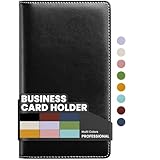
- Large capacity business card storage: This book-style business card organizer can hold up to 240 business cards, two cards back-to-back in each pouch. It is very compact & professional. Enough capacity for your different cards: business cards, credit card, social security, gift cards, insurance cards, name cards, personal IDs, mini photos, and more
- Sturdy & Long-lasting card book: Name card holder is made from high-quality pu leather cover and PVC pocket sheets. Long-lasting and sturdy
- Easy to find & read: Card holder book transparent slots are good for reading and finding information on the business card
- Compact size business card folder: The slim profile and lightweight design make carrying a breeze – Carry it in your hand, pocket or handbag when on the go. Dimension: 7.7"x 4.5" x 0.7"
Taxes on credit-card rewards
Tax treatment depends on why you received the reward and how the arrangement works. IRS private-letter-ruling material cited in the CFPB discussion treats rewards received for making purchases and redeemable for cash, a statement credit or goods as sufficiently similar to rebates for the specific tax-accounting analysis. That material is fact-specific and is not a universal ruling for every reward.
Sign-up bonuses that do not require purchases, referral payments, employment incentives and business arrangements can raise different questions. Keep records of the offer, qualifying activity and any tax form you receive. For an unusual situation, use current IRS guidance or consult a qualified tax professional rather than assuming ordinary purchase rewards receive the same treatment.
A practical workflow before you apply
- Estimate planned spending. Break a typical year into categories and use only purchases already in your budget.
- Compute gross rewards. Apply the published earn rate to each category, including caps, minimums and exclusions.
- Subtract costs. Deduct the annual fee, foreign-transaction and other transaction fees you expect to incur.
- Model interest. If you might revolve a balance, estimate the interest and subtract it before calling the card profitable.
- Value usable benefits. Count only protections, credits and travel benefits you would actually use.
- Test redemptions. Price at least two redemption methods and record the value per point or mile for each.
- Read change and closure terms. Check transfer rules, partner limits, expiration, account-closure consequences and clauses allowing devaluation or revocation.
- Recheck before applying. Offers, earning rates and redemption rules can change, so verify the current terms on the application date.
Common problems and how to respond
The advertised rate does not apply
Review the merchant category, bonus enrollment and spending cap. If a purchase coded outside the bonus category, use the documented terms when deciding whether to dispute a missing reward.
A bonus did not post
Check the qualifying window, posting date, returns and excluded transaction types. Keep screenshots or a saved copy of the offer and contact the issuer through its documented support channel.
A redemption suddenly costs more
Programs can devalue points or alter partner pricing. Recalculate the value before transferring additional points, and avoid transferring speculatively when the program does not allow reversals.
Rewards disappear after closure
Account-closure terms can determine whether unredeemed rewards are forfeited, transferred or preserved. Read those terms before closing and redeem or move rewards in the permitted way.
The website or checkout fails
Technical redemption failures are a documented consumer problem. Save the error, date and requested redemption, then ask the issuer to investigate under the program’s stated process. Do not assume an unavailable checkout means the value is permanently lost.
The bottom line
Choose a rewards card only after a personal, after-fee calculation. Use planned spending, pay in full, compare redemption routes, and treat bonuses and benefits as conditional rather than guaranteed. If interest, fees or forced spending outweigh the rewards, a simpler no-fee card—or no new card—is the better financial result.
Quick Recap
Product prices and availability are accurate as of the date/time indicated and are subject to change. Any price and availability information displayed on Amazon at the time of purchase will apply.

