Arcade racing games are built to make driving immediately exciting: steering is predictable, mistakes are recoverable and spectacular events matter as much as lap time. Simulation racers model more of the work a real car does, so braking points, tire grip, weight transfer, aerodynamics and throttle control determine whether a lap succeeds. The distinction is a spectrum rather than a strict binary, but the handling model and the cost of mistakes are the clearest dividing lines.
The central difference is how the car responds
In an arcade racer, the game usually simplifies or exaggerates vehicle behavior so that a controller input produces a quick, readable result. Turn the stick, tap the brake or use a boost and the car responds in a way that is easy to understand at speed. The design goal is momentum, drama and control that feels satisfying before you have memorized a track.
| # | Preview | Product | Price | |
|---|---|---|---|---|
| 1 |
|
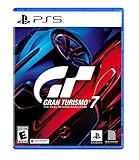
Gran Turismo 7 Standard Edition - PlayStation 5 | $42.63 | Buy on Amazon |
| 2 |

|
Gran Turismo 7 PS5 | $46.50 | Buy on Amazon |
| 3 |

|
Gran Turismo 7 - For PlayStation 5 | $45.05 | Buy on Amazon |
| 4 |

|
Resident Evil Requiem Amazon Exclusive Edition - PlayStation 5 | $69.99 | Buy on Amazon |
| 5 |

|
Street Fighter 6 - PS5 | $15.99 | Buy on Amazon |
As an Amazon Associate I earn from qualifying purchases.
A simulation-focused racer exposes more of the relationships that make real driving difficult. Braking transfers load to the front tires, accelerating can unload the rear, and a tire that exceeds its available grip will slide rather than obediently follow the steering angle. Downforce changes with speed, airflow and car setup. Throttle, steering and braking therefore have to be coordinated instead of used as isolated buttons.
What’s actually slowing this PC down?
Pick the symptom - the matching free tool is one click away.
That does not mean an arcade game has no physics or that a simulator is unpleasant. It means the game gives you different priorities. Arcade design hides or compresses variables to preserve flow; simulation design makes those variables part of the challenge.
#1 Best Overall
- With the return of classic cars, iconic tracks, and fan-favourite modes like GT Simulation and Sport Mode - Gran Turismo 7 is the complete Real Driving Simulator, 25 years in the making.
- Find your line. Whether you're a racer, collector, tuner, designer, photographer or arcade fan - immerse yourself in the facets of automotive culture that matter most to you.
- Connect and compete. Join an international community of drivers to share race strategies, tuning tips, livery designs and photos, before taking to the track to go head-to-head.
What you notice in a corner
- Arcade: You can often brake late, turn aggressively and recover from a slide with a brief correction. The car may rotate more easily than a real vehicle, or remain stable after contact that would send a real car into a spin.
- Simulation: Entering too fast, turning while braking or applying power too early can exceed tire grip. A small mistake may widen your line, lock a tire, induce oversteer or cost several seconds.
- Both: A game can offer realistic-looking cars and tracks while using forgiving handling, or provide detailed physics with extensive assists. The label alone cannot predict the feel.
Physics, grip and the cost of mistakes
The most useful test is not the marketing description but what happens when you ask the car to do two things at once. Arcade handling commonly lets you brake deep into a corner, rotate the car and return to full throttle with limited penalty. Recovery is part of the fun: a slide can be a spectacle rather than the end of a race.
In a simulation, every tire has a finite grip budget. Braking, cornering and acceleration draw from it, and the balance changes as weight moves around the car. The result is a larger difference between a clean lap and a merely fast-looking one. You learn to brake in a straight line, release pressure as you turn, find the apex and feed in power as the car unwinds its steering.
Downforce and air effects add another layer. A high-speed car can gain cornering grip from aerodynamic load, but that load changes with speed and airflow. Following another car may alter the air reaching your wings, while wind direction can affect stability. Gran Turismo 7 is a clear example of this simulation-oriented approach: its official product description says its production cars are meticulously recreated and that computational fluid dynamics is used to model downforce changes, wind direction and air turbulence.
Why recovery feels different
Arcade games often protect the race from one error. Barriers may redirect you, a reset may place you back on the course, or the car may regain traction quickly. These systems keep a short event moving and make exploration or stunt play practical.
Rank #2
- 1183237
Simulation racers tend to make errors persistent. A missed braking point can force a wide exit, damage a tire or lose positions. Some games add penalties for cutting corners or causing contact. The pressure is not intended to punish experimentation; it encourages repeatable technique, which is why practice and consistency matter more.
| Driving situation | Arcade-leaning response | Simulation-oriented response |
|---|---|---|
| Late braking | Often recoverable with a quick turn or handbrake input | May lock tires, run wide or compromise the next corner |
| Throttle on corner exit | Usually safe to apply early for speed and spectacle | Can cause wheelspin or oversteer until the car is straighter |
| Contact with a barrier | Frequently redirects the car with limited lasting effect | Can damage the car, add a penalty or end a competitive lap |
| Track knowledge | Helpful, but events may reward improvisation and exploration | Essential for repeatable braking points and consistent lines |
Are arcade racing games easier to learn?
Usually, yes, at the beginning. An arcade racer is designed to communicate its rules quickly. You can pick up a controller, understand the steering and finish an event without studying tire temperatures or setup sheets. The forgiving model lets you concentrate on traffic, jumps, shortcuts or overtakes.
Simulation racers have a steeper initial curve because the controls expose more consequences. A beginner may brake too late, turn while carrying too much speed and then blame the steering when the real problem was entry speed. Progress comes from learning a repeatable sequence rather than simply driving harder.
Outdated Drivers Are Slowing You Down
One free scan finds every outdated or missing driver and matches the right update for your exact hardware.Free scan · exact hardware matchWindows Errors? Fix Them Before They Spread
Repair common Windows errors and clear accumulated junk for a smoother, more stable PC - no reinstall needed.Free scan · no reinstallDifficulty is not fixed, however. Assists can reduce the barrier in a simulator, while an arcade-leaning game can become demanding when aids are removed, opponents are faster and damage or strict penalties are enabled. A player who turns off stability control, automatic braking and the racing line may find a supposedly accessible game requires substantial discipline.
A practical learning path
- Start with a stable car. Use a balanced road car instead of a high-power machine that overwhelms the tires.
- Learn braking first. Choose a visible marker, brake in a straight line and move the marker gradually later as you gain confidence.
- Separate the phases. Finish most braking before turning, reach the apex, then increase throttle as the steering opens.
- Change one aid at a time. Removing every assist at once makes it difficult to identify which habit needs work.
- Repeat short sessions. Consistent laps reveal whether a setup or technique is genuinely faster than a single spectacular attempt.
Assists and accessibility change the experience
Steering help, braking help, traction control, stability control, automatic gears and an on-screen racing line can make a simulation racer approachable on a gamepad. They do not turn it into an arcade game; they reduce the number of variables you must manage simultaneously. As confidence grows, you can remove aids selectively and feel the underlying model more clearly.
Arcade racers also use assistance, but often as part of the core fantasy. A forgiving steering model, rewind, boost or automatic recovery may be available because the game values uninterrupted action. The important question is not whether a title has assists, but what remains when you disable them and whether the event structure expects you to do so.
Controller versus wheel
You do not automatically need a wheel for a simulation racer. A well-designed controller provides enough range for steering, braking and throttle, and assists can smooth the learning curve. A wheel and pedals become more valuable when you want finer control over small steering angles, progressive braking and throttle modulation, or when the specific game documents robust wheel support.
Do these 3 things before closing this tab:
1Repair Windows errors before they cause bigger problems2Fix the driver behind crashes, sound loss and screen glitches3Clear out junk files and repair common Windows errorsArcade games are generally designed around a controller. A wheel may work, but it can add little if the game expects rapid camera-like steering, boost management or frequent recovery inputs. Choose the input device for the title’s control model and your available space, not for the genre label alone.
Rank #4
- Amazon Exclusive - 2 sided poster included in every game!
- Grace Ashcroft, an FBI intelligence analyst who is introverted and easily scared, representing a new type of character for the Resident Evil series. Grace will experience horror from the same perspective as the player as she learns to overcome her fears throughout the course of the story.
- For the first time ever in Resident Evil history, players will be able to freely switch between both first- and third-person perspectives throughout the game.
- An Anniversary to Remember: With March 2026 marking the Resident Evil series’ 30-year anniversary, Resident Evil Requiem marks its own milestone in the franchise.
- Pre-orders for Resident Evil Requiem are now open, with the bonus of Grace’s costume: Apocalypse. Please note that the picture weapon does not come with the costume, but it can be obtained in-game.
Game structure reveals what the designer values
Arcade-leaning racers often organize play around variety and spectacle. Open environments, festival activities, stunt jumps, collectibles and short events let you switch goals whenever a conventional race loses its appeal. The road itself becomes a playground.
Simulation racers more often center on circuits and structured racecraft. You may practice a track, complete licensing tests, qualify, manage tire or fuel strategy and progress through championships. The repetition is deliberate: driving the same corners teaches braking references, turn-in points and exits that can be compared from lap to lap.
Gran Turismo 7 illustrates the simulation side. Its official materials describe meticulously recreated production cars and a Licence Centre that teaches racing fundamentals step by step. It also includes an Arcade Race mode against AI-controlled cars, demonstrating that a simulation-focused title can still provide an immediately accessible event.
Forza Horizon 6 represents the open-world, activity-rich end of the spectrum. Its official progression description lists Horizon Festival pathways, Horizon Play, road, dirt and cross-country races, time attacks, drag meets and PR stunts. That structure is characteristic of an arcade-leaning or sim-cade experience, even when its cars have meaningful physics and tuning options.
Best Value
- Classic Experience Built for a Modern Era: With all core gameplay modes present, plus two brand new modes and enhanced visuals, Street Fighter 6 redefines the classic fighting game genre.
- Distinct Fighting Styles to Master: 18 diverse characters including legendary World Warriors and exciting brand new characters add their own flair to the game at launch, with more to be added post-launch.
- Brand New Game Modes: The Street Fighter franchise continues to hone its skills and redefine the fighting genre with the introduction of three new foundational modes – Fighting Ground, World Tour and Battle Hub.
- In-Game Commentating: Street Fighter’s first-ever Real-Time Commentary Feature, supported with subtitles in 13 languages, incorporates the voices of popular Fighting Game Community (FGC) commentators like Vicious and Aru directly into the game to narrate what is happening on-screen just like a real tournament.
- Two New Control Schemes: Classic Controls returns alongside two brand new options: Modern Controls allow you to perform special attacks with simple button combinations and are designed for players who want to fight without memorizing and practicing special move button combinations first. Dynamic Controls only require a press of the Auto-Attack button to perform attacks and is a great control type to use when you have friends and family over for a quick, casual game.
| Design axis | Arcade-leaning pattern | Simulation-leaning pattern |
|---|---|---|
| World and events | Open environments, varied activities and spectacle | Circuits, practice, licenses and structured championships |
| Primary reward | Immediate excitement, exploration and dramatic moments | Consistency, technique and repeatable lap performance |
| Failure state | Quick recovery, rewind or low-cost mistakes | Time loss, penalties, damage or a compromised stint |
| Progression rhythm | Frequent event changes and optional activities | Gradual mastery of cars, tracks and race procedures |
The spectrum: arcade, sim-cade and simulation
Think of three broad zones rather than two sealed genres. At one end, arcade racers emphasize accessible control, exaggerated action and low-cost failure. In the middle, sim-cade games combine detailed cars, tuning or believable grip with controls that remain friendly to a controller. At the other end, simulation racers make vehicle behavior, race procedure and consistency central.
A game can move between zones through its settings. A simulator with automatic gears, traction control and a visible racing line may feel approachable. The same title with manual gears, reduced assists, strict penalties and a demanding car can become a serious practice tool. Conversely, an arcade-leaning game may offer a challenging mode that rewards precise lines without modeling every real-world variable.
Genre references commonly use Gran Turismo as an example of realistic driving and games such as San Francisco Rush, Cruis’n USA and Hydro Thunder as examples of over-the-top arcade fun. Those examples describe design intent, not a universal technical test. Individual cars, modes and difficulty settings can still behave differently within the same title.
Free tools Windows power users keep installed
One-click scans. No signup required.
Which type should you play?
Choose arcade-leaning racing if you want
- Immediate action with little preparation.
- Exploration, open-world activities, stunts or frequent event changes.
- A forgiving response when you are using a controller or sharing play with newcomers.
- Short sessions where a mistake should not erase the rest of the event.
Choose simulation-leaning racing if you want
- To learn how braking, grip, weight transfer and throttle affect a car.
- Repeatable circuits where small improvements can be measured over many laps.
- Licensing, practice, qualifying, championships or strategic racecraft.
- A deeper payoff from tuning, manual control and—where supported—wheel and pedal hardware.
Choose a sim-cade game if you want both
Look for meaningful physics and tuning paired with adjustable assists, varied events and a forgiving default setup. This middle ground is useful when you want to understand car behavior without committing every session to a full practice routine.
How to judge an unfamiliar racing game
Before buying or installing, check the driving options and event design rather than relying on the cover label. Look for whether the game offers a racing line, adjustable traction and stability control, manual gears, damage or rewind, license or tutorial tests, and wheel compatibility. Watch how a car behaves under trail braking and on corner exit; those moments reveal more than a marketing phrase such as “realistic.”
- Read the control settings: A large set of adjustable assists usually means the game can serve multiple skill levels.
- Inspect the events: Festival activities and mixed terrain suggest an arcade or sim-cade focus; licenses and circuit practice suggest simulation priorities.
- Consider your input: Controller-first games are not inferior, and a simulator can be entirely enjoyable without a wheel.
- Check the specific mode: One title may contain both an accessible arcade race and a demanding championship, so compare the mode you will actually play.
Bottom line
Arcade racing games simplify handling to deliver fast, forgiving fun, while simulation racers make real-world driving relationships more consequential. Arcade games favor recovery, variety and spectacle; simulations favor braking discipline, grip management and consistency. Because assists, modes and tuning can shift the feel, treat the categories as a spectrum. Pick the arcade end for instant action and exploration, the simulation end for practicing realistic car control, or a sim-cade middle ground when you want both accessibility and meaningful physics.
Quick Recap
Product prices and availability are accurate as of the date/time indicated and are subject to change. Any price and availability information displayed on Amazon at the time of purchase will apply.
Recommended Free Tools

