AI could make education more unequal if the students best placed to use it are already those with reliable internet, suitable devices, affordable access, relevant learning materials, and support from prepared teachers. It could also help widen access and personalize learning. Which effect prevails depends on infrastructure, resources, skills, and safeguards—not on AI adoption alone.
Will AI make education more unequal?
It can, but inequality is a risk rather than a proven universal outcome. UNESCO’s 2025 report on learner rights describes possible gains in access, personalization, and educational management alongside risks to equity, privacy, safety, ethics, and the right to education. The OECD’s 2023 guidance likewise says digital tools may improve learning quality and equity under the right conditions, while warning that unequal access, uneven capacity, poor-quality resources, privacy failures, and bias can create or deepen disparities.
As an Amazon Associate I earn from qualifying purchases.
The evidence cited here is global and policy-oriented. It does not establish that AI use has caused a particular change in test scores, attainment, or long-term mobility across countries, ages, or school systems. The more defensible question is whether students and schools have the conditions to benefit—and whether institutions manage the risks.
Who benefits from AI in the classroom?
Students and teachers are more likely to benefit when tools are accessible, educationally sound, affordable, and suited to local curricula and languages. A system that can adapt explanations or provide another route into learning may be useful; so may tools that support educational management. But access to a tool is not the same as access to a good learning experience. Students need the connectivity and skills to use it, teachers need time and preparation to judge its output, and schools need policies that protect learners.
#1 Best Overall

- TURN MATH INTO AN ADVENTURE! – Make math practice fun with this interactive math board game for kids! This addition and subtraction game is perfect for preschool, 1st, 2nd, and 3rd graders, and family game night.
- LEARNING THROUGH PLAY – No boring worksheets! With Number Hunter kids board game, kids embark on a fun expedition around the world, learning addition, subtraction, and even and odd numbers without even realizing it.
- EASY TO LEARN, FUN TO PLAY – Roll the dice, add or subtract the numbers, and move forward. Land on a star tile to complete a fun action or math challenge. Be the first to reach the finish line to win!
- BUILD EARLY STEM SKILLS – This number game for kids 5-7 supports early math learning, critical thinking, and problem-solving in a playful, stress-free way.
- HOMESCHOOL ESSENTIAL – This kids game is a great choice for parents and teachers looking for a fun number game that can be used as part of homeschool supplies.
UNESCO Assistant Director-General for Education Stefania Giannini wrote in the 2025 publication AI and the future of education. Disruptions, dilemmas and directions: “Artificial intelligence (AI) is reshaping the way we learn, teach and make sense of the world around us – but it is doing so unequally.” This is a framing statement about the challenge, not a measured estimate of AI’s effect on learning outcomes.
What happens to students without reliable internet?
They may be unable to use online AI tools consistently, or at all. That can exclude them from activities their connected classmates can access, while interruptions can make a tool impractical even where a school has some connectivity. UNESCO’s 2025 learner-rights report estimates that around 2.6 billion people lacked internet access as of 2024. This is a general internet-access estimate, not a count of students unable to use AI.
Rank #2

- Spellchecked is a fun way for the whole family to help young learners improve their spelling. Each box contains 200 Spelling cards and 8 Spellchecker cards, which are keys that players can use to check each other’s answers. An easy-to-follow instruction sheet is included.
- The Spelling cards are divided into 8 color-coded decks and 4 ability levels. Players choose a deck to play. Each card shows a familiar image, gives the first letter of the word, and asks the player to identify the image and spell the word for points.
- If the player cannot spell the word correctly, the card is turned over to reveal three possible spellings. If the player can choose the correct spelling, they receive a lesser amount of points. The first player to reach 30 points is the winner.
- Spellchecked helps young learners recognize spelling patterns, use critical-thinking strategies, and learn from misspellings. The game plays to young learners’ strengths in identifying images and choosing a correct spelling from three possibilities.
- For anyone ages 8 and over in groups of 2–8 players. Play it with 3rd graders or 6th graders. Play it with friends or aunts or grandparents. The more advanced the level, the tougher the words are to spell and the correct answers are worth fewer points.
School access is also uneven. UNESCO’s 2025 connectivity Q&A reports that internet access was available in 40% of primary schools globally, 50% of lower secondary schools, and 65% of upper secondary schools. In the same account, school connectivity ranges from 80–90% in the Americas, Europe, and the Commonwealth of Independent States to 64% in Asia-Pacific States and 40% in Africa; UNESCO reports internet access as low as 14% in rural areas of least developed countries. These infrastructure figures describe connectivity, not AI use or student performance.
The Tool Desk
Outbyte PC Repair FREEClear out junk files and repair common Windows errorsFree Scan →Outbyte Driver Updater FREEFix the driver behind crashes, sound loss and screen glitchesFind Drivers →Even a connected school may not solve the home-access problem. A student who depends on school hours, shared devices, or intermittent mobile service has fewer opportunities to use a digital resource than a student who can connect reliably elsewhere. Accessibility also matters: a device or service that a learner with a disability cannot use does not provide meaningful access.
Rank #3

- Educational Journey: Embark on an exciting educational journey with the Scholastic Race Across the USA Game. Explore the diverse geography of our country while having fun with this engaging board game.
- State-Hopping Adventure: Visit six states, answer geography questions, and race back to your home state to claim victory! The game combines learning and entertainment, making it an ideal choice for educational play.
- Grade-Appropriate Questions: Tailored to each player's grade level, the game ensures that questions are suitable for their educational stage. Enjoy a personalized learning experience that adapts to the unique needs of players.
- Inclusive Gameplay: Designed for kids aged 8 and up, this game allows children from different grades to play together on an even field. Foster friendly competition and collaboration as players of various ages join forces in this educational adventure.
- Perfect for Group Play: Whether it's a family game night or a classroom setting, the Scholastic Race Across the USA Game encourages group play. Bring kids together for a shared learning experience that promotes camaraderie and knowledge sharing.
Why is the divide about more than devices?
A device is only one part of a chain. A student needs dependable connectivity, affordable ongoing access, suitable and accessible content, relevant language support, and the skills to use tools critically. Teachers and school leaders need capacity to choose resources, evaluate outputs, and protect students. If one link fails, nominal access may not translate into educational benefit.
UNESCO’s 2025 discussion notes that subscription access, infrastructure, and language advantages influence who can use advanced AI and whose knowledge and values are represented. Its 2025 explainer also identifies gender, disability, language, age, and rural location as factors that can compound barriers. These are not separate from the digital divide: they can shape whether a learner can reach a tool, participate in it, and find its output useful.
Rank #4

- CLASSIC BEGINNER GAME: Do you remember playing Chutes and Ladders when you were a kid. Introduce new generations to the classic gameplay of this kids' board game for 2 to 4 players
- NO READING REQUIRED TO PLAY: For kids ages 3 and up, Chutes and Ladders can be a great game for kids who haven't learned how to read yet
- CLASSIC UP AND DOWN GAME FOR PRESCHOOLERS: Spin the spinner and move the pawn up the ladders and down the chutes. Chutes and Ladders is a classic game that children enjoy playing over and over
- BE THE FIRST TO REACH THE TOP: Players scramble to the top of the game board without slip-sliding down. Land on good deeds to climb ladders, but watch out for the chutes
- KIDS CAN PRACTICE NUMBERS: Children can practice counting and number recognition as they travel along the gameboard to get to the top
How can schools use AI fairly?
UNESCO’s 5C framework offers a practical way to assess readiness: coordination and leadership; content and solutions; capacity and culture; connectivity and infrastructure; and cost and sustainability. The OECD’s 2023 guidance adds emphasis on governance, bias, teacher autonomy, training, privacy, and the safety, efficacy, and equity of tools. Schools can use the combined questions below to assess a proposal before expanding it.
Crashes, No Sound, or Screen Glitches?
Random freezes, missing sound and display glitches usually trace back to one bad driver. Find and replace yours safely.Free scan · under a minuteWindows Errors? Fix Them Before They Spread
Repair common Windows errors and clear accumulated junk for a smoother, more stable PC - no reinstall needed.Free scan · no reinstall| Condition | Questions for a school or system |
|---|---|
| Connectivity and infrastructure | Can students and teachers reach the tool reliably at school and, where required, at home? Are devices appropriate, accessible, and available when needed? What happens during outages or for learners who cannot use the standard interface? |
| Cost and sustainability | Who pays for devices, subscriptions, upkeep, and technical support? Can the school maintain access after a pilot ends, or will learners lose a resource they came to depend on? |
| Content and solutions | Is the material educationally sound, age-appropriate, accessible to disabled learners, available in relevant languages, and aligned with the curriculum? Can staff check whether outputs are useful and accurate for the intended task? |
| Capacity and culture | Have teachers received preparation and time to use the tool with professional judgment? Can students assess AI output critically and understand its limits? Does the approach fit the local context? |
| Coordination and leadership | Are responsibilities clear for procurement, privacy, data protection, safety, and accountability? Is there a process to review bias and address problems? Do policies preserve teacher autonomy and protect learners’ rights? |
A fair implementation should make access and risk visible rather than treating a rollout as successful because licenses were issued. Schools can map which students can actually use a proposed tool, identify barriers before adoption, and decide how to support people who cannot use it. They should also set clear purposes for use, involve teachers in decisions, and review whether the resource is safe, effective, and equitable in its real setting.
Best Value
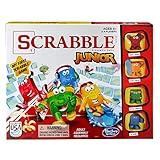
- Letter-matching fun for your little one
- Features cute character tokens for score keeping
- Features cute character tokens for score keeping
- Players create their own words in the advanced level
- Scrabble Junior is letter-matching fun for your little one
What should policymakers and school leaders prioritize?
- Build equitable access: Support affordable, reliable connectivity and access to quality resources, rather than assuming that purchasing a device or subscription closes the gap.
- Invest in people: Give teachers guidance, training, and autonomy, and develop students’ ability to question and evaluate AI-generated material.
- Choose for the learners served: Assess language coverage, disability access, age appropriateness, and curriculum fit—not just technical features.
- Set rights-based safeguards: Define privacy and data-protection expectations, accountability, safety review, and ways to identify and address bias.
- Plan beyond a pilot: Account for recurring costs, maintenance, support, and continuity so a short-term deployment does not create dependence that the school cannot sustain.
UNESCO calls for a human-centred, rights-based approach. In practice, that means judging AI not only by whether it works for connected users, but also by who is left out, what data and risks are involved, and whether learners and teachers retain meaningful agency.
Quick Recap
Product prices and availability are accurate as of the date/time indicated and are subject to change. Any price and availability information displayed on Amazon at the time of purchase will apply.




