The Tool Desk
Outbyte PC Repair FREERepair Windows errors before they cause bigger problemsFix Now →Outbyte Driver Updater FREEScan for outdated or missing drivers - takes under a minuteDriver Scan →There is no universal winner. A gold ETF is usually the practical choice when you want liquid, exchange-traded exposure without storing metal. Physical gold makes more sense when possession, gifting or cultural use is important. Sovereign Gold Bonds (SGBs) can suit a long investment horizon if you accept an eight-year maturity framework, changing issuance availability and potentially thin secondary-market trading.
Choose by matching the product to your time horizon, need for access, tolerance for storage and the exact tax rules applying on the transaction date.
As an Amazon Associate I earn from qualifying purchases.
Quick verdict by investor goal
| If your priority is | Usually the better fit | Why |
|---|---|---|
| Buying and selling conveniently at market prices | Gold ETF | Units trade on an exchange through a demat and trading account, so you avoid handling bullion. |
| Owning something you can hold, gift or use | Physical gold | You possess the metal directly, although premiums, storage and resale deductions reduce investment efficiency. |
| Holding for a long horizon and accepting restricted exit options | SGB, if a suitable series is available | SGBs are government-backed securities linked to gold and include an interest component under scheme terms, but maturity and liquidity conditions matter. |
| Keeping the investment simple and avoiding home-security concerns | Gold ETF | Custody is handled through the account structure rather than a household safe or locker. |
| Using gold for a wedding, festival or family transfer | Physical gold | Possession and immediate use can matter more than tracking efficiency. |
All three are exposed to movements in the gold price. None guarantees a profit, and each route has a different source of friction between the quoted gold price and the return you actually realise.
What each option actually is
Gold ETF
A gold exchange-traded fund is a passive fund designed to provide gold-price exposure. SEBI Investor describes exchange-traded funds as pooled, passive investments that offer diversification and exchange liquidity. Gold ETF scheme documents state that the funds are backed by physical gold, while the unit value fluctuates with gold prices.
#1 Best Overall

- ✔️Each coin contains 1/10 oz of gold.
- ✔️Obverse: Lady Liberty holding a torch with an olive branch.
- ✔️Reverse: The Type 1 reverse, used from 1986-2021, shows a male bald eagle in flight carrying an olive branch to his nest, where a female awaits with her young. The Type 2 reverse, introduced in 2021, shows a bold close-up portrait of an eagle.
- ✔️Each Gold Eagle is a sovereign monetized bullion coin fully guaranteed by the U.S. Mint.
You buy and sell units on the stock exchange during market hours. Your result depends not only on the underlying gold price but also on the fund’s expenses, the difference between the exchange’s bid and offer, execution or impact costs, tracking differences and the trading liquidity of that particular ETF. There can also be counterparty and operational risks associated with the fund and its market infrastructure.
Physical gold
Physical gold means buying and holding a bar, coin or jewellery item yourself. SEBI Investor identifies direct physical ownership as one way to invest in precious metals. The practical questions are purity, documentation, storage, insurance, theft protection and the dealer’s buyback terms.
Coins and bars are normally closer to an investment product than jewellery because jewellery includes making charges and can incur larger deductions when sold. Even with a coin or bar, you may pay a dealer premium when buying and accept a spread or deduction when selling. The metal can be lost, damaged or stolen, and a local buyer’s resale policy may determine how quickly you can convert it to cash.
Sovereign Gold Bonds
SGBs are government-backed securities whose value is linked to gold. Under the scheme terms reported in a June 2026 chartered-accountant-reviewed comparison, an SGB carries a 2.5% annual interest component, has an eight-year maturity and may be traded on an exchange before maturity. Treat the 2.5% figure as a term of the relevant bond series, not as a promise that every current purchase route will carry identical conditions.
Rank #2
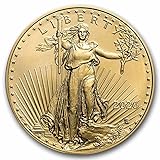
- ✔️Each coin contains 1/10 oz of gold.
- ✔️Obverse: Lady Liberty holding a torch with an olive branch.
- ✔️Reverse: Portrait with an American bald eagle, a design by Jennie Norris in 2021.
- ✔️Each Gold Eagle is a sovereign monetized bullion coin fully guaranteed by the U.S. Mint.
Exit can involve a permitted redemption window, waiting for maturity or selling on an exchange. Secondary-market volume can be low, so a quoted price does not guarantee that a large order will execute immediately or without a discount. New issue schedules and redemption rules can change; verify the current notice and the specific series before committing money.
Side-by-side comparison
| Factor | Gold ETF | Physical gold | Sovereign Gold Bond |
|---|---|---|---|
| How you hold it | Units in a demat and trading account | Metal in your possession or secure storage | Government security held in the permitted account form, often dematerialised or recorded in a bond account |
| How you exit | Sell on the exchange during trading hours | Sell to a jeweller, dealer or other buyer willing to accept the item | Use the applicable redemption window, wait for maturity or sell on an exchange |
| Main costs | Fund expenses, brokerage or transaction charges, bid-offer spread and possible impact cost | Dealer premium, making charges for jewellery, storage or insurance, and buy-sell spread or resale deductions | Issue or brokerage charges and a possible secondary-market discount or spread |
| Custody risk | Account, intermediary and market-infrastructure risk; no home storage | Loss, theft, damage and storage-security risk | Account and issuer terms; no household bullion storage |
| Income | Normally no guaranteed coupon; return is primarily linked to the unit price | No coupon or interest | Scheme terms include an interest component; the relevant series must be checked |
| Price exposure | Gold price plus tracking difference, expenses and trading spread | Gold price less premiums, deductions and resale spread | Gold-linked value plus the bond’s market price, interest terms and liquidity conditions |
| Best suited to | Investors seeking tradability and operational convenience | Investors who value possession, gifting or use | Investors with a compatible long horizon and no need for immediate liquidity |
| Tax treatment | Depends on the exact ETF, holding period and transaction date | Depends on the form of gold, holding period and transaction date | Depends on the applicable SGB rules, exit route, holding period and transaction date |
Gold ETFs: how they work and what to check
Why investors choose them
- Exchange access: You can place an order during market hours instead of finding a bullion buyer.
- No household bullion: The account structure removes the need for a locker, safe or separate insurance policy for the metal you would otherwise store.
- Transparent quoting: The live bid and offer show the price available in the market, although the trade price can differ from an indicative net asset value.
- Small, repeatable purchases: Units can be bought in the market’s available trading quantities, subject to your broker and the fund’s liquidity.
Costs that can reduce the result
Do not judge an ETF only by whether its chart follows gold. Fund expenses are deducted over time. A wide bid-offer spread or a thin order book can make the purchase price higher and the sale price lower than expected. Impact cost becomes more important for a large order or a less actively traded fund. Tracking differences arise when the fund’s net performance does not exactly match the reference gold price. These frictions can matter even when gold itself is unchanged.
Buying checklist
- Confirm that you have an operational demat and trading account and understand the broker’s order and settlement process.
- Read the ETF’s current scheme document for its benchmark, physical-gold backing, expenses, tracking information, creation or redemption arrangements and risk disclosures.
- Check the exchange’s recent bid-offer spread and trading activity rather than relying only on the fund’s name.
- For a sizeable order, use a limit order and consider splitting the transaction if the visible order book is thin.
- Keep contract notes and account statements so the acquisition date, sale date and costs are available for tax calculations.
When an ETF may disappoint
An ETF is not a substitute for jewellery or a coin you can hand to someone. It also does not remove market risk: the unit price can fall with gold, and a low-liquidity session can increase execution costs. Investors who do not have a demat route, or who need a physical object, should not choose an ETF solely because it is convenient for someone else.
Physical gold: buying, storing and selling safely
Choose the form for the intended use
Investment bars and coins are generally easier to evaluate than jewellery because jewellery’s design and making charges do not necessarily return on sale. If the objective is a gift or cultural use, those charges may be an accepted part of the purchase rather than an avoidable investment cost. Decide the purpose before comparing prices.
Rank #3
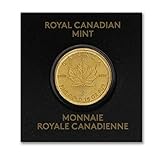
- Purity: .9999 Fine Gold (24-Karat)
- Diameter: 8 mm (0.314961 inches)
- Metal Content: 0.0322 Troy Ounces
- Stock Photo; Image is indicative of quality
- You will receive one coin per purchase in a divisible blister card with a unique serial number shown on the back of the assay card. The yer-date of the coin will be random.
Purchase checks
- Ask for a detailed invoice showing weight, purity, taxes and every premium or making charge.
- Verify the purity marking and obtain the seller’s assay, hallmark or other authenticity documentation applicable to the item.
- Ask in writing how the seller calculates buyback value, including deductions, testing fees and whether the original invoice is required.
- Compare at least two dealers’ all-in purchase prices; the lowest displayed metal rate may not be the lowest final bill.
- Keep packaging, certificates and invoices together, since missing documentation can complicate resale.
Storage and insurance
Home storage creates a theft and loss risk. A bank locker or a properly secured safe can reduce exposure, but each adds cost, access restrictions or both. Check whether any insurance covers bullion, jewellery, mysterious disappearance and transit; a standard household policy may have limits or exclusions. Separate the security decision from the investment decision: a cheaper purchase can become expensive if safeguarding it is inadequate.
Resale realities
A dealer may test the item before quoting a price, and the offer can be below the international or domestic reference price after purity adjustments, dealer margin and other deductions. Jewellery may be valued mainly for its gold content, not for the original design or making charge. If you may need the money quickly, ask potential buyers about same-day settlement and identification requirements before purchasing.
Sovereign Gold Bonds: return features and restrictions
The interest component
The SGB scheme terms cited in a June 2026 chartered-accountant-reviewed comparison specify a 2.5% annual interest component. Check the issue document for the payment frequency, record date, applicable series and any changes to the scheme before treating that figure as part of your expected return. Interest does not eliminate the possibility of a fall in the bond’s market value.
What’s actually slowing this PC down?
Pick the symptom - the matching free tool is one click away.
Maturity and early exit
An eight-year maturity is a structural commitment, not merely a suggested holding period. Early redemption may be available only in specified windows, while exchange sale depends on a willing buyer. A bond can therefore be valuable on paper but inconvenient to sell at your preferred price or on your preferred date.
Rank #4

- Our Jewelry is a Beautiful Way to Express Love; Friendship; Beauty and Art. The Right Gift Can Make Someone’s day! Whether the Occasion is a Birthday; Anniversary; Christmas; Black Friday; Cyber Monday or Mother's Day
- Our Collection Includes items for Men or Women and We Offer a Wide Range of beautiful Earrings; Bracelets; Bridal Engagement Rings; and Necklaces for Any Occasion. Our Jewelry Collections are the Perfect Gifts for Mom; Wife; Fiance; Bride; Mother; Father; Groom; Daddy; Daughter; Sister; Brother; Teacher; Employee; Coworker; Friend; Niece; Nephew; Son; Grandmother; Grandfather and More.
- Whether It is For Christmas Gifts or Stocking Stuffers; FB Jewel’s Pieces are Made With the Best Quality Materials Available as Well as Premium Quality Gold; Silver; Tungsten or Titanium for Him and Her. Why Not Treat Your Loved One for Christmas; Valentines Day; Mothers Day; Fathers Day; Graduation; Birthday; Weddings or Anniversary with FB Jewels Solid 22K Yellow Gold 1Oz American Eagle Coin (1.28 x 1.28 Inches)
- All 10K 14K or 18K Gold or 925 Silver are Made with Real Gold or Silver Not Plated
Before buying an issue
- Read the current issue notice and confirm the subscription dates, issue price formula, interest terms, maturity date and redemption provisions.
- Check whether the bond will be credited to the account you intend to use and how interest payments will reach you.
- Decide whether you can leave the money invested through the maturity framework or tolerate a potentially thin exchange market.
- If buying an older series on the exchange, compare its quoted price with the gold-linked reference, accrued interest treatment and the actual bid volume.
- Record the series number, acquisition date and all charges for future tax and redemption work.
When an SGB is a poor fit
Do not use an SGB for money you may need next month or for a purchase that requires physical gold. Availability is not continuous, and a secondary-market listing does not guarantee a fair or immediate exit. If the issue schedule, maturity date or redemption rules do not match your cash-flow plan, the interest component should not override that mismatch.
Independent reader supportYour contribution helps us test, update, and keep practical guides available for everyone.How costs and realised returns differ
The same change in the gold price can produce different investor outcomes because each route starts and ends at a different price.
- ETF: Start with the traded purchase price, then account for the bid-offer spread, brokerage or transaction charges, fund expenses and any tracking difference. On sale, the available bid—not a news headline’s gold quote—is what matters.
- Physical gold: Start with the all-in invoice, including premiums and, for jewellery, making charges. On sale, subtract the dealer’s spread, purity adjustment, testing charge and any other deduction.
- SGB: Start with the issue or exchange purchase price and add or subtract the applicable interest and market-price movement. Exit value depends on the redemption rule or the price and liquidity available on the exchange.
Because no stable comparative-return statistic is established for all three routes, a claim that one has always outperformed the others would be misleading. Your holding period, entry price, costs and exit route determine the result.
Recommended Free Tools
Tax: why a single answer is unsafe
The Income-tax Department states that long-term capital gains on many assets transferred on or after 23 July 2024 are taxed at 12.5% without indexation. That statement does not create one universal rate for every gold ETF, coin, jewellery item and SGB. Holding-period definitions and treatment can differ for listed assets, unlisted assets and government securities, and the transaction date can change the applicable rule.
Best Value

- Purity: .900 Fine Gold
- Metal Content: .1867 Troy Ounces
- Diameter: 21 mm; Thickness: 1.4 mm
- Stock Photo; Image is indicative of quality
- You will receive one coin per purchase
Before selling, identify the exact instrument, its acquisition and transfer dates, whether the transaction is an exchange sale, redemption or physical sale, and which costs are documented. Use the current Income-tax Department guidance or a qualified tax professional for the specific series and assessment year. Do not assume that a tax result for an ETF automatically applies to physical gold or an SGB.
A decision framework for different horizons
If you may need the money within a few months
Prioritise an exit route you can actually use. An ETF generally offers the clearest market-access mechanism, subject to trading liquidity and spreads. Physical gold can be sold locally but the dealer’s valuation and documentation affect the result. An SGB’s maturity and redemption framework may not fit a short cash need.
If your horizon is several years and you want low maintenance
Compare an ETF’s ongoing expenses and trading quality with an SGB’s maturity, interest terms and availability. Choose the structure you can hold through a weak gold-price period without being forced to sell. Keep physical gold in consideration only if direct possession has value beyond investment return.
If the goal is family use or gifting
Physical gold is the only option of the three that directly provides an object to hand over or wear. Treat making charges, purity paperwork and future buyback terms as part of the cost of that goal.
If you want one product for every purpose
There is no single product that simultaneously provides immediate possession, exchange liquidity, account-based custody and a bond-style interest component. Separate the use case first; then select the instrument whose compromises you understand.
Quick Recap
Common mistakes and how to avoid them
- Comparing only the gold price: Add every purchase, holding and sale friction before deciding.
- Assuming exchange liquidity: Look at the live order book and recent trading activity for the exact ETF or SGB series.
- Treating jewellery as a pure investment: Record making charges and resale deductions separately from the metal value.
- Assuming the 2.5% SGB figure is universal: Verify the current series’ terms and payment conditions.
- Ignoring custody: Include locker, safe and insurance costs when evaluating physical gold.
- Using one tax rule for all gold products: Check the instrument, dates and current guidance before selling.
- Putting emergency money into a maturity product: Match the exit rules to the date on which you may need cash.
- Buying without records: Retain invoices, contract notes, bond statements, purity documents and redemption confirmations.
Product prices and availability are accurate as of the date/time indicated and are subject to change. Any price and availability information displayed on Amazon at the time of purchase will apply.

