Recommended Free Tools
DRAM is volatile working memory; NAND flash is nonvolatile storage. DRAM keeps the data that a processor, server or accelerator is actively using and loses that data when power is removed. NAND keeps files and operating-system data without power and is the main memory technology inside solid-state drives (SSDs) and much embedded storage.
The distinction matters to investors because the two markets monetize different bottlenecks. DRAM earns value from low latency and bandwidth, with HBM (high-bandwidth memory) adding a specialized artificial-intelligence (AI) growth driver. NAND earns value from bits, density, cost per bit, endurance and storage demand. A company can participate in both markets while experiencing very different pricing cycles, qualification schedules, capital needs and customer risks in each.
As an Amazon Associate I earn from qualifying purchases.
DRAM and NAND at a glance
| Dimension | DRAM | NAND flash |
|---|---|---|
| What it stores | Temporary working data and instructions needed immediately by a processor | Persistent user and system data such as files, applications and operating-system images |
| Power behavior | Volatile: contents disappear when power is removed | Nonvolatile: contents remain without power |
| Performance objective | Very low access latency and high data throughput | High capacity at low cost per bit; access is slower than DRAM |
| Typical products | Commodity DDR, mobile LPDDR, graphics memory and HBM | Client and enterprise SSDs, removable flash and embedded storage |
| What drives demand | PCs, phones, servers, graphics and AI accelerators | SSD capacity, notebooks, data-center storage, smartphones and other embedded devices |
| Economic sensitivity | Compute shipments, server configurations, AI-memory content and bandwidth premiums | Storage-capacity growth, SSD inventories, bit supply, controller execution and cost per bit |
Both are arrays of semiconductor cells, but their cell designs, interfaces and system roles are different. Treating “memory” as one market can therefore hide the exposure an investor is actually buying.
Outdated Drivers Are Slowing You Down
One free scan finds every outdated or missing driver and matches the right update for your exact hardware.Free scan · exact hardware matchWindows Errors? Fix Them Before They Spread
Repair common Windows errors and clear accumulated junk for a smoother, more stable PC - no reinstall needed.Free scan · no reinstallWhat DRAM does in a computer or data center
Volatile working memory
Processors cannot perform useful work directly from an SSD for every instruction. They move active code and data into DRAM, where reads and writes are fast enough to support continuous computation. When a laptop, phone or server is shut down, DRAM loses its contents; the next boot reloads the operating system and applications from persistent storage.
#1 Best Overall

- Boosts System Performance: 32GB DDR5 RAM laptop memory kit (2x16GB) that operates at 5600MHz, 5200MHz, or 4800MHz to improve multitasking and system responsiveness for smoother performance
- Accelerated gaming performance: Every millisecond gained in fast-paced gameplay counts—power through heavy workloads and benefit from versatile downclocking and higher frame rates
- Optimized DDR5 compatibility: Best for 12th Gen Intel Core and AMD Ryzen 7000 Series processors — Intel XMP 3.0 and AMD EXPO also supported on the same RAM module
- Trusted Micron Quality: Backed by 42 years of memory expertise, this DDR5 RAM is rigorously tested at both component and module levels, ensuring top performance and reliability
- ECC Type = Non-ECC, Form Factor = SODIMM, Pin Count = 262-Pin, PC Speed = PC5-44800, Voltage = 1.1V, Rank And Configuration = 1Rx8
That role makes DRAM a capacity and performance component at the same time. More installed DRAM lets a system keep larger data sets close to the processor and avoid slower transfers to storage. Faster DRAM can feed more data per second, but the practical value depends on the processor, memory controller, software and workload.
DRAM product families
- DDR DRAM: The main memory used in desktops, notebooks and servers. Generations and module designs change over time, so a server’s supported memory type and speed are part of its qualification requirements.
- LPDDR: Lower-power DRAM used heavily in phones and other battery-powered devices. Mobile demand can follow a different replacement cycle from servers.
- Graphics memory: Memory designed to supply GPUs with large volumes of data for graphics and parallel workloads.
- HBM: A specialized, stacked DRAM product placed close to an accelerator package to provide very high bandwidth for AI and other data-intensive computing.
These categories are not interchangeable in an investor model. A supplier can report strong HBM demand while conventional PC or mobile DRAM is weak, or it can face the opposite mix.
How NAND flash becomes persistent storage
Nonvolatility and density
NAND cells retain an electrical state after power is removed. That makes NAND suitable for the data a device must preserve: photos, documents, applications, databases and the operating system itself. Its architecture prioritizes storing many bits in a small area, so NAND generally offers much higher density and lower cost per bit than DRAM, at the expense of higher latency and more complex management.
Manufacturers increase NAND capacity by placing more cells in each die and by building more vertical layers. The commercial result is measured in usable bits, yield, endurance and cost per bit rather than in raw cell count alone. A new generation can improve economics even when a finished SSD’s capacity looks unchanged, because the supplier may produce the same capacity with fewer or cheaper dies.
Why an SSD is more than bare flash
A consumer or enterprise SSD normally combines NAND packages with a controller, firmware, cache and a host interface. Managed NAND uses the controller to handle wear leveling, bad-block management and error correction. Those functions compensate for the fact that flash cells have finite write endurance and are not written like ordinary volatile memory.
The controller also presents a usable block-addressed device to the host. The operating system does not need to know which physical cells contain a file or which blocks have been retired. This is why an SSD is a complete storage product rather than simply a bag of NAND dies.
NVMe is an interface, not a memory type
NVMe describes a command protocol commonly used over PCI Express. An NVMe SSD can therefore be very fast compared with older storage interfaces while still using NAND as its persistent medium. The protocol changes how the host communicates with the drive; it does not turn NAND into DRAM or eliminate the controller and flash-management work inside the SSD.
Is NAND the same as RAM?
No. “RAM” usually refers to memory that the system can address for active computation, with DRAM being the dominant technology in main memory. NAND is also addressable by a controller, but its persistence, erase behavior, endurance limits and latency make it storage rather than a replacement for main RAM.
The two technologies can coexist in one device. A phone may use LPDDR as working memory and NAND in its internal storage. A data-center server may use DDR or HBM for computation and enterprise SSDs for databases and files. Performance improves when software keeps hot data in DRAM and uses NAND for capacity, durability and restart persistence.
Rank #2
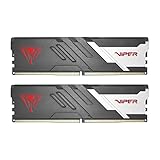
- Capacity: 32GB (2 x 16GB) 6000MHz
- Tested Timings: 30-40-40-76
- Feature Overclock: XMP 3.0 / EXPO overclocking supported
- Compatibility: Tested across latest DDR5 platforms for reliability on high performance
- Limited lifetime warranty
Some systems use flash as a cache or swap area, but that is a system-level compromise. It does not give NAND the latency, write behavior or bandwidth of DRAM.
Why AI needs HBM
The bottleneck is moving data
Modern AI accelerators perform enormous numbers of parallel operations. Supplying model weights, activations and intermediate results can be as important as the arithmetic itself. HBM addresses that data-movement problem with stacks of DRAM connected through a very wide interface and placed close to the accelerator package.
Compared with relying only on conventional memory modules farther away from the processor, HBM is designed to deliver much higher bandwidth in a compact package. The premium is justified when an accelerator would otherwise sit idle waiting for data. It is not a universal substitute for every server’s memory: capacity, package design, power, thermal limits and system architecture still determine the right mix.
HBM adds a distinct investment exposure
HBM is DRAM, but it should be modeled separately from commodity DDR. It requires advanced stacking, interconnects, packaging, testing and customer qualification. A supplier can have strong HBM pricing and growth even when standard DRAM pricing is under pressure, because the products address different constraints and have different qualification timelines.
SK hynix states on its Future Memory Technologies page that it established a mass-production system for HBM4 in 2025. That dated milestone indicates manufacturing readiness for a new HBM generation; it does not by itself disclose future market share, customer awards or profitability.
Why SSDs are built around NAND
Persistence is the first requirement
An SSD must preserve data while a computer is off. DRAM cannot do that without a battery or another power-maintenance system, so it is unsuitable as the normal medium for a boot drive or large file store. NAND supplies the required nonvolatility at a cost and density that make terabyte-scale storage practical.
The Tool Desk
Outbyte Driver Updater FREEFix the driver behind crashes, sound loss and screen glitchesFind Drivers →Outbyte PC Repair FREERepair Windows errors before they cause bigger problemsFix Now →Density and cost make the system economical
Storage buyers usually want more capacity without a proportional increase in price, power or physical space. NAND’s high density and low cost per bit fit that requirement. The trade-off is slower access than DRAM, finite program-and-erase endurance and the need for a controller that spreads writes, corrects errors and retires failing blocks.
Interfaces and form factors determine the finished product
The same underlying NAND can appear in different products: a removable card, embedded storage in a phone, a client SSD or a high-capacity enterprise drive. The controller, firmware, interface, cooling, power-loss protection and qualification can change the product’s value substantially. Investors should therefore distinguish NAND wafer or package exposure from branded SSD revenue and margins.
How DRAM and NAND markets make money differently
| Investor question | DRAM and HBM | NAND and SSDs |
|---|---|---|
| Primary demand driver | Compute cycles, server memory content, AI accelerators, graphics and mobile devices | SSD deployments, storage-capacity growth, client devices and embedded storage |
| Customer value proposition | Latency, bandwidth, power efficiency and reliable supply for a qualified design | Capacity, cost per bit, endurance, controller quality, performance and data integrity |
| Pricing behavior | Contract and spot pricing can react quickly to server, PC and AI-memory inventories | Pricing reflects bit supply, SSD inventories, capacity demand and the mix between client and enterprise products |
| Manufacturing execution | Process scaling, yield, speed grades, stacking and advanced packaging for HBM | Layer count, bit density, yield, endurance, controller firmware and SSD qualification |
| Qualification risk | High when a memory device must meet a processor, accelerator or server platform specification | High for enterprise SSDs, where endurance, firmware behavior and data protection are tested over long cycles |
| Capital intensity | Fabrication capacity plus specialized packaging and testing, especially for HBM | Fabrication capacity, layer transitions, assembly, controller development and SSD testing |
| Cycle timing | Often follows compute, server and AI-memory investment cycles | Often follows storage-capacity, SSD and client-device inventory cycles |
| Concentration to monitor | Accelerator, server and mobile customers; product qualification can narrow the field | Large cloud and enterprise buyers, PC makers, handset makers and channel inventory |
Both markets can suffer inventory corrections and oversupply. The timing and severity differ because a change in AI-accelerator demand does not have the same immediate effect as a change in client SSD inventories, and vice versa.
Rank #3

- Boosts System Performance: 32GB DDR5 overclocking desktop memory RAM kit (2x16GB) that operates at 6000MHz to improve gaming, multitasking and system responsiveness for smoother performance
- Accelerated gaming performance: Every millisecond gained in fast-paced gameplay counts—benefit from lower latency for higher frame rates, perfect for AAA games
- Optimized DDR5 compatibility: Compatible 13th gen intel core CPUs or newer AMD Ryzen 9000 series CPus
- Trusted Micron Quality: Backed by 42 years of memory expertise, this DDR5 RAM is rigorously tested at both component and module levels, ensuring top performance and reliability
- Top-Tier Overclocking: 32GB of DDR5 RAM 32GB, 6000MHz at extended timings of 36-38-38-80 provide stable overclocking performance and lower latency compared to usual Crucial Pro Series DRAM modules
How to analyze a memory-chip company
1. Map the product mix before reading the headline result
Start with the percentage of revenue, gross profit or bits shipped that comes from commodity DRAM, mobile DRAM, graphics memory, HBM, NAND components and finished SSDs. A company that reports “memory” may contain several businesses with different margins and cycles. Read segment notes and product descriptions rather than inferring exposure from the company’s name.
Samsung, SK hynix and Micron are examples of suppliers that participate in multiple memory categories, but their mixes of DRAM, HBM, NAND and SSD products are not identical. Do not treat a result from one category as evidence about the others.
2. Identify the real demand signal
For DRAM, track server configurations, accelerator deployments, AI-system memory content, PC and handset unit trends, and the proportion of high-value HBM or graphics products. For NAND, track enterprise and client SSD demand, average capacity per system, embedded-storage content and cloud-storage expansion.
Capacity growth is not the same as unit growth. A flat number of servers can still consume more DRAM if each server is configured with more memory, just as a flat number of PCs can consume more NAND if average SSD capacity rises.
3. Separate price, volume and mix
Revenue can rise because a supplier shipped more bits, charged a higher price, or sold a richer mix. Ask which factor changed. HBM, high-capacity server modules and enterprise SSDs may carry different economics from standard components, so a favorable mix can temporarily mask weak commodity pricing.
What’s actually slowing this PC down?
Pick the symptom - the matching free tool is one click away.
Check whether quoted prices are contract averages, spot observations, a company’s realized average selling price or a one-time promotional figure. Never substitute a spot-market move for a company-wide price without evidence that the company’s contracts and mix are exposed to it.
4. Test manufacturing execution
- DRAM: Examine process transitions, yield, speed grades, defect rates and the ability to produce advanced products at scale.
- HBM: Examine stacking, interconnect, packaging and test capacity, along with customer qualification status and ramp timing.
- NAND: Examine layer transitions, bit density, wafer starts, yield, endurance and the cost per usable bit.
- SSDs: Examine controller and firmware capability, error correction, power-loss protection, validation and field reliability.
Announcements about a new generation are not equivalent to profitable volume production. Investors should look for disclosed production status, yields, qualification and the effect on cost of goods sold.
5. Check qualification and customer concentration
Memory is often qualified for a specific processor, accelerator, server platform, phone design or enterprise workload. Qualification can create a period of preferred demand, but it also raises concentration risk: a delay, redesign or lost program may affect a meaningful portion of sales.
Look for the share of revenue from major customers, geographic exposure, end-market concentration and the length of design or supply commitments. A product with an attractive technical specification can still be financially risky if one customer controls most of the volume.
Do these 3 things before closing this tab:
1Fix the driver behind crashes, sound loss and screen glitches2Repair Windows errors before they cause bigger problems3Scan for outdated or missing drivers - takes under a minuteRank #4

- Elevated performance for gamers & creators: 128GB kit DDR5 for enhanced productivity—accelerate demanding tasks and enjoy higher frame rates with this high-speed RAM
- Enhanced PC performance: Crucial Pro RAM 128GB kit with 2x64GB DDR5 operating at the speed of 5600MHz with 5200MHz or 4800MHz downclock support
- Top-tier RAM capacity: 128GB DDR5 RAM kit (2x64GB) compatible with latest Intel Core Ultra Series 2 & 14th Gen Core CPUs and AMD Ryzen 9000 Series desktop CPUs and above
- Low-profile, matte black heat spreader: Enhance your gaming rig with a sleek, modern look. With our integrated low-profile heat spreader, Crucial DDR5 Pro can even fit in smaller PCs
- Supports Intel XMP 3.0 and AMD EXPO on the same module: Achieve easy performance recovery on CPUs that suppress rated memory speeds with Intel XMP 3.0 or AMD EXPO turned on in the UEFI/BIOS settings. Get the full value of your investment without overpaying for performance
6. Evaluate capital intensity and the balance sheet
Fabrication plants, clean-room tools, advanced packaging and testing require large, multi-year investments. Compare planned capital expenditure with expected demand, depreciation, cash generation and debt. Capacity added at the top of a cycle can worsen pricing when demand normalizes; underinvestment can forfeit qualification opportunities when demand accelerates.
For NAND, include controller development and SSD assembly in the analysis, not only wafer capacity. For HBM, include the packaging and test bottlenecks that can limit shipments even when DRAM wafer output is available.
Independent reader supportYour contribution helps us test, update, and keep practical guides available for everyone.Important dated technology markers
HBM4 manufacturing readiness
SK hynix’s current Future Memory Technologies page says it established a mass-production system for HBM4 in 2025. The statement is evidence of a manufacturing milestone as of that page’s stated timeframe. It is not a guarantee of customer volume, yield, pricing or market share, so those questions require separate company disclosures.
Ninth-generation NAND volume production
Micron’s SEC filing published in 2025 says volume production of its ninth-generation NAND began in 2024. That fact demonstrates a product-generation transition already underway; it does not establish how quickly the technology changes industry supply, customer adoption or company earnings.
Quick wins for a faster PC:
Clear out junk files and repair common Windows errorsFree Scan →Scan for outdated or missing drivers - takes under a minuteDriver Scan →Why market-share comparisons need care
There is no single, directly comparable, date-aligned global DRAM-and-NAND market-share figure established by the primary sources cited here. Companies report different product boundaries, fiscal periods and measures such as revenue, bits or wafer capacity. Treat conflicting third-party estimates as estimates, not as one definitive fact, unless the methodology and period match.
Common analytical mistakes
Calling NAND “slower RAM”
NAND is slower storage with different endurance and management requirements, not a drop-in DRAM substitute. A device can use both, but moving data between them is a system operation with latency and software consequences.
Assuming all memory revenue follows AI
AI directly increases demand for accelerator memory and can raise HBM content, yet conventional server, mobile and graphics products remain separate markets. A company with large NAND exposure may benefit from storage growth rather than from HBM pricing.
Using one quarter’s price change as a structural trend
Memory prices can move with inventories, production cuts, contract resets and short-term supply disruptions. Compare several periods, identify the product category involved and separate price from shipped bits and product mix.
Ignoring the finished-product layer
NAND die capacity does not automatically become profitable enterprise-SSD revenue. Controllers, firmware, qualification, warranty obligations and channel inventory determine how much value a supplier captures.
Equating a technology announcement with earnings
A new layer count, HBM generation or packaging design matters only when it reaches acceptable yield, qualified customers and economic volume. Track the path from prototype to qualification to production rather than capitalizing the announcement immediately.
A practical checklist for comparing two memory investments
- Classify exposure: list each company’s DRAM, HBM, NAND-component and finished-SSD businesses.
- Match exposure to demand: connect every product to servers, AI accelerators, PCs, phones, enterprise storage or embedded devices.
- Measure economics: separate price, shipped bits, capacity per system, product mix and cost per bit.
- Review execution: assess process transitions, yields, layer counts, stacking, packaging, controllers and qualification.
- Stress the cycle: model weaker pricing, inventory corrections, delayed ramps and lower utilization.
- Check concentration: identify major customers, platforms, geographies and dependence on one product generation.
- Fund the plan: compare capital expenditure, depreciation, cash flow and debt with the capacity required for the next cycle.
- Demand evidence: prefer disclosed production, qualification and shipment data over broad claims about total memory demand.
Bottom line
DRAM and NAND solve different problems. DRAM is fast, volatile working memory whose strongest investment drivers are compute, servers and specialized AI products such as HBM. NAND is dense, lower-cost, nonvolatile storage whose economics are tied to SSD and embedded-storage capacity cycles. The best investor analysis starts with product mix, then follows pricing, qualification, manufacturing execution, capital intensity and customer concentration for each category separately. A memory company’s headline growth is meaningful only after you know which kind of memory generated it and which cycle supports it.
Quick Recap
Product prices and availability are accurate as of the date/time indicated and are subject to change. Any price and availability information displayed on Amazon at the time of purchase will apply.
Free tools Windows power users keep installed
One-click scans. No signup required.

