Recommended Free Tools
Yes—detailed how-to guides are worth creating when their detail helps readers complete a task more easily, safely, or confidently. Length alone does not make a guide useful or improve its chances of appearing in search. Build the guide around what readers need to understand and do, then leave out anything that does not help.
Does Google reward longer how-to articles?
Google says there is no preferred word count. Its people-first content guidance asks publishers to consider whether a page offers original information, reporting, research, or analysis; demonstrates experience; and achieves its purpose for readers. Those are quality considerations, not a formula that guarantees a ranking.



As an Amazon Associate I earn from qualifying purchases.
Google’s guide to generative AI features, last updated July 10, 2026, recommends foundational SEO and useful, distinctive content organized for people. It says generative AI search is grounded in Google’s core Search systems, but meeting technical requirements does not guarantee that a page will be crawled, indexed, or served. The guidance describes Google’s stated preferences, not a promise of rankings, traffic, or revenue.
Quick wins for a faster PC:
Repair Windows errors before they cause bigger problemsFix Now →Scan for outdated or missing drivers - takes under a minuteDriver Scan →Clear out junk files and repair common Windows errorsFree Scan →When is a comprehensive guide worth the effort?
Go deep when a short answer would leave readers unable to finish the task or make a sound decision. A comprehensive guide is especially useful when the task has:
#1 Best Overall
- Multiple steps, branches, or prerequisites.
- Safety, compatibility, or configuration considerations.
- Common errors that require diagnosis or recovery.
- Choices whose trade-offs need explanation before the reader acts.
For a straightforward question, a concise answer or focused guide may serve readers better. Google’s own framing is that content should help people who arrive directly on the site—not exist simply to attract search traffic. As Google puts it, “The ‘why’ should be that you’re creating content primarily to help people, content that is useful to visitors if they come to your site directly.”
What makes a detailed guide distinctive?
Extra length earns its place when it adds something a generic, easily reproduced explanation cannot. That might be firsthand experience, original analysis, practical examples, clear explanations of why a step matters, or images and tools that make the work easier to follow. If a section merely repeats familiar advice without helping readers understand, decide, or act, cut it.
Detail should also match the task. Explain a risky or easily misunderstood step more fully than a routine one. Show examples where readers might otherwise misinterpret an instruction. Include a tool or image only when it clarifies the work rather than decorating the page.
What’s actually slowing this PC down?
Pick the symptom - the matching free tool is one click away.
How should you structure a how-to guide?
Organize the page in the order readers need it: answer the central question, identify what they need before starting, walk through the actions, and address meaningful branches or likely failures. Use headings that describe the reader’s next question, numbered steps for a procedure, and lists for checks or options. Keep instructions precise and make time-sensitive details easy to find and update.
Rank #3
Explain the reason behind consequential steps, disclose limits or uncertainty, and avoid making readers hunt through background material to reach the action they came for. The goal is not maximum detail; it is enough relevant detail to complete the task without unnecessary friction.
How do AI search features change the decision?
Search is adding new discovery surfaces, but visibility and referral traffic are separate questions. Google reported in 2026 that AI Overviews had more than 2.5 billion monthly active users and AI Mode had surpassed one billion monthly users. Those are figures reported by Google, not independent measurements. Google has also described features such as contextual links and website previews intended to connect users with relevant sites and original content. See its announcement about links in AI search experiences.
Rank #4
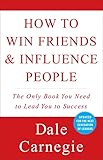
- You can go after the job you want—and get it!
- You can take the job you have—and improve it!
- You can take any situation—and make it work for you!
There is also evidence of referral risk. An August 2026 preregistered field experiment with 1,100 participants reported that removing AI Overviews and AI Mode increased publisher click-through. In the tested conditions, an AI Mode-only experience reduced clicks and weakened users’ experience and trust in information found on Google. That is one study, not a forecast for every query, publisher, or market. Its results caution against assuming that a search feature’s reach will translate into visits to a particular guide.
How can you decide whether to publish—or expand—a guide?
Before investing in a long treatment, assess the task rather than choosing a target word count. These are editorial criteria, not a search-ranking formula:
Best Value
- Completeness: Can readers finish the task or make the intended decision with the proposed coverage?
- Distinctiveness: Does the page add experience, original analysis, or examples beyond generic instructions?
- Clarity: Can readers scan the structure and find the step or explanation they need?
- Freshness: Are labels, steps, and prerequisites accurate for the relevant product or situation?
- Friction: Do examples, images, or tools make the task easier, and does every section justify the reader’s time?
After publication, measure the guide against its purpose and audience. Track relevant outcomes in Search Console and on-page engagement rather than treating word count as a proxy for performance. The available evidence does not establish a universal traffic, revenue, or conversion return for long-form how-to content.
Quick Recap
Product prices and availability are accurate as of the date/time indicated and are subject to change. Any price and availability information displayed on Amazon at the time of purchase will apply.




