The Tool Desk
Outbyte PC Repair FREEClear out junk files and repair common Windows errorsFree Scan →Outbyte Driver Updater FREEScan for outdated or missing drivers - takes under a minuteDriver Scan →Data centers can capture heat from servers and send it to nearby buildings or district-heating networks. That can make some of the energy used for computing useful a second time, but it does not mean the heat cools the servers by itself: a dependable cooling system must still remove heat when a recipient cannot take it.
How can heat from AI servers help cool a data center?
Computing turns electricity into heat. Servers transfer that heat to air or a liquid cooling loop; a heat exchanger can then move it to a building or heat network. The cooling loop carries heat away from the equipment, while the receiving building or network puts some of that captured energy to use.
As an Amazon Associate I earn from qualifying purchases.
The two functions are connected but not interchangeable. Reuse can reduce the work done by some cooling equipment in suitable designs, yet the data center still needs a reliable way to reject heat if the outside recipient is unavailable. The U.S. Department of Energy (DOE) says facilities generally retain redundant cooling able to remove heat when a heat host is unavailable. Its 2024 Best Practices Guide for Energy-Efficient Data Center Design also notes that higher air or water temperatures leaving servers create greater opportunities for reuse.
Free tools Windows power users keep installed
One-click scans. No signup required.
What determines whether the heat is useful?
Temperature and the receiving system
The temperature of the recovered heat must suit the job. If it is warm enough for a building’s low-temperature heating needs, the heat may be transferred directly. If a district-heating network requires hotter water, a heat pump can raise the temperature, using additional electricity and equipment. Direct use avoids that temperature-upgrade step when supply and demand temperatures already match.
#1 Best Overall
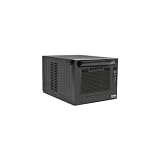
- FULLY SUPPORTED & PROVEN QUALITY: This product is protected by a Manufacturer's 2-Year Limited Warranty. To best support your purchase, Eaton's expert technical team is available via phone, web, or email to address any concerns.
Distance and demand
A practical project needs a nearby heat user, a connection, and an arrangement for taking heat over time. A district-heating network’s location, operating temperatures, and economics affect whether a data center can connect to it. Demand also varies by season, while data centers produce heat continuously; the project needs a workable plan for periods when the recipient needs less heat.
Ownership and resilience
The data-center operator, heat-network operator, and heat customer may be different parties. DOE advises aligning project ownership and incentives as well as matching heat temperature to the host’s needs. Contracts and operating plans must address who pays for connection and equipment, how heat is delivered, and what happens when the host cannot accept it. Backup heat rejection protects the data center independently of that arrangement.
What can recovered data-center heat be used for?
- Building heating: Where temperatures align, recovered heat can preheat water or ventilation air. DOE describes direct use for low-temperature heating as offering the greatest energy savings in the settings addressed by its guide.
- District heating: A nearby network can distribute heat to multiple customers. Lower-temperature heat may need a heat pump before it can meet the network’s requirements.
- Cooling other loads: Australian government guidance lists absorption chillers as a possible use of waste heat, producing chilled water or air for other needs. Whether this makes sense depends on the project; there is no universal savings figure established for this pathway.
DOE says heat reuse can reduce or, in some cases, eliminate chillers, and may reduce use of evaporative cooling towers in some cases. Those are conditional possibilities, not a guarantee that a facility can dispense with cooling equipment.
Where is data-center heat reuse already being explored?
The International Energy Agency (IEA) reported in 2025 that more than 20 data centers in Stockholm provide 1.5% of the city’s district-heating needs. It also reported that a cluster of new data centers in Espoo, Finland, is expected to provide enough waste heat for around 100,000 homes. The Espoo figure is an expectation reported by the IEA, not a measured result.
These examples show why a local heat network matters: the opportunity comes from connecting a continuous source to nearby demand. They do not establish that every data center, city, or AI facility can achieve similar results. The IEA discusses the wider district-heating context in Opportunities for district heating in the changing energy landscape.
Rank #2

- Dimensions: 1.75"H x 19"W x 13"D
- 4 Fans
- Switches: Lighted ON/OFF rocker switch
- Color: Black
- Input Voltage: 110V 50/60Hz
What are the trade-offs?
- Heat-pump electricity: Upgrading low-grade heat to a higher delivery temperature requires added energy and equipment.
- Cooling-system needs: Reuse may reduce some cooling loads, but reliable heat rejection is still required when the heat recipient is unavailable or demand falls.
- Network and connection costs: Distance to a customer, network temperatures, and local economics influence feasibility.
- Seasonal mismatch: A data center’s steady heat output may not match a building’s changing heating demand.
- Actual displaced energy: A climate or energy benefit depends on what energy the delivered heat replaces and on the local system. Capturing heat alone does not show that a facility is carbon-neutral or carbon-negative.
There is no universal winning design. A site assessment needs to compare heat temperature with delivery requirements, connection distance, demand through the year, backup capacity, heat-pump energy, possible cooling-system changes, and the commercial terms of heat delivery.
How should reused heat be measured?
For EU reporting under Commission Delegated Regulation (EU) 2024/1364, reused heat is energy used outside the data-center boundary that partly or fully substitutes for energy otherwise needed outside that boundary. The regulation measures it where energy is handed to the other party and excludes the portion reused for cooling the data center from the reuse figure.
Recommended Free Tools
This boundary distinguishes useful delivery from heat that merely leaves a server loop. The amount captured inside a facility is not, by itself, the amount of beneficial reuse reported outside it.
What the available energy figures do—and do not—show
A DOE article about the National Renewable Energy Laboratory’s high-performance computing data center says equipment cooling accounts for 6% of its energy consumption, compared with 70% for a “typical data center.” Those figures are the article’s specific comparison, not a universal benchmark for today’s data centers. DOE presents them in Technology Changes, but Energy Efficiency Principles Remain Steadfast in Data Center Design.
The IEA’s 2025 Energy and AI report discusses liquid cooling as potentially providing heat at 40–80 °C and includes scenario cost estimates for supplied heat. Such estimates depend on the report’s scenario assumptions; they should not be treated as a quote for a particular project or as a general cost comparison for all data centers.
Quick Recap
Product prices and availability are accurate as of the date/time indicated and are subject to change. Any price and availability information displayed on Amazon at the time of purchase will apply.




