PC Slower Than It Used to Be?
A free scan shows the junk files, broken settings and background clutter dragging Windows down - then fixes them in one click.Free scan · Windows 10 & 11Crashes, No Sound, or Screen Glitches?
Random freezes, missing sound and display glitches usually trace back to one bad driver. Find and replace yours safely.Free scan · under a minuteTo pass Core Web Vitals, a page’s field data must meet all three “good” thresholds at the 75th percentile: Largest Contentful Paint (LCP) of 2.5 seconds or less, Interaction to Next Paint (INP) of 200 milliseconds or less, and Cumulative Layout Shift (CLS) of 0.1 or less. Check mobile and desktop separately. A Lighthouse score can help diagnose a problem, but it does not by itself establish a field-data pass.
What counts as passing Core Web Vitals?
Google’s current Core Web Vitals are LCP, which measures loading; INP, which measures responsiveness; and CLS, which measures visual stability. To pass, all three must be in the good range at the 75th percentile of page visits. In other words, the assessment is based on the experience of most visits, not a single test run. The recommended thresholds are the same for mobile and desktop, but results should be examined separately because users’ devices and networks differ. Google’s Web Vitals overview explains the assessment, and its threshold methodology describes how the targets were chosen.

As an Amazon Associate I earn from qualifying purchases.
| Metric | Good | Needs improvement | Poor | What it measures |
|---|---|---|---|---|
| LCP | ≤2.5 seconds | Above 2.5 and up to 4 seconds | >4 seconds | When the largest visible image, text block, or video is rendered |
| INP | ≤200 milliseconds | Above 200 and up to 500 milliseconds | >500 milliseconds | Responsiveness to user interactions |
| CLS | ≤0.1 | Above 0.1 and up to 0.25 | >0.25 | Unexpected layout movement during a page visit |
The middle range means improvement is needed; it is not a pass. Because all three metrics must be good, one failing metric is enough for the page to miss the assessment. Google’s thresholds were last updated May 7, 2025, in its threshold guidance.
Do these 3 things before closing this tab:
1Scan for outdated or missing drivers - takes under a minute2Repair Windows errors before they cause bigger problems3Fix the driver behind crashes, sound loss and screen glitchesHow to check whether a page passes
-
Open PageSpeed Insights and enter the page URL. Start with the field-data section, not the Lighthouse score. When available, PSI shows CrUX-based field results for the URL and/or its origin over the past 28 days.
#1 Best Overall
Sale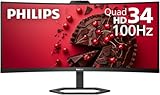 Philips 34E1C5600HE 34" UltraWide QHD 21:9 Monitor with Built-in Windows Hello Webcam & Noise Canceling Mic, USB-C Docking, Stereo Speakers, 100Hz, 4-Year Advance Replacement,Black
- EXPAND YOUR HORIZONS: 3440 x1440 UltraWide QHD (WQHD) resolution with 21:9 aspect ratio for efficient productivity
- CURVED IMMERSION: The 1500R radius curved VA panel allows for more immersion and better color accuracy. It can also help alleviate eye strain during long hours of working
- RICH COLORS FOR WORK AND PLAY: Ultra Wide-Color technology produces true-to-life images and a wider spectrum of colors with sRBG 123.24 percent , NTSC 99.25 percent color gamut area coverage
- WINDOWS HELLO WEBCAM WITH NOISE-CANCELING MIC: Comes with built-in 5MP webcam, noise canceling microphone, and speakers, perfect for remote working. The webcam is equipped with advanced sensors for Windows Hello facial recognition, which conveniently logs you into your Windows devices in less than 2 seconds
- ONE CABLE IS ALL YOU NEED: USB-C docking transfers high-speed data, high-resolution video signal, and power to your laptop (up to 65W of Power Delivery support) via a single USB-C cable. Play and work in high resolution while simultaneously charging your notebook
-
Note whether the report is for the specific URL or the broader origin, and check mobile and desktop results separately. Origin-level data describes a wider group of pages, so it is not proof that every URL has the same experience.
-
Compare LCP, INP, and CLS individually with the good thresholds. A page passes only when all three meet their target at the 75th percentile.
-
If PSI has no field data for the URL, treat the result as unavailable—not as evidence that the page passed or failed. CrUX-based reporting is available only where there is enough data.
What’s actually slowing this PC down?
Pick the symptom - the matching free tool is one click away.
Special offer. See more information about Outbyte and uninstall instructions. Please review EULA and Privacy policy.Rank #2
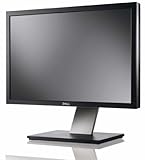 Dell UltraSharp U2410 24-inch Widescreen LCD High Performance Monitor with HDMI, DVI, DisplayPort and HDCP
- Dell UltraSharp U2410 - LCD display - IPS- 24" - widescreen - 1920 x 1200 / 60 Hz
-
Use the lab diagnostics to investigate potential causes, then validate changes against field data after real visitors have used the page. Lab and field results can differ.
For a site-wide view, Google Search Console’s Core Web Vitals report groups affected URLs and shows historical patterns; access requires verified ownership of the site. Google’s measurement guide describes these tools and their limits.
Choose the right measurement tool for the question
| Tool or data source | Best for | What it provides | Important limitation |
|---|---|---|---|
| PageSpeed Insights | Checking field results for a URL or origin | CrUX-based aggregate field results and diagnostic suggestions for the past 28 days | Some pages lack sufficient CrUX data; aggregate data does not show every visit |
| Search Console Core Web Vitals report | Finding affected URL groups and viewing history | Grouped page issues and historical performance | Requires verified site ownership |
| Chrome DevTools Performance panel | Inspecting a page during diagnosis | Local performance traces, alongside available CrUX context | A local trace does not replace the distribution of real-user results |
First-party real-user monitoring (RUM), optionally with web-vitals |
Investigating a site’s own users and watching changes | More detailed and timely feedback from the site’s user population | Requires instrumentation and reporting |
| Lighthouse or WebPageTest | Testing controlled changes in a development workflow | Synthetic lab measurements | Test conditions can differ from visitors’ devices, networks, locations, and content |
Use CrUX-based reporting to answer whether the measured field experience meets the targets. Use traces and lab tests to help explain why a result may be poor. First-party RUM can add a more detailed view of your own users, while PSI and Search Console provide Google’s CrUX-based view. These sources complement rather than replace one another. See Google’s guide to measuring Web Vitals.
How to investigate a failing metric
LCP: find what is delaying the largest visible content
LCP records the render time of the largest visible image, text block, or video relative to navigation. A slow result is not automatically an image-size problem: field timing can also include unloading the previous page, connection setup, redirects, and server response delays. Use the page’s field data to identify the affected experience, then inspect a trace to locate where time is being spent. Google’s LCP guide explains the metric and its timing components.
INP: focus on observed interaction responsiveness
INP reflects how responsive a page is to user interactions, with a good target of 200 milliseconds or less at the 75th percentile. Begin with the affected page and interaction patterns shown by your available field or RUM data, then use diagnostic tools to investigate. The measurement guidance establishes the threshold and workflow but does not support a universal, metric-specific implementation checklist; avoid assuming one code change will fix every INP problem.
CLS: identify unexpected movement in real page conditions
CLS measures the largest session window of unexpected layout shifts across a page’s lifecycle. Common sources include images or videos without known dimensions, fonts that render at a different size from their fallback, and ads or widgets that resize dynamically. A local test may not reproduce production behavior if cached assets, personalization, or API timing differ. Google’s CLS guide explains the metric and common causes.
Rank #4
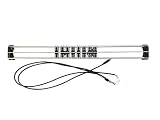
- Exclusively compatible with N scale locomotives, this test stand works with most standard N gauge models, making it a flexible and practical addition to any hobbyist’s collection.
- With a straightforward structure and simple connection design, the rolling test stand can be assembled and put into use quickly without complicated tools or procedures.
- Manufactured from premium metal materials, the test bench offers excellent stability and wear resistance, ensuring reliable performance even with frequent daily use.
- This dedicated test treadmill lets you safely debug, test speed and inspect locomotive performance, greatly upgrading the fun and professionalism of your model train hobby.
- This is not a toy. Not intended for use by children under 14.
A practical improvement loop
-
Use field data to identify the failing metric, device segment, and affected URL or page group.
-
Reproduce and inspect the problem with Chrome DevTools or a controlled lab test. Treat the trace as diagnostic evidence, not the pass/fail result.
Special offer. See more information about Outbyte and uninstall instructions. Please review EULA and Privacy policy. -
Make a targeted change related to the observed cause, then test it under controlled conditions before release where practical.
-
Watch field results again after the change. PSI and Search Console use rolling 28-day data, so their reports may not reflect a change immediately; first-party RUM can provide more timely feedback if it is already instrumented.
This workflow is a way to investigate and validate improvements, not a guarantee that any particular change will make a page pass.
Why field and lab results do not always match
Field data reflects real visits across users’ devices, network conditions, locations, redirects, cache states, and personalized content. A lab run measures a controlled scenario, so it can help reproduce and diagnose a bottleneck without representing the full user distribution. A strong Lighthouse result therefore does not override failing field data, and a poor lab result alone does not establish that a page fails Core Web Vitals.
Recommended Free Tools
The 75th-percentile approach is intended to represent the experience of most visits while limiting the influence of outliers. Google says its threshold methodology balances user experience with what is achievable on existing sites, using human-perception research where available and CrUX data to check attainability. The official threshold material does not establish a current 2026 percentage of all sites that pass.
Quick Recap
Product prices and availability are accurate as of the date/time indicated and are subject to change. Any price and availability information displayed on Amazon at the time of purchase will apply.




