The Tool Desk
Outbyte PC Repair FREERepair Windows errors before they cause bigger problemsFix Now →Outbyte Driver Updater FREEScan for outdated or missing drivers - takes under a minuteDriver Scan →For most new or fast-changing applications serving Vietnam, public cloud is the safer default. It removes hardware procurement, offers elastic capacity and provides managed databases, queues, backups and monitoring. Colocation can be the better financial and operational choice when your workload is steady, you already own suitable servers, you need physical control or sustained bandwidth, and your team can run hardware. A hybrid design often works best: keep predictable, stateful systems on owned machines in a Vietnamese facility and use cloud capacity for bursts, analytics or disaster recovery.
Choose by five-year total cost of ownership (TCO), actual network paths, bandwidth and egress, residency obligations, resilience targets and your operations capacity—not by a monthly cloud compute price or a rack quote alone.
As an Amazon Associate I earn from qualifying purchases.
What colocation and public cloud actually provide
Colocation: you own the server
Colocation rents physical space, electrical power and network connectivity in a data center. You purchase and operate the server, install the operating system and applications, apply patches, replace failed drives and plan hardware refreshes. The facility supplies the rack, environmental controls, physical security, redundant power and usually a remote-hands service for tasks you cannot perform in person.
A typical unit is a 1U rackmount server. “1U” describes the server’s height, not its depth, weight, power draw or performance. A 1U chassis can contain different CPUs, memory capacities, storage layouts and network adapters, so a low rack fee does not tell you the complete cost.
#1 Best Overall

- Supports up to ATX motherboards
- Compatible with 1U Redundant or Flex power supply
- Reversible front I/O panel, rail kit, handles, drive bays, and power module design
- Supports 1 × 3.5" HDD and 2 × 2.5" SSDs, Supports one standard PCI / PCIe expansion slot, 2 x USB 3.0 front ports,
- Compatible with CP05 and G11908000-RT to upgrade the 3.5" HDD to a hot-swap drive
Public cloud: you rent virtualized infrastructure and services
Public-cloud providers run the physical servers and expose virtual machines, block and object storage, load balancers, managed databases, queues, monitoring and autoscaling through APIs or a console. You still administer the guest operating system and application unless you select a managed service, but the provider handles hardware failure, capacity procurement and data-center operations.
Cloud billing is normally usage-based. Compute may be charged by time, while storage, requests, snapshots, data transfer and premium managed services can each add a line item. This flexibility is valuable for variable demand, but traffic and egress can make a seemingly inexpensive design expensive at scale.
Which option fits common Vietnam hosting situations?
| Situation | Likely starting point | Reason |
|---|---|---|
| New product with uncertain demand | Public cloud | Provision capacity in minutes, test multiple sizes and scale without buying hardware. |
| Steady, high-utilization service with owned equipment | Colocation | Fixed rack and power charges can be predictable when servers remain busy for years. |
| Large domestic traffic volume | Compare local colocation and cloud connectivity | Bandwidth, peering and egress terms may outweigh compute pricing. |
| Strict physical-isolation or audit requirement | Colocation or dedicated cloud hosts | Colocation offers direct custody of the machine; confirm what the contract and auditors require. |
| Small team needing managed databases and rapid releases | Public cloud | Managed services reduce patching, backup and hardware-replacement work. |
| Fixed core plus seasonal or unpredictable bursts | Hybrid | Run baseline stateful capacity on owned servers and burst stateless workloads into cloud. |
Published Vietnamese colocation prices
Two Vietnamese providers publish concrete 1U offers. The figures below are displayed provider prices accessed in 2026; confirm current quotes, taxes, contract terms, included power and installation conditions before signing.
| Provider and package | Monthly price | Included capacity or network detail | Five-year rack charge |
|---|---|---|---|
| Viettel IDC COLO 1 promotion | 1,352,000 VND/month | 400 W, 100 Mbps Internet, one IPv4 | 81,120,000 VND over 60 months |
| FPT Telecom Silver 1U | 2,000,000 VND/month | Bandwidth tier listed by FPT; exact Mbps is not stated in the published figure | 120,000,000 VND, plus 2,000,000 VND listed setup fee = 122,000,000 VND |
| FPT Telecom Titan 1U | 2,500,000 VND/month | Different bandwidth tier from the other FPT packages; exact Mbps is not stated in the published figure | 150,000,000 VND, plus setup = 152,000,000 VND |
| FPT Telecom Gold 1U | 3,500,000 VND/month | Different bandwidth tier; exact Mbps is not stated in the published figure | 210,000,000 VND, plus setup = 212,000,000 VND |
| FPT Telecom Platinum 1U | 5,000,000 VND/month | Different bandwidth tier; exact Mbps is not stated in the published figure | 300,000,000 VND, plus setup = 302,000,000 VND |
The five-year figures are simple multiplication of the displayed monthly charge by 60, with FPT’s listed 2,000,000 VND initialization fee added once. They exclude the server, replacement parts, support contracts, software, backups, cross-connects, excess power, taxes if applicable, traffic overages and any future price change. Viettel’s figure is explicitly displayed as a promotion, so treat it as time-sensitive rather than a guaranteed five-year rate.
Rank #2

- HP ProLiant DL360 G7 Business Server, the perfect enterprise server or small business server!
- Processors: Dual (2) Xeon X5675 6-Core 3.06 GHz 12MB CPUs Max Turbo 3.46 GHz
- Memory: 72GB (4 x 16GB) DDR3 PC3-10600R Memory; Storage: 3.6TB (4 x 900GB) 10K 12Gb/s SAS 2.5" HDDs
- Power: Redundant Power Supplies; RAID: HP Smart Array P410i-a 12Gb/s with 4×GigaBit NIC
- Hard drives and memory upgrades included separately NOT installed, installation required.
Why a cloud price comparison is harder
Cloud compute prices are only one part of TCO. A realistic five-year model should include:
- Virtual-machine or container compute at the sizes and utilization you actually expect.
- Persistent block storage, object storage, snapshots, backup retention and replication.
- Load balancers, public IP addresses, monitoring, logs, managed databases, queues and security services.
- Data transfer into and out of the provider, inter-zone traffic and any private-connectivity port charges.
- Migration engineering, reserved-capacity commitments and the cost of changing architecture later.
- Staff time for operating either environment, including on-call coverage and incident response.
FPT notes that international hyperscalers can be cheaper per month because their scale is larger, while bandwidth and other charges can change the total. Ask each provider for a line-item estimate using the same workload: average and peak CPU, RAM, storage growth, requests per second, monthly outbound gigabytes, backup retention and availability target. Exact break-even cannot be stated without those inputs, the server specification, refresh cycle, cloud region and negotiated rates.
A practical five-year worksheet
- Write down baseline and peak compute, memory and storage for every production component.
- Measure or estimate monthly domestic and international traffic separately; identify traffic that leaves the hosting facility.
- Price one-time items: colocation server purchase, rails, spare disks, migration and cloud data import or export.
- Price recurring items: rack, power, bandwidth, support, monitoring, backups, cloud instances and managed services.
- Add a refresh event for colocation hardware during the period and include a residual-value assumption only if you can sell or reuse the equipment.
- Run low, expected and high-growth scenarios. A design that is cheapest only at 95% utilization may be risky if demand is uncertain.
Latency, routing and the Vietnam-versus-Singapore question
The lowest latency is determined by the complete user-to-application path, not by the country name on a server location. A Vietnamese data center with strong domestic peering can beat a Singapore deployment for users in Hanoi or Ho Chi Minh City. Conversely, a poorly routed local facility can perform worse than a well-connected Singapore region. Test from the Vietnamese mobile, fixed-line and enterprise networks your customers actually use.
PC Slower Than It Used to Be?
A free scan shows the junk files, broken settings and background clutter dragging Windows down - then fixes them in one click.Free scan · Windows 10 & 11Crashes, No Sound, or Screen Glitches?
Random freezes, missing sound and display glitches usually trace back to one bad driver. Find and replace yours safely.Free scan · under a minuteFPT Cloud reports that an AWS Hanoi Local Zone began operating on June 19, 2026 and describes single-digit-millisecond latency for domestic workloads. A Local Zone is an extension of a parent region—Singapore in this case—not a full AWS Region in Vietnam, and it offers only a limited set of services. Confirm the services, quotas, availability zones, pricing and supported instance types before designing around it.
Rank #3
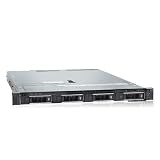
- PROCESSOR & MEMORY: Powered by an Intel Xeon Silver 4112 2.60GHz CPU and 16GB DDR4 RAM for reliable server-grade performance
- STORAGE CAPACITY: Equipped with 32TB total storage via four 8TB 12Gb/s SAS hard drives for high-throughput data handling
- RAID CONTROLLER: Features the PERC H740P RAID controller, enabling advanced data protection and flexible storage configuration
- POWER SUPPLY: Dual 550W redundant power supply units ensure continuous uptime and protection against single power source failure
- FLEXIBLE DEPLOYMENT: Ships with no OS installed, allowing administrators to install their preferred operating system or hypervisor
What to measure before choosing
- Round-trip latency and packet loss from representative Vietnamese access networks to the application, database and object-storage endpoints.
- Latency during evening peaks, not only during a quiet test window.
- Path changes during international-link or undersea-cable incidents.
- Throughput and transfer pricing for domestic users, overseas users, backups and software updates.
- Whether a private connection, domestic peering arrangement or cloud gateway changes the route.
FPT Cloud Shortpath is listed on AWS Marketplace with custom pricing. Its description says it uses FPT Cloud Connect, based on AWS Direct Connect, and a gateway at an FPT data center to receive domestic public Internet traffic and send a separate priority stream to the international cloud provider. The listing claims data-transfer-out reductions of up to three times; treat that as a product claim to verify in a commercial proposal, not as an expected saving.
Does Vietnam data residency require local servers?
Not every application automatically needs a physical server in Vietnam. Residency and cross-border-transfer obligations depend on the data category, customer contracts, sector rules, security requirements and the role of each provider. A local server can simplify a customer’s physical-location requirement, but it does not by itself prove compliance: backups, logs, support access and replicated databases may still leave the country.
Document where production data, replicas, backups, encryption keys, logs and administrative access are located. Ask the cloud or colocation provider for contract language, audit reports, incident-notification terms, deletion procedures and the ability to identify data by tenant. If a customer requires physical isolation, clarify whether a cage, dedicated rack, dedicated host or merely logical separation satisfies the requirement.
What’s actually slowing this PC down?
Pick the symptom - the matching free tool is one click away.
What to verify before buying a 1U server
Use “1U rackmount server” as the product category, then match the machine to the facility and workload. Do not choose by CPU model alone.
Rank #4

- 1U Rackmount
- Supports up to standard ATX
- Included 450W 80+ Platinum Flex ATX PSU
- Supports three 40x28mm PWM fans (2 pre-installed)
- 1x Full-Height PCIe slot (requires a riser card/bracket)
- Rack fit: confirm maximum chassis depth, rail compatibility, rack weight limits and whether the provider supplies rails or shelves.
- Power: compare the server’s measured draw under load with the package allowance. Viettel’s displayed COLO 1 offer includes 400 W; sustained or peak draw above that may incur charges or be disallowed.
- Compute and memory: size for encryption, compression, database cache and peak concurrency, not just average CPU.
- Storage: decide between mirrored SSDs, hardware or software RAID, hot spares and a separate backup target. RAID is not a backup.
- Networking: check port speed, transceiver requirements, IPv4 and IPv6 availability, VLAN options and whether a cross-connect costs extra.
- Serviceability: use standard drives, fans and power supplies that can be replaced locally; keep tested spares.
- Remote hands: obtain the hourly rate, response target, permitted tasks, console access and process for replacing a failed part.
- Warranty: ensure the manufacturer or reseller can deliver parts and service in Vietnam for the full deployment period.
Operations: the work your team must absorb
Colocation responsibilities
Your team owns firmware updates, operating-system patches, vulnerability remediation, capacity planning, hardware monitoring, drive replacement, spare inventory, backup testing and disaster recovery. A remote-hands technician can press a button or swap a component, but that service does not replace runbooks or an engineer who knows the system.
Public-cloud responsibilities
The provider replaces failed hosts and maintains the facility, but you remain responsible for identity permissions, network design, encryption, patching of self-managed instances, backup policies, observability and region-level resilience. Managed databases and serverless services reduce routine work but add service-specific limits and charges.
In either model, define recovery-point objective (how much data you can lose) and recovery-time objective (how quickly service must return). Test a restore and a complete site failure. A second server in the same rack is not disaster recovery; place replicas and backups in a separately powered facility or region when the business requires it.
Scaling speed and service richness
Cloud capacity can be requested through an API and expanded or removed as demand changes. Autoscaling works best for stateless web and worker tiers, while databases and specialized appliances may scale more slowly. Colocation scaling requires ordering, shipping, racking, cabling, configuration and testing another server; lead time can be days or weeks, and power or rack capacity may be unavailable.
Best Value

- Intel Xeon D-2123IT Quad-Core Processor; 2.2 - 3.0 GHz
- Supports up to 512GB ECC LRDIMM Memory
- 2x 10G SFP+, 2x 10GBase-T RJ45 Ports, 4x GbE RJ45 Ports, and 1x Dedicated IPMI
- Supports 4x 2.5" Drives or 2x 3.5" Drives
- Short Depth 9.8", Front I/O 1U Rackmount Form Factor: 17.2" x 9.8" x 1.7" (in inches)
Cloud platforms also offer managed databases, queues, analytics, identity, container orchestration and autoscaling. In colocation, you can run equivalent open-source or commercial software, but your team carries upgrades, high availability and support. The service-rich option is usually worth more than a small infrastructure-price difference when engineering time is scarce.
Architectures that work well in Vietnam
Cloud-first regional deployment
Place the web tier, API and managed database in a Singapore region or an eligible Hanoi Local Zone, then measure Vietnamese user latency. Keep backups and a tested recovery environment in a separate location. This is the simplest path for a new application with uncertain demand.
Local colocation core with cloud burst
Run a predictable database, license server or storage-heavy workload on owned hardware in a Vietnamese facility. Keep stateless application nodes, build jobs and seasonal workers in cloud. Use private connectivity where available, encrypt traffic and design for the failure of either side.
Free tools Windows power users keep installed
One-click scans. No signup required.
Dual-site colocation
For organizations that need physical control, place independent servers in two facilities or network zones. Replicate asynchronously, retain offline or immutable backups and rehearse DNS or traffic-manager failover. This costs more than one rack but avoids treating a single building as a complete continuity plan.
A decision process you can defend
- Classify the workload: separate stateless services, databases, file stores, batch jobs and latency-sensitive components.
- Set service targets: write latency, uptime, recovery-time and recovery-point objectives in measurable terms.
- Collect traffic evidence: use access logs and monitoring to separate domestic traffic, international traffic, peak rates and egress.
- Request comparable quotes: ask colocation providers for rack, power, bandwidth, IPv4, cross-connect, remote-hands and overage terms; ask cloud providers for compute, storage, managed-service and transfer estimates.
- Price five years: include hardware purchase and refresh, staff, support, backups, migration and failure scenarios.
- Run network tests: test from Hanoi, Ho Chi Minh City and other major customer locations at busy times.
- Validate compliance: map every copy and access path, including support and backups, to your contractual and regulatory requirements.
- Choose a reversible pilot: deploy a representative slice, measure cost and latency for several weeks, and set a trigger for moving more capacity to the other model.
Common mistakes and how to avoid them
- Comparing rack rent with a cloud VM: add the server, replacement parts, labor, backup and network costs before declaring colocation cheaper.
- Assuming a local address guarantees low latency: measure real routes and peering from customers’ networks.
- Buying a server that exceeds the power allowance: obtain measured idle and peak draw and confirm the provider’s metering policy.
- Counting RAID as backup: keep independent, tested copies and document restoration.
- Ignoring egress: model exports, backups, software distribution and cross-zone traffic explicitly.
- Believing a Local Zone is a full region: verify service availability, quota and failure-domain behavior before relying on it.
- Underestimating remote-hands limits: agree on response times, authentication, console access and spare-part logistics in the contract.
- Locking in before measuring utilization: start with a pilot or a flexible commitment when workload growth is unknown.
Bottom line for applications serving Vietnam
Choose public cloud when speed, elasticity, managed services and uncertain demand dominate. Choose colocation when you can keep owned hardware highly utilized, need direct physical control or can secure materially better bandwidth economics, and you have the staff and spares to operate it. The published Vietnamese 1U prices show why a local rack can look attractive, but they are not a complete TCO. Measure domestic latency, price five years of real traffic and operations, and use a hybrid design when a fixed local core and elastic cloud capacity each solve a different part of the problem.
Quick Recap
Product prices and availability are accurate as of the date/time indicated and are subject to change. Any price and availability information displayed on Amazon at the time of purchase will apply.

