PC Slower Than It Used to Be?
A free scan shows the junk files, broken settings and background clutter dragging Windows down - then fixes them in one click.Free scan · Windows 10 & 11Outdated Drivers Are Slowing You Down
One free scan finds every outdated or missing driver and matches the right update for your exact hardware.Free scan · exact hardware matchA mathematical model of 33 urban neighborhoods in Blantyre, Malawi, estimated that active TB case finding guided by childhood Mycobacterium tuberculosis immunoreactivity surveys could identify 80% of people with TB disease while covering 48% of the modeled population. The approach was more cost-effective than untargeted screening in the model, but neither strategy met the cost-effectiveness thresholds the authors considered available for Malawi. These are projections, not results from a completed neighborhood screening program.
What the Blantyre study examined
Kim and colleagues used a Markov microsimulation to ask whether local estimates of annual risk of TB infection (ARTI) could help public-health programs decide where to conduct active case finding (ACF). ARTI estimates were derived from immunoreactivity survey results in children younger than five. The idea is to use this local infection-risk measure as a proxy for differences in underlying TB burden between neighborhoods.
As an Amazon Associate I earn from qualifying purchases.
The analysis covered 33 urban neighborhoods, with an estimated combined population of 266,710. Neighborhoods were defined by community health worker catchment areas and selected based on population density and proximity to three study clinics. The reported neighborhood ARTI estimates ranged from 0% to 9%; those figures describe the neighborhoods in this study, not all of Blantyre or Malawi.
What’s actually slowing this PC down?
Pick the symptom - the matching free tool is one click away.
The authors compared three modeled strategies: passive case finding (PCF) alone, PCF plus ACF offered without neighborhood targeting, and PCF plus ACF directed to neighborhoods with higher estimated ARTI. PCF refers to people seeking care through routine services; ACF means actively screening people in the community rather than waiting for them to present for care.
#1 Best Overall
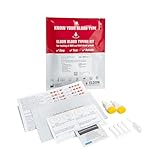
- Quick Results: Learn your blood type in just a couple of minutes with this easy-to-use testing kit
- Simple Interpretation: Easily understand your blood type group with clear and straightforward results
- Permanent Record: Keep as a permanent record of your blood type on the durable card for your records or safekeeping
- Reliable Accuracy: Offers a reliable and accurate way to learn your blood type using proven testing technology
- Convenient Home Use: Can be used conveniently at home without the need for laboratory visits
How the modeled strategies compared
| Strategy | How screening was allocated | Modeled findings reported by Kim and colleagues |
|---|---|---|
| PCF alone | Routine, passive detection; no modeled ACF intervention | Specific case-identification, life-expectancy, and cost-per-DALY values are not stated in the study summary. |
| PCF plus untargeted ACF | ACF offered without prioritizing neighborhoods by ARTI | Compared with PCF alone, estimated life expectancy for people with TB disease improved by 3.7 years (95% credible interval 1.9–5.9). The modeled cost was US$1,600 per disability-adjusted life year (DALY) averted. |
| PCF plus ARTI-guided targeted ACF | ACF concentrated in neighborhoods with higher estimated ARTI | Covering 48% of the modeled study population was estimated to identify 80% of people with TB disease. The modeled cost was US$1,100 per DALY averted. |
The cost-per-DALY figures are model estimates, not observed program costs. The authors reported that both ACF strategies exceeded the available cost-effectiveness thresholds for Malawi. The study summary does not provide a separate PCF-alone cost-per-DALY figure, so the figures above should be read as a comparison between the two modeled ACF approaches rather than a complete ranking of all three strategies on that measure.
How the screening pathway worked in the model
The modeled intervention was a one-time community-wide ACF effort. Screening used symptoms and diagnostic follow-up in this sequence:
Rank #2

- Easy-to-Use: Simple testing procedure with clear visual indicators—no need for complex lab equipment or specialized training.
- High Sensitivity & Precision: Designed with advanced technology to provide precise results, minimizing the risk of false positives or negatives.
- Fast & Reliable Results: Delivers highly accurate detection of tetracycline antibiotics in just minutes, ensuring quick decision-making.
- For milk for human consumption the level is 0.5 ppb. Levels up to 300 ppb are allowed in certain circumstances for nondairy animal feed. The European Union’s aflatoxin regulations for groundnuts, tree nuts, dried fruit, spices, and cereals include limits as low as 4 ppb total aflatoxins and 2 ppb for aflatoxin B1. Some EU member states have also separately established their own maximum limits on aflatoxins.
- People reporting any cough were sent for Xpert testing.
- People without cough received a chest X-ray.
- People with any chest X-ray abnormality were sent for Xpert testing.
- People with a positive Xpert result were considered diagnosed with TB.
The model also assumed that 5% of people diagnosed had pretreatment loss to follow-up. Xpert, chest X-ray, and immunoreactivity testing are clinical or public-health program tools in this analysis, not consumer products evaluated for purchase.
Why targeting might improve efficiency
If neighborhoods with higher childhood ARTI estimates also have higher TB prevalence, directing ACF toward those areas can concentrate screening where more cases are expected. That is the rationale behind the modeled result: the targeted strategy screened less than half of the study population yet was estimated to reach four-fifths of people with TB disease.
Rank #3

- Unmarked Skin for Realistic Assessment: Unlike most injection pads with obvious, pre-marked injection sites, this intradermal practice pad has no visible injection points. Users need to identify the correct injection area just like working with real patients, improving clinical judgment and confidence
- Realistic Intradermal Skin Feel: This intradermal injection training pad is designed to closely mimic real human intradermal skin, providing a realistic tactile experience for intradermal injection practice, TB skin test practice, and nursing skills training
- Designed for TB Skin Test Practice: Ideal for practicing TB skin test injections and intradermal injection techniques. Helps learners master shallow-angle needle insertion, bleb formation, and accurate dose delivery
- Educational Training Tool: This injection practice pad is an excellent injection tool for nursing students, medical students, educators, and clinical instructors looking for a reliable intradermal injection pad for hands-on practice
- Durable Silicone Injection Pad: Made from high-quality silicone, this injection training pad is durable, reusable, and resistant to repeated needle punctures, making it suitable for long-term training use in classrooms, labs, and skill assessments
But this advantage depends on ARTI being a useful proxy for the local distribution of TB disease. The authors varied the assumed predictive power of ARTI in their model, so the projected efficiency is conditional on how well infection-risk estimates correspond to true neighborhood TB prevalence. A survey result does not, by itself, confirm disease in an individual or establish the true burden in every neighborhood.
Independent reader supportYour contribution helps us test, update, and keep practical guides available for everyone.What the estimates do—and do not—show
They are projections, not program outcomes
The 3.7-year life-expectancy improvement under untargeted ACF, the 48% coverage and 80% case-identification estimate for targeted ACF, and the cost-per-DALY ratios all come from a mathematical model. They are not measured effects from a prospective program that implemented this neighborhood-targeting plan.
Rank #4

- REALISTIC FOREARM SIMULATION: TB testing model replicates a human forearm with palpable nodules, allowing learners to practice the Mantoux method. TB testing model presents four conditions with visible swelling and measurable induration for accurate interpretation
- TRUE-TO-LIFE MATERIALS: Soft silicone skin combined with a 3D-printed rigid core,TB testing Set provides a realistic feel when locating and assessing induration during training
- DUAL SKIN TONES: Two skin colors palpable arm set allow practice on different skin tones,helping improve accuracy in palpation and interpretation across diverse patient groups; The TB testing Set is durable for repeated use
- BUILT-IN MEASUREMENT GUIDE: A millimeter scale printed on the instruction panel helps learners measure induration diameter correctly, reinforcing proper TB test reading skills
- SAFE TRAINING APPLICATIONS: Palpable TB testing set suitable for classrooms, labs, and simulation courses, offering a safe and effective way to demonstrate and practice tuberculin skin test skills
The survey-data cost was excluded
The immunoreactivity survey data came from a separate research study embedded in primary-care visits, and the model excluded the cost of collecting those data. The reported cost-effectiveness ratios therefore do not represent the full cost of routinely collecting surveillance data and then using them to plan screening. Lower-cost ways to gather the data are a practical requirement the authors identify for wider adoption.
The setting and assumptions matter
The analysis uses local data and assumptions for selected neighborhoods in Blantyre. Its results do not establish that the same targeting approach, coverage, health gains, or costs would apply elsewhere in Malawi or in other settings. Real-world results would depend on the quality and cost of survey data, how accurately ARTI identifies higher-burden areas, and whether a program can deliver screening and follow-up as modeled.
Publication status
The work is identified as a medRxiv preprint from October 2025. A later peer-reviewed journal version is not established here, so the estimates should be attributed to the preprint rather than described as confirmed by a peer-reviewed publication.
Quick Recap
Product prices and availability are accurate as of the date/time indicated and are subject to change. Any price and availability information displayed on Amazon at the time of purchase will apply.




