The Tool Desk
Outbyte Driver Updater FREEScan for outdated or missing drivers - takes under a minuteDriver Scan →Outbyte PC Repair FREERepair Windows errors before they cause bigger problemsFix Now →AI can help decipher a doctor’s handwriting, but current evidence does not show that its reading is safe to rely on without professional verification. For a prescription, do not act on an uncertain AI transcription: a mistaken medicine, strength, dose, route or frequency can affect care. Check the result against the original, and ask the prescriber or pharmacist if any critical detail is unclear.
Why reading a prescription is different from verifying it
Handwriting recognition turns marks on a page into text. It does not establish that the text reflects what the clinician intended, or that the instruction is clinically appropriate. A plausible-looking transcription is not confirmation.
As an Amazon Associate I earn from qualifying purchases.
That distinction matters because poorly written or misinterpreted handwritten medication orders are among the fundamental causes of medication-order errors identified by the American College of Obstetricians and Gynecologists in its Improving Medication Safety guidance.
Crashes, No Sound, or Screen Glitches?
Random freezes, missing sound and display glitches usually trace back to one bad driver. Find and replace yours safely.Free scan · under a minuteWindows Errors? Fix Them Before They Spread
Repair common Windows errors and clear accumulated junk for a smoother, more stable PC - no reinstall needed.Free scan · no reinstallHow accurate is AI at reading doctors’ handwriting?
There is no broadly applicable, independently validated accuracy percentage established for AI reading doctors’ handwriting across different writers, clinical settings and prescription fields. One paper, published in the International Journal of Computer Applications in September 2025, reports character-level accuracy above 91.3% for its proposed system. That is a claim about that particular model and metric—not a guarantee for other systems, a measure of whether a whole prescription is correct, or evidence that medication decisions are safe. The paper is available at A Hybrid AI-Based System for Recognizing and Converting Handwritten Medical Prescriptions into Digital Text.
#1 Best Overall

- The Learn to Letter Writing Tablet, appropriate for grades PK-1, gives beginning students the perfect place to practice their alphabet and writing
- Each page is printed with raised solid and dotted line primary ruling to see and "feel" the lines, helps keep handwriting aligned
- Binding is smooth and helps keep pages securely in place
- Includes 4 writing tablets, each with 40 sheets measuring 8" x 10"
- Developed and tested by handwriting experts
Character-level accuracy can obscure clinically important mistakes: a system might read most characters correctly yet misread one digit in a strength or confuse a medicine name. A score for characters alone does not tell a patient or clinician how often critical fields are transcribed correctly, how uncertainty is handled, or what happens when a note is illegible.
What can go wrong when AI output is trusted?
A plausible transcription can still be wrong
When handwriting is ambiguous, a model may produce fluent text without reliably signaling that it guessed. Context can make one interpretation seem likely, but likelihood is not proof of the intended drug or dose. Do not let a model fill in an unclear medication instruction.
Rank #2
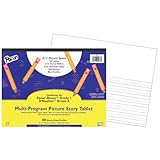
- Ruling conforms to D'Nealian Grade K and Zaner-Bloser Grade 1
- Ruling size is 5/8" x 5/16" x 5/16" with a 4-1/4" Picture Story Space
- Blue headlines and dotted midlines with red baselines
- Tablet is tape-bound on top with a heavy chipboard back and printed cover for added durability and sturdiness
- Includes 40 sheets ruled on both sides
Reviewers can over-trust automation
Having a person review the result is important, but a human-in-the-loop step is not automatically an effective safeguard. The Agency for Healthcare Research and Quality (AHRQ) describes automation bias: reviewers may over-rely on automated output, particularly under time pressure or heavy workload. AHRQ notes that people reviewing AI-generated material may accept, reject or revise it, while warning that the assumption they will review it consistently does not always hold. See its Human-AI Interaction issue brief, created in June 2025 and last reviewed in July 2025.
Evidence from AI scribes is not handwriting evidence
A 2025 study of two ambient AI scribe products evaluated 11 simulated outpatient encounter scripts. It reported 127 errors across 44 draft notes, with errors in 31 of the 44 notes. Those products generated clinical documentation from speech; the results are not an error rate for handwriting recognition and should not be used to estimate how often prescription-reading AI fails. The study also notes that its controlled cases and workflow did not fully represent clinical practice, and calls for realistic clinical evaluation and ongoing independent testing. Read the study in the Journal of Medical Internet Research.
Rank #3
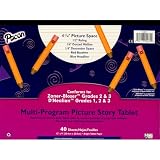
- Conforms to zaner-bloser (grades 2 and 3) and d'nealian (grades 1, 2 and 3) handwriting programs
- Ruled on both sides with red baselines, blue dotted midlines, blue headlines, and a 4.5 inch
- Heavy chipboard back and protective front cover
- Measures 12" x 9"; includes 40 sheets
- Recyclable
How to check an AI reading of a prescription
- Treat the output as a draft. Do not use an AI transcription as a confirmed prescription or as authority to start, stop or change medication.
- Compare each critical field with the original. Check the medication name, strength, dose, route and frequency. If the transcription is being entered into a record, check that it is associated with the correct patient as well.
- Escalate any uncertainty. If you cannot confidently read a critical detail on the original, contact the prescriber or pharmacist. Do not choose between possible drug names or doses based on an AI guess or surrounding context.
- For organizations, validate the whole workflow. Check performance for the intended users, handwriting, languages, document types and medication fields; monitor errors and provide a way to escalate uncertain cases. The Office of the National Coordinator for Health Information Technology’s 2025 SAFER Guides address organizational responsibilities for AI-enabled systems and safer electronic health record workflows, including patient identification and computerized provider order entry.
What to look for when evaluating a handwriting tool
The cited sources do not establish a set of competing, clinically validated prescription-reading products or a head-to-head winner. For a clinical or organizational decision, assess more than a single accuracy score:
- Whether it is intended for the specific setting and document type.
- Evidence for the handwriting styles and languages it will encounter.
- Performance on medication names and dose-related fields—not only character recognition overall.
- Whether it flags uncertainty rather than presenting guesses as certain.
- Independent validation, meaningful human review and a clear escalation route.
- Patient identification safeguards and ongoing error monitoring.
A system that performs well on a narrow test may not perform equally well on unfamiliar handwriting or a different clinical workflow. Validation should match the intended use, and critical details still need a dependable verification process.
Quick Recap
Best Value

- Guide include - Plus a printed manuscript writing guide on the inside cover to help you child during practice writing
- Not just for pre-school - This set is ideal for kids in pre-school up to 2nd grade
- Large writing surface - 11.75in X 7-in Manuscipt Tablets. Each tablet has 60-sheets
- Ideal Use. Online School, Private tutor or just home writing practice for your Preschooler
- Pack of 2 - Your child will surely wont run out of manuscript tablet with total of 120-sheets
Rank #4
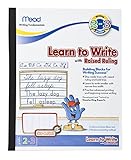
- The Mead Learn to Write Tablet has features which help students transition from manuscript to cursive writing; Appropriate for Grade 2-3 level students; 40 sheet count; add to your school supplies list!
- The tablet has narrow lines needed for cursive tablets that help students stay within the lines; Learn to Letter workbooks use 0.5 inch ruled pages which are optimal for practicing the alphabet, words, and beginning sentences
- Developed and tested by handwriting experts; It conforms to Zaner-Bloser and D'Nealian handwriting methods
Product prices and availability are accurate as of the date/time indicated and are subject to change. Any price and availability information displayed on Amazon at the time of purchase will apply.
Free tools Windows power users keep installed
One-click scans. No signup required.




