Recommended Free Tools
In the United States, a book about organic farming is not thereby an organic product, and the USDA guidance reviewed here does not list books as a category of organic certification. If a book’s publisher calls it “certified organic,” ask what exactly is certified, which organization certified it, and under what standard.
What “organic” certification means in the United States
USDA organic labeling is a regulated framework for products, ingredients, and agricultural production practices. The USDA Agricultural Marketing Service says organic product labels must be reviewed and approved by a USDA-accredited certifying agent before marketplace use. Its guidance describes production practices intended to foster resource cycling and ecological balance, maintain or improve soil and water quality, minimize synthetic materials, and conserve biodiversity. Products must also be overseen by an authorized certifier, comply with USDA regulations, avoid prohibited methods, and use allowed substances. USDA Agricultural Marketing Service: Labeling Organic Products


As an Amazon Associate I earn from qualifying purchases.
Why the USDA food-label categories do not certify a book
The USDA labeling thresholds concern the organic ingredients in products. Salt and water are excluded from the calculations:
- “100 Percent Organic”: all ingredients are organic.
- “Organic”: at least 95 percent of ingredients are organic.
- “Made with Organic”: at least 70 percent of ingredients are organically produced, with additional restrictions.
These categories do not establish an organic certification category for books. The USDA guidance also discusses textiles, but it does not establish that a bound book qualifies as an organic textile or as a USDA organic product. This is a statement about the USDA guidance—not proof that no private standard anywhere could apply to some book material.
#1 Best Overall
Paper, printing, and subject matter are different claims
A book can cover organic agriculture, use recycled paper, or carry an environmental claim about its materials without the whole book being certified organic. The consulted sources do not verify a specific certified book or certified-paper edition. Treat any claim as specific rather than self-explanatory: look for the named certifier, the standard, the component covered (such as paper, ink, or cover), and evidence showing what the certification covers. Do not infer whole-book certification from a claim about one material.
Independent reader supportYour contribution helps us test, update, and keep practical guides available for everyone.A practical next-read option
If the word “organic” was a playful prompt to find your next book, Bloomsbury lists Nick Rennison’s Bloomsbury Good Reading Guide as a 544-page paperback, ISBN 9781408113950, published November 23, 2009. The publisher describes it as a guide to hundreds of authors and thousands of titles across contemporary and twentieth-century writing. It is a book recommendation guide, not a product presented here as organic-certified; listing details and availability may change. Bloomsbury: Bloomsbury Good Reading Guide
Quick Recap
Rank #4
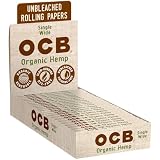
- 50 Leaves per Booklet (1200 Total)
Product prices and availability are accurate as of the date/time indicated and are subject to change. Any price and availability information displayed on Amazon at the time of purchase will apply.




