Free tools Windows power users keep installed
One-click scans. No signup required.
There is no single best self-hosted model for every regulated business. The right choice is the model family that fits your workload, languages, hardware, license and provenance rules while allowing the entire data path—prompts, retrieved documents, outputs, logs, backups, monitoring and support access—to remain inside an approved jurisdiction. Llama, Mistral, Qwen, DeepSeek, Gemma and Phi-4 are sensible families for a serious shortlist, but residency is a system property, not a model-label feature.
What “self-hosted” means when residency matters
A self-hosted deployment runs model inference on infrastructure you control: an on-premises cluster, a private cloud account or a dedicated virtual private cloud (VPC). You download and pin the model weights, operate the serving layer and decide where requests and stored data travel. Mistral states that its open-weight models can be downloaded from Hugging Face and hosted on your own hardware, and that enterprise customers can deploy them on-premises or in their own cloud.
| # | Preview | Product | Price | |
|---|---|---|---|---|
| 1 |

|
NVIDIA Tesla L4 24GB PCIe Graphics ACELLERATOR HH/HL 75W GPU 900-2G193-0000-000 | $3,950.00 | Buy on Amazon |
| 2 |

|
NVIDIA L4 | $4,187.00 | Buy on Amazon |
| 3 |
|
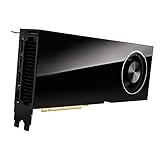
PNY VCNRTXA6000-PB NVIDIA 48GB GDDR6 Graphics Card | $6,167.99 | Buy on Amazon |
| 4 |
|
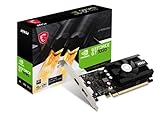
msi Gaming GeForce GT 1030 4GB DDR4 64-bit HDCP Support DirectX 12 DP/HDMI Single Fan OC Graphics... | $119.97 | Buy on Amazon |
| 5 |

|
VIPERA NVIDIA GeForce RTX 4090 Founders Edition Graphic Card | $4,699.95 | Buy on Amazon |
As an Amazon Associate I earn from qualifying purchases.
That control is valuable when a contract, regulator or internal policy prohibits sending sensitive content to a multi-tenant managed service. Google Cloud’s open-model guidance identifies self-deployment for applications with stringent data-residency requirements, custom or fine-tuned weights, predictable high-volume traffic and a need to choose exact machine types and accelerators. The trade-off is operational responsibility: your team must secure, patch, monitor, scale and recover the service.
Residency covers more than the inference GPU
A prompt can leave its intended country through a retrieval service, observability pipeline or support connection even when the model server is local. Define the boundary for every component:
#1 Best Overall
- 24GB Video Memory
- Fourth Generation Tensor Cores
- HALF HEIGHT BRACKET ONLY
- Inference: model weights, tokenizer, serving runtime and GPU nodes.
- Retrieval: document stores, embedding generation, vector indexes and caches.
- Data at rest: prompts, outputs, conversation history, uploaded files, checkpoints and backups.
- Operations: logs, traces, metrics, crash dumps, alerting and security telemetry.
- People and vendors: administrator access, remote support, managed monitoring and subprocessors.
- Network paths: DNS, package downloads, container registries, license checks, update channels and failover sites.
Document which jurisdictions are approved, which data classes may enter the system and what evidence proves that the boundary is enforced. A model hosted in an EU VPC does not by itself establish EU residency if logs are copied to a United States service or a vendor engineer can open an unrestricted support session.
Shortlist of model families
The table below is a starting point, not a ranking. Capability varies by release, quantization, prompt format and serving stack. Test the exact checkpoint you intend to operate.
Do these 3 things before closing this tab:
1Clear out junk files and repair common Windows errors2Scan for outdated or missing drivers - takes under a minute3Repair Windows errors before they cause bigger problems| Family | Why it belongs on the shortlist | Checks before approval |
|---|---|---|
| Llama (Meta) | Broad ecosystem and tooling support make it a practical compatibility baseline across many self-hosting stacks. | Review Meta’s custom license and acceptable-use terms; do not assume Apache-style rights. Confirm the selected release and any fine-tune obligations. |
| Mistral | Strong option for EU-oriented organizations and a large selection of open-weight releases. Mistral also offers enterprise self-deployment. | Licenses differ by model. Verify the exact model card, commercial rights and update policy. If considering a regional hosted endpoint, confirm supported-model coverage and contractual residency terms. |
| Qwen (Alibaba) | Broad multilingual coverage and inclusion in the OECD’s indicative offline-model list. | Review the precise Qwen license, provenance requirements, language quality for your documents and organizational country-of-origin policy. |
| DeepSeek | Included in the OECD offline list and often evaluated for capability relative to hardware cost. | Add country-of-origin, supply-chain and governance review to the technical test. Check the exact release license and data-handling documentation. |
| Gemma (Google) | Google’s open-weight family and an option for teams already operating Google infrastructure. | Read the terms for the specific release, validate commercial use and test whether its language and context behavior fit your workload. |
| Phi-4 (Microsoft) | Phi-4 14B appears in the OECD’s indicative offline foundational-model list and can suit a smaller-footprint deployment or Microsoft-aligned environment. | Confirm the exact release license, memory requirements at your chosen precision and capability on your domain tasks. |
The OECD’s 2025 indicative list names DeepSeek R1 and Coder, Gemma 3n, Llama 3.3 70B, Llama 3.2, Code Llama, Qwen 2.5 and Qwen Coder, Mistral 7B and Phi-4 14B as models that can be used offline. “Indicative” means the list is a useful catalog for evaluation, not a certification, security assessment or performance ranking.
Llama: ecosystem breadth as a risk reducer
Llama’s widespread support can lower integration effort: your team is more likely to find compatible quantization formats, inference engines, adapters and monitoring integrations. That convenience should not shortcut legal review. Meta’s terms are model-specific and include acceptable-use provisions, so record the license alongside the weight checksum and the intended application. If you fine-tune or redistribute a derivative, have counsel verify the resulting obligations.
Mistral: European option with two deployment paths
Mistral’s open-weight portfolio is relevant to EU organizations that want a European vendor or permissive licensing on selected releases. There is no single “Mistral license”; verify the model card for the exact checkpoint. Mistral also documents regional EU and US inference endpoints for supported models. Requests are processed in the selected region and carry a stated 10% upcharge. A regional endpoint can simplify operations, but it is not equivalent to self-hosting: confirm retention, subprocessors, support access and the contractual residency commitment.
Rank #2
- 900-2G193-0000-000
Qwen: multilingual breadth requires language-specific testing
Qwen is a candidate when your users or documents span many languages. Measure extraction accuracy, terminology handling, refusal behavior and long-context retrieval in each language that matters. Keep provenance review separate from capability scoring; a model can pass one and fail the other. License terms and permissible redistribution can vary by release.
Quick wins for a faster PC:
Repair Windows errors before they cause bigger problemsFix Now →Fix the driver behind crashes, sound loss and screen glitchesFind Drivers →Clear out junk files and repair common Windows errorsFree Scan →DeepSeek: include supply-chain governance in the gate
DeepSeek checkpoints are available for offline evaluation and are commonly considered when teams seek strong capability without the largest hardware footprint. Organizations with country-of-origin restrictions, procurement rules or sensitive-sector governance should make those checks a formal go/no-go gate. Record where the weights came from, how they were verified and who may update them.
Gemma: convenient for Google-aligned infrastructure
Gemma may fit teams that already operate Google tooling, identity and GPU capacity. Treat “open-weight” as a distribution description, not a blanket permission. Read the selected release’s terms, document acceptable uses and test the model with your safety and data-loss-prevention controls.
Phi-4: a smaller-footprint candidate
Phi-4 14B is worth testing when a compact deployment, lower concurrency target or Microsoft ecosystem alignment matters. A smaller parameter count can reduce memory pressure, but it does not guarantee lower total cost: context length, batching, quantization, redundancy and staffing still determine the production footprint.
How to choose: a decision framework
Score each candidate against the same evidence instead of choosing from a leaderboard. A model that wins a generic benchmark can lose on your documents, latency target or license policy.
Rank #3
- Memory: 48GB, GDDR6
- PCI Express x16 4.0 interface
- Maximum resolution: 7680 x 4320 pixels
- Ports: 4 x DisplayPorts
- Backed by a 3 years manufacturers warranty
| Decision area | Questions to answer | Evidence to collect |
|---|---|---|
| Residency control | Can inference, retrieval, logs, backups, monitoring and support paths stay in the approved jurisdiction? | Network diagrams, firewall rules, data-flow inventory, region settings and support-access records. |
| Workload fit | Is the primary job chat, coding, structured extraction, multilingual work, vision, speech or reasoning? | Representative prompts, labeled test set, error taxonomy and human review. |
| License and provenance | Are commercial use, redistribution, acceptable use, indemnity, training-data disclosure and update rules acceptable? | Exact license text, model card, weight source, checksum and legal sign-off. |
| Hardware footprint | What memory, context length, concurrency, latency and redundancy are required? | Measured tokens per second, peak memory, queue time and failover results on the intended hardware. |
| Operations | Can your team patch the runtime, rotate keys, observe quality and respond to incidents? | Runbooks, on-call coverage, patch windows, rollback procedure and recovery tests. |
| Economics | At your steady-state token volume, is owned or rented GPU capacity cheaper than an API? | Three-year infrastructure, power, cooling, staffing, support and egress model versus API spend. |
| Ecosystem | Does the checkpoint work with your serving engine, identity, policy and security tooling? | Compatibility test, vulnerability scan, integration effort and upgrade history. |
Match the family to the workload
- General enterprise chat: start with Llama, Mistral, Gemma or Qwen and compare grounded-answer accuracy, refusal handling and citation behavior.
- Code assistance: include code-specialized releases such as Code Llama, Qwen Coder and DeepSeek Coder from the OECD list; test repository-level tasks rather than isolated snippets.
- Multilingual service: prioritize Qwen and Mistral candidates, then score every required language separately.
- Compact departmental service: include Phi-4 14B and smaller releases from the other families; measure quality loss against the savings in memory and power.
- Vision or speech: verify that the selected release actually supports the modality. A text-only checkpoint cannot be made multimodal by a residency setting.
Residency-safe deployment procedure
Use this sequence to turn a model download into an auditable service.
- Define the boundary. Name approved countries or regions, prohibited destinations, data classes, retention periods and the people permitted to administer the system.
- Select and pin the checkpoint. Download from an approved source, record the exact release identifier, license, model-card URL in your internal register and a cryptographic checksum. Store the weights in an access-controlled repository inside the boundary.
- Build the serving environment inside the boundary. Run the inference engine on-premises or in the customer-owned VPC. Use private subnets, deny-by-default egress and an internal container or package mirror so routine startup does not fetch data externally.
- Keep retrieval local. Generate embeddings, store source documents and maintain vector indexes in the approved region. Inspect application defaults for telemetry or remote tracing before production.
- Separate sensitive logs. Disable prompt and output capture unless it is required. When debugging is necessary, redact or tokenize content, set a short retention period and place logs and traces in the same residency boundary.
- Control identity and secrets. Use least-privilege service accounts, hardware-backed or centrally managed keys where available, rotation schedules and separate credentials for developers, operators and vendors.
- Block unintended egress. Test DNS, proxy, telemetry, update, license-check and support paths. An allowlist should contain only destinations that your policy explicitly approves.
- Design regional disaster recovery. Replicate encrypted weights, indexes, configuration and backups only to approved locations. Test restoration, key availability and recovery-time objectives without temporarily using an unapproved region.
- Document support access. Record whether a hardware, cloud or software provider can access the host, what approval is required, how sessions are logged and how emergency access is revoked.
- Re-test after every change. A new model, runtime, GPU driver, monitoring agent or managed add-on can alter both behavior and data flow. Repeat residency and security tests before promotion.
Hardware and serving considerations
Model name alone does not determine the server. Memory is driven by parameter count, numerical precision, quantization overhead, context length, batch size and runtime buffers. Throughput and latency then depend on concurrency, prompt length and generation length.
Size for the real service, not a demo
- Measure peak concurrent requests and the longest prompt that must be accepted.
- Reserve memory for the key-value cache; long contexts can exhaust memory even when the weights fit.
- Choose quantization only after testing quality on your domain set. Lower precision can reduce cost but may harm extraction, code or multilingual accuracy.
- Include headroom for rolling upgrades, a failed GPU and traffic spikes. A single machine that runs a demo is not high availability.
- Validate cooling, power, rack capacity and network bandwidth for the complete server, not just the accelerator.
Google Cloud’s guidance names NVIDIA L4 and H100 as examples of accelerators teams can select when self-deploying. The right choice depends on the pinned model, target context and concurrency; no universal GPU recommendation is established here. When budgeting an NVIDIA L4 GPU or a complete GPU server for self-hosted AI, validate memory, concurrency, cooling, power, support and total cost of ownership before purchase.
Serving-stack controls
Pick a serving engine that supports the checkpoint format, batching, streaming, authentication and observability requirements you can operate. Keep the model server on private networks, terminate client authentication at a controlled gateway and enforce request-size, rate and content policies before traffic reaches the GPU. Scan images and dependencies, sign internal artifacts and maintain a rollback copy of the previous known-good runtime.
Outdated Drivers Are Slowing You Down
One free scan finds every outdated or missing driver and matches the right update for your exact hardware.Free scan · exact hardware matchPC Slower Than It Used to Be?
A free scan shows the junk files, broken settings and background clutter dragging Windows down - then fixes them in one click.Free scan · Windows 10 & 11Licensing, provenance and policy review
“Open-weight” means that weights are available under stated terms; it does not make every model interchangeable with an Apache-licensed project. Before production, legal and security teams should review:
Rank #4
- Chipset: NVIDIA GeForce GT 1030
- Video Memory: 4GB DDR4
- Boost Clock: 1430 MHz
- Memory Interface: 64-bit
- Output: DisplayPort x 1 (v1.4a) / HDMI 2.0b x 1
- Commercial-use and redistribution rights for the exact release.
- Acceptable-use restrictions and prohibited applications.
- Obligations for notices, attribution, derivative models or hosted access.
- Any indemnity language, warranty exclusions or pass-through terms.
- Training-data disclosures and procedures for handling takedown or copyright complaints, where provided.
- How updates are published, signed, versioned and withdrawn.
- Country-of-origin, sanctions, procurement and supply-chain requirements.
Store the license and provenance record with the checksum. If a vendor offers both open weights and hosted APIs, evaluate the two contracts separately; a hosted endpoint’s terms do not automatically apply to locally downloaded weights.
Independent reader supportYour contribution helps us test, update, and keep practical guides available for everyone.Self-deployment versus a regional managed endpoint
Self-hosting is not the only way to keep processing in a chosen geography. A regional endpoint can reduce infrastructure work, but it shifts control and some evidence to the provider.
Recommended Free Tools
| Consideration | Self-deployment | Regional managed endpoint |
|---|---|---|
| Data-path control | You control networks, storage and logging if configured correctly. | Provider controls parts of the service path; verify region, retention and subprocessors. |
| Engineering effort | Higher: serving, patching, scaling, security and recovery are yours. | Lower infrastructure burden; integration and contractual review remain necessary. |
| Capacity economics | Can be favorable for predictable, high-volume workloads, but staffing and hardware are fixed costs. | Usage-based cost can suit prototypes or variable traffic; review all regional premiums. |
| Model choice | Use the exact pinned open-weight or fine-tuned checkpoint your stack supports. | Limited to the provider’s supported models and regions. |
| Residency evidence | Prove your own controls, backups, monitoring and support paths. | Obtain contractual commitments and technical documentation, not just a region selector. |
Mistral documents a 10% upcharge for supported EU or US regional inference endpoints. That figure is specific to the documented endpoints and date of the Mistral page accessed October 20, 2026; it is not a general premium for every provider or model. Google’s guidance similarly distinguishes managed APIs, which suit rapid prototyping or variable traffic, from self-deployment, which requires more engineering but can improve control and economics at predictable production volume.
How to run a defensible pilot
- Assemble a representative, permitted dataset. Include real document layouts, languages, code repositories or structured records, but remove data that the pilot team is not authorized to process.
- Set acceptance thresholds. Define extraction accuracy, groundedness, refusal rate, latency, throughput, maximum context, recovery time and cost per task before testing.
- Evaluate at production settings. Test the intended quantization, context window, retrieval pipeline, concurrency and safety filters. A high-precision offline test can hide production bottlenecks.
- Run adversarial and leakage tests. Try prompt injection, cross-tenant retrieval, accidental logging, unauthorized export and malformed files. Verify that blocked requests do not appear in downstream telemetry.
- Perform a residency audit. Capture network flows, storage locations, backup destinations, administrator sessions and software update paths during the pilot.
- Compare total cost. Include accelerator depreciation or rental, power, cooling, storage, networking, licenses, staff, support and disaster recovery—not only tokens per second.
- Make the decision reversible. Keep the previous checkpoint, configuration and index format available so a license change, quality regression or security issue can be rolled back.
Common failure modes and fixes
“The GPU is local, so residency is solved.”
Cause: prompts or traces are sent to a remote observability platform, backup bucket or support system.
Fix: map every data flow, apply egress deny rules and keep telemetry and backups in approved regions.
“Open-weight means unrestricted commercial use.”
Cause: the team treats all model families as if they shared one permissive license.
Fix: pin the exact release, read its license and acceptable-use terms, and obtain legal approval before fine-tuning or redistribution.
Best Value
- 16,384 NVIDIA CUDA Cores
- Supports 4K 120Hz HDR, 8K 60Hz HDR and variable refresh rate as indicated in HDMI 2.1A
- New streaming multiprocessors: up to 2x power and power efficiency
- Fourth generation tensor cores: up to 2x AI power
- Third-generation RT cores: up to 2x ray tracing performance
“A smaller model will automatically be cheaper.”
Cause: weight memory is considered without context cache, redundancy, staffing or power.
Fix: measure end-to-end cost at required concurrency and include high-availability and recovery capacity.
The Tool Desk
Outbyte Driver Updater FREEFix the driver behind crashes, sound loss and screen glitchesFind Drivers →Outbyte PC Repair FREEClear out junk files and repair common Windows errorsFree Scan →“The benchmark winner is the production winner.”
Cause: generic scores do not represent your languages, documents, tools or policies.
Fix: use a labeled, representative evaluation set and publish error categories for every candidate.
“A regional endpoint guarantees compliance.”
Cause: a region label is mistaken for a complete contractual and technical boundary.
Fix: verify retention, subprocessors, support access, failover, model coverage and written commitments for the exact service.
Practical recommendations by organization type
Regulated EU organization with predictable volume
Start with Mistral, Llama and Qwen candidates, then add Gemma or Phi-4 where infrastructure or footprint makes them useful. Favor self-deployment when your policy requires direct control and your volume justifies an operations team. Keep every subsystem in approved EU locations and have counsel review each model license.
Global company with several approved regions
Build a regional deployment pattern rather than one global endpoint: pin a model and configuration per jurisdiction, keep indexes and logs local, and prevent cross-region failover unless policy allows it. Compare self-hosted capacity with regional managed endpoints for each traffic profile.
What’s actually slowing this PC down?
Pick the symptom - the matching free tool is one click away.
Small team proving an internal assistant
Use a short pilot with Phi-4 14B, Mistral, Gemma or a Llama release that fits your available hardware. Keep sensitive production data out until the residency map, logging controls, license review and recovery test pass. If traffic is highly variable, a regional managed endpoint may reduce operational burden, provided its contractual controls meet your policy.
Developer platform serving code teams
Include Code Llama, Qwen Coder and DeepSeek Coder in the test set, with repository-level tasks, secret-leakage checks and license review for generated code. Measure latency under concurrent IDE requests rather than relying on single-prompt demos.
What the evidence does—and does not—establish
The available guidance supports self-deployment for data-residency control, custom weights and predictable high-volume workloads. It identifies Llama, Mistral, Qwen, DeepSeek, Gemma and Phi-4 as credible families to evaluate and documents a 10% premium for specified regional Mistral endpoints. It does not provide a current, comparable benchmark proving one universal enterprise winner across chat, coding, extraction, multilingual, vision and reasoning tasks. Your workload tests, legal review and residency audit must determine the final choice.
Quick Recap
Product prices and availability are accurate as of the date/time indicated and are subject to change. Any price and availability information displayed on Amazon at the time of purchase will apply.

