Recommended Free Tools
Yes. The numbered Resident Evil games share a broad continuity built around Umbrella’s biological-weapons research, recurring heroes and villains, major outbreaks, and the consequences of earlier incidents. Each entry usually tells a complete survival-horror story, so you can play one on its own, but previous games add context to the characters, organizations, betrayals, and discoveries that keep resurfacing.
The clearest links run from Resident Evil 0 and the first game’s Mansion Incident through the overlapping Resident Evil 2 and Resident Evil 3 Raccoon City stories, then into later numbered games with returning characters and broader bioweapon threats.
| # | Preview | Product | Price | |
|---|---|---|---|---|
| 1 |

|
Resident Evil Origins Collection - PlayStation 4 Standard Edition | $19.70 | Buy on Amazon |
| 2 |
|
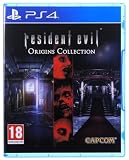
Resident Evil Origins Collection (PS4) | $21.00 | Buy on Amazon |
| 3 |

|
Resident Evil Origins Collection (PS4) | $22.05 | Buy on Amazon |
| 4 |

|
Resident Evil 4 - PS4 | $19.93 | Buy on Amazon |
As an Amazon Associate I earn from qualifying purchases.
What “connected” means in Resident Evil
Resident Evil is not one uninterrupted campaign in which every scene depends on the previous game. Instead, it uses a shared timeline and a continuing cast. A new game normally introduces a self-contained crisis, location, and immediate objective, while its background grows out of earlier experiments, outbreaks, and personal conflicts.
That structure gives the series two useful entry points. A newcomer can understand the immediate danger in an individual game, while a returning player recognizes why a survivor, corporation, laboratory, or antagonist matters. The continuity is therefore strongest in the setting’s history and characters, not in a requirement to remember every puzzle or side story.
#1 Best Overall
- Return to the series origins - Discover the truth behind what led to the horrors at the Mansion in Resident Evil in this fan-favorite and popular prequel title to the series.
- Completely enhanced visuals - New high-resolution textures have been created from scratch, including 1080p support on next-gen consoles, while still preserving the classic appearance of the original release.
- Fan-favorite Resident Evil characters - Rookie S.T.A.R.S. member Rebecca Chambers and wanted criminal Billy Coen combine skills and buddy up to survive the undead and infected nightmares that await them.
- All original difficulty levels plus new Very Easy Mode for novice players
- People carry over: Chris Redfield, Jill Valentine, Claire Redfield, Leon Kennedy, Albert Wesker, Rebecca Chambers, and William Birkin recur or materially affect later events.
- Institutions carry over: Umbrella Corporation’s experiments provide the foundation for the early arc and the biological outbreaks that follow.
- Incidents overlap: Resident Evil 0 leads directly into the first game, while Resident Evil 2 and Resident Evil 3 occur during the same Raccoon City disaster.
- Consequences carry over: discoveries, betrayals, survivors, and unresolved threats become context for later games.
The core continuity: Umbrella, outbreaks, and consequences
Umbrella’s experiments are the foundation
The early Resident Evil storyline is tied together by Umbrella Corporation’s biological-weapons research. The company’s experiments create the conditions for the outbreaks that define the first major arc. Even when a later game changes country, location, or immediate threat, it is responding to that established history rather than starting in a completely unrelated universe.
This is why a laboratory document, a survivor’s testimony, or an antagonist’s plan can matter beyond the game in which it appears. The shared world treats biological research as an ongoing problem: one incident exposes information, another group exploits it, and the resulting threat reaches a new set of characters.
The Mansion Incident is the first major anchor
The first Resident Evil, released in 1996, establishes the Mansion Incident as the event around which the early continuity is organized. Chris Redfield and Jill Valentine are introduced in that game, and the incident becomes a reference point for later investigations and personal stakes.
Do these 3 things before closing this tab:
1Repair Windows errors before they cause bigger problems2Scan for outdated or missing drivers - takes under a minute3Clear out junk files and repair common Windows errorsResident Evil 0 is positioned immediately before it. Capcom Product Manager Andrew Schnorr described it as a direct prequel that takes place the day before the famous Mansion Incident and leads directly into those events. That makes RE0 more than a thematically related side story: it is the opening chapter of the same chain of events.
Raccoon City is a shared crisis, not three separate resets
Resident Evil 2 and Resident Evil 3 both take place during the Raccoon City outbreak. Their stories are distinct, but they occupy the same larger disaster, with RE3 overlapping the period in which Leon Kennedy and Claire Redfield are dealing with the outbreak in RE2.
Rank #2
- Resident Evil Zero Features
- Return to the series origins - Discover the truth behind what led to the horrors at the Mansion in Resident Evil in this fan-favorite and popular prequel title to the series
- Completely enhanced visuals - New high-resolution textures have been created from scratch, including 1080p support on next-gen consoles, while still preserving the classic appearance of the original release
- Fully remastered sound effects - 5.1 surround support provides a more experiential gaming atmosphere that best matches players' listening environments
- Relive the classic horror in either its original settings or modified to modern-day standards: Experience the horror in the classic 4:3 ratio or newly added 16:9 widescreen mode. Play with the classic control scheme, or enjoy a new alternative scheme where the character moves in the direction of the analogue stick.
That overlap explains why the two games feel connected even when their playable characters, routes, and immediate objectives differ. They are showing different experiences of one crisis rather than repeating the same event in a new continuity.
Which characters and villains carry over?
Recurring characters are the most visible form of continuity. Their histories change how later conflicts read, while their appearances also give the series a human through-line as locations and threats evolve.
| Character | How the continuity connects |
|---|---|
| Chris Redfield | Introduced in the first Resident Evil alongside Jill Valentine; later returns as part of the continuing main cast. |
| Jill Valentine | Introduced in the first game and remains one of the recurring protagonists associated with the series’ early incidents. |
| Claire Redfield | Introduced in Resident Evil 2; her Raccoon City story is part of the same outbreak continuity as Leon’s. |
| Leon Kennedy | Introduced in Resident Evil 2; his Raccoon City experience is one of the major threads carried into the broader numbered storyline. |
| Rebecca Chambers | Resident Evil 0 links Rebecca to the setup for the first game, making her story a direct bridge into the Mansion Incident. |
| William Birkin | Material from Resident Evil 0 connects Birkin to Resident Evil 2 and to consequences beyond that game. |
| Albert Wesker | His activities and betrayals form a continuing thread; RE0 material links him to RE2 and later developments. |
Not every returning figure is present in every numbered entry. A character may reappear directly, be discussed by other characters, or affect events through an earlier decision. Capcom’s mainline history summary also describes Resident Evil 6 as featuring many returning characters after Resident Evil 5, showing how the series brings several established threads together.
How the main early games fit together
| Game or group | Chronological position | Continuity function | First-time accessibility |
|---|---|---|---|
| Resident Evil 0 | The day before the Mansion Incident | Direct prequel; links Rebecca, Birkin, and Wesker material to the first game | Best understood with awareness that it leads immediately into the first game |
| Resident Evil (1996, original, or HD/remake presentation) | The Mansion Incident | Introduces Chris and Jill and establishes the early Umbrella outbreak history | Foundational, though modern players may prefer a remake or HD presentation |
| Resident Evil 2 | During the Raccoon City outbreak | Introduces Leon and Claire and expands the consequences of the earlier incident | Capcom USA calls the 2019 version a great jumping-on point |
| Resident Evil 3 | Overlaps the Resident Evil 2 period in Raccoon City | Shows another perspective on the same city-wide crisis | Easier to place after RE2, but does not require every earlier game |
| Later numbered games, including Resident Evil 5 and Resident Evil 6 | After the early Mansion and Raccoon City arc | Broaden locations and bioweapon threats; RE6 brings back many characters after RE5 | More rewarding when you recognize the returning cast and prior consequences |
Do you need to play Resident Evil in order?
No, but the order changes what you notice. Every main entry is designed to communicate its immediate situation. You can start with a game that interests you without first completing the entire catalog. Playing earlier titles first mainly improves your understanding of relationships, references, and why a new outbreak matters.
For the earliest chronological story
- Play Resident Evil 0. It takes place immediately before the Mansion Incident and leads directly to it.
- Play Resident Evil. Choose the original, its HD remaster, or a remake presentation; the major continuity landmark is the Mansion Incident.
- Play Resident Evil 2. Leon and Claire’s stories move the timeline into the Raccoon City outbreak.
- Play Resident Evil 3. Its events overlap the RE2 crisis, so it works naturally after seeing the outbreak from Leon and Claire’s perspective.
- Continue through the later numbered games. Follow the characters and consequences that interest you; the core arc does not require every spin-off.
For the easiest modern starting point
Capcom USA’s 2024 newcomer guide recommends Resident Evil 2 (2019) as “a great jumping-on point for the series.” That recommendation makes practical sense: it introduces a major outbreak, two central protagonists, and the consequences of the earlier history without demanding that a new player already know every detail of RE0 or the first game.
Rank #3
- Return to the series' origins
- Enhanced visuals
- remastered sound effects
- Wesker mode
From there, playing Resident Evil 3 gives you another view of the same Raccoon City disaster. You can then move into later numbered entries according to the characters or story threads you want to follow. If you later return to RE0 and the first game, their connections to the Mansion Incident will be easier to place.
Free tools Windows power users keep installed
One-click scans. No signup required.
Is Resident Evil 0 really a prequel?
Yes. It is not merely a game set in the same universe. Capcom describes Resident Evil 0 as a direct prequel that occurs the day before the Mansion Incident and leads directly into the first game’s events.
Its importance is structural as well as chronological. The game connects Rebecca Chambers to the first game’s setup and supplies material involving William Birkin and Albert Wesker that links forward to Resident Evil 2 and beyond. If you want to see how the earliest chain of events begins, RE0 is the correct place to start; if you want a smoother introduction to the series’ style and central conflict, starting with RE2 (2019) is less demanding.
Independent reader supportYour contribution helps us test, update, and keep practical guides available for everyone.How do the remakes fit the continuity?
Capcom’s official history lists remake versions alongside original releases, including Resident Evil 2 and Resident Evil 3. The practical way to understand them is as updated retellings of established incidents. They preserve the major continuity landmarks—the Mansion Incident or Raccoon City outbreak, for example—while changing presentation, pacing, mechanics, and some scene details.
That means you do not have to treat an original and its remake as two unrelated timelines before you can follow the broader story. Choose the version whose controls, visual presentation, and availability suit you. If a remake changes how a scene unfolds, the key question for continuity is whether it still depicts the same established incident and its consequences; Capcom’s history places those remake versions alongside the original games.
Rank #4
- Reawaken a Classic – Resident Evil 4 preserves the essence of the original game, now reconstructed using Capcom’s proprietary RE Engine to deliver realistic visuals and additional narrative depth to the iconic story that was not possible at the time of the original release.
- Modernized Gameplay – The team from 2019’s Resident Evil 2 returns to build upon the series’ modern approach to survival horror. Engage in frenzied combat with the Ganados villagers, explore a European village gripped by madness, and solve puzzles to access new areas and collect useful items for Leon and Ashley’s constant struggle to survive.
- Overwhelming Hordes – Face hordes of rabid enemies that threaten to overwhelm Leon with even more diverse methods of attack than in the original release.
- Survive on a Knife’s Edge – Years of intense training have taught Leon new ways to use his knife, helping to even the odds against the unrelenting onslaught of enemies. By parrying enemy attacks, you can avoid debilitating damage and evade lunging enemies seeking to grab Leon and hold him in place. Make smart use of scavenged knives to deliver precise finishing moves on vulnerable enemies, and even use the element of surprise to quietly dispatch unsuspecting foes before they break.
- Reimagined Story – Resident Evil 4 dials up the original release’s key feelings of loneliness and the fear of enemies blinded by zealotry, while providing more nuanced depictions of the character motivations and relationships that defined the 2005 survival horror icon.
Are spin-offs required to understand the numbered games?
No. The numbered games provide the core arc. Spin-offs can add perspective or extra background, but the continuity described by Capcom’s mainline history is understandable through the numbered entries themselves. If your goal is to follow Umbrella’s experiments, the Mansion Incident, Raccoon City, and the returning protagonists, prioritize RE0 through the numbered games that continue those threads.
This also keeps the play order manageable. You can add side stories later when a character or incident interests you instead of treating every release as a prerequisite for the next main chapter.
A practical starter bundle for the earliest arc
Capcom’s PlayStation article identifies the Resident Evil Origins Collection for PS4 as a physical collection containing Resident Evil 0 and the Resident Evil HD remaster. For someone who wants the chronological opening without assembling the first two games separately, that collection covers the direct prequel and the Mansion Incident entry in one package.
Availability, region, and stock can change, so confirm those details for your market before buying. The collection’s story value is stable: it pairs the game immediately before the Mansion Incident with the game that depicts the incident itself.
What carries over, and what does not?
What carries over
- The history of Umbrella’s experiments and the biological outbreaks they create.
- Survivors whose relationships and decisions affect later events.
- Antagonists such as Wesker and Birkin whose actions connect separate crises.
- Major incidents, especially the Mansion Incident and the Raccoon City outbreak.
- Consequences: discoveries, betrayals, and unresolved threats that later games revisit.
What does not carry over as a requirement
- You do not need to complete every earlier game to understand the immediate objective in a new numbered entry.
- You do not need every spin-off to follow the core numbered storyline.
- You do not need to play both an original and a remake to recognize the incident they retell.
- You should not expect every game to use the same location, protagonist, or style; later entries broaden the settings and bioweapon threats.
The best order depends on your goal
Choose RE0 → RE1 → RE2 → RE3 when you want the earliest chronology and the direct progression from the prequel into the Mansion Incident and Raccoon City. Choose RE2 (2019) when you want Capcom’s recommended modern jumping-on point. In either case, continue into later numbered games by following the returning characters and consequences that interest you most.
The series is connected enough that earlier games add real meaning, but self-contained enough that a single entry can still work as an introduction. That balance—not a requirement to play every release in strict order—is the defining way Resident Evil carries its story forward.
Quick Recap
Product prices and availability are accurate as of the date/time indicated and are subject to change. Any price and availability information displayed on Amazon at the time of purchase will apply.

