Quick wins for a faster PC:
Clear out junk files and repair common Windows errorsFree Scan →Scan for outdated or missing drivers - takes under a minuteDriver Scan →Usually, no—but the risk depends on where the fungus is growing and whether anyone eats it. Touching or handling garden fungi is generally safe. The serious direct hazard is ingestion: an unidentified mushroom can poison a person or pet, and appearance is not a dependable toxicity test. Large puffballs and many fungi in lawns, mulch, or potting soil simply consume dead organic matter and do not injure healthy plants.
Fungi growing from a living tree, root flare, trunk, or major limb are different. They can indicate root or butt rot and weakened wood. Fruiting bodies do not prove that a tree will fail immediately, but they justify a certified arborist or tree-risk assessment—especially where falling limbs could reach people, animals, vehicles, or buildings.


As an Amazon Associate I earn from qualifying purchases.
The risk depends on three questions
Size is a poor way to judge danger. A very large fungus may be harmless, while a smaller unidentified mushroom may be poisonous. Use these three questions to triage what you have found:
Free tools Windows power users keep installed
One-click scans. No signup required.
| What you see | Most likely concern | What to do |
|---|---|---|
| Fruiting bodies in lawn, mulch, soil, or a flower bed | Usually a nuisance caused by fungi feeding on dead organic matter; ingestion remains the safety concern | Keep children and pets away, remove accessible specimens, and do not eat them |
| Giant puffball or a large ringless honey-mushroom cluster over buried, decaying roots | Generally harmless to people, pets, and grass; the fungus is using an exhausted or decaying food source | Remove it if it is accessible or unsightly; inspect nearby trees if roots or a stump are involved |
| Fruiting bodies on a living trunk, root flare, major root, or major limb | Possible root, butt, or heartwood decay that may reduce structural strength | Arrange a certified arborist assessment, particularly in a high-use or high-consequence area |
| Anyone may have tasted or swallowed an unidentified fungus | Potential poisoning, even if the mushroom looks familiar or edible | Contact local poison control or an Extension or diagnostic service promptly |
There is no dependable percentage for how many “giant” fungi are toxic, and the available guidance does not establish a reliable rate of pet poisonings. Treat every unidentified specimen as inedible.
#1 Best Overall
Is it dangerous to touch a giant mushroom?
For ordinary garden contact, no. The Royal Horticultural Society states that “No fungi will harm humans or animals to touch and handle them.” You can pick up or scrape away a fruiting body without expecting a poisoning through intact skin.
That does not make an unknown fungus safe to taste. The meaningful exposure route is swallowing it, including a small bite by a curious child or dog. Wash hands after handling, and avoid touching your mouth while collecting specimens. Gloves are useful for cleanliness and for protecting against splinters, insects, or irritating soil, not because a typical mushroom will poison you through the skin.
Why appearance cannot establish edibility
University of Maryland Extension advises assuming unknown mushrooms are inedible because toxic and safe species can look alike. A large cap, a familiar color, a pleasant smell, or a location in a lawn is not a safety test. University of Florida Extension lists potentially toxic genera that may occur in potting soil, including Chlorophyllum, Leucocoprinus, Conocybe, and Lepiota. This list is a warning about uncertainty, not a field identification key.
Do these 3 things before closing this tab:
1Fix the driver behind crashes, sound loss and screen glitches2Repair Windows errors before they cause bigger problems3Scan for outdated or missing drivers - takes under a minuteDo not rely on an internet photograph, a folk rule, an animal’s apparent interest, or the absence of immediate symptoms. Correct identification can require details that disappear when a mushroom is cut, dried, crushed, or photographed from only one angle.
Can a giant mushroom hurt a dog or cat?
Yes, if the animal eats an unidentified mushroom. Dogs may investigate and chew fruiting bodies in lawns, mulch, and woodland edges, while children and cats can also be exposed. The safe rule is simple: prevent access rather than trying to decide whether a specimen is edible after the fact.
One Oregon State Extension response about likely Armillaria (honey mushrooms) says they are generally not poisonous to humans when cooked, but raw specimens can cause reactions involving mucous membranes and the guidance is uncertain for dogs. That species-specific observation is not permission to feed honey mushrooms to a person or pet. An unknown specimen must still be treated as inedible.
What to do after a possible bite
- Remove the remaining mushroom and any pieces from the child’s or animal’s reach. Do not induce vomiting unless a qualified professional tells you to.
- Record when the exposure happened, how much may have been eaten, and whether symptoms have appeared.
- Keep a fresh sample or clear photographs only if a poison-control, Extension, diagnostic, or veterinary professional asks for them. Do not delay a call while trying to identify it yourself.
- Contact local poison control or an Extension or diagnostic service for immediate guidance. For an animal, contact its veterinarian as well and explain that the species is unknown.
Seek urgent medical or veterinary care for any concerning symptoms, worsening condition, breathing difficulty, collapse, seizures, severe vomiting, or altered consciousness. Do not wait for symptoms if a professional advises immediate evaluation.
The Tool Desk
Outbyte PC Repair FREERepair Windows errors before they cause bigger problemsFix Now →Outbyte Driver Updater FREEScan for outdated or missing drivers - takes under a minuteDriver Scan →Are giant puffballs and lawn mushrooms harmful?
Giant puffballs
Michigan State University Extension states: “Puffballs are not harmful to people, pets, or plants, but can be a nuisance in well-maintained lawns.” Their presence does not, by itself, mean grass or nearby ornamentals are being attacked. They can still attract a child or pet, so remove accessible specimens where accidental ingestion is likely.
Rank #3
Fungi feeding on dead material
Many lawn and mulch mushrooms are saprotrophs: they digest dead organic matter rather than living tissue. Illinois Extension notes that mushrooms and puffballs may be using buried stumps, old roots, boards, or thatch. Ohio Extension reports that large, ringless honey-mushroom clusters over decaying roots will not harm lawn grass and may disappear when their food source is exhausted.
University of Florida Extension likewise explains that many fungi in potting soil are saprotrophs and are not necessarily harmful to plants. Some fungi form mycorrhizal associations with living roots that can be beneficial. A cluster therefore tells you that a food source is present, not automatically that a plant disease is spreading.
When a lawn fungus still deserves attention
Even a harmless species can be a nuisance in a play area, attract pets, or signal buried wood that is decomposing. Check whether the fruiting bodies are emerging from a stump, buried construction lumber, or a tree root. Removing the visible caps improves appearance and reduces access, but it does not remove the underground mycelium. Long-term disappearance usually depends on the food source being exhausted or removed.
Are mushrooms at the base of a tree dangerous?
They can be a warning sign, not an automatic death sentence. University of Maryland Extension describes Armillaria species as causes of root rot and wood decay and calls mushrooms fruiting at a tree base “a red flag.” The same guidance says this does not necessarily mean the tree will die soon or presents an immediate hazard. A site assessment is needed to determine how much structural wood remains and what could be struck if a limb or the whole tree failed.
Rank #4
Penn State Extension reports that Armillaria causes root and butt rot in many conifers and hardwoods and recommends prompt removal or professional evaluation when fruiting structures occur where falling limbs or trees could hit people or pets. The USDA Forest Service identifies honey mushroom, Armillaria solidipes, as a root-and-butt-rot fungus that can kill red and white pine while also contributing to forest structure and wildlife habitat. Ecological value does not remove the need to manage a hazardous tree beside a home, road, or play area.
Use location, tree condition, and exposure together
| Observation | How to interpret it | Recommended response |
|---|---|---|
| Fungi only in soil, mulch, or a dead stump | Often saprotrophic activity; the tree may not be involved | Remove nuisance specimens and inspect the area for buried wood |
| Fungi at the root flare, on a living trunk, or on a major limb | Possible decay in roots, butt wood, trunk, or limb | Schedule a certified arborist or tree-risk assessment |
| Fruiting bodies plus crown dieback, dead limbs, cavities, or a lean | More evidence that the tree may have declining health or compromised structure | Keep people and pets out of the target area and seek prompt professional evaluation |
| Tree stands beside a house, street, parking area, or play space | Even a moderate failure probability can have serious consequences | Prioritize the assessment; ask the arborist about target occupancy and risk reduction |
Do not judge safety by the number of mushrooms or by removing them. Cutting off visible fruiting bodies does not remove underground mycelium and cannot reverse established decay. An arborist needs to evaluate the tree, the suspected decay, the surrounding targets, and the likelihood of failure.
Independent reader supportYour contribution helps us test, update, and keep practical guides available for everyone.What to do when you find a giant fungus
Make the area safe first
- Keep children and pets away until you know what the fungus is and whether it is growing on a tree.
- For an accessible lawn or bed specimen, pick or scrape it out with gloves or a shovel. Place it in household trash rather than compost if ingestion is a concern.
- Mark or temporarily block off any area beneath a tree with dead limbs, a visible lean, or fungal growth on the trunk or root flare.
- Do not burn, taste, cook, or feed the specimen to an animal as an identification experiment.
Document it without handling it unnecessarily
Take photographs of the cap, gills or pores, full stem, the point where it is growing, and a nearby object for scale. Include the surrounding soil, mulch, stump, root flare, or trunk. Note the date, location, weather, and whether the substrate is living wood, dead wood, or soil. A diagnostic service may request a fresh specimen, but retain one only as instructed; do not keep an unknown mushroom where a child or pet can reach it.
Recommended Free Tools
Know when to call a professional
Use a local Extension office, mushroom diagnostic clinic, or poison-control service for identification and ingestion questions. Arrange a certified arborist or tree-risk assessment when fungi occur on a living tree, root flare, trunk, or major limb, or when dead branches, cavities, or leaning create a strike hazard. The correct professional depends on the question: a mushroom identifier can help determine the fungus, while an arborist assesses whether the tree is structurally hazardous.
Best Value
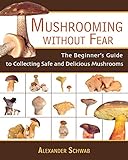
- Skyhorse Mushrooming without Fear: The Beginner's Guide to Collecting Safe and Delicious Mushrooms
Common questions answered
Should I remove every large mushroom from my yard?
No. Remove accessible fruiting bodies when children or pets might eat them, or when they are a nuisance. A lawn mushroom that is feeding on buried dead material usually does not damage the grass. Removal is a sanitation and access measure, not a cure for the underground fungus.
Does a ring of mushrooms mean my tree is dying?
Not necessarily. A ring or cluster may be using dead roots or a stump. The concern rises when fruiting bodies are attached to living wood or accompanied by decline, cavities, dead limbs, or a lean. Have an arborist assess the tree rather than relying on the pattern alone.
Can I identify a safe mushroom by cooking it?
No. Cooking is not a universal detoxification method, and the Oregon State guidance about cooked honey mushrooms is specific to a likely species and situation. Never use cooking, smell, color, or an online image as permission to eat an unknown fungus.
Will removing mushrooms save an infected tree?
No. Fruiting bodies are the visible part of a larger fungal system. If decay is present, removing caps does not restore lost wood or eliminate underground mycelium. Tree condition and site risk must be evaluated separately.
Quick Recap
Product prices and availability are accurate as of the date/time indicated and are subject to change. Any price and availability information displayed on Amazon at the time of purchase will apply.

