What’s actually slowing this PC down?
Pick the symptom - the matching free tool is one click away.
AI payments can be made with meaningful safeguards, but they are not automatically safe. The main questions are what the AI agent is allowed to do, what you must approve, how the payment is processed, and how you can report a mistake. Tokenization, authentication and fraud monitoring can reduce certain risks; they cannot ensure an agent follows your intent, stop every scam or guarantee that a disputed charge will be resolved in your favor.
What counts as an AI payment?
The term covers several different activities. An AI assistant may simply find a product and leave you to complete an ordinary checkout. A more autonomous agent may select an item and submit a payment under permissions you set. A machine may also pay another service for an API call or computing resource, sometimes in very small amounts. These cases can differ in who approves a transaction, what payment method is used, and how errors can be disputed or reversed.
As an Amazon Associate I earn from qualifying purchases.
A chatbot that answers questions about a payment is not the same thing as an agent authorized to initiate one. The Consumer Financial Protection Bureau’s 2023 report discusses customer-service chatbots in consumer finance, including privacy, security and dispute-handling concerns; it does not evaluate every autonomous payment system.
Quick wins for a faster PC:
Scan for outdated or missing drivers - takes under a minuteDriver Scan →Clear out junk files and repair common Windows errorsFree Scan →What can go wrong?
An agent misunderstands or exceeds your instructions
“Find a good replacement” may not specify a maximum price, acceptable sellers, shipping cost or whether a subscription is acceptable. An agent could act within a broad instruction while still producing a result you did not mean to authorize. Visa describes controls such as spending limits, merchant-category restrictions and approval thresholds; Mastercard says its approach is designed to give consumers control over what an agent may buy. These are design features, not proof that every product offers the controls or applies them in the same way.
#1 Best Overall

- SECURE YOUR WALLET FROM e-PICKPOCKETING: Prevent potential identity and financial theft through your contactless cards. This is the simplest and most effective prevention solution! Block RFID and NFC signals, protect your personal information, and enjoy peace of mind wherever your travels or business take you.
- JAMMING CHIP: An antenna and jamming chip makes up the main components of the card. The antenna will sense incoming radio waves and draw power for the chip to create a jamming signal. Lifetime usage as the card does not require battery.
- BROAD WORKING DISTANCE: With a 2.4” working distance, your entire wallet stays protected. The premium RFID blocking card helps secure cards within 1.2” on either side, providing reliable protection against electronic pickpocketing.
- ULTRA-THIN & COMPACT: At the size of a standard credit card and at only 0.03” thick, the card will fit into any wallet, purse or card case. Keep your wallet compact with no added bulk from this card. Best for travel, business, and everyday use.
- TEST THE CARD: Test the card is working at your local supermarket. At the self-service checkout machines, combine the card and a contactless card on the payment reader. Payment with the contactless card will be blocked and an error message should occur on the reader.
Fraud, impersonation or compromised identity
Payment systems must distinguish a legitimate agent acting for a user from a malicious agent or an impersonator. A merchant may also mistake a legitimate automated shopper for suspicious bot traffic. Visa describes the need for transparency about user, agent and seller identity. Mastercard has announced agent registration and verification, tokenization, authentication and efforts to make unfamiliar agent transactions easier to understand. Such announced measures do not guarantee that fraud will be prevented, and their availability can depend on rollout and implementation.
Sensitive information is exposed in a support chat
Financial information entered into a chatbot should be treated as sensitive. The CFPB warns that chatbots may fail to detect suspicious behavior or phishing attempts. Its 2023 report recounts a 2018 Ticketmaster UK/Inbenta incident in which malicious code recorded information entered into a payment-page conversational AI. The incident affected 9.4 million data subjects, including 60,000 individual payment card details. That is a historical example involving a payment-page chatbot, not evidence that AI payment agents as a category are currently compromised.
A chatbot does not actually open your dispute
A financial institution’s chatbot may give inaccurate information, fail to recognize that a consumer is invoking a right, or make it difficult to reach a person. The CFPB report describes a consumer who thought a chat assistant had opened a dispute, then learned in a later interaction that no dispute had been opened. A chat transcript is not confirmation that a formal case exists.
Windows Errors? Fix Them Before They Spread
Repair common Windows errors and clear accumulated junk for a smoother, more stable PC - no reinstall needed.Free scan · no reinstallCrashes, No Sound, or Screen Glitches?
Random freezes, missing sound and display glitches usually trace back to one bad driver. Find and replace yours safely.Free scan · under a minuteRank #2

- Advanced RFID secure sleeve designed to protect credit cards, money cards, identification cards from electronic fraud or theft; RFID shields are a superb debit card protector, RFID blocking to provide superior travel security.
- Made from special RFID blocking material, this credit cards holder is thin and lightweight. certified secure sleeves for credit cards protect against scanning of digital and electronic chips by thieves, tear- and water-resistant
- RFID sleeve with electronic armor is the identity theft protection for your bank cards. this credit card and ID holder prevents electronic access to your cards. valuable credit card protection, an ID card protector. RFID to block scanning and skimming
- Credit card protection sleeve designed with color coding system to find each card easily and quickly. RFID credit card holder have different colors for superior convenience. the special high quality rigid aluminum foil coating of these tiny slim RFID blocking wallets ensures you will never be a victim of high-tech crime
- Includes 12x RFID credit card protector sleeves for ultimate fraud prevention and travel safety
Fast machine transactions complicate evidence and recovery
Visa’s July 2026 report identifies open questions when agents transact at high speed or pay other agents in chains. Traditional chargeback windows and evidence processes were designed around human-speed commerce and identifiable orders; a stream of machine transactions can make the order and the responsible party harder to establish. This is an industry problem statement from a Visa-funded report, not a legal ruling that ordinary consumer protections no longer apply.
Which safeguards matter—and what they do not do
Network and payment-provider programs describe several types of controls:
- Delegated permissions: limits on amount, merchant or category, plus approval requirements for some purchases.
- Tokenized credentials: a payment token can be tied to an agent or use case, reducing the need to expose the underlying card details in every interaction.
- Identity and authentication: measures intended to identify an agent and verify that it is permitted to act.
- Fraud monitoring: checks intended to flag suspicious activity.
These controls address different parts of the risk. A token does not establish that a purchase matched your intent; authentication does not guarantee the seller will deliver what was promised; and a spending limit does not resolve who is responsible for an agent’s error. Visa’s and Mastercard’s descriptions explain their own products and plans, not independent evaluations proving that every implementation is secure.
Rank #3

- QUICK CARDS ACCESS: This minimalist wallet for men features a smooth pop-up mechanism. Just press the side button, and the cards slide out in a stepped layout for easy access.
- SLIM BODY WITH LARGE CAPACITY: Despite being slim at only 0.6 inches thick, this card wallet for men can hold 10-12 cards. The aluminum chamber holds 6-8 and the leather flap holds 4 (2 ID windows included). The money clip on the back holds 10+ bills.
- DOUBLE ID WINDOWS: KAFELLON designed the first pop up wallet on the market with 2 ID windows, based on real user needs. It's perfect for holding your ID and driver's license for quick access and quick view.
- RFID BLOCKING: This rfid blocking wallet features a built-in RFID-blocking layer that blocks unauthorized scans, protecting your finances and personal information.
- PERFECT GIFT IDEA: This money clip wallet combines a modern design with great practicality and comes with an elegant gift box. It's the perfect gift for men on Christmas, Valentine’s Day, Father’s Day, and other special occasions.
How to reduce risk before an agent pays
- Set narrow permissions. Specify the task, a maximum amount, allowed sellers or categories, and which actions require your approval. Check how to change or revoke permissions and how quickly those changes take effect.
- Inspect the final order. Before authorizing, verify the merchant, item, total, currency, shipping terms, and whether the charge recurs or starts a subscription.
- Use a clearly identified payment flow. Prefer tokenized credentials when available, while treating tokenization as a way to limit credential exposure—not as a substitute for reviewing the authorization.
- Keep account access and records. Enable transaction alerts and retain your instructions, what the agent showed before checkout, your approval, and the receipt or transaction ID. Keep access to your bank, card issuer or wallet independent of the AI conversation.
These are general risk-reduction steps, not a tested ranking of products. The available material does not establish comparative security outcomes or incident rates across AI payment services.
How do agent-assisted checkout, network programs and machine micropayments differ?
| Approach | What is described | What to check |
|---|---|---|
| Agent-assisted card or ordinary e-commerce checkout | Visa says consumer-scale purchases can use established card rails. Network programs describe tokenization, agent identification, authorization, fraud monitoring and permission controls. | Does each charge require your approval? Can you set amount or merchant limits? How is the agent identified, and what dispute process applies to the card? |
| Agent Pay-style network framework | Mastercard has announced trusted-agent registration and verification, tokenization, consumer controls, authentication and support for disputes involving unfamiliar transactions. | Is the program available to you and the merchant? How do you opt in or revoke access? How will an agent-originated charge appear in a dispute? |
| Machine-native micropayments | Visa’s July 2026 report discusses x402 and the Machine Payments Protocol (MPP) for frequent, small machine payments. It argues fixed card fees can make sub-dollar payments uneconomic and says card and stablecoin rails may coexist. | Can the payment be reversed? What wallet or asset protections apply? What are the fees, authorization limits, identity checks and dispute options—and who can recover funds? |
Visa and Artemis reported roughly $15.0 million in adjusted x402 volume across 109.6 million transactions since its May 2025 launch, based on Artemis Analytics onchain data through April 21, 2026 and excluding identified wash and test activity. For MPP, the report put activity in its first few weeks after a mid-March 2026 launch at about $25,000 across roughly 115,000 transactions, using data through April 21, 2026. Those figures describe early network activity, not consumer safety or adoption rates.
There is no neutral, apples-to-apples comparison here of loss rates or security performance across these approaches. A company’s description of a protocol or control is not enough to establish which approach is safest for a particular user.
Rank #4
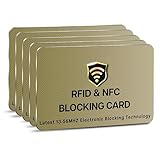
- SECURE YOUR WALLET FROM e-PICKPOCKETING: Prevent potential identity and financial theft through your contactless cards. This is the simplest and most effective prevention solution! Block RFID and NFC signals, protect your personal information, and enjoy peace of mind wherever your travels or business take you.
- JAMMING CHIP: An antenna and jamming chip makes up the main components of the card. The antenna will sense incoming radio waves and draw power for the chip to create a jamming signal. Lifetime usage as the card does not require battery.
- BROAD WORKING DISTANCE: With a 2.4” working distance, your entire wallet stays protected. The premium RFID blocking card helps secure cards within 1.2” on either side, providing reliable protection against electronic pickpocketing.
- ULTRA-THIN & COMPACT: At the size of a standard credit card and at only 0.03” thick, the card will fit into any wallet, purse or card case. Keep your wallet compact with no added bulk from this card. Best for travel, business, and everyday use.
- TEST THE CARD: Test the card is working at your local supermarket. At the self-service checkout machines, combine the card and a contactless card on the payment reader. Payment with the contactless card will be blocked and an error message should occur on the reader.
What to do if a transaction looks wrong
- Contact the payment provider through an official channel. Use the number on your card or the provider’s official app or site—not a link in a suspicious message. Tell the bank, credit union, card issuer or payment provider that you are reporting an unauthorized transaction or disputing an error. Ask for a case number and the applicable deadline.
- Write down the facts and preserve evidence. Record the date, amount, merchant descriptor, payment method, agent or platform involved, and the permission or approval you remember giving. Save receipts, screenshots and relevant messages.
- Ask about account protection. Find out whether exposed credentials should be frozen or replaced and whether further charges need monitoring. The right steps vary by payment method; credential replacement is not a universal fix.
- Confirm the case exists and track it. If you used a chatbot, confirm separately through the provider’s official dispute process that the dispute was registered. Follow any written-confirmation instructions and track investigation status and any provisional credit.
How do I get my money back after an unauthorized U.S. bank-account transfer?
The CFPB’s guidance on electronic fund transfers (EFTs) says to notify your bank promptly, generally no later than 60 days after the statement showing the unauthorized withdrawal. For a lost or stolen debit card, telling the bank within two business days can limit liability under the conditions described by the CFPB. These rules are fact-specific.
For an unauthorized EFT, a bank or credit union generally has 10 business days to investigate, or 20 business days for an account open less than 30 days. If it cannot finish on time, it generally must provide temporary credit, subject to exceptions and required confirmation. The usual resolution period is 45 days; specified cases may take up to 90 days. Contact the provider promptly rather than waiting to decide which deadline applies.
Do these 3 things before closing this tab:
1Scan for outdated or missing drivers - takes under a minute2Clear out junk files and repair common Windows errors3Fix the driver behind crashes, sound loss and screen glitchesThose timelines concern U.S. EFT guidance. Do not automatically apply them to credit-card disputes, crypto assets, commercial payments or transactions outside the United States; the payment rail and jurisdiction matter.
Best Value

- RFID Protection: An electromagnetically opaque layer helps block unauthorized scans, protecting credit card, debit card, and passport information from nearby readers; This RFID blocking card helps prevent digital skimming by shielding your wallet from electronic theft
- Threats Stay Outside: Digital pickpockets use hidden readers to skim contactless cards in crowds, transit and checkout lines; This credit card protector works as an RFID blocker the moment it's placed in your purse or wallet, stopping electronic theft before it occurs
- Invisible Yet Active: Ultra-thin and sized to fit any wallet slot, this rfid blocking card adds no bulk; Invisible protection helps shield your debit cards and IDs from electronic skimming without changing the way you carry your wallet
- One Card Protects All: Forget slipping every card into a separate RFID sleeve, just one RFID blocking card protects every contactless card, passport, and license all at once; Carry it in a purse, travel pouch or cardholder and stay shielded at airports, transit hubs and during daily commutes
- Drop and Defend: Keep the RFID blocking card in your wallet or travel bag, or save it as a backup; Simply insert it alongside your credit and debit cards for immediate protection against identity theft — no charging, no setup
What the available figures can—and cannot—tell you
Visa’s Trust Index figures, reported by its Chief Product and Strategy Officer Jack Forestell on September 9, 2026, say 72% of U.S. consumers had used an AI assistant to discover products and 23% trusted GenAI to handle payment transactions on their behalf. The reported trust figure rose to 61% when Visa was securing the transaction. These are Visa-attributed survey figures; the published text does not expose the survey methodology, so they should not be treated as independent or universal measures of trust or safety.
Forestell also posed the question, “The real question is, will we, consumers, be ready?” It reflects Visa’s perspective on adoption, not a regulator’s assessment of payment risk. More broadly, the material does not settle liability when an agent makes a mistaken or malicious payment across the user, agent platform, model provider, payment provider, issuer and merchant. The outcome depends on the actual payment method, product terms, facts and applicable law.
Quick Recap
Product prices and availability are accurate as of the date/time indicated and are subject to change. Any price and availability information displayed on Amazon at the time of purchase will apply.




