Freedom251 › Software Composition Analysis Software
OSS Review Toolkit
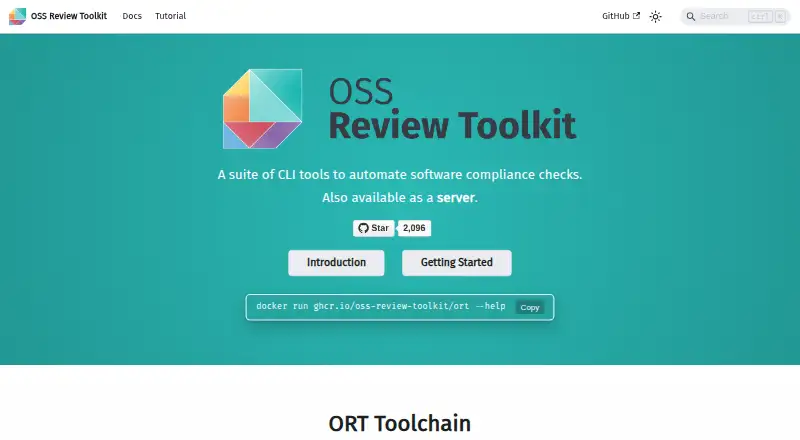
What OSS Review Toolkit is
OSS Review Toolkit (ORT) is an open-source toolkit for managing software dependencies and automating FOSS policy checks. It can analyze dependencies, download source code, scan for license and copyright findings, retrieve security advisories, evaluate policies, report results, and send notifications. Its risk-based policy-as-code checks address licensing, security vulnerabilities, InnerSource, and engineering standards. ORT generates CycloneDX and SPDX SBOMs and custom FOSS attribution documents, with report formats that include static HTML, Web App reports, and NOTICE files. The analyzer supports many ecosystems, including Gradle, Maven, NPM, Cargo, Composer, PIP, Poetry, and NuGet. Configured vulnerability information providers can include OSV, VulnerableCode, OSS Index, and Black Duck. Teams can use ORT as a library, through the command line, or with CI integrations. It runs on Linux, macOS, and Windows and supports self-hosting. Installation options include Docker images, a GitHub releases binary, or a source build. For release 13.0.0, the full Docker image is approximately 7 GB and the minimal image approximately 3 GB. The PIP analyzer may execute setup.py files when configured to resolve dependencies, a potential security risk noted in the documentation.
Who it suits
It suits teams that need dependency analysis, FOSS policy checks, SBOM generation, and integration into CI workflows. It can be used by teams able to install or build the toolkit and configure its analyzers and providers.
What it does well
- Generates CycloneDX and SPDX SBOMs
- Checks licensing, vulnerabilities, and engineering standards
- Works as a library, CLI, or CI integration
- Supports Linux, macOS, Windows, and self-hosting
- Open-source toolkit listed as free
What to know first
- Release 13.0.0 Docker images are approximately 3–7 GB
- PIP setup.py execution can pose a security risk
Plans
| Plan | Billed and limits | Price |
|---|---|---|
| OSS Review Toolkit | Open-source toolkit; no paid limits stated | Free |
As oss-review-toolkit.org lists them, read 4 Oct 2026. The maker's own page has the final word.
Getting started
- Visit the OSS Review Toolkit website.
- Choose Linux, macOS, Windows, or a self-hosted deployment.
- Install using Docker images, the binary distribution from GitHub releases, or a build from source.
- Use ORT as a library, through its command-line interface, or via CI integrations.
- Configure the package ecosystem analyzers and vulnerability information providers you need.
OSS Review Toolkit (ORT) is a free, open-source toolkit for governing software dependencies, from analysis and advisory retrieval through policy decisions and compliance reporting. It best suits organizations prepared to self-host and maintain policy-as-code workflows across numerous package managers. Its breadth and deployment flexibility are compelling, but the large container footprint and a documented PIP configuration risk make operational discipline essential.
Overview
ORT covers the dependency-governance chain rather than acting as only a vulnerability viewer. Its tools analyze projects, download source code, identify license and copyright findings, retrieve security advisories, evaluate policies, generate reports, and send notifications. You can use the toolkit as a library, through its command-line interface, or in CI integrations, allowing teams to place checks inside existing build and release processes.
The self-hosted, open-source model gives organizations control over deployment and rule definitions. It also means they must operate the infrastructure and configure the workflow themselves; readers seeking a managed scanner should look elsewhere.
Key features
Policy, licensing, and attribution
Risk-based policy-as-code checks can address licenses, security vulnerabilities, InnerSource requirements, and engineering standards. That combination is useful when legal, security, and engineering gates need one policy framework instead of separate review systems. ORT can produce CycloneDX and SPDX SBOMs, custom FOSS attribution documentation, NOTICE files, static HTML, and Web App reports, giving compliance teams several distribution formats.
Ecosystem and advisory coverage
The analyzer supports a notably wide range of ecosystems, including Gradle, Maven, NPM, PNPM, Yarn, Cargo, Composer, PIP, Poetry, NuGet, Bazel, Conan, Go Modules, Swift Package Manager, and others. Its advisor can retrieve vulnerability data from configured providers such as OSV, VulnerableCode, OSS Index, and Black Duck. Coverage is strongest for teams with mixed-language estates; smaller projects using one ecosystem may not need this breadth.
Deployment and security considerations
ORT is distributed as Docker images, a binary from GitHub releases, or a source build. For release 13.0.0, the full Docker image is approximately 7 GB and the minimal image approximately 3 GB. Those sizes can affect storage, transfer time, and CI setup, particularly in constrained environments. The PIP analyzer may execute setup.py files when configured to resolve dependencies, and the project flags that behavior as a potential security risk; teams should review this setting before enabling it.
Pricing
| Plan | Price | What it includes |
|---|---|---|
| OSS Review Toolkit | free | Open-source toolkit; no paid limits stated |
There is no paid tier or free trial. The free plan is the complete open-source toolkit, including its analyzers, advisors, reporters, and self-hosted deployment options. It fits teams willing to supply their own infrastructure and operational support; organizations wanting vendor-managed hosting or a packaged service should budget for another product.
Platforms
ORT supports Linux, Windows, and macOS, and is available for self-hosted deployment. The project says its core development team continuously uses all three operating systems and considers them well supported. Docker, binary, and source installation routes let teams align installation with their existing build environment.
Who it's for
ORT is a strong match for security, legal, and platform teams governing dependencies across many languages and requiring repeatable policy decisions, SBOMs, and attribution output. It also suits engineering organizations that want library, CLI, and CI integration choices. It is less suitable for buyers who need a hosted interface, minimal infrastructure work, or a small, narrowly scoped dependency-monitoring tool.
Pros and cons
Pros
- Broad governance coverage: Analysis, source retrieval, license and copyright scanning, advisories, policy evaluation, reporting, and notifications span the full workflow.
- Large ecosystem reach: Support for mainstream and specialist package managers helps mixed-technology organizations standardize controls.
- Flexible outputs: CycloneDX, SPDX, attribution documents, NOTICE files, static HTML, and Web App reports serve engineering and compliance audiences.
- Open deployment model: Library, CLI, CI, Docker, binary, and source options let teams fit ORT to existing infrastructure without licensing fees.
Cons
- Operational responsibility: Self-hosting and policy configuration leave maintenance and reliability with the adopting team.
- Heavy containers: Approximately 7 GB for the full image and 3 GB for the minimal image can burden CI and storage.
- PIP execution risk: Enabling setup.py execution for dependency resolution can create a security exposure and requires careful configuration.
Alternatives
Choose ActiveState Platform instead if you prefer a freemium platform with API, web, desktop, and Linux/Windows/macOS access; its free organization plan is limited to public projects.
Sonatype Nexus Repository is a better fit when you need a repository manager with a free Community Edition, CI/CD integration, and an external PostgreSQL option.
Pick DepsHub for a hosted freemium service offering unlimited public repositories, team members, and security alerts on its Open Source plan.
Endor Labs suits individual developers wanting free local scans without an account, while its developer plan omits a UI, policies, and scan history.
Choose Snyk Open Source when a hosted SCA service with a free plan capped at five projects is preferable.
Socket is an alternative for teams wanting developer-priced scanning with a minimum five-developer Team plan and defined scan and API quotas.
Updatecli is the simpler free, Apache-2.0-licensed single-binary option for dependency update automation locally or in CI.
Depfu fits users seeking hosted dependency updates, including unlimited updates for public and personal account repositories on its free plan.
Verdict
Choose OSS Review Toolkit if your organization needs one open-source, self-hosted system for multi-ecosystem dependency analysis, policy enforcement, SBOM production, and attribution reporting. Its main advantage is the depth and range of controls without a subscription fee. Look elsewhere if you need a managed service, a lighter deployment, or cannot accept the configuration and security oversight required by the PIP analyzer.
Verdict
ORT offers dependency analysis and policy automation with multiple use and deployment options. Teams configuring the PIP analyzer should account for the documented setup.py execution risk.
Questions
How much does OSS Review Toolkit cost?
The listed plan is free. The pricing model is free, and the toolkit is open source.
Is there a free plan or trial?
A free plan is available. There is no free trial.
Which operating systems does ORT support?
ORT is continuously used by its core development team on Linux, Windows, and macOS, which the project considers well supported.
Can it generate SBOMs?
Yes. It can generate CycloneDX and SPDX SBOMs.
How can ORT be installed?
It is available as Docker images, a binary distribution from GitHub releases, or a build from source.
Does the PIP analyzer have a security consideration?
When configured to resolve dependencies, the PIP analyzer can execute setup.py files. The documentation flags this as a potential security risk.
Facts from OSS Review Toolkit's own pages
- Community support
- The project links to a community Slack and provides the team contact [email protected]. · oss-review-toolkit.org, 4 Oct 2026
- Container image sizes
- For release 13.0.0, the full Docker image is approximately 7 GB and the minimal image approximately 3 GB. · oss-review-toolkit.org, 4 Oct 2026
- Installation
- ORT is available as Docker images, a binary distribution from GitHub releases, or a build from source. · oss-review-toolkit.org, 4 Oct 2026
- Package ecosystem coverage
- The analyzer supports package managers including Gradle, Maven, NPM, PNPM, Yarn, Cargo, Composer, PIP, Poetry, and NuGet. · oss-review-toolkit.org, 4 Oct 2026
- Pipeline tools
- The toolkit includes tools to analyze dependencies, download source code, scan for license and copyright findings, retrieve security advisories, evaluate policies, report results, and send notifications. · oss-review-toolkit.org, 4 Oct 2026
- Policy checks
- Its risk-based policy-as-code checks cover licensing, security vulnerabilities, InnerSource, and engineering standards. · oss-review-toolkit.org, 4 Oct 2026
- Purpose
- ORT is a FOSS policy automation toolkit for managing software dependencies. · oss-review-toolkit.org, 4 Oct 2026
- Report formats
- Reporters can produce outputs including CycloneDX BOMs, SPDX documents, static HTML, Web App reports, and NOTICE files. · oss-review-toolkit.org, 4 Oct 2026
- SBOMs and attribution
- It can generate CycloneDX and SPDX SBOMs, as well as custom FOSS attribution documentation. · oss-review-toolkit.org, 4 Oct 2026
- Security configuration caveat
- The PIP analyzer can execute setup.py files to resolve dependencies when configured to do so, and the documentation flags this as a potential security risk. · oss-review-toolkit.org, 4 Oct 2026
- Supported operating systems
- The project says ORT is continuously used by its core development team on Linux, Windows, and macOS, which it considers well supported. · oss-review-toolkit.org, 4 Oct 2026
- Usage and CI
- ORT can be used as a library, through its command-line interface, or via CI integrations. · oss-review-toolkit.org, 4 Oct 2026
- Vulnerability data integrations
- The advisor can retrieve vulnerability information from configured providers including OSV, VulnerableCode, OSS Index, and Black Duck. · oss-review-toolkit.org, 4 Oct 2026