Do these 3 things before closing this tab:
1Scan for outdated or missing drivers - takes under a minute2Repair Windows errors before they cause bigger problems3Fix the driver behind crashes, sound loss and screen glitchesShort answer: complete your available Daily Duty Quests first when you need guaranteed Kina and Abyss Points, then spend your three daily Shugo Festival Reward Keys on the mini-game in which you place most consistently. The Festival is the better fit for a predictable, few-minute progression burst; Duty Quests take an uncertain amount of time but guarantee valuable currency and can award tickets for other activities.
There is no defensible universal “rewards per minute” winner. Shugo Festival games run on a fixed schedule and last about 2.5 to 5 minutes after registration, while a Duty Quest can be quick or lengthy depending on its assigned objective. The systems reward different currencies, so the best order depends on what your character needs.


As an Amazon Associate I earn from qualifying purchases.
The practical verdict
Use both systems rather than treating them as competing checklists. Duty Quests are the foundation of a daily routine because every completed Common, Rare or Epic quest pays the same guaranteed 50,000 Kina and 1,000 Abyss Points. Their random reward slots may also provide Nightmare Dungeon tickets, Shugo Festival Reward Keys, Ascension Trial tickets, Unknown Fissure tickets, Hidden Cube keys, Odyle or Enhance Stones.
What’s actually slowing this PC down?
Pick the symptom - the matching free tool is one click away.
The Shugo Festival is the efficient add-on for short sessions. Participation costs nothing, a game takes roughly 2.5–5 minutes, and one Reward Key unlocks the post-game reward-card selection. Better placement gives you more card picks, so a player who regularly finishes near the top can convert three daily keys into several batches of progression materials.
#1 Best Overall

- 【Relive Memories with Everyday Fun】Dive into nostalgia with our retro gaming console, pre-loaded with 2000+ classic and modern titles across 9 emulators. As one of the top game consoles with built in games, it offers endless variety so you never play the same game twice.Support for 24 language settings allows you to enjoy the game in your most familiar language.
- 【Versatile Entertainment for All Ages】Our dual wireless game console is the ultimate all-in-one solution, serving as both handheld video games for adults and tv games for kids. With its portable design and seamless TV connectivity, it transforms any space into a gaming hub, making it a perfect game system for family fun.Enjoy over 2000 built-in games that cater to every generation.
- 【High-Definition&Plug-and-Play Setup】Experience crystal-clear graphics with 1080p HDMI output,turning your TV into an instant arcade with plug and play video games for tv. The included 64GB TF card ensures ample storage for all your games, while the wireless design eliminates clutter. It's a user-friendly game stick-style device that requires no downloads or complicated installations—just connect and play!
- 【Kid-Friendly&Family-Oriented Design】With 2 PCS 2.4GHz wireless controller adapters, the connection is stable,the maximum connection distance is 32.8 ft.Console encourages cooperative play with its dual-user capability. It's an ideal game console for children to enjoy educational and entertaining titles, while adults can join in for multiplayer fun. The simple interface and robust build make it a reliable choice for everyday use, promoting bonding through shared gaming sessions.
- 【Perfecet Holiday Gift for Endless Joy】Surprise your loved ones with the perfect present this holiday season! Whether for Christmas, Thanksgiving, or the New Year.it's more than a gift—it's a box of shared memories and fun, making it the most thoughtful and entertaining present for any celebration.Rediscover the joy of gaming with this versatile video game consoles which brings back childhood memories while keeping entertainment fresh daily.
- Need Kina or Abyss Points now: prioritize Duty Quests.
- Need Centuryroot Tokens or Enhance Stones: use Festival keys, especially when you can place well.
- Have only a few minutes: catch the next Festival registration window.
- Have a longer play session: finish Duty Quests, then use the Festival and any tickets they award.
How the Shugo Festival works
Hourly schedule and registration
The Festival opens every hour at :00 server time. Registration remains open for three minutes. Once registration closes, the game assigns one of 11 mini-games, and that event lasts approximately 2.5 to 5 minutes. The schedule means you cannot start whenever you want; missing the three-minute registration window means waiting for the next hourly opening.
Because the activity is scheduled, treat it as a low-friction filler between other tasks rather than as an activity to queue repeatedly. You can join when convenient, and the participation itself is free.
Reward Keys and character sharing
A Reward Key is not required to enter or play. It is spent only when you claim the reward cards after the game. Three keys refill daily, and the keys are shared across characters on the same server. Spending a key on one character therefore reduces the pool available to every other character on that server.
Plan the spending character before claiming cards. If one character is still below the level-45 reward threshold, another level-45-plus character may get more immediate value from the same key. The shared pool also makes it wasteful to spend keys impulsively on a character you are not actively progressing.
Placement determines the number of picks
After the mini-game, your placement controls how many reward cards you may select. One key pays for the entire card selection, not for each individual card. This makes performance more important than the entry cost: a high placement lets one key produce more rolls, while a poor placement still consumes the key but gives fewer choices.
Rank #2
What Shugo Festival rewards contain
Level-45-and-above card rewards
For characters at level 45 or higher, every selected card includes the following basic rewards:
| Card component | Amount | Condition |
|---|---|---|
| Centuryroot Tokens | 50 | Included on each selected card at level 45+ |
| Enhance Stones | 700 | Included on each selected card at level 45+ |
Additional rolls can add gear, Odyle, refining stones and Abyss Points. Reported level-45 reward highlights include 30–100 extra Centuryroot Tokens, 1,200 Enhance Stones and 800 Abyss Points. Those figures describe possible additional rewards, not a guaranteed package on every card, so do not budget them as fixed daily income.
Why placement matters economically
Since a single key covers the whole card selection, the marginal value of finishing higher is the extra card choice you receive without paying another key. A player who places first consistently can therefore obtain more guaranteed 50-token and 700-stone card components per key than a player who usually places near the bottom. The Festival has no published standardized expected-value table for all 11 games, so a precise average reward per key cannot be calculated from the available figures.
Spending Festival currency
The Festival Shop turns Centuryroot Tokens into longer-term progression. Buy Daevanion Crystals first, then Stigma Shards, unless your personal goal is collection or appearance. Wings, artworks and skins are reasonable later purchases for players who value cosmetics, but they generally delay the progression items that improve a developing build.
What Daily Duty Quests provide
Unlocks and daily limit
Duty Quests unlock at level 45. You may complete five per day, and that allowance is shared across characters on the same server. The shared limit means completing five quests on one character leaves no additional daily completions for your alts.
Rank #3
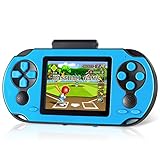
- Brand New Game Console: This handheld video games built-in 230 newly designed educational puzzle and leisure, racing, fighting, adventure games without repetition. Also comes with 3 game cartridges, each with a separate classic game. Have fun playing the game console while they work on important developmental skills such as hand-eye coordination, thinking and problem-solving skills
- Larger and Clearer Screen: 3 inch high definition display and substantially more stable, no longer prone to black screen. To ensure the portability and the comfort of playing the game. Our gameboy is not too bulky or too small, perfectly tailored for children. Warm tip: Please tear off the protective film before use
- Rechargeable Battery: Our handheld games built-in 800mAh high-capacity lithium battery, which can be charged and played at the same time. After each full charge, the game can be played for 5 hours. When you are on a business trip, travel, camping, you don't have to worry about running out of power. (Note: Please fully charge the battery before the first use
- Sturdy and Durable: The shell of this handheld game console is made of sturdy and environmentally friendly plastic. Anti-fingerprint and anti-scratch. Tested for a long time and real experience, it is strong enough to withstand daily drops
- Perfect Gift for Kids & Adults: This retro handheld game systems can definitely bring you and your children a surprise. It is perfect as a gift for birthday, Christmas, party
Guaranteed payout by quest rarity
Every Common, Rare and Epic Duty Quest guarantees the same base currencies:
Recommended Free Tools
| Quest rarity | Guaranteed Kina | Guaranteed Abyss Points |
|---|---|---|
| Common | 50,000 | 1,000 |
| Rare | 50,000 | 1,000 |
| Epic | 50,000 | 1,000 |
Completing all five available quests would therefore provide 250,000 Kina and 5,000 Abyss Points from the guaranteed portion, assuming all five are completed on the same server day. That total excludes any random-slot rewards.
Random reward slots
Duty Quests can roll additional rewards beyond the guaranteed currencies. Possible items include Nightmare Dungeon tickets, Shugo Festival Reward Keys, Ascension Trial tickets, Unknown Fissure tickets, Hidden Cube keys, Odyle and Enhance Stones. These slots create upside that cannot be expressed as a fixed daily amount: one day may produce a useful ticket, while another may provide only the guaranteed Kina and Abyss Points.
Shugo Festival versus Duty Quests: direct comparison
| Comparison point | Shugo Festival | Duty Quests |
|---|---|---|
| Availability | Opens every hour at :00 server time; three-minute registration | Available after level 45, with five completions per day |
| Time requirement | About 2.5–5 minutes for the mini-game after registration | Depends on the assigned objective; no standardized completion time is published |
| Entry cost | Participation is free; one Reward Key is spent when claiming cards | No separate entry currency is specified |
| Guaranteed currency | At level 45+, each selected card includes 50 Centuryroot Tokens and 700 Enhance Stones | Each Common, Rare or Epic quest guarantees 50,000 Kina and 1,000 Abyss Points |
| Variable rewards | Cards can add gear, Odyle, refining stones and Abyss Points; level-45 highlights include 30–100 extra tokens, 1,200 Enhance Stones and 800 Abyss Points | Random slots can add dungeon, trial, fissure or event tickets, Hidden Cube keys, Odyle or Enhance Stones |
| Performance effect | Higher placement unlocks more card picks for the same key | Quest rarity does not change the guaranteed Kina or Abyss Point amount |
| Server sharing | Three daily Reward Keys are shared across characters | Five daily Duty Quest completions are shared across characters |
| Best use | Short progression bursts and Festival Shop currency | Reliable Kina and Abyss Points, plus chances at tickets |
Which activity is better per minute?
A numerical answer would be misleading because the inputs are not standardized. Festival time is bounded at roughly 2.5–5 minutes once you register, but the value depends on placement and the number of cards that placement allows. Duty Quest time varies with the objective, and the guaranteed reward is expressed in Kina and Abyss Points rather than Centuryroot Tokens or Enhance Stones.
When Duty Quests win
Choose Duty Quests first when your immediate bottleneck is money or Abyss Points. Five completions provide a known 250,000 Kina and 5,000 Abyss Points from the base rewards, regardless of whether the quests are Common, Rare or Epic. A random ticket can also unlock content whose value exceeds the quest’s direct currency payout, although no fixed chance or average value is established.
Quick wins for a faster PC:
Fix the driver behind crashes, sound loss and screen glitchesFind Drivers →Clear out junk files and repair common Windows errorsFree Scan →When the Festival wins
Choose the Festival when you have a short, predictable window and want progression materials rather than Kina. At level 45+, every selected card contributes Centuryroot Tokens and Enhance Stones, and strong placement increases the number of cards obtained per key. This is particularly attractive when you can reliably finish high in a specific mini-game.
Why the systems complement each other
The currencies serve different purposes. Duty Quests fund general spending and Abyss Point progression, while Festival cards feed the Festival Shop and enhancement stockpile. A Duty Quest can even award another Festival Reward Key, linking the two systems instead of making them mutually exclusive. The practical question is not which activity is universally superior, but which guaranteed currency and which opportunity cost matter to your current build.
How to identify your best Festival mini-game
No complete expected-value table for all 11 mini-games is available, so select the game using your own placement history rather than a claimed universal ranking.
- Record the game and placement. After each Festival, note which mini-game appeared and where you finished.
- Separate familiarity from luck. A game you understand may produce steadier placements even if another game occasionally offers a higher finish.
- Compare repeated results. Look for the mini-game in which you most often reach the placement tier that grants additional card picks.
- Spend keys on that game when possible. If the hourly schedule presents your strongest game, use a key after the match rather than saving it indefinitely.
- Reassess after practice. Your best choice can change as you learn movement, timing or scoring in another mini-game.
This method measures your key efficiency without pretending that every player receives the same result. It also avoids wasting keys on a game where you routinely place too low to obtain many card selections.
A daily routine that protects your rewards
- Check level requirements. Duty Quests and the enhanced Festival card package require level 45. If you are below that threshold, do not plan your economy around the level-45 figures.
- Claim the five Duty Quests. Complete the available objectives while you are already traveling, grouping or running other content. Confirm that the server-wide daily allowance has not been used by another character.
- Review the random slots. Use any dungeon, trial, fissure or Hidden Cube tickets according to your broader schedule; do not assume the ticket appears every day.
- Watch the hourly clock. Join a Festival registration before the three-minute window closes. Participation costs nothing, so there is no reason to skip a convenient match merely to preserve keys.
- Choose your strongest mini-game. Use a key only when claiming the cards, and direct the shared server pool to the character that benefits most.
- Spend up to three daily keys. Three keys refill daily. Keep the bank below its cap so a future refill is not lost, while remembering that all characters on the server draw from the same pool.
- Buy progression items first. Convert Festival Tokens into Daevanion Crystals, then Stigma Shards, before cosmetic items unless appearance or collection is your explicit priority.
Pitfalls that reduce your return
Confusing free entry with free rewards
You can play without a key, but the key is required to claim the post-game cards. A player who joins games but never claims cards is spending time without receiving the Festival’s progression package. Conversely, spending a key on every match without considering placement can give less value than saving it for a game in which you perform well.
Best Value

- [ Kids Handheld Game Console Built-in 400 Retro Games ] - This handheld gaming console is pre-installed 400 nostalgic 8-bit games such as puzzles, arcades, shooting, racing, fighting and adventure games. Kids are able to cultivate skills such as hand-eye coordination, thinking, and problem-solving while playing these games.
- [ Rechargeable and Long Battery Life ] - This video game console is equipped with an 800mAh rechargeable battery, which supports up to 5 hours of continuous playing. And 1-2 hours for fully charged. No more worring about replacing batteries while electricity runs out. Remember to charge it when you receive the package.
- [ Portable and Travel-friendly ] - This mini handheld video game console is carfted with 2.8" color screen and compact size, which makes it portable to be in your pocket, handbag. Keep you entertained when outdoor in airplanes, camps, journey or travelling......
- [ Support TV Output ] - This handheld game console supports TV output, there is an AV cable in package, you are able to connect this gaming console to TV and enjoy hours of fun
- [ Perfect Gift for Gamers of All Ages ] - If you are looking for unique gift for kids, this mini handheld game console is a good option, for birthdays, Christmas or other special occasion, offering endless fun and entertainment wherever kids go.
Letting shared allowances hide on another character
Both systems use server-wide sharing: Festival keys are shared across characters, and the five Duty Quest completions are shared as well. Check which character has already consumed the allowance before assuming an alt has a fresh set of attempts.
Missing the registration window
The three-minute registration period is separate from the mini-game itself. Arriving after it closes means waiting for the next hourly opening, so align the Festival with a known break in your play session.
Budgeting possible drops as guaranteed income
Extra Festival rolls and Duty Quest random slots are opportunities, not fixed payouts. Build your daily plan around the guaranteed card components and Duty Quest currencies, then treat tickets, gear, Odyle, refining stones and bonus Abyss Points as upside.
The Tool Desk
Outbyte Driver Updater FREEScan for outdated or missing drivers - takes under a minuteDriver Scan →Outbyte PC Repair FREEClear out junk files and repair common Windows errorsFree Scan →Buying cosmetics before progression materials
Wings, artworks and skins can be worthwhile for collectors, but buying them first delays Daevanion Crystals and Stigma Shards. Decide whether your current goal is power progression or collection before converting Tokens.
Decision guide by player situation
| Your priority | First action | Reason |
|---|---|---|
| Reliable Kina for upgrades or purchases | Complete Duty Quests | Each quest guarantees 50,000 Kina |
| More Abyss Points | Complete Duty Quests, then use Festival cards | Duty Quests guarantee 1,000 points each; Festival cards can add points through variable rolls |
| Daevanion progression | Play Festival and buy Daevanion Crystals first | Centuryroot Tokens are the Festival Shop currency |
| Stigma progression | Play Festival after securing daily Duty Quest rewards | Stigma Shards are the second Festival Shop priority |
| Very limited playtime | Join the next convenient Festival, then claim cards with a key | The mini-game takes about 2.5–5 minutes after registration |
| Long session with flexible objectives | Finish Duty Quests, use any tickets, then attend Festival games | This sequence captures guaranteed currency and chance-based extras before the hourly event |
| Strong at one particular mini-game | Reserve keys for that game when it appears | Higher placement unlocks more picks per key |
What is and is not known about reward efficiency
The available figures establish the guaranteed payouts and the Festival’s timing, but they do not establish a universal reward-per-minute ratio. There is no standardized completion-time dataset for every Duty Quest objective and no complete expected-value table covering every Festival mini-game and placement. Any guide that names one activity as the absolute winner without measuring those variables is overstating the evidence.
You can still make a disciplined decision: value Duty Quests by the guaranteed 50,000 Kina and 1,000 Abyss Points per completion plus any ticket, and value Festival runs by the number of cards your placement earns multiplied by their guaranteed 50-token and 700-stone components, with variable drops treated separately. Tracking your own completion times and placements will produce a more useful personal rate than a single server-wide claim.
Bottom line for your daily schedule
At level 45 and above, complete the five Duty Quests whenever you need their guaranteed Kina and Abyss Points, then attend the Shugo Festival when its hourly window fits your session. Spend the three daily shared Reward Keys on the mini-game in which you place highest, keep the key bank from reaching its cap, and direct Festival Tokens to Daevanion Crystals followed by Stigma Shards. This routine captures reliable currency first, uses short Festival sessions efficiently, and leaves room for the random tickets and bonus materials that make both systems more valuable.
Free tools Windows power users keep installed
One-click scans. No signup required.
Quick Recap
Product prices and availability are accurate as of the date/time indicated and are subject to change. Any price and availability information displayed on Amazon at the time of purchase will apply.

