What’s actually slowing this PC down?
Pick the symptom - the matching free tool is one click away.
Cheaper AI translation does not make a dependable translation system cheap—or make its design optional. The model is only one component. Language coverage, terminology, document context, evaluation, review, and the cost of operating the workflow determine whether a translation is usable. The right architecture depends on the language pair, content, and consequences of an error; there is no universal winner between large language models (LLMs) and neural machine translation (NMT).
What changed when translation got cheaper?
Lower model or token charges can make it practical to translate more content, experiment with more languages, or provide drafts sooner. But those charges are not the total cost of a translation operation. Microsoft’s localization guidance advises accounting for operational and personnel costs as well as model costs. Data preparation, integration, terminology management, evaluation, correction, and expert review can all matter to the final bill.
As an Amazon Associate I earn from qualifying purchases.
The architecture question is therefore not simply which model has the lowest price per request. It is how to route each job to a system that meets the required quality, speed, and coverage—and how to detect and correct failures before translated content reaches its audience.
Free tools Windows power users keep installed
One-click scans. No signup required.
What does translation architecture include?
A translation system is the set of components and decisions around translation, not just the model that generates target-language text. A practical system may include:
#1 Best Overall

- Real-Time 160+-Language Translation Instant two-waytranslation between Mexican Spanish & English with 0.5s lowlatency, perfect for restaurant, retail, hotel and dailycommunication.Breaks language barriers at work and lifeseamlessly.
- As a portable Bluetooth omnidirectional microphone, it can connect to mobile phones, tablets, computers, etc. via Bluetooth for audio calls, essentially functioning as an external microphone and speaker for smart devices. After connecting to a mobile phone or tablet via Bluetooth, open the App for real-time bilingual practice.
- Al Language Tutor & Accent Adaptation Built-inAl speaking partner with native pronunciation correction.Supports Mexican Spanish slang and regional accents, helpingyou improve English/Spanish fluency for better careerdevelopment.
- Wearable & Hands-Free Design Lightweight wearable bodyfree your hands for work.Stable Bluetooth connection,longbattery life, ideal for long-hour service jobs and on-the-godaily use.
- Universal Communication Bridge Not only for Spanishspeakers to communicate with Americans, but also for Englishusers to talk with Hispanic colleagues and customers. A must-have tool for cross-cultural workplace and daily life.
- Content preparation: identify language, split or preserve document structure, and provide relevant context.
- Translation engines: choose an NMT system, an LLM, or a combination according to the job.
- Terminology and adaptation: supply approved terms, domain guidance, or language-variant requirements where the system supports them.
- Evaluation and quality controls: test whether meaning is preserved, terminology is correct, and the result reads naturally.
- Human review and correction: assign expert attention where errors carry meaningful risk.
- User controls: let people provide useful context, understand what the output does and does not establish, and correct or adapt it.
- Operations: monitor latency, throughput, cost, language performance, and changes after model updates.
These pieces are coupled. For example, expanding language coverage may require different models or data; that affects routing and evaluation. A model that produces fluent text may still need stronger adequacy checks if it can add material absent from the source.
When does NMT fit better, and when might an LLM help?
Microsoft’s guidance describes NMT as purpose-built for translation. Depending on the implementation, it can be tuned for a domain, connected to terminology resources, and optimized for language variants. LLMs can make use of explicit document context and often produce natural-sounding text; they can also support tasks beyond translation. These are general tradeoffs, not guarantees for every system or language pair.
Microsoft also flags that LLM translation can be slower and more costly, particularly for low-resource languages. Conversely, an NMT system may be less suitable when the task depends on broader context or other language work. The useful comparison is between actual candidate systems on your own content—not between model labels in the abstract.
Rank #2

- 【5.5" IPS Touch Screen】Voice translator configured with 5.5" IPS touch screen, high visualisation, just 3 buttons, easy to operate. The extra-large screen brings you a very convenient experience, and our translator comes with a lanyard and a protective case, so you don’t have to worry about dropping or losing it.
- 【150 Languages Online Translation】Our language translator device supports more than 150 online voice translations with an accuracy rate of up to 98%. Whether you're traveling for business or pleasure, this portable translate device will ensure smooth communication in foreign languages. Enjoy instant voice translation, with clear playback, 100% subscription-free.
- 【Offline Translation Support 21 Languages】Mandarin, Taiwanese, English (US), Japanese, Korean, German, Spanish, Russian, French, Thai, Arabic (Saudi Arabia), Italian, Portuguese, Dutch, Hindi (India), Indonesian, Vietnamese, Cantonese, Cantonese (Simplified), Turkish, Farsi. No need to worry about no signal in remote areas.
- 【Powerful Photo Translation Function】The translator devices are built-in 5MP camera supports image and text translation in 75 languages online and 41 languages offline. By simplifying tasks such as reading menus, road signs, magazines, and labels in various languages, enhances the user experience.
- 【Language Translator Real-Time for Business】Language translator updated the chip, our translator device is more stable and faster. Are you worried about lagging translations during a meeting? Our real-time translations quickly translate into your language based on the speed at which you speak. Recording translation can also save the meeting content and convert it into text.
- Consider NMT when you need a translation-focused system, predictable throughput, domain adaptation, terminology integration, or language-variant controls.
- Consider an LLM when explicit document context or a broader language workflow matters and its output can be evaluated for added or altered meaning.
- Consider a hybrid when different content types or language pairs have different needs. Route work by measured quality, risk, and operating cost rather than assuming one engine should handle every request.
Microsoft recommends a stepwise transition, with systems meeting established benchmarks for each language before full implementation. Its advice is especially relevant when an organization is replacing a mature workflow: test incrementally rather than treating a promising result in one language as proof across the catalog.
Why is fluency not enough?
Translation quality has at least two distinct dimensions: adequacy, or whether the source meaning is preserved, and fluency, or whether the target text reads naturally. A polished sentence can omit a condition, shift a claim, or introduce information that was never in the source. Microsoft specifically warns that LLMs can generate text absent from the input.
The CUBBITT study illustrates why evaluation must separate these dimensions. In a 2020 context-aware English-to-Czech news evaluation, the researchers reported higher adequacy than professional-agency translation, while human translation was rated more fluent. The result concerns that study’s language pair, domain, and evaluation setup; its authors said generality across other pairs and domains remained to be evaluated. It is not a current market-wide verdict on LLMs versus NMT.
Rank #3
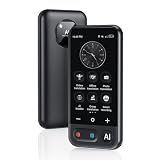
- Real Time Translation: Instantly translates between a wide range of languages, making communication effortless while traveling or in meetings. Many models also support two-way translation, this translation device is a must-have tool for breaking down language barriers and fostering genuine connections wherever you go.
- Accurate Online & Offline Translation: The translator device supports online translation of 150 languages. The voice translation device is based on the super combination of four engines. The professional neural network translation matrix is only for more accurate translation. In addition, the instant translator device also supports 16 offline languages, and offline translation packages need to be downloaded in advance.
- Image Translation and Bluetooth Function: The voice translation device has an 8 megapixel camera, supports photo translation in 75/41 languages. The comprehensive touch screen 3D arc design makes the operation more comfortable. This image translation can help you read menus/road signs/magazines/labels in different languages.
- ChatGPT+Group Discussion: This real time translation device is equipped with the most popular AI voice+ChatGPT large-scale model language processing technology, supporting the creation of personalized ChatGPT characters and providing rich and practical intelligent voice services and interactions.
- Advanced Loudspeaker & Dual Microphone: the portable language translator device has a high fidelity loudspeaker, which makes the external amplification effect more fidelity and clearer. The Ai translator has professional dual microphone intelligent noise reduction pickup. The recording function of translator can realize long-distance speech recognition up to 2 meters in noisy environments.
For consequential content, review should look beyond an aggregate score. Check for omissions, additions, meaning shifts, terminology errors, and the required language variant. The evaluation protocol matters too: Google Research’s 2024 study found that professional-translator assessments could produce system rankings different from crowd-worker rankings. Evaluators should have expertise appropriate to the content and language.
How should a team choose an architecture?
- Define the job. Separate content by domain, language pair, audience, format, and risk. A support article, a casual internal note, and a safety instruction do not necessarily need the same quality controls.
- Set acceptance criteria. Specify what counts as preserved meaning, acceptable fluency, correct terminology, and correct language variant. Decide which errors require rejection or escalation.
- Build a representative test set. Include real content, difficult examples, and terminology. Evaluate each candidate system for the language and product context in which it will be used.
- Compare complete operating costs. Include inference, integration, maintenance, evaluation, personnel, and correction—not just per-token or per-request charges. Compare throughput and latency as well as quality.
- Route by evidence and risk. Use automated translation where it meets the acceptance criteria; send uncertain or high-consequence material for expert review. Keep a way to inspect, correct, and escalate output.
- Re-test changes. Re-run language-specific evaluations after model or workflow updates. Microsoft cautions that newer model versions can degrade performance for some languages.
This process also prevents a common failure: selecting a system because it performs well on a broad benchmark, then assuming it will handle a specialized domain, a less-resourced language, or a different language variant equally well.
Independent reader supportYour contribution helps us test, update, and keep practical guides available for everyone.What do low-resource language projects show?
Language coverage is an architecture and data problem as well as a model problem. Meta’s 2022 No Language Left Behind (NLLB) work reported evaluation over more than 40,000 translation directions using FLORES-200 and toxicity evaluation, and a 44% BLEU improvement relative to its previous state-of-the-art baseline. Those are project-reported results within the stated evaluation context, not a guarantee of quality for every direction or use case.
Rank #4

- Support Workplace Communication: Designed for everyday conversations in restaurants, hotels, retail stores, and other service environments. Help English and Spanish speakers communicate more smoothly during customer service, teamwork, and daily interactions
- 165 Language App Support: No subscription fee required, Connect the device with the companion app to access 165 listed languages and translation features. Useful for Spanish speakers learning English, English speakers communicating with Spanish-speaking coworkers, and multilingual conversations
- Practice English Spanish Conversations: Built-in microphone and speaker support listening and speaking practice through app-based exercises. Review vocabulary, common phrases, and real-life scenarios for workplace and daily communication
- Lightweight Clip-On Design: Weighing only 1.31 oz with a compact 2.76 × 2.72 × 0.91 inch design, this wearable translator can be clipped to clothing or carried with the included lanyard for hands-free convenience
- Bluetooth Connection USB-C Charging: Connect with compatible smartphones or tablets via Bluetooth up to 32.8 ft. The built-in 600 mAh rechargeable battery supports up to 8 hours of audio playback for work, study, and everyday use
Meta’s 2026 Omnilingual MT project describes support for more than 1,600 languages and reports results from both decoder-only and encoder-decoder designs. It also describes retrieval-augmented translation and use of non-parallel data. The project reports that its specialized 1B-to-8B-parameter models matched or exceeded a 70B LLM baseline on its MT evaluations. These figures describe that project’s methods and evaluations; they do not establish a universal model-size rule or performance level for other systems.
Together, these efforts show why language coverage cannot be reduced to choosing a larger general-purpose model. Training data, architecture, adaptation, and evaluation all shape what a system can do, especially where parallel translation data is limited.
What should users be able to do?
A dependable system should help people provide useful inputs and assess outputs, not just display a translated string. Google Research identifies three design directions for human-centered machine translation: helping users craft good inputs, helping them understand translations, and expanding interactivity and adaptivity.
In practice, this means making relevant context and terminology easy to provide, clarifying when output is automated, and offering a correction or review path. These controls help users judge when the translation is appropriate to rely on and when it needs another person’s attention.
Quick Recap
What evidence should not be overgeneralized?
- A favorable result for one language pair or domain does not establish quality for other pairs or content types.
- Natural-sounding wording does not prove that the source meaning was preserved.
- Lower inference charges do not prove lower total operating costs.
- A language-count claim or benchmark improvement from a research project does not guarantee a particular result for an individual user.
- A model update can change performance; previously passing evaluations should not be treated as permanent proof.
Product prices and availability are accurate as of the date/time indicated and are subject to change. Any price and availability information displayed on Amazon at the time of purchase will apply.




