To set up a live stream with Wowza Streaming Engine, sign in to Streaming Engine Manager, create or select a live application, configure your encoder with that application’s connection details and any required source credentials, then verify the incoming stream in Manager and test playback. The exact server address, protocol, application name, stream name and firewall rules depend on your installation and network.
What Manager does—and what you need first
Wowza Streaming Engine Manager is the browser interface for managing the Streaming Engine server, its applications and its status. A live source—such as a software encoder, camera or other encoder—publishes to an application on the server. The server can then deliver the stream to a player or, in a different architecture, to other servers or HTTP caching infrastructure.
| # | Preview | Product | Price | |
|---|---|---|---|---|
| 1 |
|
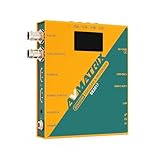
AVMATRIX SE2017 HDMI SDI Video Streaming Encoder and Recorder RTMP RTSP UDP HTTP SRT with USB... | $439.00 | Buy on Amazon |
As an Amazon Associate I earn from qualifying purchases.
Before configuring a stream, install a supported Streaming Engine version, confirm the system requirements and licensing for your situation, and arrange network access for the protocols you intend to use. Wowza’s installation guide includes version 4.12.0 installer examples and was updated July 24, 2026; check Wowza’s current documentation for supported versions and licensing before downloading.
Do these 3 things before closing this tab:
1Fix the driver behind crashes, sound loss and screen glitches2Clear out junk files and repair common Windows errors3Scan for outdated or missing drivers - takes under a minuteSign in to Streaming Engine Manager
- Confirm the server is responding. From a machine that can reach the server, check
http://[wowza-ip-address]:1935/ServerVersion. Replace the bracketed text with the server’s address. - Open Manager. Go to
http://[wowza-ip-address]:8088/enginemanagerand sign in using the administrator username and password created during installation. - Account for remote access. Manager connections default to localhost. Accessing it from another machine is a separate network and access-configuration task; a public IP address alone does not enable safe remote administration. Configure access for your deployment and protect the administrative interface.
The Server tab contains server and virtual-host settings. The Applications tab is where you work with live and VOD applications. Manager’s home page also provides connection counts, resource usage and application connection settings.
#1 Best Overall
- Record, stream and capture multi-function three-in-one
- HDMI and SDI inputs and loopout
- Line audio input embedded(Does not support MIC input)
- Encoding bit rate up to 32Mbps
- USB/SD card recording, MP4 and TS file format, up to 1080P60
Choose the live application architecture
An application is the server-side destination to which an encoder publishes. Choose the architecture based on where streams originate and where they need to go; the application types are not interchangeable labels for the same setup.
| Application type | Use it when |
|---|---|
| Live Single server | A single Streaming Engine server will receive a live source and deliver the stream directly to players. This is the simplest direct-delivery case. |
| Live Origin | The server will act as an origin and deliver streams to other Wowza servers. |
| Live Edge | The server will ingest streams from an origin as part of an origin-and-edge distribution setup. |
| Live HTTP Origin | The server will deliver live streams to HTTP caching infrastructure. |
For a first stream delivered directly from one server to players, use a Live Single server application unless your deployment calls for a different architecture. Create or select the application in the Applications area, and note its actual name: your encoder must use the matching application and connection details.
Set up source authentication
By default, RTMP- and RTSP-based encoders must provide source username and password credentials before they can publish to a live application. In Manager, go to Server > Source Authentication to create or manage the source account. Enter the matching username and password in the encoder. Wowza documents these credential values as case-sensitive, so match capitalization exactly.
Quick wins for a faster PC:
Fix the driver behind crashes, sound loss and screen glitchesFind Drivers →Repair Windows errors before they cause bigger problemsFix Now →Authentication requirements can differ with protocol and configuration. Do not assume that an encoder can publish merely because it can reach the server: check that the selected protocol, application and source credentials match your setup.
Configure an encoder or camera
A live source is an encoder or camera that publishes to Streaming Engine. OBS is one software-encoder example, not a requirement. A camera or other RTMP-capable encoder may also work if it supports the protocol and settings required by your application. Check the device or software documentation for the fields it supports.
Use the connection details for your own server and application. In the encoder, configure the relevant fields:
- Server or host: the address and protocol endpoint configured for your Streaming Engine deployment.
- Application: the live application name created or selected in Manager.
- Stream name or key: the stream identifier expected by your application and encoder configuration. Use the value for your deployment, not a tutorial example.
- Protocol: a protocol supported by both the encoder and the application configuration, with the corresponding network ports open.
- Source username and password: the matching case-sensitive credentials when required, including for RTMP- and RTSP-based encoders by default.
There is no universal production stream URL: the hostname, application, stream identifier and protocol are deployment-specific. Tutorial values—including demo stream names or trial-server addresses—are examples, not settings to copy into a production encoder.
Open only the network ports your setup needs
Streaming Engine’s default port list is a starting point, not a checklist that every installation must expose in full. The required ports depend on the protocols you use and your server configuration. Wowza’s guide lists these defaults:
| Port or range | Default use listed by Wowza |
|---|---|
| TCP 1935 | RTMP-family and related streaming traffic |
| TCP 8086–8088 | Administration |
| UDP 6970–9999 | RTP/UDP streaming |
| TCP 80 | HLS, MPEG-DASH and RTMPT |
| TCP 443 | TLS streaming such as RTMPS, HTTPS and WebRTC |
| TCP 554 | RTSP |
Wowza warns that ports cannot be shared and that relevant streaming ports must be open in the firewall. On an enterprise network, coordinate with the network administrator; on a home or office network, router port forwarding may be required. Do not open every listed port automatically: identify the protocols in use and configure the firewall, router and server accordingly. Treat remote Manager access separately from media delivery and secure it for your deployment.
Publish and verify the incoming stream
- Start the encoder. Enter the deployment-specific server, application, stream and authentication values, then start streaming. Wowza’s OBS example uses a custom server and stream key; substitute your own details rather than copying its illustrative values.
- Check ingestion in Manager. Open Applications > [your live application] > Incoming Streams. Look for your source and confirm that its status is Active.
- Test playback. Use a playback client such as VLC to connect using the playback address and protocol configured for your application. Confirm that the player receives the expected video and audio; an encoder reporting that it has started is not, by itself, proof that the server is ingesting or delivering correctly.
- Check server health if needed. Manager’s status area reports source and playback connections, CPU, Java heap, memory and disk usage. These indicators can help you distinguish an ingestion problem from a broader capacity or playback issue.
Troubleshoot common setup failures
| Symptom | What to check |
|---|---|
| Manager or the server check does not load | Confirm the server address, that Streaming Engine is running, and that the relevant administration or server-check port is reachable from your machine. Remote Manager access requires deployment-specific configuration; knowing the public IP is not enough. |
| The encoder cannot connect | Check that the server hostname or address and protocol match your deployment, and that the required port is allowed through the server firewall and any router or network firewall. |
| Authentication fails | Verify the source account in Server > Source Authentication and re-enter the matching username and password. Check capitalization: the documented values are case-sensitive. |
| The source connects but does not appear under Incoming Streams | Confirm the encoder is publishing to the exact live application name and stream identifier expected by the server. Check the encoder’s protocol and connection details against the application configuration. |
| Manager shows an active source but playback fails | Test with the playback address and protocol configured for the application, and check whether the corresponding delivery ports are open. An active incoming source confirms ingestion, not that every playback path is configured or reachable. |
| Connections work intermittently or server performance is poor | Review Manager’s connection counts and CPU, Java heap, memory and disk usage. These are diagnostic indicators, not a substitute for checking the network path and the requirements of your specific workload. |
Copyright and content checks
Before publishing, confirm you have the rights needed for the video, music and other material in the stream. The setup instructions establish how to connect a source to Streaming Engine; they do not grant content rights or determine whether a platform will accept or monetize a particular stream. Review the applicable platform rules and any licenses for your content. Do not assume that a technically successful stream is automatically cleared for distribution.
Or let it run in the cloud
Wowza is for receiving and delivering a live source you configure. If your specific goal instead is to keep a YouTube channel live by looping uploaded videos, StreamNeo is a separate YouTube-only option: upload a recording or build a playlist, add your YouTube stream key once, and go live. It does not stream a camera feed and is not a replacement for a Wowza setup that needs its own encoder, application architecture or delivery workflow.
Recommended Free Tools
- Nothing has to stay on at home: the stream runs in the cloud, so your computer can be off.
- Uploaded video streams as made, up to 4K 60fps, at one flat price per slot, with no re-encode or quality tiers.
- Automatic recovery is included if YouTube drops the stream.
- The first day is free with no card, one free day per account.
- Monthly: $9.99 per month.
See StreamNeo for details, or start the free first day.
Quick Recap
Product prices and availability are accurate as of the date/time indicated and are subject to change. Any price and availability information displayed on Amazon at the time of purchase will apply.




