What’s actually slowing this PC down?
Pick the symptom - the matching free tool is one click away.
The most useful Windows 11 navigation change depends on what is getting in your way. Use Text size when labels are too small, Display scale when the whole interface needs enlarging, Magnifier when you need temporary zoom, and pointer or cursor controls when you lose track of where you are typing or clicking. Keyboard accessibility, Voice Access, and a less crowded taskbar provide alternatives when mouse movement, key combinations, or visual scanning are difficult.
Start with the barrier, not a preset
Windows 11 does not have one “easy navigation” mode that suits everyone. A person who can read comfortably but cannot find the pointer needs a different change from someone who struggles with tiny menu text. Begin with the narrowest adjustment that solves the problem, then broaden it only if necessary.
As an Amazon Associate I earn from qualifying purchases.
| If the problem is… | Try first | What changes |
|---|---|---|
| Labels, menus, or title bars are too small | Settings > Accessibility > Text size | Text grows while the overall layout changes less. |
| Apps, icons, and controls all feel too small | Settings > System > Display > Scale | More of the interface, including images and apps, is enlarged. |
| You need to inspect one area temporarily | Magnifier | A selectable zoom view follows a pointer or cursor. |
| You lose the mouse pointer or insertion point | Mouse pointer and touch; Text cursor | Size, color, thickness, and an indicator make the active location easier to spot. |
| Key combinations or mouse actions are difficult | Keyboard accessibility or Voice Access | Commands can be entered with modified keystrokes, an on-screen keyboard, or voice. |
| The desktop is visually busy | Visual effects and Taskbar settings | Unneeded motion, transparency, notifications, and taskbar items can be reduced. |
Settings labels can move slightly between Windows updates. If a path looks different on your PC, open Settings and search for the bold feature name.
Do these 3 things before closing this tab:
1Fix the driver behind crashes, sound loss and screen glitches2Repair Windows errors before they cause bigger problems3Scan for outdated or missing drivers - takes under a minuteEnlarge text without enlarging everything
Use Text size for readable labels
Open Settings > Accessibility > Text size, move the slider until sample text is comfortable, and select Apply. This enlarges text such as title bars, menus, and icon labels. It is the least broad way to improve readability because it targets lettering instead of scaling every visual element.
#1 Best Overall

- Compact design for ultimate portability
- 4-Way touch scrolling for navigating up, down, left and right
- Works on virtually any surface with Blue Track Technology
- Wireless Bluetooth connectivity - no transceiver required
- Optimized for Windows 8 navigation
Most changes appear immediately. An older or unusually designed application may not redraw correctly until you sign out of Windows and sign back in, so save open work before doing that.
Use Display scale when the whole interface is undersized
For larger buttons, icons, app content, and images, open Settings > System > Display > Scale and choose a larger scale option. Scale affects more of the interface than Text size, which can make controls easier to hit but also leaves less content visible at once.
Think of the controls as separate steps: increase Text size first if only words are hard to read; change Scale if icons, windows, or app controls are also too small. Check the applications you use every day after either change, because some programs may need a sign-out and sign-in before every element refreshes.
Recommended Free Tools
Use Magnifier for temporary or detailed zoom
Open and control it quickly
Press Windows key + Plus (+) to open Magnifier and zoom in. Press Windows key + Minus (-) to zoom out. Magnifier can follow the mouse pointer, keyboard focus, text cursor, or Narrator cursor, so the enlarged area can move with the way you actually navigate.
Choose a view that fits the task
Cycle through the available views with Ctrl + Alt + M. Try each one while using a normal document, browser window, or settings page rather than choosing from a description alone.
Rank #2
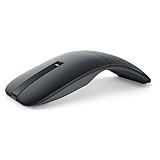
- SLIM AND LIGHT WEIGHT: Weighs only 56.9 grams so you can take the mouse wherever you go.
- SMOOTH TURNING, TWISTABLE DESIGN: Simply twist to turn off, stow, and then go.
- SEAMLESS CONNECTIVITY: Connect up to 3 devices to the mouse via Bluetooth 5.0 and easily switch between devices with the click of a button. Securely pair the mouse with your device with just one click with Dell Pair.
- ENHANCED SENSITIVITY AND PRECISION: An adjustable 4000 DPI (Dots per Inch) mouse sensitivity for a smoother, more precise control of the mouse pointer. Responsive and fast touch scrolling and quiet click buttons.
| View | How the zoom is presented | When to try it |
|---|---|---|
| Full screen | The magnified content occupies the display. | Useful when you need the largest possible view and can navigate by the moving magnified area. |
| Docked | A fixed magnified region is docked on the screen while the rest of the desktop remains visible. | Useful when you need to keep surrounding windows or context in sight. |
| Lens | A movable lens shows a magnified portion near the pointer. | Useful for inspecting a small area while keeping most of the desktop at its normal size. |
Set what Magnifier follows
Open Magnifier’s settings from Windows Accessibility options and review the follow controls. Enable only the sources you use: mouse pointer, keyboard focus, text cursor, and, when relevant, Narrator cursor. For example, a writer may prefer the text cursor to remain centered while typing, whereas a mouse user may want the lens to track pointer movement. If the view jumps somewhere unexpected, turn off the follow source that is competing with your current input method.
Magnifier is a good fit when you need enlargement for a particular task but do not want the permanent layout changes caused by Display scale. It can also complement larger Text size: keep everyday text readable, then invoke Magnifier for a map, dense dialog, or small control.
Make the pointer and text cursor easy to locate
Change pointer size and color
Open Settings > Accessibility > Mouse pointer and touch. Increase the pointer size until it remains visible against the backgrounds you normally use, then choose a color with enough contrast. A larger pointer helps with size; a contrasting color helps when the pointer blends into a window. Check both light and dark applications before settling on a choice.
Strengthen the text cursor
Open Settings > Accessibility > Text cursor. Increase cursor thickness so the insertion point does not disappear between letters, and enable the colored text-cursor indicator if you need a larger visual marker around it. Use a color that stands out from document backgrounds without obscuring the characters you are editing.
These controls address two different locations: the mouse pointer shows where a click will occur, while the text cursor shows where typed characters will be inserted. Adjust both if you switch frequently between pointing and typing.
Rank #3

- Next-gen 12,000 DPI HERO optical sensor delivers unrivaled gaming performance, accuracy and power efficiency
- Advanced LIGHTSPEED wireless gaming mouse for super-fast 1 ms response time and faster than wired performance
- Ultra-long battery life gives you up to 250 hours of continuous gaming on a single AA battery
- Lightweight mechanical design and classic shape for maximum maneuverability, durability and comfort
- Compact, portable design with convenient built-in storage for included USB wireless receiver
Choose a more forgiving way to enter commands
Use the On-Screen Keyboard when physical keys are awkward
Windows includes an On-Screen Keyboard under its keyboard accessibility options. It can replace or supplement a physical keyboard when reaching keys is difficult. Because it is a window, you can combine it with Text size, Display scale, or Magnifier; make sure the resulting layout still leaves the application you are controlling visible.
PC Slower Than It Used to Be?
A free scan shows the junk files, broken settings and background clutter dragging Windows down - then fixes them in one click.Free scan · Windows 10 & 11Crashes, No Sound, or Screen Glitches?
Random freezes, missing sound and display glitches usually trace back to one bad driver. Find and replace yours safely.Free scan · under a minuteMake multi-key commands sequential with Sticky Keys
Sticky Keys is designed for commands that normally require keys to be held together. Instead of pressing a combination simultaneously, you can press modifier keys in sequence. This can reduce strain or coordination demands when a shortcut uses several keys.
Use Toggle Keys for audible state feedback
Toggle Keys can signal changes to lock keys such as Caps Lock or Num Lock. This is helpful when you cannot reliably see the keyboard indicator and need confirmation that a mode changed.
Filter brief or repeated keystrokes with Filter Keys
Filter Keys changes how Windows handles very brief or repeated keystrokes. It can reduce accidental repeats for someone whose fingers rest on a key or whose keystrokes are uneven. Test it with the applications you use, because filtering that helps in one task may make rapid text entry feel delayed.
Find these controls in Settings > Accessibility > Keyboard. Enable one option at a time and try the exact shortcuts or typing tasks that caused trouble; several changes together can make it harder to identify which setting helped.
Control Windows with your voice when pointing is the barrier
Voice Access can control Windows with spoken commands, including moving the mouse and performing clicks. Microsoft documents Voice Access for Windows 11 version 22H2 and later. Availability and command details can vary by Windows build, so confirm that your installed version supports the feature before relying on it.
Rank #4

- The shape of the mouse is designed to maximize wrist comfort
- Thumb scoop helps to maintain the correct ergonomic hand and wrist position
- Windows button provides one-touch access to the Start screen
- Back button for faster navigation
- 4-way scroll wheel for navigating up, down, left and right
Voice control is an alternative interaction method, not a replacement that every user must adopt. It can be useful when a pointer is hard to steer or when a sequence of mouse clicks is physically tiring. Keep a keyboard or other fallback available for situations in which speech recognition is affected by noise, privacy needs, or an unfamiliar command.
Independent reader supportYour contribution helps us test, update, and keep practical guides available for everyone.Reduce visual clutter without hiding useful controls
Trim motion, transparency, and notification distractions
Open Settings > Accessibility > Visual effects. Windows provides controls related to scrollbar visibility, transparency effects, animation effects, and how long notifications remain on screen. Turn down only the effects that interfere with scanning. Removing animation may make transitions easier to follow, while reducing transparency can make text and boundaries more distinct; neither change is guaranteed to help every person.
Notification display duration is a practical focus setting. If alerts vanish before you can read them, increase their display time; if pop-ups repeatedly interrupt your search for a control, a shorter duration may leave the desktop calmer.
The Tool Desk
Outbyte PC Repair FREEClear out junk files and repair common Windows errorsFree Scan →Outbyte Driver Updater FREEScan for outdated or missing drivers - takes under a minuteDriver Scan →Keep the taskbar focused
Open Settings > Personalization > Taskbar. Review the taskbar items and system-tray icons that are visible, choose the alignment that makes controls easiest for you to reach, and consider automatic hiding if the bar consumes space. Hiding an item reduces scanning load but adds a step when you need it, so keep frequently used controls available.
After changing the taskbar, perform a normal routine: launch an app, switch between windows, open the system tray, and find notifications. If a useful control now takes too many clicks, restore it rather than optimizing for an empty taskbar.
Build a setup you can evaluate in one session
- Describe the failure precisely. Note whether you cannot read labels, see the pointer, follow the insertion point, reach keys, or find controls among clutter.
- Apply one narrow change. Start with Text size, pointer or cursor visibility, or a single keyboard option rather than changing every category.
- Test the real workflow. Use the browser, documents, settings pages, and shortcuts you depend on. A setting that looks good in a sample panel may behave differently in an app.
- Add a broader tool only if needed. Move from Text size to Display scale, or add Magnifier, when the first change leaves a specific barrier unresolved.
- Record what you changed. Keeping a short note of the path and original choice makes it easier to undo a change after a Windows update or when another person uses the PC.
There is no requirement to use every feature. A stable combination might be slightly larger text, a high-contrast pointer, and a simplified taskbar; another person may need Magnifier with a text-cursor indicator and Sticky Keys.
When software settings are not enough
Windows accessibility settings address visual and interaction barriers, but they cannot change the physical shape or travel of a mouse. Microsoft’s accessibility resources also describe optional adaptive hardware, including an adaptive mouse, hub, and buttons. Consider such equipment only when the difficulty is physical pointer control rather than pointer visibility. Purchasing hardware is not required to use any of the built-in settings above.
Quick Recap
Troubleshoot the most common surprises
- Text changed but an app did not: close and reopen the app; if it still looks unchanged, sign out of Windows and sign back in after saving your work.
- Everything became too large: reduce Display scale and keep the larger Text size if labels were the original problem.
- Magnifier follows the wrong location: review its follow settings and disable pointer, keyboard-focus, text-cursor, or Narrator tracking that you are not using.
- The pointer is visible in one window but not another: test a different color and size against both light and dark backgrounds.
- Keyboard filtering feels slow: adjust or disable Filter Keys and test normal typing before using it for shortcuts.
- The desktop feels empty after cleanup: return a frequently used taskbar item or system-tray icon; reducing clutter should not make essential controls hard to reach.
Product prices and availability are accurate as of the date/time indicated and are subject to change. Any price and availability information displayed on Amazon at the time of purchase will apply.




