Not reliably, and not across the board. The next generation of AI tools is moving some file work onto devices, but “on-device” describes where a computation runs. It does not tell you what the assistant can read, what it keeps, what it sends when a task gets harder, or who may review the content. Those answers depend on the specific product, the account you sign in with, and the version you use.
What “on-device” does and does not promise
A local model processes your input on your hardware. That can reduce how often raw content leaves your device for routine tasks, such as summarizing a note or rewriting a paragraph. It does not settle several other questions that matter just as much:
As an Amazon Associate I earn from qualifying purchases.
- Context access: Can the assistant see other apps, open windows, screenshots, or connected accounts, or only the file you selected?
- Derived data: Does the system store summaries, embeddings, transcripts, or indexes built from your files, even when the original never leaves the device?
- Tools and integrations: When the assistant calls a web search, a calendar, or a third-party extension, what data goes with that call?
- Telemetry: What diagnostic or usage data is sent, and what does it contain?
- Cloud fallback: What triggers a handoff to a server, and does the handoff include the document or only part of the request?
An academic framework published in June 2026 by Chung and Badhe makes this same distinction between processing location and access, retention, and transmission. It is a scholarly framework that compares products against their published documentation. It is not an independent audit, and it does not verify any vendor’s privacy claims.
Windows Errors? Fix Them Before They Spread
Repair common Windows errors and clear accumulated junk for a smoother, more stable PC - no reinstall needed.Free scan · no reinstallOutdated Drivers Are Slowing You Down
One free scan finds every outdated or missing driver and matches the right update for your exact hardware.Free scan · exact hardware matchHybrid is the emerging design
The clearest current example is Apple Intelligence. Apple’s security documentation says it handles tasks on-device whenever possible and sends more sophisticated requests that need additional processing to Private Cloud Compute (PCC). Apple’s 2025 technical report described a compact on-device model of roughly 3 billion parameters, optimized for Apple silicon, alongside a server-based model designed for PCC. That figure describes model size, not adoption, privacy, or quality.
#1 Best Overall
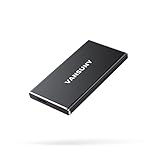
- Ultra-Fast Transfer Speed - Read and write speed can respectively reach up to 450MB/s and 400MB/s, which enables you to fast back up massive data to the SSD or read data from it
- Mini Design & Lightweight - The SSD is very mini and lightweight, smaller than your palm, and easy to carry around with you; metal-made design makes it more solid and durable, and features fast heat dissipation
- Excellent Performance - The SSD features ultra-fast, stable and secure data transfer, waterproof, shockproof, wear resistant; and it has more excellent performance than common mobile solid state drive, perfect for photographers, gamer, video editors and music producers
- Strong Compatibility - The external SSD is compatible with Windows, Mac OS and Android systems, and supports all kinds of PC with USB port, and latest laptops and smartphones with Type-C port
- What You Get - 1 * 500GB Mini SSD, 1 * Type-A to Type-C Data Adapter, 1* Type-A to Type-C Data Cable, 1 * Storage bag
Hybrid is a deliberate design choice, not a temporary workaround. Small or routine work stays local, while heavier work goes to a protected cloud system. The hybrid design is the reason a “local” label alone is not enough: the same assistant can do both.
What Apple says about PCC
Apple describes PCC as stateless computation. In its legal privacy page, dated September 14, 2026, Apple says data processed by PCC is not stored or made accessible to Apple and is used only to fulfill the request. The same page describes limited request metadata that may be collected, such as approximate request and response size, the feature used, and duration. It says request and result content are not part of that metadata.
Apple also says users can enable an Apple Intelligence & PCC Report to see requests sent off-device to PCC and to supported Apple Intelligence Extensions. This visibility is a useful control, but it covers supported requests only.
Rank #2

- [Blazing Fast 1000MB/s Speed] Experience ultra-fast file transfers with USB 3.2 Gen 2 technology, delivering read speeds up to 1000MB/s. Transfer large videos, photos, games, and documents in seconds and dramatically improve your workflow efficiency
- [Large 500GB Storage Capacity] Store thousands of photos, videos, games, and important documents with reliable 500GB storage. Perfect for professionals, gamers, students, and everyday users who need portable high-speed storage
- [Plug & Play – No Installation Needed] Simply connect the external SSD to your device and start transferring files instantly. No drivers or complicated setup required
- [Compact & Ultra Portable Design] This lightweight portable external SSD easily fits into your pocket or bag, making it the perfect travel companion for work, school, or gaming on the go
- [Wide Compatibility] Compatible with PC, Laptop, MacBook, Tablet, Game Consoles and more. Works seamlessly with Windows, macOS, and other USB-enabled devices
On June 8, 2026, Apple’s Security Engineering and Architecture team published “Expanding Private Cloud Compute.” Apple said the next generation of Apple Foundation Models spans on-device and cloud, and that PCC is being extended to Google Cloud systems using NVIDIA GPUs, Intel CPUs with TDX, and Google’s Titan chip for the most demanding work. The post states Apple’s core requirements: “Our core PCC requirements remain exactly the same: stateless computation, enforceable guarantees, no privileged runtime access, non-targetability, and verifiable transparency.” These are Apple’s own commitments and architecture. They are not an independent evaluation, and an announcement does not show which route a particular task takes on your device.
Cloud assistants: Gemini Apps and Copilot
Not every assistant follows Apple’s model. Cloud-first products usually receive the files you give them, and the question becomes what the provider’s policy allows it to do with them.
Google Gemini Apps
Google’s Gemini Apps Privacy Notice, last updated June 29, 2026, lists files, videos, screens, photos, imported chats, and browser page content among the information users may provide. It says that data can be used to provide, maintain, improve, develop, personalize, and customize services, and that human reviewers review some collected data for those purposes. Google advises users not to enter confidential information they would not want a reviewer to see or Google to use to improve services.
Rank #3

- FAST TRANSFER: 2TB external solid state hard drive with read and write speeds up to 2000MB/s (actual speeds vary depending on devices, file size, and conditions)
- DURABLE DESIGN: Compact portable hard drive with premium metal casing and scratch-resistant polymer bottom
- THERMAL PROTECTION: Advanced thermal solution keeps SSD below 50°C/122°F to prevent overheating during heavy use; IP65 water and dustproof rating
- IN THE BOX: Includes two USB cables (Type C to C, Type C to A) for seamless data transfer and high-res video playback, plus storage case
These terms cover Gemini Apps while signed in. The notice says signed-out use falls under Google’s general Privacy Policy. Do not apply these terms to every Google model or device feature. Gemini Nano and other on-device features on Android are a separate question, and the current routing rules for those features should be checked in Google’s own documentation for your device and software version.
Microsoft Copilot: consumer app versus Microsoft 365
Microsoft uses “Copilot” for more than one product with different rules. Its consumer Copilot FAQ identifies an updated Copilot app available as of August 18, 2026, and says the FAQ’s rules apply only to the older app, not to the new app or web version. For the older app, the FAQ says shared files may be stored securely for no longer than 18 months and then deleted automatically, and that conversations are stored by default for 18 months. Because the FAQ points newer users elsewhere, do not apply that 18-month file window to the current standalone app or web experience without first reading the policy the FAQ links to.
Microsoft 365 apps for home are documented separately. Copilot there works with the content of the file you are working on, or another file you ask it to inspect. Microsoft’s page says prompts, responses, and file contents are not used to train foundation models. This applies to home subscriptions and personal Microsoft accounts. It does not describe enterprise accounts or the standalone Copilot app.
Rank #4

- Blazing Fast Speeds – This 1TB external SSD delivers up to 2000MB/s read and 1800MB/s write via USB 3.2 Gen2x2, making large file transfers, gaming, video editing, and backups smooth and efficient
- Compact & Portable – The portable SSD adopts a pocket-size design (3.35×1.97×0.34 in, 1.6oz), perfect for on-the-go creators and gamers. Includes 2-in-1 USB Type-C to C/A cable for wide compatibility
- Durable Aluminum Casing – Built with a sturdy aluminum alloy body, this SSD external hard drive resists shock and drops while offering excellent heat dissipation for reliable high-speed performance
- Broad Compatibility – Works seamlessly with Windows, Mac, Android, iPhone 15/Pro, laptops, PCs, and external hard drives SSD for PS5, PS4, Xbox, and more. Also supports OTG and Windows-to-Go
- Reliable After-Sales Support – This 1TB SSD external is built with high-quality flash chips and controllers, offering long-lasting durability. Each external hard drive 1TB comes with 5 years of after-sales service or 512TBW, plus lifetime professional technical support
In the Microsoft 365 home documentation, two settings control the connection: “Experiences that analyze content” and “All connected experiences.” Turning off either one disables Copilot features in Word, Excel, Outlook, PowerPoint, and OneNote. Look for these labels in your Microsoft account privacy settings. The documentation does not give a single navigation path, so confirm the location for your version.
How the main options compare
The table below uses only what the cited vendor documentation states. “Not stated” means the documentation reviewed does not address that point for the product and account shown.
| Question | Apple Intelligence (PCC) | Gemini Apps (signed in) | Copilot consumer app (older app, per FAQ) | Microsoft 365 apps for home |
|---|---|---|---|---|
| Where processing happens | On-device when possible; more demanding requests to PCC, which Apple says is being extended to Google Cloud systems (announced June 8, 2026) | Cloud service | Cloud service | Cloud service for Copilot features in the apps |
| Content scope | Request metadata only, such as approximate size, feature, and duration, per Apple’s September 14, 2026 page | Files, videos, screens, photos, imported chats, browser page content | Shared files and conversations | The file being worked on, or another file the user asks Copilot to inspect |
| Retention | PCC data not stored after the response, per Apple’s stated design | Not stated in the notice reviewed | Files up to 18 months; conversations stored by default for 18 months | Not stated in the page reviewed |
| Used to train foundation models | Not stated in the pages reviewed | Notice says data may be used to improve services; not stated as training in the same terms | Not stated in the FAQ reviewed | Not used to train foundation models, per Microsoft |
| Human review | Not stated in the pages reviewed | Yes, for some collected data, per Google’s notice | Not stated in the FAQ reviewed | Not stated in the page reviewed |
| User controls and visibility | Apple Intelligence & PCC Report for supported requests | Signed-out use falls under the general Privacy Policy | FAQ directs newer app users elsewhere | Disable “Experiences that analyze content” or “All connected experiences” |
Checklist for judging a tool before you upload
Use these questions for any AI assistant, including ones not covered here. Answer each one from the current policy for the exact app, version, and account you use.
Best Value

- Fit For All Needs: Designed with dual USB-A and USB-C plugs, this solid state drive meets all your data transfer and storage needs across your USB-C smartphone, iPhone 16, iPad Pro, tablet, laptop, and USB-A computer, Smart TV, in-car audio system
- Ultra Data Transfer: This USB SSD improve USB 3.2 Gen 2 technology to achieve amazing data transfer speed of up to 1000MB/s,it could transfer 4K videos,high definition photos,game data and more
- Plug and Work: Widely compatible with Windows Android, Linux and Mac OS, this USB C solid state drive is plug-and-work without any adapter or software installation. Also compatible with USB 3.1/USB 3.0/USB 2.0
- Sturdy and Reliable: This SSD is made of zinc alloy,can be used for various environments.High quality SSD standard improve data security and performance reliability
- Slim and Portable: Designed in a fashion racing car design and slim profile measuring 79.7x21.2x8.5 mm/3.14x0.83x0.33 inch, this external SSD is easy to carry in your bag. Turning covers ensure your data is protected on the move
- Route: Which tasks run on the device, which go to a vendor server, and what triggers the handoff?
- Scope: Does the service get only the document you choose, or also screenshots, browser content, connected apps, or system context?
- Retention: How long are files, prompts, transcripts, and derived summaries kept? Can you delete them, and does deletion cover the derived items?
- Training: Are your files used to train foundation models, to improve products, to personalize your experience, or for safety review? Treat each as a separate question.
- Human review: Can staff or service providers read the content, and under what settings?
- Visibility: Can you inspect where requests went, turn off the feature, or export a log?
- Account context: Is this a consumer app, a personal Microsoft 365 subscription, a work account, or a signed-out session? Each can carry different rules.
Two common assumptions break under this checklist. “No training” does not mean a file was never uploaded, never retained, or never reviewed. “On-device” does not mean the assistant has no access to the rest of your system.
What is not yet established
As of October 2026, there is no comparable market-wide figure for how many AI tasks run locally, how many AI services upload the files users give them, or how user privacy has changed as a result. Most vendor pages change without notice, and the statements above reflect the documents dated as shown. The current standalone Copilot app and web experience have uploaded-file retention terms that are not covered by the older FAQ, so they should be checked directly in Microsoft’s linked policy before you rely on them.
A more accurate version of the headline is this: the next wave of AI is moving some file work onto devices, while harder tasks still go to cloud systems that vendors describe with their own privacy commitments.
Free tools Windows power users keep installed
One-click scans. No signup required.
Quick Recap
“
Product prices and availability are accurate as of the date/time indicated and are subject to change. Any price and availability information displayed on Amazon at the time of purchase will apply.




