Recommended Free Tools
A sample that changes during storage—or whose handling history is unknown—can make a downstream measurement difficult to interpret. Reliable storage helps protect sample integrity, but it cannot guarantee sound results on its own: collection, processing, retrieval, and associated data also shape what research findings mean.
How storage affects research results
Biospecimens are not interchangeable raw materials. Differences in how they are collected, processed, stored, retrieved, and linked to associated data can affect their usefulness and the reproducibility of measurements. The National Cancer Institute (NCI) notes that molecular data reliability depends on sample quality and consistency as well as the quality and breadth of related clinical data (NCI Biospecimen Best Practices; Introduction to Best Practices for Biospecimens).
As an Amazon Associate I earn from qualifying purchases.
Storage is therefore one link in a chain, not a repair step. A well-controlled freezer cannot undo a collection or processing problem, and a carefully handled sample may still be difficult to interpret if its identity, history, or associated data are incomplete. Standardized procedures help reduce avoidable variation and make differences between samples easier to assess (NCI Biospecimen SOPs).
Outdated Drivers Are Slowing You Down
One free scan finds every outdated or missing driver and matches the right update for your exact hardware.Free scan · exact hardware matchWindows Errors? Fix Them Before They Spread
Repair common Windows errors and clear accumulated junk for a smoother, more stable PC - no reinstall needed.Free scan · no reinstallWhat makes sample storage reliable?
Reliability means that conditions are appropriate to the sample and intended analysis, are applied consistently, and can be verified from records. NCI’s 2026 fourth edition organizes its guidance around governance and technical and operational practice, including collection, processing, storage, retrieval, dissemination, quality assurance, biosafety, and data management (NCI Best Practices for Biospecimen Resources).
#1 Best Overall
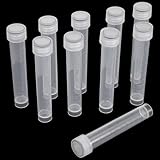
- Package Contents: You will receive 10 10 ml graduated test tubes
- Precision-Graduated Sample Containers: These 15mm diameter test tubes include clear 1-10ml measurement markings for accurate volume readings. The crystal-clear polypropylene walls offer excellent visibility while resisting clouding from repeated freezing/thawing cycles
- Leak-Proof 10ml Vials with O-Ring Seal: Our professional-grade plastic test tubes with caps feature integrated silicone O-rings that create an airtight seal, preventing sample evaporation and leakage even during long-term freezing
- Reliable Performance: Each 95mm (3.74") storage tube maintains perfect integrity from -80°C to 120°C for reliable laboratory performance
- Engineered for extreme conditions: Withstands ultra-low temperature freezing; Resists cracking under thermal shock; Maintains flexibility when frozen; Compatible with standard tube racks; Leakproof during transport
There is no single temperature, container, or storage duration that suits every sample and assay. Use a protocol suited to the biospecimen type and target analyte, and review it when scientific needs or evidence change. NCI presents its best practices as voluntary guidance that repositories should adapt to their mission and needs, not as a universal legal requirement.
Controls that protect sample integrity
Use a sample-specific SOP
Define the collection, processing, storage, and retrieval steps for the sample and intended analysis. Keep handling consistent across comparable samples; deviations can introduce variation that complicates comparisons.
Rank #2
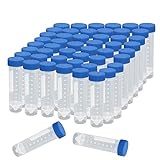
- Material: PP ( Polypropylene )
- Capacity: 50 ML, Graduated every 5ml and 2.5ml
- Dimension: 1.0 x 4.5inch / 25 x 114mm(DxL)
- Package Included: 50pcs 50ml Plastic Tubes
- Apply to loading solid, powder, seeds, pills, granular objects etc
Monitor conditions and record deviations
Maintain records of storage conditions and departures from the SOP, including temperature fluctuations, thaw-and-refreeze episodes, and equipment failures. A record lets researchers evaluate sample history when interpreting results rather than treating all stored material as if it had identical handling.
Plan aliquots and limit unnecessary handling
Where appropriate, decide aliquot sizes before storage so later work does not require repeatedly thawing and refreezing a larger sample. The suitable approach depends on the sample and assay; aliquoting is a handling control, not a universal requirement.
Rank #3

- Made of high transparency plastics
- Each capacity: 5 mL
- Size: 14 x 41mm, D x L
- Package included: 50 pieces 5 ml plastic tubes
Make retrieval traceable
Inventory tracking helps locate the correct sample and minimize disruption to stable storage conditions during retrieval. Identification and retrieval records are part of reliable storage, not administrative extras.
Maintain equipment and continuity
Include monitoring, maintenance, and response procedures for equipment problems in the repository’s operating practices. NCI’s guidance addresses equipment maintenance alongside storage and retrieval controls; specific facility design and backup arrangements should fit the repository’s needs.
Rank #4

- 【Freezing/Sterilization】10ml plastic vials can store laboratory samples at a low temperature of -112°F, and can also be heated to 248°F for autoclaving.
- 【Wide application】Suitable for liquid solids, such as: essential oils, spices, dyes, model coatings, powder, seeds, pills, granular objects, etc.
- 【O-ring seal】Small bottles with caps have O-shaped silicone sealing rings to prevent liquid leakage. Even at the lowest storage temperature, it can ensure the sealing performance, and finally ensure the safety of the samples in the tube.
- 【SIZE】Length with lid 95mm (3.74inch), vial diameter 15mm (0.59 inch).
- 【Packaging】50pcs multi-purpose plastic bottles..
Why pre-analytical records matter
Storage history is easier to interpret when it sits alongside the steps that came before it. ISBER’s Standard PREanalytical Code (SPREC) v2.0 identifies seven pre-analytical data elements, including sample and primary-container type, cold and warm ischemia periods, centrifugation speed and temperature, and final storage temperature (ISBER SPREC v2.0). Using a shared coding framework can make sample histories more legible across studies and repositories; it does not replace detailed SOPs or records.
Quick wins for a faster PC:
Scan for outdated or missing drivers - takes under a minuteDriver Scan →Repair Windows errors before they cause bigger problemsFix Now →ISBER’s fifth-edition Best Practices describe evidence- or consensus-based recommendations for specimen collection, long-term storage, retrieval, and distribution. ISBER characterizes them as advisory rather than mandatory, and says they can inform SOPs within a repository quality-management system (ISBER Best Practices for Repositories).
Best Value
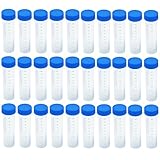
- Made of high transparency plastics
- Apply to loading solid, powder, liquid etc
- Each capacity: 50 mL
- Size: 32 x 117 mm, D x L
- Package included: 30 pieces 50 ml plastic tubes
Choose conditions for the sample and analysis
Before selecting storage conditions or containers, check the study protocol and applicable institutional guidance. For any proposed approach, assess:
- Compatibility: Does it fit the biospecimen, target analyte, and planned assay?
- Validated handling: Are the storage conditions and handling steps supported by an appropriate protocol?
- Monitoring and records: Can the repository detect and document excursions or other deviations?
- Identification and retrieval: Can staff trace a sample through storage and retrieve it without unnecessary disruption?
- Equipment continuity: Are maintenance and equipment-failure responses addressed in operating procedures?
Container choice is part of this decision. Cryogenic storage vials or other sample storage vials should be selected only when they match the specimen, storage conditions, and validated SOP; the category alone does not establish compatibility.
NIST describes its own biorepository as using standardized protocols and monitoring and security systems to support sample stability, quality control, and reproducible critical measurements (The NIST Biorepository). This is an institutional example, not a requirement that every laboratory use the same facility or instrumentation.
Quick Recap
A practical implementation checklist
- Specify the sample type, intended analyte, and planned assay before setting storage conditions.
- Document consistent collection, processing, storage, and retrieval procedures in an SOP.
- Plan aliquots where appropriate and avoid unnecessary thawing and refreezing.
- Track sample identity, location, conditions, and handling history.
- Record excursions, equipment failures, and other deviations rather than assuming they did not affect the sample.
- Review procedures as scientific needs, evidence, or repository operations change.
Product prices and availability are accurate as of the date/time indicated and are subject to change. Any price and availability information displayed on Amazon at the time of purchase will apply.




