Pinyon-juniper woodlands are declining in some places, but not everywhere: some stands are losing trees while others are expanding or becoming denser. Hotter, drier conditions can increase tree stress and limit new growth; insects, disease, and high-severity fire can accelerate losses. The balance depends on location, species, stand history, and disturbance.
Are pinyon-juniper woodlands dying everywhere?
No. Across the western United States, contraction and expansion are happening at the same time in different places. Some stands experience drought-related dieback or severe fire, while other areas see woodland expansion or infilling. That variation means there is no single trend that describes every pinyon-juniper woodland.
As an Amazon Associate I earn from qualifying purchases.
The evidence also does not establish one current total for woodland area lost across the entire West or a universal ranking of causes. Studies differ in the species, places, and methods they cover, so a finding about modeled tree populations should not be treated as a measurement of all woodland acreage.
How warming and drought can cause decline
Warmer conditions and drought can reduce the moisture available to trees. That can increase stress and mortality while making it harder for seedlings and young trees to establish. If losses exceed recruitment—the addition of new trees to a population—woodland populations can decline.
#1 Best Overall

- ✅ ABOUT PRODUCT- This package contains New Fresh 50pcs Green Pinyon Pine Tree Seeds Generic , SEEDS ONLY, no live plants.The photos show are the mature plant in the future, not the actual plant you will receive
- ✅ PREMIUM TREE SEED MIXTURES -Premium Seed Mix is a blend of high quality ingredients and fertilisers designed specifically for germinating and growing from seeds with vigorous
- ✅QUALITY - All seeds packaged by Seed Needs are intended for the current and the following growing seasons. All seeds are stored in a temperature controlled facility that is free of significant amounts of moisture.
- ✅GERMINATION - Seed Needs packets contain some of the freshest seed available. Direct from the growers. If sown correctly, you will begin seeing results in only a matter of days
- ✅ REACH US -If you do not satisfy with the products, please do not leave negative/neutral feedback. You can contact us for solution. We will try our best to fix the problem as soon as possible
What a five-species analysis found
A 2022 U.S. Geological Survey analysis modeled demographic rates for two pinyon and three juniper species across the western United States. Four of the five species showed declines in parts of their ranges. Pinus edulis had the largest share of populations declining: 24%. Under the warmest and driest conditions studied, up to about 50% of populations were declining. These are modeled shares of populations in that study, not percentages of trees killed or woodland acreage lost.
The study found that mortality and recruitment both helped explain where populations were declining. A population can be under pressure not only because established trees die, but also because too few new trees take their place.
Rank #2
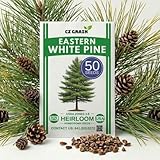
- 50 TREE SEEDS INCLUDED: Provides multiple planting opportunities for growing Eastern White Pine trees from seed. Allows flexibility for spacing, thinning, or selecting the strongest seedlings as they develop.
- MATURE SIZE AND GROWTH: Eastern White Pine can reach 50–80 feet tall or more with a spread of 20–40 feet at maturity. Fast growth in early years makes it suitable for long-term landscape planning and coverage.
- EVERGREEN FOLIAGE: Features soft, flexible needle clusters that remain green year-round. Needles typically grow in bundles and create a full, layered appearance.
- SUNLIGHT REQUIREMENTS: Thrives in full sun but can tolerate partial sun in some conditions. At least 6 hours of direct light supports optimal growth and structure.
- COLD HARDINESS: Suitable for USDA Zones 3–8, making it a reliable option for colder climates. Tolerates winter conditions once established.
How insects and disease can compound drought stress
Drought-stressed pinyon can become more vulnerable to insects and disease. Pinyon Ips beetles and other agents can add to the effects of moisture stress rather than acting as an entirely separate cause. A USDA Forest Service inventory summary published in 2005 described mortality approaching 100% in some local areas, while other areas had little or no mortality. That report’s observation illustrates how uneven the impacts can be; it is not a range-wide average.
When fire accelerates woodland loss
Fire effects depend on woodland type and fire severity. High-severity, stand-replacing fires can kill most overstory trees and remove a stand. Not every fire has that effect, so fire should not be treated as uniformly destructive.
Rank #3

- Produces delicious and highly prized pine nuts, perfect for culinary use.
- Features a distinctive umbrella-shaped canopy that adds elegance to any landscape.
- Thrives in warm, dry climates and is highly drought-tolerant once established.
- Provides excellent shade with its wide-spreading branches, making it a great addition to gardens and parks.
- Grows into a majestic, long-lived tree that enhances property value and beauty for generations.
Why the sequence before a fire matters
Wet periods can support tree recruitment and denser stands with more continuous fuels. If drought follows, conditions may become more conducive to large fires. This wet-growth-then-drought sequence can help explain why some stands face greater fire risk, but the outcome still depends on local fuels, vegetation, and fire behavior.
Why some places expand while others contract
Regional differences reflect more than climate alone. Human development can directly remove woodland. In other places, climate shifts, livestock grazing, fire suppression, or recovery of stands that were historically cleared have contributed to expansion or infilling. Those processes help explain local increases; they do not disprove declines elsewhere.
Rank #4

- Grow your own tree from seed!
- Includes absolutely everything you need to grow a Piñon Pine (Pinus edulis) from seed: seeds, gowing rmedium, a mini-greenhouse, and detailed instructions
- 100% guaranteed: If your seed fails to germinate or your seedling perishes, we are happy to provide free replacement seed
- Fun and educational, great for kids and adults—amateurs to experts!
- A universal symbol of life, regrowth and recovery, enduring friendships and new beginnings, a tree is a wonderful gift that will only grow in value, meaning, and beauty
The National Park Service’s ecosystem-drivers synthesis, last updated in 2015, describes pinyon-juniper habitat expansion and contraction as potentially driven by climate, insects, disease, fire frequency, or combinations of these factors. The relevant mix differs by place.
Quick wins for a faster PC:
Fix the driver behind crashes, sound loss and screen glitchesFind Drivers →Clear out junk files and repair common Windows errorsFree Scan →Scan for outdated or missing drivers - takes under a minuteDriver Scan →How to assess the risk in a particular woodland
A useful assessment looks beyond whether tree cover is rising or falling. The 2023 resilience framework recommends considering historical woodland structure and landscape change alongside current vegetation, future climate suitability, and habitat or resource value.
Best Value

- Rare and hard to find
- Native to Southwest: Grown in the high desert of New Mexico, these pinon nuts have a rich history in Native American cuisine.
- Easy to crack and shell
- Raw, not roasted, no salt
- Climate exposure: Consider drought, temperature, and moisture availability.
- Population change: Compare tree mortality with recruitment, rather than looking only at the number of mature trees.
- Stand structure and history: Examine density, composition, age, and past disturbance or land use.
- Fire context: Consider disturbance history, fuels, and the likelihood of high-severity fire.
- Future and ecological value: Weigh future climate suitability alongside habitat and other resource values.
Management should be local and adaptive: removing trees is not automatically beneficial, and preserving every stand may not be feasible under changing conditions. A USGS-indexed 2026 climate-adaptation strategy menu for Colorado Plateau management includes options such as mitigating disturbance, maintaining biodiversity, conserving ecotones, timing actions, and accepting climate-driven change where appropriate. It is decision support for a particular management context, not a universal prescription.
Quick Recap
Product prices and availability are accurate as of the date/time indicated and are subject to change. Any price and availability information displayed on Amazon at the time of purchase will apply.




