Verizon internet can feel slow because of a weak cellular signal, temporary network congestion, a network problem, or a weak link between a home router and a device. First identify whether the slow connection is Verizon cellular data or home Wi-Fi; the right fix depends on where the slowdown occurs.
First, identify which Verizon connection is slow
“Verizon internet” can mean mobile data on a phone, Verizon 5G or LTE Home Internet, Fios, or Wi-Fi from a Verizon router. A phone that is slow on cellular data has different likely causes from a laptop that is slow only on home Wi-Fi. Verizon’s troubleshooting guidance describes possible causes, but it cannot identify the cause for a particular account or address.
As an Amazon Associate I earn from qualifying purchases.
- Slow on cellular data: Check signal conditions, congestion, plan data controls, and network status.
- Slow on home Wi-Fi: Check whether the issue affects one device or several, and whether it is limited to a particular room.
Why Verizon mobile data may be slow
Weak or obstructed signal
Distance from a cell site, terrain, foliage, building materials, construction, and electronic interference can weaken or block a mobile signal. Moving to a different spot may help if the slowdown is tied to a particular building or location. Verizon lists these as possible factors, not as a diagnosis of an individual connection. Verizon’s network troubleshooting guide describes these conditions.
Crashes, No Sound, or Screen Glitches?
Random freezes, missing sound and display glitches usually trace back to one bad driver. Find and replace yours safely.Free scan · under a minuteWindows Errors? Fix Them Before They Spread
Repair common Windows errors and clear accumulated junk for a smoother, more stable PC - no reinstall needed.Free scan · no reinstallTemporary congestion or a network event
Heavy use at a crowded event can slow service in a local area. An unexpected network event can also leave more traffic on the remaining available network. Verizon says, “You may have slow data speeds until the network congestion clears or you reach an uncongested cell site.” In these cases, an accessory at home will not resolve the cellular network condition. Verizon’s slow-data guidance explains congestion and other possible mobile-data causes.
#1 Best Overall

- The latest Wi-Fi generation, Wi-Fi 6 (802.11 ax) with speeds averaging 60% faster on 2.4 GHz and 38% faster on 5 GHz than previous Verizon Wi-Fi routers*
- Tri-band 4x4 antennas, increasing Wi-Fi coverage by an average of 63%*
- 4 Gigabit LAN + 1 Gigabit WAN, MoCA2.5 + LAN MoCA1.1 WAN
- Automatic Band switching between 2.4GH and 5.8GH Band and 150% more Wi-Fi range than G1100
- Self-Organizing Network technology for automatic band steering and single Wi-Fi Network name
Plan data controls
Depending on the plan, a data-control feature may reduce speeds after a limit is reached. Check the account’s plan details and data settings in Verizon’s account tools before assuming the phone or network is at fault.
Why Verizon home internet or Wi-Fi may be slow
The Wi-Fi link may be weaker than the internet connection
A device far from the router, walls, furniture, appliances, and other obstructions can weaken Wi-Fi. The number of connected devices and what they are doing can also affect the experience. If one device or one room is affected while others work normally, the issue may be local to that device or Wi-Fi location rather than the connection from the router to Verizon’s network. Verizon’s Wi-Fi troubleshooting guidance recommends checking placement, obstructions, connected devices, cables, and settings.
Rank #2

- DUAL-BAND WIFI 6 ROUTER: Wi-Fi 6(802.11ax) technology achieves faster speeds, greater capacity and reduced network congestion compared to the previous gen. All WiFi routers require a separate modem. Dual-Band WiFi routers do not support the 6 GHz band.
- AX1800: Enjoy smoother and more stable streaming, gaming, downloading with 1.8 Gbps total bandwidth (up to 1200 Mbps on 5 GHz and up to 574 Mbps on 2.4 GHz). Performance varies by conditions, distance to devices, and obstacles such as walls.
- CONNECT MORE DEVICES: Wi-Fi 6 technology communicates more data to more devices simultaneously using revolutionary OFDMA technology
- EXTENSIVE COVERAGE: Achieve the strong, reliable WiFi coverage with Archer AX1800 as it focuses signal strength to your devices far away using Beamforming technology, 4 high-gain antennas and an advanced front-end module (FEM) chipset
- OUR CYBERSECURITY COMMITMENT: TP-Link is a signatory of the U.S. Cybersecurity and Infrastructure Security Agency’s (CISA) Secure-by-Design pledge. This device is designed, built, and maintained, with advanced security as a core requirement.
The router-to-network connection may be slow
Verizon’s Home app includes a router speed test with download and upload results. Verizon says those results measure the connection from the router to its network; they do not guarantee the speed a particular device will receive over Wi-Fi. A better result near the router or over Ethernet than in a distant room points toward Wi-Fi coverage as a likely factor, though it does not prove the exact cause. Verizon’s Home app FAQ explains the router speed test.
Do these 3 things before closing this tab:
1Clear out junk files and repair common Windows errors2Scan for outdated or missing drivers - takes under a minute3Repair Windows errors before they cause bigger problemsWireless home internet is address-specific
Eligibility for Verizon wireless home internet depends on the service address. Availability can differ between homes on the same block, and Verizon says a direct line of sight between a home and a cell site may be required. For LTE Home Internet, Verizon directs customers to the My Verizon app to find a suitable gateway location. Check the exact address rather than relying on a neighbor’s eligibility. Verizon’s 5G Home Internet page provides availability information; its LTE Home Internet FAQ covers gateway placement.
Rank #3
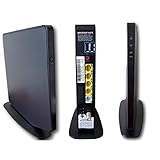
- AC1750 dual-band Wi-Fi for Verizon Fios plans
- 4 Gigabit Ethernet ports for wired devices
- 3x3 MIMO for strong, reliable coverage
- MoCA 2.0 uses coax to extend network
- Supports Wi-Fi 5 (802.11ac) technology
How to troubleshoot a slow Verizon connection
- Identify the connection. Determine whether the device is using cellular data or home Wi-Fi. If it is Wi-Fi, check whether other devices and rooms have the same problem.
- Check for a network issue. Use Verizon’s network status and support tools to look for an issue affecting your area. A general status page cannot establish what is happening at every address.
- Test the router connection. Run the router speed test in the Verizon Home app. Treat it as a router-to-network measurement, not a promise of device-level Wi-Fi speed.
- Check Wi-Fi conditions. Move the device closer to the router, reduce obstructions where practical, review connected devices and their activity, and check that cables are connected.
- Compare Wi-Fi with a wired connection, if possible. Use Ethernet with a compatible device. If the wired test works better, that points to Wi-Fi as a likely weak link.
- Restart the router. Verizon describes unplugging the router for about a minute and reconnecting it. Follow the instructions for your specific equipment if they differ.
- Improve coverage only when the problem is coverage. Reposition the router or an existing extender. A Wi-Fi extender may help in a dead zone, but check compatibility and service terms before buying one.
- Contact Verizon about unresolved issues. Use Verizon’s support and account tools for service-specific troubleshooting, especially when the router test is slow or you suspect a cellular or network-side problem.
Choose a fix based on where the slowdown happens
| What you observe | Likely area to investigate | Useful next check |
|---|---|---|
| Cellular data is slow in a particular place | Signal, obstruction, or local congestion | Try another location and check Verizon network status |
| Several home devices are slow, including near the router | Router-to-network connection, cables, settings, or a service issue | Run the Verizon Home app router speed test and check Verizon support tools |
| One device is slow, while others work normally | The device or its local Wi-Fi connection | Compare with another device and try a wired connection if supported |
| Wi-Fi is slow in one room but better near the router | Local Wi-Fi coverage or obstructions | Reposition the router or consider a compatible extender |
An extender is a coverage tool, not a remedy for a Verizon outage, cellular congestion, or a slow router-to-network result. Likewise, a wired test is useful for isolating Wi-Fi, but it requires a device that supports Ethernet.
Quick Recap
Rank #4

- Tri-Band WiFi 6E Router - Up to 5400 Mbps WiFi for faster browsing, streaming, gaming and downloading, all at the same time(6 GHz: 2402 Mbps;5 GHz: 2402 Mbps;2.4 GHz: 574 Mbps)
- WiFi 6E Unleashed – The 6 GHz band brings more bandwidth, faster speeds, and near-zero latency; Enables more responsive gaming and video chatting
- Connect More Devices—True Tri-Band and OFDMA technology increase capacity by 4 times to enable simultaneous transmission to more devices
- Unique Design, More RAM, Better Processing - A unique housing design provides optimal heat dissipation, combined with a 1.0 GHz dual-core CPU and 512 MB High-Speed Memory, the AXE75 is designed for long-term reliability and performance.
- EasyMesh-compatible - Extend network range even more by adding EasyMesh-compatible routers, extenders, or wireless powerline adapters for a seamless, whole-home connection. Eliminate dead zones, drops, and lag as you move across your home.
Product prices and availability are accurate as of the date/time indicated and are subject to change. Any price and availability information displayed on Amazon at the time of purchase will apply.




