Quick wins for a faster PC:
Clear out junk files and repair common Windows errorsFree Scan →Scan for outdated or missing drivers - takes under a minuteDriver Scan →Identity fabric matters when an organization’s identities, directories, applications and access controls are spread across systems that do not work as one. It is an architectural approach for connecting and coordinating those systems—not a required product or a guarantee of better security. Done well, it can make access policies and identity administration more consistent across a mixed environment.
What is an identity fabric?
An identity fabric connects and orchestrates multiple identity and access management (IAM) systems so they can operate as a more coherent whole. IBM uses this definition to describe an approach that may involve a vendor platform, a mix of point solutions, or custom integrations built with code and APIs. The precise design depends on which systems an organization connects and which system remains authoritative for each kind of identity data. IBM’s overview of identity fabric is a vendor’s working definition, not a formal NIST standard.


As an Amazon Associate I earn from qualifying purchases.
The idea is broader than single sign-on (SSO). SSO can simplify how users sign in to connected applications, while a fabric may also coordinate authentication, authorization, provisioning, governance, privileged access and monitoring. An implementation does not necessarily include every capability.
Why does identity fabric matter?
1. It can reduce identity silos
Separate identity systems may hold different directories, credentials, permissions and access records. Connecting them can give administrators a more coherent view of who has access to which applications and environments, rather than requiring them to piece that picture together system by system. The benefit depends on the quality and coverage of the integrations. IBM describes identity silos and integration as a central use case for identity fabric.
#1 Best Overall
2. It can help apply access policies more consistently
A shared orchestration layer can help coordinate authentication, authorization, governance and monitoring across connected systems. That does not make policies consistent automatically: teams still need to design the rules, connect the relevant systems and operate the controls. An application outside the fabric’s reach may still be governed separately. IBM outlines these potential capabilities.
3. It can support Zero Trust implementation
Zero Trust shifts security away from assuming that a user or device is trustworthy because it is inside a network perimeter. NIST says access should not be implicitly trusted based solely on network or physical location or asset ownership, and that authentication and authorization should occur before a session to an enterprise resource is established. Identity controls are therefore important to Zero Trust, but an identity fabric is only one possible way to coordinate them—not a complete Zero Trust architecture. NIST SP 800-207 was published on August 10, 2020, and updated on March 23, 2021.
Rank #2

- POWERFUL SECURITY KEY: The Security Key C NFC is the essential physical passkey for protecting your digital life from phishing attacks. It ensures only you can access your accounts.
- WORKS WITH 1000+ ACCOUNTS: Compatible with Google, Microsoft, and Apple. A single Security Key C NFC secures 100 of your favorite accounts, including email, password managers, and more.
- FAST & CONVENIENT LOGIN: Plug in your Security Key C NFC via USB-C and tap it, or tap it against your phone (NFC) to authenticate. No batteries, no internet connection, and no extra fees required.
- TRUSTED PASSKEY TECHNOLOGY: Uses the latest passkey standards (FIDO2/WebAuthn & FIDO U2F) but does not support One-Time Passwords. For complex needs, check out the YubiKey 5 Series.
- BUILT TO LAST: Made from tough, waterproof, and crush-resistant materials. Manufactured in Sweden and programmed in the USA with the highest security standards.
4. It may connect legacy applications to newer controls
Some implementations can extend controls such as multifactor authentication (MFA) to older applications that do not support those controls natively. Whether that works depends on the application and the integration method; it is not a built-in capability of every fabric. IBM describes this as a capability offered by some orchestration and fabric solutions.
PC Slower Than It Used to Be?
A free scan shows the junk files, broken settings and background clutter dragging Windows down - then fixes them in one click.Free scan · Windows 10 & 11Outdated Drivers Are Slowing You Down
One free scan finds every outdated or missing driver and matches the right update for your exact hardware.Free scan · exact hardware match5. It can coordinate identity lifecycle and privileged access
Identity governance and administration (IGA) can cover tasks such as provisioning access and removing it when someone leaves. Privileged access management (PAM) addresses higher-risk accounts and actions. These functions show why identity fabric can extend beyond sign-in, though an organization must verify whether its chosen design includes them or connects to separate tools. IBM identifies IGA and PAM among capabilities that may be part of a fabric.
6. It can provide a path to evolving authentication
Passkeys, risk-based authentication and passwordless credentials can be incorporated into identity strategies as providers and organizational policies allow. Microsoft’s Zero Trust identity guidance discusses FIDO 2.0 credentials, conditional access, analytics, governance and privileged identity controls within its ecosystem. These are possible controls, not prerequisites for an identity fabric. Microsoft’s deployment guidance explains its approach.
How an identity fabric can work
A fabric typically connects identity systems through integrations, APIs or standards so information and access decisions can flow between them. IBM names OAuth and SAML as examples of standards used to exchange identity information and support access policies. Orchestration may coordinate sign-ins, onboarding and provisioning, while directory synchronization can help present a more authoritative view of identities. Some designs also connect adaptive authentication, identity threat detection and response, IGA or PAM. The exact boundary matters: identify which system owns identity records, which evaluates access and what each connector actually passes between systems. IBM describes these architectural building blocks.
Rank #4

- IAM REFERENCE POSTER: Features key Identity and Access Management terms and signals including Principal, Credential, Entitlement, Policy Decision, Approval Flow, Session Token, Assertion, Access Log, and Audit Event.
- CRISP GLOSSY PRINT: Printed on high-quality glossy paper at 13x19 inches in portrait orientation, delivering sharp, clear visuals ideal for professional display.
- VERSATILE DECOR: Perfect for offices, classrooms, training rooms, and tech workshops, making it a great addition to any IT or security-focused environment.
- EDUCATIONAL TOOL: Designed for IAM teams, security architects, and enterprise IT professionals to support team discussions, training sessions, and knowledge sharing.
- UNFRAMED AND READY TO DISPLAY: Arrives as a single unframed poster, easy to frame or mount in your preferred style to suit any workspace aesthetic.
For example, a fabric might coordinate a sign-in and pass an authentication result to an application, while a separate directory remains the source of user records and a governance tool manages access reviews. That is one possible division of responsibilities, not a universal blueprint.
The Tool Desk
Outbyte PC Repair FREEClear out junk files and repair common Windows errorsFree Scan →Outbyte Driver Updater FREEFix the driver behind crashes, sound loss and screen glitchesFind Drivers →What should an organization evaluate?
Before choosing a platform, combining point solutions or building integrations, map the environment and assess the design against the needs that led to the project. These questions are architectural checks, not a vendor ranking or benchmark.
Best Value
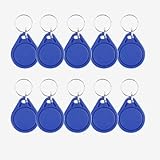
- NOTE: These are 13.56 MHz key fobs (tags). If you want to register them to your lock system, please make sure your system uses the same 13.56 MHz frequency.
- Durable Material: Made of high-quality ABS waterproof material, lightweight and durable, equipped with a metal key ring for easy carrying and use.
- Wide application: Suitable for apartments, office buildings, factories, communities, parks and other access control places.
- Stable performance: operating frequency 13.56MHz, sensitive sensing, reading distance up to 0-10cm, and fast recognition.
- Suitable for use with 13.56MHz RFID proximity access control and identity management systems. For example, it can be registered as a new key in an RFID door lock, where applicable.
- Identity coverage: Which workforce, customer, partner, service and device identities are in scope?
- Integration reach: Which directories, cloud services, legacy applications and identity providers connect? Which protocols, APIs or connectors are used?
- Control breadth: Does the design handle only SSO, or also authentication, authorization, provisioning, governance, privileged access and monitoring?
- Policy and visibility: Can teams apply the intended policies across connected systems and collect useful activity and access logs?
- Operational fit: What skills, migration work, integrations and ongoing administration will the design require?
- Resilience and authority: What remains available if an integration or central orchestration service is unavailable, and which systems remain authoritative for identity data?
For a concrete vendor example, IBM positions IBM Verify as a way to build an identity fabric using IBM and existing third-party solutions. Its product page lists directory consolidation, no-code integrations for traditional applications, risk-based authentication and privileged identity protection. Those are IBM’s product claims, not independent comparative findings. IBM Verify’s identity fabric page describes its offering.
What identity fabric does not establish
Identity fabric is not itself a formal NIST framework, a single mandatory product category or proof that an organization has achieved Zero Trust. NIST’s Zero Trust publication addresses broader security principles, while the term identity fabric describes an approach to connecting IAM capabilities. NIST’s identity and access management resource page reports that Digital Identity Guidelines SP 800-63 Revision 4 was released on August 1, 2025; that guidance provides current IAM context but does not prescribe identity fabric.
Quick Recap
- Integration does not by itself eliminate breaches, ensure compliance or guarantee consistent enforcement.
- A fabric only provides visibility and control over the systems and events it can actually reach.
- A physical FIDO2 security key can support passwordless authentication in a compatible environment, but it is an authentication accessory—not an identity fabric. Check provider, protocol and organizational-policy compatibility before choosing one. Microsoft discusses FIDO 2.0 credentials, and IBM discusses passkeys.
Product prices and availability are accurate as of the date/time indicated and are subject to change. Any price and availability information displayed on Amazon at the time of purchase will apply.




