For most Comcast/Xfinity cable customers, a router connects to a separate cable modem or to an Xfinity gateway—not directly to the cable line. These five picks suit different needs, from mesh coverage to multi-gig wired ports. Before buying, check Xfinity’s My Device Info for equipment guidance tied to your account and address, and make sure your setup supports your internet speed tier.
First, check what equipment your Xfinity service needs
A router provides Wi-Fi and manages your home network; it is not normally a DOCSIS cable modem. Xfinity says a standard router can be used if it is compatible with your speed tier. Most modems need a separate router for Wi-Fi, while an Xfinity Wireless Gateway combines modem and router functions. See Xfinity’s equipment guidance and check My Device Info before purchasing: compatibility can depend on the service, address and subscribed speed.
As an Amazon Associate I earn from qualifying purchases.
If you have a separate cable modem
Connect the router’s WAN or internet port to the modem’s Ethernet port. The modem handles the cable connection; the router handles the home network. Confirm that the modem itself is supported for your service and speed tier.
What’s actually slowing this PC down?
Pick the symptom - the matching free tool is one click away.
If you have an Xfinity Wireless Gateway
You can use the gateway’s built-in router, or connect a separate router. If you choose the latter, Xfinity instructs customers to enable Bridge Mode, which disables gateway routing while leaving modem operation active. Xfinity says only one device can be connected to the gateway in Bridge Mode; follow its Bridge Mode instructions.
#1 Best Overall

- MAXIMIZE YOUR CABLE INTERNET AND WHOLE-HOME WIFI: A cable modem and WiFi router in one device unlocks the full potential of your home internet with faster downloads, smoother WiFi for gaming and video calls, and reliable coverage in every room.
- APPROVED FOR YOUR PROVIDER AND PLAN: Works with Xfinity internet plans up to 800Mbps, Spectrum up to 1Gbps, and Cox up to 1Gbps. Not compatible with Verizon, AT&T, CenturyLink, DirecTV, DISH, or bundled voice plans. ISP activation required after setup.
- MULTI-GIG DOCSIS 3.1 SPEEDS: Get Gigabit+ cable download speeds on today's fastest plans, with headroom for the upgrades ahead. Real-world speeds depend on your plan and ISP network.
- WIFI 6 COVERAGE FOR THE WHOLE HOME: Stay connected in every room with dual-band AX2700 WiFi 6 covering up to 2,000 sq ft and capacity for 25+ connected devices. Real-world coverage depends on home size, layout, and building materials.
- WIRED CONNECTIONS FOR YOUR FASTEST DEVICES: Four Gigabit Ethernet ports keep gaming consoles, desktops, and streaming devices hardwired for the lowest latency and the most stable connection in your home.
If your service is eligible fiber/EPON
Xfinity documents a separate case in which certain fiber/EPON community customers may connect a third-party Ethernet router directly to an ONU, subject to eligibility and speed-tier capability. This exception does not apply to ordinary cable service. See Xfinity’s third-party equipment guidance.
Five router and mesh picks for different needs
These are feature-based candidates, not a tested or performance-ranked top five. Manufacturer specifications describe ports and wireless capabilities, not the speed you will necessarily see at home. Choose based on your Xfinity plan, modem or gateway, Ethernet devices, Wi-Fi clients and home layout.
Rank #2

- Compatible with major cable internet providers including Xfinity and Cox. NOT compatible with Verizon, Spectrum, AT&T, CenturyLink, DSL providers, DirecTV, DISH and any bundled voice service. Best for cable provider plans up to 800Mbps.
| Model | Form and Wi-Fi | Documented wired ports | Best fit |
|---|---|---|---|
| TP-Link Archer BE550 | Standalone tri-band Wi-Fi 7 router | One 2.5 Gbps WAN and four 2.5 Gbps LAN ports | Several wired multi-gig devices |
| TP-Link Deco BE63 | Wi-Fi 7 mesh system; whole-home mesh form factor | Port details not stated in the cited product page | Homes where a mesh arrangement is preferred |
| NETGEAR Nighthawk RS300 | Standalone tri-band Wi-Fi 7 router | One 2.5 Gbps internet port, two 2.5 Gbps LAN ports and two gigabit LAN ports | Multi-gig internet connection with a mix of wired device speeds |
| ASUS RT-BE88U | Wi-Fi 7 router with AiMesh support | One 10 Gbps WAN/LAN, one 10 Gbps SFP+, one 2.5 Gbps WAN/LAN, three 2.5 Gbps LAN and four gigabit LAN ports | Many wired connections or specialized high-speed links |
| eero Max 7 | Wi-Fi 7 router | Two auto-sensing 10 Gigabit Ethernet ports and two auto-sensing 2.5 Gigabit Ethernet ports | Multi-gig wired connections |
TP-Link Archer BE550: multi-gig ports for wired devices
TP-Link lists one 2.5 Gbps WAN port and four 2.5 Gbps LAN ports, plus EasyMesh compatibility, on its Archer BE550 product page. It is a practical feature match if you want multiple wired devices to have multi-gig-capable connections as well as Wi-Fi 7. A 2.5 Gbps port does not make an internet plan faster than its provisioned speed.
Quick wins for a faster PC:
Clear out junk files and repair common Windows errorsFree Scan →Fix the driver behind crashes, sound loss and screen glitchesFind Drivers →Repair Windows errors before they cause bigger problemsFix Now →TP-Link Deco BE63: mesh for a distributed layout
TP-Link describes the Deco BE63 as a whole-home Wi-Fi 7 mesh system that works with any internet provider. Mesh is a way to distribute access points around a home; it is not a promise of coverage in every building. Place nodes where they can maintain a useful connection, and check the product’s port details and package configuration before buying if wired connections matter.
Rank #3
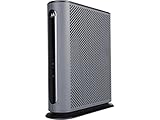
- 16x4 DOCSIS 3.0 cable modem plus a built-in AC1900 Dual Band (2.4 GHz and 5 GHz) WiFi Gigabit Router with four Gigabit (GigE) Ethernet ports, a firewall DFS, Power Boost, and more. This product is recommended for actual cable Internet service speeds up to 375 Mbps. A Broadcom cable modem chipset provides security from Denial of Service attacks. WiFi performance is exceptionally good, even in multi-dwelling units with lots of WiFi noise from neighbors. DFS and Power Boost are key
- Requires cable Internet service. Approved by and for use with Comcast Xfinity and Xfinity X1, Cox, Charter, Time Warner Cable, Suddenlink, WOW., CableOne and other cable service providers. Eliminate cable modem rental fees up to 156 dollars per year. (Savings are shown for Xfinity and vary by cable service provider. No cable modem is compatible with fiber optic, DSL, or satellite services from Verizon, AT&T, CenturyLink, Frontier, and others. Model MG7550 has no phone jack.)
- Built-in high-speed Wi-Fi router with AC1900 Wi-Fi, and Power Boost, and DFS provides Internet access for Wi-Fi devices including smartphones, notebooks, tablets, game stations, HDTVs, Amazon Echo, Google Home, Chromecast, Roku, Amazon Fire TV, and AppleTV. Four 10/100/1000 Gigabit Ethernet LAN ports provide wired connections to Windows and Mac computers, HDTVs, game stations, streaming TV devices, and other Ethernet-capable devices.
- Wireless Power Boost adds high-performance WiFi power amplifiers to boost the wireless signals to the legal limit, giving a significant boost in speed and range. The router can work on WiFi DFS frequencies, unlike most routers, so it is much less vulnerable to WiFi interference from neighbors. In addition, AnyBeam beamforming at both 2.4 GHz and 5 GHz frequencies focuses the signal on wireless clients to further enhance performance and range.
- Integrating the cable modem and router creates a reliable connection that reduces unwieldy wiring and power adapter clutter while conserving desk space. The vertical design minimizes shelf space and improves cooling while looking great in any home or office. A two-year warranty plus rugged lightning and power surge circuits protect your investment.
NETGEAR Nighthawk RS300: mixed-speed wired ports
The Nighthawk RS300 has a 2.5 Gbps internet port, two 2.5 Gbps LAN ports and two gigabit LAN ports, according to NETGEAR. That mix can suit a home with a multi-gig-capable connection and a few wired devices that can use it, alongside standard gigabit devices.
ASUS RT-BE88U: extensive wired connectivity
ASUS lists a 10 Gbps WAN/LAN port, a 10 Gbps SFP+ port, a 2.5 Gbps WAN/LAN port, three 2.5 Gbps LAN ports and four gigabit LAN ports for the RT-BE88U, along with AiMesh support. This is the connectivity-focused option in this group. Those ports are useful only if your internet service and wired equipment can use them; most households should not assume they need this many high-speed connections.
Rank #4

- MultiGig speed for today & tomorrow: DOCSIS 3.1 performance supports cable internet plans up to 2.5 Gbps, delivering ultrafast streaming, gaming, and downloads.
- Save on rental fees: Own your modem and avoid monthly equipment charges - check with your cable provider for plan compatibility.
- Compact, modern design: Space saving footprint with simple LED indicators for power, upstream/downstream, and online status.
- Easy setup: Connect cable, power on, and activate with your cable provider. Then join the default Wi-Fi or personalize your own Wi-Fi network name and password.
- Wi-Fi 6 Coverage: Includes dual-band W-Fi 6 (AX3000) delivering up to 3 Gbps wireless performance for your whole home.
eero Max 7: high-speed ports on a Wi-Fi 7 router
eero documents two auto-sensing 10 Gigabit Ethernet ports and two auto-sensing 2.5 Gigabit Ethernet ports for the Max 7. Consider it if multi-gig wired connections are part of your setup. The port specifications do not establish how its real-world performance compares with the other candidates.
Do these 3 things before closing this tab:
1Repair Windows errors before they cause bigger problems2Scan for outdated or missing drivers - takes under a minute3Clear out junk files and repair common Windows errorsHow to choose for your plan and home
Match the router to the internet connection
Router throughput is limited by the slowest relevant part of the path: the Xfinity plan, modem or gateway, Ethernet link and client device. A router’s maximum wireless data rate is a physical specification, not a promise that a phone or laptop will reach that speed. A faster router may still be useful for local networking or future devices, but it cannot raise the speed Xfinity provisions.
Best Value

- DUAL-BAND WIFI 6 ROUTER: Wi-Fi 6(802.11ax) technology achieves faster speeds, greater capacity and reduced network congestion compared to the previous gen. All WiFi routers require a separate modem. Dual-Band WiFi routers do not support the 6 GHz band.
- AX1800: Enjoy smoother and more stable streaming, gaming, downloading with 1.8 Gbps total bandwidth (up to 1200 Mbps on 5 GHz and up to 574 Mbps on 2.4 GHz). Performance varies by conditions, distance to devices, and obstacles such as walls.
- CONNECT MORE DEVICES: Wi-Fi 6 technology communicates more data to more devices simultaneously using revolutionary OFDMA technology
- EXTENSIVE COVERAGE: Achieve the strong, reliable WiFi coverage with Archer AX1800 as it focuses signal strength to your devices far away using Beamforming technology, 4 high-gain antennas and an advanced front-end module (FEM) chipset
- OUR CYBERSECURITY COMMITMENT: TP-Link is a signatory of the U.S. Cybersecurity and Infrastructure Security Agency’s (CISA) Secure-by-Design pledge. This device is designed, built, and maintained, with advanced security as a core requirement.
Choose standalone or mesh based on layout
A standalone router is one central access point. A mesh system uses multiple access points to spread Wi-Fi through a larger or more obstructed layout. The right choice depends on the home and node placement; a product page alone cannot establish coverage in your specific rooms. Mesh still needs a compatible connection to the modem, gateway or eligible ONU.
Count the wired connections you actually use
List devices such as computers, network storage, consoles or switches that you plan to connect by Ethernet. Compare their link speeds and the router’s WAN and LAN ports. If you only need gigabit wired connections and a conventional broadband plan, multiple 10 Gbps ports may add little value. If you need several faster wired links, compare the number of multi-gig ports—not just the Wi-Fi generation.
Check the Wi-Fi clients you own
Wi-Fi 7 features help only when client devices can use them, and actual results also depend on distance, walls, interference and configuration. If most of your devices are older, prioritize reliable placement and appropriate coverage rather than treating the newest Wi-Fi label as a speed guarantee.
What to verify before you buy
- Use Xfinity My Device Info, with sign-in or address entry, to check service-specific equipment guidance and confirm the speed-tier requirement.
- Determine whether you have a separate cable modem, an Xfinity gateway, or an eligible fiber/EPON ONU connection.
- If keeping an Xfinity gateway while adding a router, review Xfinity’s Bridge Mode setup and its one-connected-device limitation.
- Check that the router’s WAN connection matches the modem, gateway or ONU connection, and that its LAN ports suit your wired devices.
- For mesh, verify the system’s package contents and port configuration, and plan node placement for your actual home.
Xfinity’s equipment overview also describes the XB10 gateway as combining DOCSIS 4.0 with Wi-Fi 7. That is context for customers considering Xfinity-provided equipment, not evidence that any router in this list is a certified cable modem. See Xfinity’s gateway overview.
Quick Recap
Product prices and availability are accurate as of the date/time indicated and are subject to change. Any price and availability information displayed on Amazon at the time of purchase will apply.




