The Tool Desk
Outbyte Driver Updater FREEScan for outdated or missing drivers - takes under a minuteDriver Scan →Outbyte PC Repair FREERepair Windows errors before they cause bigger problemsFix Now →Start with screen time and brightness: shorten your screen timeout or Auto-Lock and reduce brightness if it is higher than you need. Next, check your phone’s battery-use screen and adjust the apps or background activity it identifies as unusually demanding. Use Battery Saver or Low Power Mode when you need more runtime and can accept some delays or feature limits. Charging optimization is for long-term battery health, not extra charge today.
1. Reduce screen-on time and brightness
The display is a practical first place to look because it uses power while you are actively using the phone. Set a shorter screen timeout on Android or Auto-Lock on iPhone so the screen turns off sooner when idle. Lower brightness, or use automatic brightness if it keeps the display at a comfortable level. Google recommends shorter screen timeout and reduced or automatic brightness for Android; Apple also recommends lowering brightness when Battery settings identify it as a significant factor.
As an Amazon Associate I earn from qualifying purchases.
These controls are easy to try without restricting apps or connectivity. Change one at a time and use the phone normally so you can tell whether the adjustment suits you.
Do these 3 things before closing this tab:
1Scan for outdated or missing drivers - takes under a minute2Clear out junk files and repair common Windows errors3Fix the driver behind crashes, sound loss and screen glitches2. Find what is actually using the battery
On iPhone
Open Settings > Battery and review the Daily Usage chart before disabling features across the board. Apple’s chart compares the current day with the previous seven days and can help identify high brightness, background activity, or increased use after a software update or device setup. Update and setup activity may be temporary, so check whether the drain continues after that work is finished.
#1 Best Overall

- Up to 3.5 Phone Charges On the Go: Compact and easy to carry, this 15,000mAh power bank keeps you powered for travel, commuting, and emergencies. Charges iPhone 17 up to 3.5 times, Samsung S26+ up to 2.5 times, and AirPods Pro up to 20 times.
- 40% Smaller, 45% Lighter: Designed for power without the extra bulk, this compact power bank is 40% smaller and 45% lighter than conventional models, making it easy to carry for travel and daily use. Built-in USB-A, Type-C, iOS, and Micro cables keep your devices ready to charge—no extra cables needed.
- Airline-Safe Power, Trusted Worldwide: Safe charging you can trust. Join over 50 million users worldwide who rely on our safety-focused design for worry-free charging and carry-on travel.
- 50% Power in 30 Minutes: Get fast, convenient charging when you need it most. This 22.5W portable charger powers your phone up to 50% in just 30 minutes, ideal for busy days and travel.
- Charge 6 Devices at Once: With 6 outputs and a bi-directional Type-C port, this portable charger powers multiple devices at the same time. Compact enough for your pocket or bag.
On Android
Open your phone’s battery-use or battery-usage screen and look for apps consuming unusually high power. Android settings and labels vary by manufacturer, and Google directs users to their phone maker for device-specific instructions. The figures on this screen help you decide what to change; they do not by themselves prove that an app is faulty.
3. Adjust the apps or background activity behind the drain
If one app stands out, consider restricting its background activity or changing how often it refreshes—rather than limiting every app. On supported Android phones, Adaptive Battery can help manage battery use, and Google recommends restricting apps with high battery use. The exact controls depend on the phone maker and Android version.
On iPhone, Low Power Mode disables Background App Refresh and email fetch, among other changes. If the Battery screen points to a particular source, address that source first; broad restrictions can make notifications or updates arrive later.
What’s actually slowing this PC down?
Pick the symptom - the matching free tool is one click away.
Rank #2
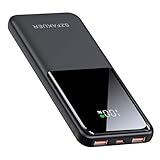
- Ultra-Slim & Light weight Design: At just 0.63 inches thick and 8.11oz, this is the slim and light 10000mAh power bank. Perfect for travel, it easily fits in your pocket or bag without adding bulk.
- 22.5W USB-C Fast Charging: Equipped with USB-C input and output, this power bank supports PD3.0 and QC4+ fast charging, delivering up to 22.5W of power. Charge your iPhone to 65% in just 30 minutes or power up multiple devices quickly.
- 3 Output & Dual Input: Features 3 outputs (2 USB-A + 1 USB-C) and 1 inputs (USB-C ), allowing you to charge up to three devices simultaneously. Ideal for smartphones, tablets, earbuds, and more.
- Wide Compatibility: Works seamlessly with a wide range of devices,Compatible with iPhone 17/16/15/14/13/12, Samsung Galaxy, Google Pixel, iPads, AirPods, Android tablets, and other USB-C devices.
- Advanced Safety & LED Display: Built with an 8-Layer Protection System to prevent overcharging, overheating, and short circuits. The LED digital display shows the remaining battery percentage, so you’re never caught off guard by a low battery.
4. Turn on a power-saving mode when you need runtime now
| Phone | Where to look | What to expect |
|---|---|---|
| iPhone 14 or earlier | Settings > Battery > Low Power Mode | Reduces background and automatic activity; it can also reduce brightness and set Auto-Lock to 30 seconds. |
| iPhone 15 or later | Settings > Battery > Power Mode > Low Power Mode | Applies Low Power Mode changes; on ProMotion models, it may limit the refresh rate. |
| Android | Look for Battery Saver in your phone’s battery settings; the exact path and label vary by manufacturer. | Can limit or turn off background activity, which may delay some apps or network connections. |
Choose a saving mode when extending the current charge matters more than background convenience or full performance. Apple describes Low Power Mode as reducing background activity to extend battery life. The official guidance cited here does not provide a comparable number of minutes or percentage of extra runtime for these settings, so the result will depend on your device and use.
5. Check whether Adaptive Power is available
Adaptive Power is not a universal iPhone setting. Apple’s current guidance ties availability to supported models and software; its guide describes the feature on iPhone 15 Pro or later, and the support information lists compatibility for iOS 26 or later. Check your model and iOS version before looking for the control.
On a supported iPhone, Adaptive Power can make adjustments such as reducing brightness or background activity. Apple says it may automatically turn on Low Power Mode at 20% battery. That is a trigger for the feature, not a promised runtime gain.
Rank #3

- Universal 5V Battery Pack for Heated Clothing: Compatible with 5V heated jackets, vests, and trousers. This upgraded battery pack offers steady, reliable warmth, keeping you comfortable through any cold-weather activity.
- Pocket-Sized Portability: At only 5.5" x 2.6" x 0.5" and just 0.5 lbs, this slim, lightweight battery is built to go anywhere. Its compact design fits easily in your pocket, so you can stay powered and comfortable wherever the day takes you.
- High 10,000mAh Capacity: Reliably charge most smartphones 2-3 times or a tablet once, providing ample power for a full day out or during travel.
- Triple-Port Fast Charging: Two USB-A ports and one USB-C port allow you to charge up to three devices at the same time. Whether you're powering a phone, tablet, earbuds, or other small devices, you get fast, convenient charging without waiting for an available outlet.
- Comprehensive Safety System: Features advanced protection against over-charging, over-discharging, over-current, over-voltage, and short circuits for safe charging of all your connected devices.
6. Separate today’s charge from long-term battery health
Charging optimization and a charge limit aim to reduce battery wear over time; they do not add charge for the day. On iPhone 15 and later, you can choose a charge limit from 80% through 100% in 5% increments. Optimized Battery Charging is available when the limit is set to 100%. On iPhone 14 and earlier, look under Settings > Battery > Battery Health & Charging for Optimized Battery Charging.
A lower limit means less charge is available when you unplug the phone, which may not suit a long day away from an outlet. With the specified iPhone charge-limit behavior, charging can resume after the battery drops by 5% while connected. Apple says Optimized Battery Charging is designed to reduce wear by reducing the time the iPhone spends fully charged.
7. Don’t switch off Wi-Fi and Bluetooth by default
Turning off radios is not a reliable first-line battery fix. Apple says Wi-Fi and Bluetooth are designed to draw minimal power when they are not connected, and recommends leaving them on for the best iPhone experience. Focus first on screen use, the battery-use screen, and power-saving controls.
8. Check battery health if runtime stays poor
If the phone still runs out unusually quickly after you address identified drain, check its battery-health information. Rechargeable batteries chemically age and lose capacity, so a settings change may not restore the runtime of a worn battery. On iPhone, if Battery Health shows Service, Apple advises considering battery replacement. Treat that as a service decision rather than another setting to toggle.
Quick Recap
Product prices and availability are accurate as of the date/time indicated and are subject to change. Any price and availability information displayed on Amazon at the time of purchase will apply.




