Buy a separate gadget when it solves a recurring problem your phone creates: you need the task to work away from the phone, want controls designed for one activity, or must conserve the phone’s battery for communication. The clearest cases supported by available guidance are a fitness tracker or simple running device for consistent activity tracking, and a handheld GPS when hiking navigation is the main job. For alarms, casual photos, timers and similar routine tasks, a phone is usually sufficient unless you have a specific usability or reliability problem.
Start with the task, not the gadget
A phone app is hard to beat when you already carry the phone, the task is occasional, and the app does everything you need. A dedicated device earns its place only when its advantages change your behavior or reduce a meaningful risk. Before looking at products, answer four questions:
As an Amazon Associate I earn from qualifying purchases.
- What exact task must it perform? “Fitness” could mean counting steps, timing runs, recording routes, or monitoring several body metrics. “Navigation” could mean following a planned hiking route rather than simply finding a street address.
- How often will you do it? A daily or weekly pain point can justify a device that would be wasteful for a once-a-month task.
- Must it work without the phone? Consider being out of range, putting the phone away, or needing the phone battery for an emergency call.
- What trade-offs will you accept? Account for charging, screen readability, physical controls, setup, accuracy, compatibility, accessories, data plans and subscriptions.
This approach also prevents a common mistake: buying the most feature-rich device when a basic one would do. REI’s guidance notes that a simple pedometer or running watch can cover step counting or run timing; a feature-heavy tracker is not automatically better for those jobs. REI’s fitness-electronics guide also distinguishes basic activity devices from navigation equipment, so match the category to the activity.
Where a dedicated gadget has the strongest case
1. A fitness tracker or band for consistent activity data
A wearable can make activity measurement automatic: it stays on your wrist, starts with fewer steps than opening an app, and can keep recording while your phone remains in a pocket or bag. This is valuable only if you will wear, charge and check it consistently. Cleveland Clinic advises evaluating a tracker’s accuracy for the particular metric, compatibility, charging routine, lifestyle fit, cost and any subscription before buying. Its consumer guidance on fitness trackers also stresses that the numbers are information, not a diagnosis or an automatic health improvement.
#1 Best Overall

- Explore confidently with the reliable handheld GPS
- 2.2” sunlight-readable color display with 240 x 320 display pixels for improved readability
- Preloaded with Topo Active maps with routable roads and trails for cycling and hiking
- Support for GPS and GLONASS satellite systems allows for tracking in more challenging environments than GPS alone
- 8 GB of internal memory for map downloads plus a micro SD card slot
Different measurements deserve different confidence levels. Cleveland Clinic says some readings, including heart rate when the device is worn properly, tend to be fairly accurate, while estimates such as body composition can be less precise. Treat calories, sleep stages, body-fat percentages and similar outputs as approximations useful for observing trends, not exact medical measurements. If a number would affect treatment or a serious health decision, use an appropriate clinical assessment instead of a consumer wearable.
The practical benefit is often behavioral rather than technical. Certified personal trainer Curt Fischer, CPT, told Cleveland Clinic: “Fitness trackers give you information about your body and your activity. What really matters is how you use that information to stay consistent and keep moving.” Choose a device whose charging and wearing routine you can sustain; an accurate tracker left in a drawer is less useful than a simpler one you actually use.
2. A pedometer or running watch for one simple job
If you only want daily steps or elapsed time and distance for a run, start with the least complicated device that provides those functions. A basic pedometer can avoid the distraction and battery use of a phone, while a running watch can put timing and activity data on your wrist. REI specifically identifies these as suitable options for simple step counting or run timing. Do not pay for multisport maps, communications or advanced sensors unless you have a use for them.
The Tool Desk
Outbyte Driver Updater FREEScan for outdated or missing drivers - takes under a minuteDriver Scan →Outbyte PC Repair FREEClear out junk files and repair common Windows errorsFree Scan →Check how the device records activity: whether it needs a phone nearby for setup or syncing, how often it must be charged, and whether the display remains readable during movement. Compatibility with your phone’s operating system and the companion app matters even when the device records data independently; unsupported software can prevent setup, updates or export.
3. A handheld GPS when hiking navigation is the priority
Hiking is the strongest navigation-specific case for a separate device. A phone can show maps and record a route, but GPS use and continuous screen activity consume phone battery that may be needed for communication. REI recommends considering a handheld GPS when navigation is the main focus. A dedicated unit also gives you a device reserved for the route rather than the same screen used for messages, photos and other distractions.
Capabilities vary widely. Basic units may provide an off-course warning, while more advanced devices can support programmable routes, turn guidance, waypoints and breadcrumb trails. Compare those functions rather than assuming every “GPS” has the same navigation experience. Also examine map coverage, how maps and routes are loaded, screen visibility in sunlight, physical controls that work with gloves, battery type and expected runtime, weather resistance, and whether the device can operate entirely without a phone.
Rank #2

- Compact and lightweight GPS handheld navigator boasts an anti-slip design offering a bright 3.2" screen that is sunlight readable, even in bright sunlight, plus, physical buttons provide more versatility in any conditions
- Get multi-GNSS support(GPS+GALILEO+BEIDOU+QZSS) for superior positional accuracy,so you know exactly where you are,location precision within 6 ft
- The handheld GPS navigator uses GPS technology to capture your trip or waypoint so you can guide back to your starting position
- Equip with 3-axis compass and barometric altimeter,follow your bearing on the digital compass, which provides an accurate heading even when stationary
- Hike in any weather with the water-resistant design (rated to IP66) ,Rechargeable battery can provide up to 36 hours of battery life in full charge, recharge easily with a standard USB-C cable
A handheld GPS should complement sensible preparation, not replace it. Carry a charged phone as a communication and backup tool, bring the map data or paper information appropriate to the route, and learn the device before a remote trip. A unit that requires an unfamiliar app or account at the trailhead is not a dependable plan.
What’s actually slowing this PC down?
Pick the symptom - the matching free tool is one click away.
Fitness band or smartwatch: understand the difference
Samsung UK describes fitness bands as simpler wearables focused mainly on health and activity metrics, while smartwatches add phone-like apps and communication functions. That distinction is useful, but the exact behavior is model-specific. Some functions can work without a phone; advanced features may require a compatible phone, a companion app, an account or a data connection. Read the support requirements for the exact model and phone you intend to use rather than relying on the category name.
| Need | Phone app | Dedicated option | Questions to check |
|---|---|---|---|
| Count steps | Usually adequate if you carry the phone consistently | Basic pedometer or fitness band | Will you wear or carry it all day? How does it sync? |
| Time a run | Large screen and route logging, with phone battery use | Running watch | Can it record without the phone? Is the display readable while moving? |
| Track several activity metrics | Flexible apps and a larger screen | Fitness tracker or smartwatch | Which metrics are measured, and how accurate are they for your use? |
| Navigate a hike | Maps, route recording and communication in one device | Handheld GPS | Does it support your routes, waypoints, turn guidance and offline maps? |
| Messages and calls during exercise | Already built in | Smartwatch, sometimes with phone or cellular dependency | Which phone, app, account and connectivity are required? |
A band is sensible when you want unobtrusive tracking and do not need many apps. A smartwatch is justified when on-wrist communication or broader apps solve a recurring problem. Neither category guarantees better measurements; evaluate the metric and the model’s documented limitations.
When the phone is still the better tool
Alarms
A phone alarm costs nothing beyond the phone you already own, is easy to schedule and can provide multiple alarms. A dedicated alarm clock may be reasonable if you have a specific issue—such as keeping the phone out of the bedroom, needing a large physical control, or wanting an alarm independent of phone charging—but the available evidence does not establish that a separate clock improves sleep or reliability for everyone.
Casual photography
Phones combine a camera, preview screen, editing and sharing. A dedicated camera can be appropriate for a particular photographic requirement, but the available evidence does not support a general claim that buying one produces better photos or value than a phone. Define the requirement—optical reach, controls, interchangeable lenses or another concrete need—before accepting the cost and extra equipment.
Quick wins for a faster PC:
Scan for outdated or missing drivers - takes under a minuteDriver Scan →Repair Windows errors before they cause bigger problemsFix Now →Fix the driver behind crashes, sound loss and screen glitchesFind Drivers →Timers, flashlights and quick utility tasks
For an occasional countdown, calculator, flashlight or reminder, an app is normally the lowest-friction choice. A separate tool becomes interesting only when the phone is inconvenient in the setting: a kitchen timer with a physical button, a work light that must remain available while the phone is elsewhere, or a device that can be operated with gloves. These are situational decisions, not universal upgrades.
Rank #3

- Explore confidently with the reliable handheld GPS
- 2.2” sunlight-readable color display with 240 x 320 display pixels for improved readability
- Preloaded with Topo Active maps with routable roads and trails for cycling and hiking
- Support for GPS and GLONASS satellite systems allows for tracking in more challenging environments than GPS alone
- 8 GB of internal memory for map downloads plus a micro SD card slot
E-readers and other single-purpose screens
A separate reading device can offer a different screen and fewer interruptions, but the consulted sources do not establish head-to-head results for e-readers versus phone reading. Buy one for a clearly identified preference—such as screen characteristics, battery routine or distraction control—rather than assuming every single-purpose device is superior.
Bitkom Research’s 2025 survey shows how often people already use phones as replacements: 74% of surveyed German smartphone users said their phone had fully or largely replaced an alarm clock, 65% said the same of a camera, and 40% said the same of a navigation device. The survey covered 1,004 people in Germany aged 16 and older, including 827 smartphone users, interviewed by telephone during calendar weeks 2–5 of 2025; Bitkom describes it as representative. These are self-reported replacement behaviors, not tests showing that phones perform better or that dedicated devices are unnecessary. Read the Bitkom Research release for the wording and sample details.
Compare the total experience before you buy
Task fit and controls
List the actions you perform, then check whether the device makes them faster or more reliable. A physical lap button, always-visible run time or glove-friendly GPS controls can matter more than a long feature list. Conversely, a small screen or awkward menu can make a theoretically capable device less usable than the phone you already know.
Free tools Windows power users keep installed
One-click scans. No signup required.
Independence from the phone
“Works without a phone” is not a single feature. Separate recording from setup, syncing, maps, notifications, emergency communication and data uploads. Confirm what remains available when the phone is out of range, switched off or low on battery. A device that records a hike offline but needs the phone to load every route has a different dependency from one with onboard route management.
Battery and charging
Continuous GPS and fitness monitoring can consume a phone’s battery, potentially reducing the reserve available for calls or messages. A dedicated device moves that drain to its own battery, but introduces another item to charge. Compare realistic charging intervals, charging time, cable or dock availability and what happens when the battery is empty. For remote activities, include a charging plan and a backup rather than relying on a single estimate.
Data quality and limitations
Decide which measurement matters before comparing accuracy. Heart-rate readings, step counts, route tracks and body-composition estimates have different error profiles. Look for model-specific validation and usage instructions, wear the device as directed, and treat estimates as trends unless a professional tells you otherwise.
Rank #4
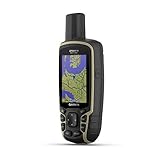
- Large 2.6” sunlight-readable color display for easy viewing
- Expanded global navigation satellite systems (GNSS) and multi-band technology allow you to get optimal accuracy in challenging locations, including steep country, urban canyons and forests with dense trees
- Includes routable TopoActive mapping and federal public land map (U.S. only)
- Compatible with the Garmin Explore website and app (compatible smartphone required) to help you manage tracks, routes and waypoints and review statistics from the field
Compatibility and recurring cost
Add every required cost: the device, a compatible phone, companion software, accessories such as straps or mounts, a data plan where applicable, map purchases and subscriptions. Verify operating-system support and account requirements before purchase. A low introductory price is not the total cost if essential functions are locked behind a recurring fee.
Windows Errors? Fix Them Before They Spread
Repair common Windows errors and clear accumulated junk for a smoother, more stable PC - no reinstall needed.Free scan · no reinstallCrashes, No Sound, or Screen Glitches?
Random freezes, missing sound and display glitches usually trace back to one bad driver. Find and replace yours safely.Free scan · under a minuteA practical buying process
- Write a one-sentence job description. For example: “I need to time runs without holding my phone,” or “I need offline route guidance on day hikes.” If you cannot state the job, postpone the purchase.
- Record the phone’s current failure. Note battery drain, distraction, missed controls, poor visibility, unreliable carrying or another repeatable problem. A gadget should address this specific failure.
- Set a minimum specification. Define required independence, battery duration, screen or control type, metric, map function and compatibility. Mark optional features separately.
- Check the exact model’s dependencies. Read its support page for phone operating systems, app accounts, offline operation, updates, subscriptions and accessories. Category-level claims are not enough.
- Test the routine before committing. If possible, borrow or trial a device. Wear it, charge it, import a route, operate it outdoors and review the recorded data. The test should mirror your real activity, not a showroom demonstration.
- Plan for failure. Carry a backup communication or navigation method where the activity warrants it. Learn how to recover a route, restart tracking and preserve battery before relying on the device.
- Buy only when the recurring benefit exceeds the ongoing burden. Include charging, updates, subscriptions and the attention required to maintain another device.
Common mistakes and how to avoid them
Buying features instead of solving a problem
Extra sensors, apps and modes add cost and learning time. If your requirement is steps or run timing, a basic device may be enough; if your requirement is hiking navigation, prioritize route and map behavior. Use the minimum specification you wrote rather than the longest product description.
Assuming a dedicated device is automatically more accurate
Specialization can improve convenience and battery separation, but it does not make every estimate exact. Check accuracy for the metric that matters and follow wearing or positioning instructions. Do not convert a consumer estimate into a medical conclusion.
Ignoring the phone and app dependency
A wearable may record independently yet require a compatible phone for initial setup, synchronization or advanced analysis. A GPS may store tracks but need an app for route transfer. Verify each stage before purchase, particularly if you use an older phone or plan to travel without connectivity.
Leaving the phone without a backup on a hike
A handheld GPS can preserve phone battery, but the phone may still be your communication and emergency tool. Carry both when appropriate, keep them charged, and know which map or route remains available if one device fails.
Recommended Free Tools
Forgetting the charging habit
Another battery means another routine. Choose a charging interval that fits your week, keep the cable or dock where you use it, and determine what data is lost when the battery runs out. Consistency matters more than a feature you cannot maintain.
Best Value
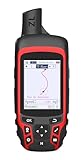
- Compact and lightweight GPS handheld navigator with bright 2.4" high-resolution color screen so you can easily follow your track
- 4 satellites (GPS, Galileo, BeiDou and QZSS) allow you to get optimal accuracy in challenging locations, including steep country, urban canyons and forests with dense trees
- Rechargeable battery can provide up to 20 hours of battery life in continuous use; recharge easily with a standard USB-C cable
- Equip with essential tools like GPS compass which provides an accurate heading, barometric altimeter, sunrise and sunset (No maps)
- Track navigation, Record your tracks before hiking,it can guide back to your starting position when you lost your direction,and store waypoints along a track
Using replacement statistics as performance proof
Survey figures describe what people report replacing, not which product performs best. Bitkom’s German results are useful context for phone habits, but they do not establish superiority, safety, quality or value for a particular gadget.
Decision guide by reader situation
| Your situation | Most defensible choice | Reason | Do not overlook |
|---|---|---|---|
| You want only step counts | Phone or basic pedometer | Simple task does not require a feature-rich tracker | Carrying or wearing consistency and sync compatibility |
| You time runs regularly | Phone app or running watch | A watch removes the need to hold the phone and can separate GPS battery use | Offline recording, readability and charging |
| You want ongoing activity trends | Fitness band or tracker | Automatic wear-based collection can reduce friction | Metric accuracy, comfort, subscriptions and charging |
| You hike where navigation is central | Handheld GPS plus phone backup | Dedicated route controls and a separate battery are valuable | Map loading, route features, battery and backup communication |
| You need an occasional alarm, timer or snapshot | Phone app | Already available with no second device to maintain | Buy separately only for a specific environmental or control problem |
What the evidence does—and does not—support
The strongest supported buying cases are task-specific fitness and hiking navigation. The guidance supports comparing a phone app with a pedometer, running watch, fitness tracker or handheld GPS according to independence, battery, controls, accuracy and cost. It does not establish head-to-head tests for dedicated alarm clocks, cameras, timers, flashlights or e-readers, so claims of guaranteed better sleep, focus, safety or photo quality would go beyond the available evidence.
Use a tracker as a feedback tool, not a diagnosis. Use a GPS as navigation equipment, not a substitute for preparation. If your phone already handles the task without a recurring problem, there is no demonstrated reason in the available guidance to add another gadget.
Frequently asked questions
Should I buy a smartwatch or a fitness band?
Choose a band when your priority is straightforward activity and health metrics with fewer phone-like functions. Choose a smartwatch only when its apps or communication features solve a recurring need, and confirm which features require a compatible phone, app or connection.
Can I rely on a phone for hiking navigation?
A phone can log routes and display maps, but GPS use can consume battery needed for communication. If navigation is the primary hiking task, compare a handheld GPS’s route, waypoint, turn-guidance and breadcrumb capabilities, and carry the phone as a charged backup.
Are fitness-tracker numbers medically accurate?
Accuracy depends on the measurement and how the device is worn. Cleveland Clinic says heart-rate readings can be fairly accurate when worn properly, while some body-composition estimates are less precise. Treat consumer metrics as estimates and seek clinical measurement for medical decisions.
Is a separate alarm clock automatically healthier?
No conclusion of that kind is established here. A separate clock may fit your routine if you specifically want the phone out of the bedroom or need different controls, but the purchase should address that personal requirement rather than an assumed universal health benefit.
How much should I spend?
There is no universal price threshold. Set the minimum functions first, then total the device, accessories, compatible phone or app requirements, data plan and subscriptions. A cheaper device that lacks your required offline or control features is not a saving.
Quick Recap
Product prices and availability are accurate as of the date/time indicated and are subject to change. Any price and availability information displayed on Amazon at the time of purchase will apply.




