Free tools Windows power users keep installed
One-click scans. No signup required.
You can generate a 3D mesh from a terminal by scripting a documented text-to-3D API: submit a prompt, poll the returned task, and download its model when it is ready. An AI agent can orchestrate the same steps by calling your script or API tools. The cited documentation shows API workflows—not a vendor-provided command-line program or official agent integration—so the terminal and agent layer is yours to build.
How terminal-based 3D generation works
A typical workflow is an API task rather than a single local command. Tripo’s quick start demonstrates a text-to-model request that returns a task ID, followed by status polling and downloading the model URL after success. Meshy documents text-to-3D generation with preview and refinement stages. See Tripo’s quick start and Meshy’s Text to 3D API for their current request fields and behavior.
As an Amazon Associate I earn from qualifying purchases.
- Prepare the prompt and credentials. Keep API keys out of source control. Avoid putting secrets directly in shell commands that may be saved in shell history; use an appropriate secret manager or environment configuration for your setup.
- Submit a generation request. Send the prompt and any required options to the API endpoint. Save the task ID returned by the service.
- Poll the task. Check its status until it succeeds or fails. Handle errors and timeouts rather than assuming a request completes immediately.
- Download the result. After success, retrieve the model from the URL or result field returned by the API and save it with the intended file extension.
- Inspect or convert if needed. Use a mesh-processing library or a 3D application to check the file and prepare it for its destination.
The commands or script that wrap these steps are your own automation; the cited sources do not establish an official vendor CLI. Likewise, an agent can call an API only if it has an appropriate tool or script, credentials, and a way to handle task status and downloaded files. No official agent integration is established by these sources.
Choose the output format for its destination
| Format | Useful when | What to account for |
|---|---|---|
| GLB | You want a portable, single-file glTF scene. | Blender describes GLB export as packing glTF data into one binary file. trimesh describes GLB/GLTF as a scene format with broad support for textures and other scene data. Confirm that your destination application supports the content you need. |
| OBJ | Your destination pipeline accepts OBJ. | Meshy lists OBJ as an output, and trimesh supports it. Where materials are involved, check how the exporter handles associated material data and confirm the destination’s expectations. |
| STL | You need geometry for a fabrication or slicing workflow. | Tripo identifies STL as a slicing and printing path. trimesh describes STL as a basic triangle-soup format; visual materials and textures are not its purpose. Validate the geometry before treating it as printable. |
| 3MF | Your 3D-printing workflow specifically calls for 3MF. | Meshy lists 3MF, but its documentation says it must be explicitly requested. That does not establish support across other services. |
Meshy’s API documentation lists GLB, OBJ, FBX, USDZ, STL, and 3MF output options. Request the format required by your downstream application rather than assuming the default will suit it. Support and request details can differ by service; consult the relevant API documentation.
#1 Best Overall

- Full-sized keyboard with detached numpad
Inspect the mesh before using it
A successful API response and a downloadable file do not prove that a model is production-ready or printable. Check the result in the application or pipeline that will consume it. For a print workflow, inspect the geometry in a suitable mesh tool and slicing application before fabrication; STL carries geometry, not the visual material and texture data used in a rendered scene.
trimesh is a Python library for loading, exporting, inspecting, and processing mesh formats. Blender also exposes scene export through its Python API. Its cited glTF export operator documentation is for Blender 3.0, so check the API and installed export operators for the Blender version you use.
Rank #2

- More than 140+ intuitive keyboard shortcuts
- Backlit keys, adjustable in 5 levels
- Built-in USB 3.0 Super-Speed hub
- USB wired
- Plug-and-play with macOS
What an AI agent can—and cannot—do
An agent can orchestrate the workflow if it can make the API request, retain the task ID, poll status, download the result, and write the file to an accessible location. In practice, delegate those operations through a script or tools configured for the agent, and constrain where it can store outputs and access credentials. The documented API steps make this automation possible, but the cited vendor documentation does not demonstrate a first-party agent integration or a ready-made agent implementation.
What’s actually slowing this PC down?
Pick the symptom - the matching free tool is one click away.
Quick Recap
Rank #4

- Big Features on a Small Screen - Is there anything it can't display? Custom gif image, date. connection mode, WIN/MAC layout, battery status, etc.
- Knob Design- Adjust volume, connection mode, backlit brightness/speed, RGB mode/color, all it takes is just a twist or a click.
- BT5.0/2.4G/USB-C - Wireless keyboard with stable BT 5.0, hassle-free 2.4Ghz dongle plus USB-C wired mode set no limits about your keyboard connection.
- Gaming Friendly Top-Mount Design - Offers a superior tactile consistency, firm feeling, and better noice reducing creamy keyboard.
- Sound Absorbing Foams - Equipped with IXPE switch dampener pad, 2 layers of thicker sound-absorbing foams, silicone dampener pad, which reduces 40% noise and removes 80% hallow sound. Bringing creamy or thocky sounding, natural and clear feedback, no more cavities noise.
Rank #3
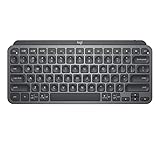
- Perfect Stroke Typing with Smart Keys (1): Type on keys shaped for your fingertips, with voice to text Dictation (4), Mic Mute/Unmute, and Emoji keys
- Mini Size, Mighty Powerful: A layout designed for effortless precision, with a minimalist form for an ergonomic keyboard that's portable and can travel wherever you get work done
- Smart Illumination: The wireless keyboard's backlit keys light up the moment your hands approach, and automatically adjust to suit changing lighting conditions
- Multi-Device, Multi OS: Pair MX Keys Mini compact keyboard with up to 3 devices on nearly any operating system via Bluetooth Low Energy and switch between them seamlessly
- Multiple Computers, One Flow: Team the slim MX Keys Mini with MX Master 3 or MX Anywhere 3 and type across multiple computers or laptops in one fluid workflow(1)
Product prices and availability are accurate as of the date/time indicated and are subject to change. Any price and availability information displayed on Amazon at the time of purchase will apply.




